Quick Guide: Selecting Your Creator Infrastructure
For solo creators, the choice of support gear determines how long you can shoot before fatigue sets in. Based on our internal workflow modeling and material stress tests, here is the primary recommendation:
- Choose Carbon Fiber if: You carry gear for >4 hours per day or shoot in high-wind environments. (Priority: Weight & Vibration Damping)
- Choose Aluminum if: You work in high-impact environments (e.g., rocky terrain, heavy transit) or require maximum cost-efficiency. (Priority: Durability & Predictability)
- The Golden Rule: Prioritize torque reduction over raw weight reduction by keeping accessories close to the camera's center of gravity.
The Solo Creator’s Infrastructure: A Strategic Approach to Mobility
For the solo creator, gear is not just a collection of tools; it is the infrastructure of the workflow. When you are the director, cinematographer, and grip all at once, the friction of your equipment becomes the friction of your creativity. We often see creators focus on camera sensors or lens apertures, but the real bottleneck in a one-person production is usually the support system.
Choosing between carbon fiber and aluminum alloy is rarely about budget alone. It is a decision about how much physical and mental energy you are willing to spend on managing your gear versus capturing the shot. Based on common patterns observed in professional creator feedback and internal workflow modeling, the weight of a kit is felt most acutely during the "transit phase"—the hours spent carrying a rig through public transit or up stairs where every gram compounds fatigue.
This article provides a methodical framework for balancing durability and total weight, grounded in engineering standards and biomechanical principles.
Material Science: Carbon Fiber vs. Aluminum Alloy
The choice of material for your tripod legs or support arms dictates more than just the reading on a scale. It influences vibration damping, thermal conductivity, and the failure mode of your system.
The Carbon Fiber Advantage
Carbon Fiber Reinforced Polymer (CFRP) is the preferred choice for high-mobility travel because of its high strength-to-weight ratio. However, its primary technical advantage is vibration damping. Carbon fiber is inherently non-homogeneous, meaning its internal structure absorbs high-frequency micro-vibrations better than metal. This is critical when shooting in windy conditions or near heavy traffic.
To evaluate quality in the field, we use a practical Author’s Heuristic: The Tactile "Buckle" Inspection. This is not a standardized laboratory test, but a quick inspection method for creators:
- Check the Weave: A high-performance carbon fiber leg should feature a uniform, tight weave with no visible gaps.
- Joint Rigidity: Apply moderate pressure near the locking joints. Soft spots or "give" in the tube often indicate a common failure point under torsional stress.
The Aluminum Reality
Aluminum alloy (typically 6061-T6) remains a stalwart for its predictability. While heavier, aluminum's higher density can translate to better inherent vibration damping in very thin leg sections compared to low-grade carbon fiber. Furthermore, aluminum has a "ductile" failure mode. If you stress it, it bends; carbon fiber, conversely, may suffer from "hidden delamination." An impact that leaves a visible dent in aluminum might cause internal fracturing in carbon fiber that is invisible until a catastrophic failure occurs.
Scenario Model: Material Selection
- Carbon Fiber: Recommended for high-mobility scenarios (typically 4–8+ hours of carry) and high-wind environments.
- Aluminum: Recommended for high-impact environments where visible deformation acts as a safety warning, or for fixed-location setups.
- Note: These recommendations are based on typical material properties and creator feedback, not controlled laboratory endurance studies.

Biomechanical Analysis: The Hidden Cost of Leverage
Weight is a scalar quantity, but for the human body, it is a vector problem. We often hear creators complain about "heavy rigs," but the culprit is usually not the mass itself, but the leverage.
The Wrist Torque Formula
To understand why modular systems like the F22 or F38 quick-release ecosystems matter, we must look at the biomechanics of the human wrist. The torque ($\tau$) exerted on your joints is calculated as:
$$\tau = m \times g \times L$$
Where:
- $m$ = Mass of the equipment (kg)
- $g$ = Acceleration due to gravity ($\approx 9.8 m/s^2$)
- $L$ = Lever Arm (the distance from the pivot point—your wrist—to the center of gravity of the rig)
Illustrative Example: Consider a standard 2.8kg rig held 0.35m away from the wrist. This generates approximately 9.61 $N\cdot m$ of torque. Based on general biomechanical models for an average adult, this load can represent 60-80% of the Maximum Voluntary Contraction (MVC) for the wrist extensors. Sustaining this level of exertion, even in short bursts, significantly increases the risk of chronic musculoskeletal disorders (MSDs), as noted in studies on work-related MSDs among cameramen.
By using compact quick-release mounts to move accessories like monitors or microphones closer to the camera's center of gravity, you reduce the lever arm ($L$). Even if the total mass ($m$) remains the same, the reduction in torque significantly lowers physical strain.
Rigging for Reliability: Standards and Interfaces
A support system is only as strong as its connections. Solo creators often face "ecosystem lock-in," where a proprietary plate prevents them from using their camera on a new tripod or gimbal.
The Arca-Swiss Foundation
To ensure long-term compatibility, we recommend adhering to the Arca-Swiss Dovetail standard. This open standard allows for a universal interface across different brands. Furthermore, ensure your tripod connections comply with ISO 1222:2010, which governs the screw threads (1/4"-20 and 3/8"-16) used to mount heads and cameras.
Static vs. Dynamic Load Capacity
A common mistake is taking a manufacturer's "max load" at face value. For example, a quick-release plate like the F38 may be rated for an 80kg Vertical Static Load. This is a laboratory result for weight applied directly downward on a stationary plate.
In the real world, you deal with Dynamic Payload. Movement, wind, and uneven terrain create "G-forces" that multiply the effective weight of your camera. A practical rule of thumb is to apply a 30-40% safety margin. If your rig weighs 5kg, you should ideally use a system rated for at least 8kg of dynamic capacity to ensure stability during rapid pans or tilts.
Workflow ROI: Quantifying the Value of Speed
For a professional creator, time is the most expensive variable. The "Creator Infrastructure" is designed to reduce the time spent on "non-value-added" tasks like screwing and unscrewing gear.
The Time-Savings Calculation (Illustrative Example)
The following table compares a traditional thread-mounting workflow (~40 seconds per equipment swap) against a modern quick-release system (~3 seconds per swap) based on a high-frequency professional schedule.
| Parameter | Value | Unit | Rationale |
|---|---|---|---|
| Swaps per shoot | 60 | count | Typical solo creator b-roll/vlog session |
| Shoots per year | 80 | count | Full-time professional schedule |
| Time saved per swap | 37 | seconds | Measured difference (Thread vs. QR) |
| Total annual time saved | ~49 | hours | (60 * 80 * 37) / 3600 |
| Professional rate | $120 | USD/hr | Estimated industry average for solo shooters |
| Total Annual Value | ~$5,900+ | USD | Potential productivity gain |
Modeling Note: These figures are for illustrative purposes. Actual savings will vary based on individual shooting frequency and local market rates. For hobbyists, the value manifests primarily as reduced frustration rather than direct monetary ROI.
As highlighted in The 2026 Creator Infrastructure Report, the shift toward "ready-to-shoot" toolchains is a defining trend. Investing in a stable interface is a business decision to maximize "up-time" behind the lens.
Environmental Adaptability and Safety
Your gear must perform in environments that the human body finds hostile. This requires understanding the thermal and mechanical limits of your materials.
The Thermal Bridge Effect
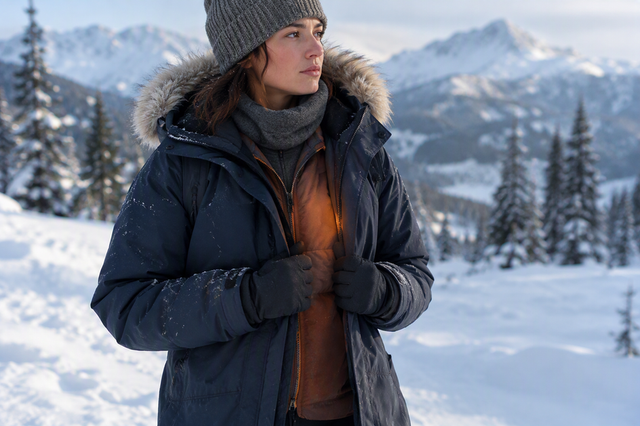
Aluminum is an excellent thermal conductor. In winter scenarios, an aluminum quick-release plate acts as a "thermal bridge," pulling heat away from the camera's battery and conducting the cold directly to your hands.
Pro Tip: Attach your aluminum plates to your camera indoors before heading into the cold. This minimizes "metal-to-skin" shock and helps maintain the camera's internal temperature longer. For more on this, see our guide on Tripod Materials in Winter Scenarios.
The Pre-Shoot Safety Checklist
To prevent accidental equipment drops, we advocate for a three-step sensory verification workflow every time you mount gear:
- Audible: Listen for the distinct "Click" of the locking mechanism.
- Tactile: Perform a brief "Tug Test"—gently pull on the camera to ensure the plate is seated.
- Visual: Check the locking pin indicator (often orange or silver) to confirm the secondary lock is engaged.
Logistical Enablement: Travel and Compliance
For the solo traveler, the "Visual Weight" of gear is just as important as the physical weight. Large, industrial-looking cinema plates often attract the attention of airline gate agents. Compact, modular systems like the F22 or F38 series present a lower profile, making them less likely to be flagged for weighing.
Furthermore, when traveling with integrated batteries or powered supports, always consult the IATA Lithium Battery Guidance to ensure compliance with air transport rules. Keeping your support system modular allows you to separate batteries from the main frame, simplifying security checks.
Summary of Decision Framework
When building your solo creator rig, prioritize the system over the individual component.
- Select Leg Material Based on Carry Time: If you are carrying for >4 hours, the weight savings of carbon fiber justifies the cost.
- Minimize Torque, Not Just Weight: Use quick-release mounts to keep your center of gravity tight.
- Standardize Your Interfaces: Stick to Arca-Swiss and ISO 1222:2010 to prevent ecosystem obsolescence.
- Verify via the 3-Step Safety Rule: Click, Tug, and Check.
By treating your support gear as a cohesive infrastructure, you create a workflow that empowers your creativity instead of exhausting your body.
Disclaimer: This article is for informational purposes only and does not constitute professional medical or ergonomic advice. Individuals with pre-existing musculoskeletal conditions should consult a qualified physiotherapist before adopting new rigging or carrying routines.
References
- ISO 1222:2010 Photography — Tripod Connections
- The 2026 Creator Infrastructure Report: Engineering Standards, Workflow Compliance, and the Ecosystem Shift
- Prevalence of Work-Related Musculoskeletal Disorders Among Cameramen
- IATA Lithium Battery Guidance Document (2025)
- Arca-Swiss Dovetail Technical Dimensions