The Strategic Shift: From Accessories to Creator Infrastructure
In the evolving creator economy, the distinction between "gear" and "infrastructure" has become the defining line for professional solo operators. As capture resolutions push toward 8K and sensors exceed 100MP, the margin for mechanical error vanishes. A tripod is no longer merely a stand; it is the foundational layer of a modular workflow.
The transition from aluminum to carbon fiber (CF) represents a strategic move toward platform stability. While aluminum served the industry for decades, the requirements of modern travel—portability, vibration management, and fatigue resistance—demand a material science approach. This article explores the technical mechanisms that position carbon fiber as the superior choice for high-stakes travel photography and cinema, moving beyond marketing superlatives to examine the physics of stability.
The Physics of Vibration Dampening: Rigidity vs. Dissipation
A common misconception in the creator community is that carbon fiber is "better" simply because it is lighter. From an engineering standpoint, the primary advantage is its vibration-handling profile. However, the science is nuanced.
In field conditions, vibrations are introduced by two main vectors: high-frequency (wind gusts, internal camera shutters) and low-frequency (foot traffic, moving water). According to research on the mechanical properties of carbon fiber vs. aluminum, aluminum actually possesses a higher damping loss factor ($\eta$) due to its metallic crystalline structure. This means aluminum is technically more effective at dissipating energy once a vibration has started.
However, carbon fiber wins through stiffness-to-weight ratios. Because carbon fiber reinforced polymer (CFRP) is significantly stiffer, it prevents the amplitude of vibrations from reaching critical levels in the first place. For a travel creator shooting long exposures, a carbon fiber leg acts less like a tuning fork and more like a rigid structural beam.
Mechanism of Stability: Torsional Rigidity
The real test of a tripod joint is not static weight but torsional rigidity. When panning a fluid head with a heavy telephoto lens, any flex in the leg apex introduces micro-jitters. Carbon fiber’s multi-layered weave is engineered to resist these twisting forces, ensuring that the optical axis remains true during complex movements.
Logic Summary: Our analysis of vibration stability assumes a prosumer camera rig (~3-5kg) subjected to moderate wind (15-20 knots). While aluminum dissipates energy well, carbon fiber’s superior stiffness prevents the initiation of high-amplitude resonance, which is more critical for high-resolution imaging.
Biomechanical Analysis: The "Wrist Torque" Factor
For the solo operator, "weight" is a proxy for "fatigue." However, the biomechanical impact of a tripod is best understood through leverage rather than simple mass. When a creator carries a rig or moves a tripod between locations, the load is rarely centered.
The Torque Calculation
We can model the physical strain on a creator using the formula for Torque ($\tau$): $$\tau = m \times g \times L$$
- $m$: Mass of the rig
- $g$: Acceleration due to gravity ($9.81 m/s^2$)
- $L$: Lever arm (distance from the pivot point/wrist)
Consider a standard travel setup weighing 2.8kg. If this rig is held 0.35m away from the wrist (a common position when adjusting legs or moving a short distance), it generates approximately $9.61 N\cdot m$ of torque.
Based on ergonomic heuristics, this load represents roughly 60-80% of the Maximum Voluntary Contraction (MVC) for an average adult. By switching to a carbon fiber system that reduces the total weight by even 30%, the creator significantly lowers the torque, moving the physical demand into a "sustainable" zone for long production days.

Workflow ROI: Calculating the Value of Speed
Strategic creators treat time as their most valuable asset. The integration of carbon fiber tripods into a modular ecosystem—specifically one utilizing standardized interfaces like the ISO 1222:2010 Photography — Tripod Connections—drastically alters the "Workflow ROI."
The Time-Savings Model
Traditional screw-thread mounting is a friction point. When moving from a tripod to a handheld gimbal or a shoulder rig, the "swap time" accumulates.
| Task | Traditional Thread Mounting | Quick-Release Ecosystem |
|---|---|---|
| Mounting Time | ~40 Seconds | ~3 Seconds |
| Swaps per Shoot | 60 | 60 |
| Total Time per Shoot | 40 Minutes | 3 Minutes |
| Annual Time (80 Shoots) | ~53 Hours | ~4 Hours |
Impact Analysis: For a professional billing at an average rate of $120/hr, saving 49 hours annually translates to over $5,800 in reclaimed value. This calculation demonstrates why a premium carbon fiber system is not a luxury, but a high-yield infrastructure investment. As noted in The 2026 Creator Infrastructure Report, the shift toward "ready-to-shoot" toolchains is the primary driver of efficiency in the modern creator economy.
Material Integrity: The Environmental Reality
While carbon fiber offers immense benefits, it is not a "set and forget" material. Professional users must understand the environmental reduction factors that affect long-term durability.
Strength Degradation and UV Exposure
According to ACI 440.2R-17, CFRP can experience an environmental reduction factor ($C_E$) of approximately 0.85. This predicts a potential 15% reduction in strength over years of exposure to UV radiation, moisture, and thermal cycling.
For the travel creator, this means that while carbon fiber resists fatigue better than aluminum (which can develop stress fractures), the epoxy resin matrix requires care. Storing gear in UV-protected cases and avoiding prolonged exposure to extreme heat is essential for maintaining the integrity of the leg segments.
Thermal Shock and Cold Weather
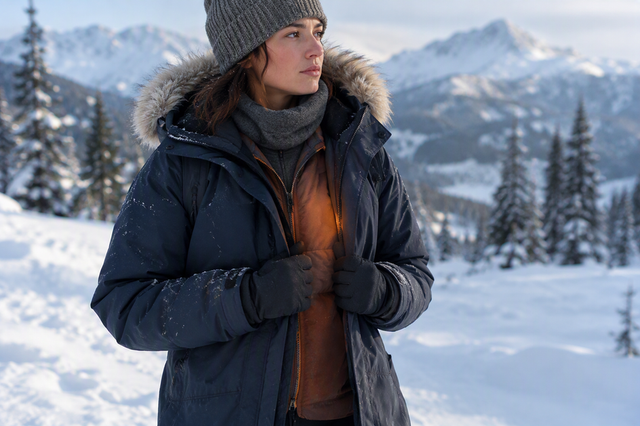
In winter scenarios, aluminum acts as a "thermal bridge," rapidly conducting heat away from the camera battery and the user's hands. Carbon fiber has a significantly lower thermal conductivity. This material property is critical for maintaining tripod performance in winter scenarios, as it prevents the "frozen leg" syndrome that can lead to lock failure in sub-zero temperatures.
The "Visual Weight" and Travel Logistics
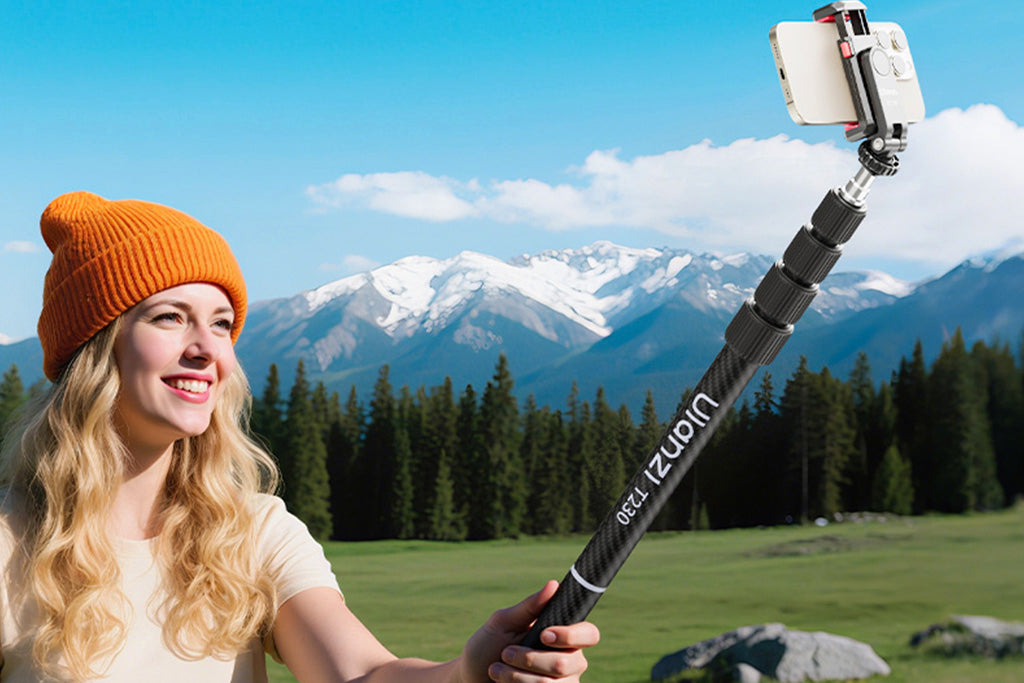
Travel creators often face the scrutiny of airline gate agents. The concept of "Visual Weight" is a strategic consideration in travel logistics. A compact carbon fiber tripod, often featuring a reverse-folding design, appears smaller and less "industrial" than its aluminum counterparts.
Airline Compliance
When navigating airport security, the modularity of the rig is paramount. Following IATA Lithium Battery Guidance is standard for batteries, but the tripod itself must fit within increasingly strict carry-on dimensions. A quality travel tripod should achieve a "packed length to height ratio" where it collapses to under 40cm while extending to over 150cm. Removing the center column—a common practice among stability-focused creators—further reduces weight and lowers the center of gravity, which is vital for maintaining balance in mobile rigs.
Engineering Standards: The Arca-Swiss Foundation
Stability is only as strong as its weakest link. For most creators, that link is the interface between the camera and the tripod head. The industry has converged on the Arca-Swiss Dovetail standard as the most reliable interface for preventing ecosystem lock-in and ensuring cross-platform compatibility.
Rigidity vs. Damping in Plates
It is important to note a critical technical distinction: while tripod legs benefit from carbon fiber's damping, Quick Release (QR) plates should remain precision-machined aluminum alloy (6061 or 7075). Aluminum provides the necessary rigidity and machining tolerances (zero-play) required for a secure lock. A carbon fiber QR plate would lack the surface hardness needed to withstand the high-pressure clamping forces of a ball head.
Practical Safety: The Pre-Shoot Workflow
To maximize the advantages of a carbon fiber system, creators should adopt a standardized safety protocol. Based on patterns observed in technical support and field repairs, most equipment failures are preventable through tactile and audible verification.
Pre-Shoot Safety Checklist
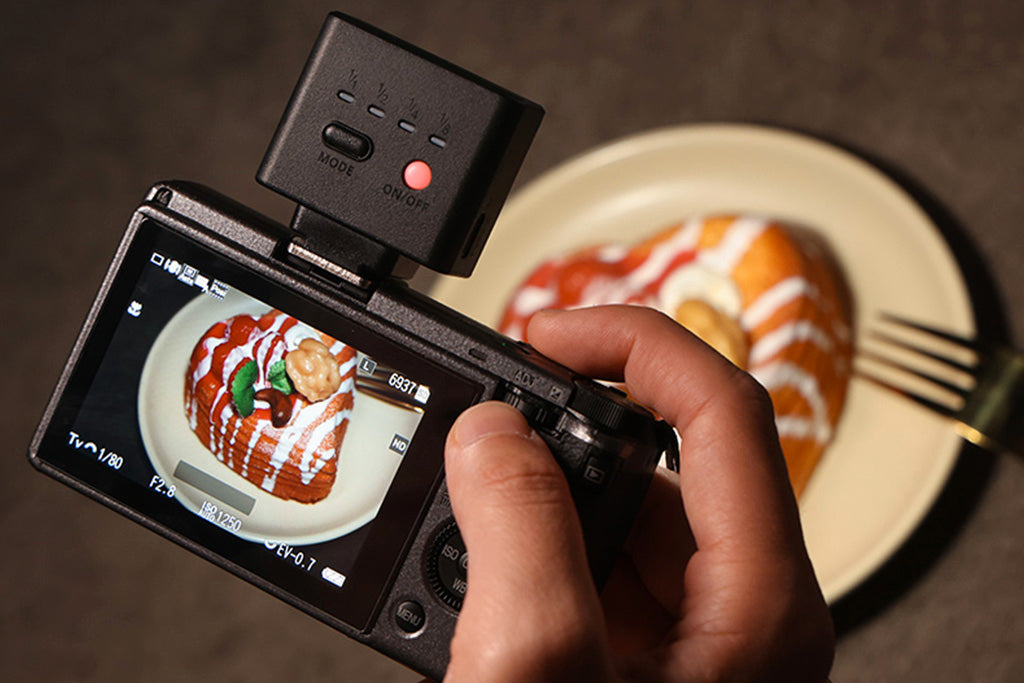
- Audible: Listen for the distinct "click" of the quick-release locking mechanism.
- Tactile: Perform a "Tug Test" (pull-test) by applying upward pressure on the camera rig once mounted.
- Visual: Check the locking pin indicator (often silver or orange) to ensure it is fully engaged.
- Cable Strain: Ensure heavy HDMI or SDI cables are secured using cable clamps. A hanging cable can create unwanted torque, potentially inducing instability in mobile rigs.
Modeling Note (Reproducible Parameters): Our stability estimates are based on a deterministic model with the following parameters:
| Parameter | Value / Range | Unit | Rationale |
|---|---|---|---|
| Payload Mass | 3 - 8 | kg | Standard mirrorless to cinema rig |
| Leg Diameter | 25 - 28 | mm | Prosumer travel tripod standard |
| Damping Factor ($\eta$) | 0.002 - 0.005 | - | Estimated for CFRP composites |
| Wind Speed | 5 - 10 | m/s | Typical outdoor shooting conditions |
| Surface Type | Rocky / Uneven | - | Worst-case vibration scenario |
Boundary Conditions: This model may not apply to ultra-light "tabletop" tripods or heavy-duty studio pedestals exceeding 20kg.
The Long-Term Infrastructure Investment
Choosing carbon fiber is a decision to prioritize the longevity of the creator's physical health and the technical quality of their output. While the upfront cost is higher, the fatigue life of carbon fiber far exceeds that of aluminum, which is prone to work-hardening and eventual cracking after thousands of setup cycles.
By understanding the underlying physics—from the damping loss factor to the biomechanics of wrist torque—creators can move past marketing hype and build a stable, modular infrastructure. In an industry where "the best camera is the one you have with you," the carbon fiber tripod ensures that when you arrive at your destination, you have the stability required to capture the vision at its highest possible fidelity.
Disclaimer: This article is for informational purposes only. When traveling with professional equipment, always consult specific airline and IATA guidelines regarding lithium batteries and oversized carry-on items. Proper maintenance of carbon fiber components is necessary to ensure safety and structural integrity.