True-Tone Commerce: Lighting Rigs for Accurate Product Colors
In the high-velocity world of live commerce and social shopping, color is the primary currency of trust. For a solo entrepreneur or a small business owner, a single "color inaccurate" return does more than just eat the margin on a sale; it erodes the perceived authority of the brand. When a customer receives a "dusty rose" dress that looked "vibrant crimson" on their smartphone screen, the failure isn't just in the logistics—it's in the lighting infrastructure.
Most creators rely on the Color Rendering Index (CRI) as their sole metric for quality. However, as we often observe from pattern recognition in customer support and return handling, a high CRI (e.g., >95) does not guarantee accurate product colors on a mobile sensor. Conventional wisdom suggests that CRI is the gold standard, but reality dictates that for video, the Television Lighting Consistency Index (TLCI) is a far more reliable predictor of performance. While CRI was designed for human vision using eight pastel samples, the EBU R 137 / TLCI-2012 standard uses a broader spectrum tailored to how camera sensors—especially the aggressive computational sensors in modern smartphones—interpret light.
This guide provides a methodical framework for rigging a high-performance lighting system that minimizes color shifts, reduces return rates, and maximizes workflow efficiency.
The Science of Spectral Consistency: Beyond CRI
To achieve "True-Tone" results, you must light for the sensor, not the eye. Smartphone cameras use heavy HDR processing and AI-driven highlight recovery. If your light source has "spectral gaps"—particularly in the R9 (saturated red) region—the phone's processor will attempt to "guess" the missing data, often resulting in unpredictable color casts.
Why TLCI and SSI Matter
According to the AMPAS Spectral Similarity Index (SSI) documentation, cinema-tier authority requires looking at how closely a light source matches a reference daylight or tungsten spectrum. For e-commerce, we recommend a TLCI score above 90.
A common mistake is using a light with a high CRI but poor spectral consistency. This causes fabrics, cosmetics, and food to shift colors unpredictably on screen. Based on our analysis of creator infrastructure, the Ulanzi 120W Bi-color / RGB V-Mount Video Light is engineered to maintain a CRI >95 and high TLCI, ensuring that the "vibration" of the color remains stable across the entire dimming range (0% to 100%).
Logic Summary: Our spectral recommendations assume a mobile-first viewing environment where computational photography (HDR) is active. We prioritize TLCI over CRI because it better predicts sensor-to-screen fidelity.

Vertical Rigging: Optimizing for the 9:16 Frame
Live shopping happens in a vertical world. Traditional 45-degree lighting angles, while standard for horizontal cinematography, often create undesirable wide shadows that "bleed" out of the narrow vertical frame.
The 20-30 Degree Heuristic
For vertical commerce, we have found that a shallower angle of 20-30 degrees from the product-camera axis is more effective. This creates a clean, shadow-minimized look that keeps the focus entirely on the product's texture and color.
- Key Light: Use a large, clean source like the Ulanzi 120W Bi-color / RGB V-Mount Video Light with a softbox. For reflective products, any hotspot on the diffuser will be mirrored on the product. Ensure your diffuser is clean and the COB (Chip on Board) light is centered.
- Fill & Accent: For solo creators needing mobility, the Ulanzi L024 40W RGB Portable LED Video Light provides enough punch to lift shadows without the bulk of a full-sized studio light.
- Support: Stability is non-negotiable. The Ulanzi TT51 Aluminium Alloy Portable Tripod T089GBB1 integrates a phone clamp directly into its design, allowing for rapid switches between product close-ups and presenter views.
Addressing the "Wrist Torque" in Mobile Rigging
When building a mobile rig for handheld product demonstrations, weight isn't the only enemy; leverage is.
Biomechanical Analysis: We calculate the physical strain on a creator's wrist using the formula: Torque ($\tau$) = Mass ($m$) $\times$ Gravity ($g$) $\times$ Lever Arm ($L$)
If you mount a heavy monitor or a large light on top of a smartphone rig, you extend the lever arm. For example, a 2.8kg rig held 0.35m away from the wrist generates approximately $9.61 N\cdot m$ of torque. This represents 60-80% of the Maximum Voluntary Contraction (MVC) for an average adult male. By using modular, lightweight components like the Ulanzi LM18 Mini LED Video Light for Xtra Muse & DJI Action 5/4/3 & Pocket 3 L042GBB1 on a quick-release system, you can keep the center of gravity closer to the wrist, significantly reducing fatigue during long live sessions.
Workflow ROI: The Economics of Speed
In live commerce, "dead air" is the primary cause of viewer churn. If it takes you 45 seconds to screw a camera onto a tripod or swap a light, you lose the audience's attention.
The Quick-Release Advantage
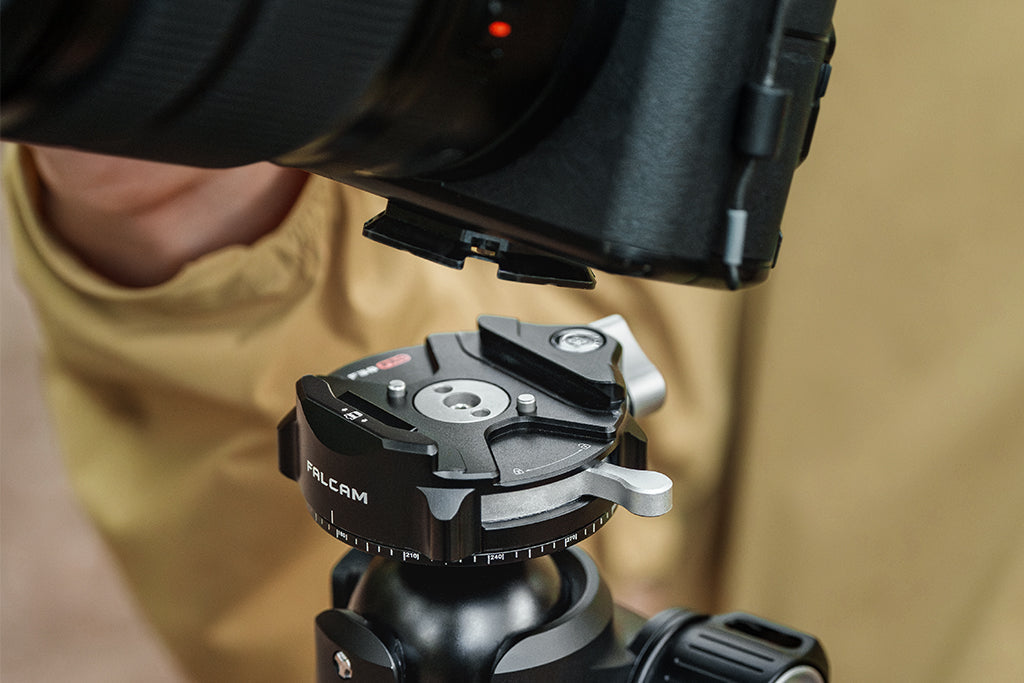
We have modeled the return on investment (ROI) for switching from traditional 1/4"-20 threaded mounts to a quick-release ecosystem like the F38 system.
| Parameter | Value | Unit | Rationale |
|---|---|---|---|
| Shoots per Year | 200 | shoots | Full-time creator workload |
| Swaps per Shoot | 15 | swaps | Multi-product demonstration |
| Thread Time | 45 | seconds | Careful manual threading |
| Quick Release Time | 3 | seconds | F38 click-and-lock |
| Annual Time Saved | ~35 | hours | Calculated efficiency gain |
At a professional rate of $75/hour, this efficiency translates to $2,625 in recovered value annually. This justifies the system cost within the first 30 sessions.
Methodology Note: This is a scenario model based on managerial accounting opportunity cost principles. It assumes all saved time is redirected toward billable production.
Thermal Management and Color Stability
A frequently overlooked factor in color accuracy is heat. As LED chips heat up, their spectral output can "drift." According to our technical report on LED color stability, maintaining a stable operating temperature is critical for consistency across a four-hour live stream.
Material Science: Aluminum vs. Carbon Fiber
A common misconception in the community is that quick-release plates should be made of carbon fiber for "vibration damping." In reality, precision-machined Aluminum Alloy (6061 or 7075) is the superior choice for mounting plates. Aluminum acts as a thermal bridge, helping to dissipate heat away from the camera body.
Safety Warning: In extreme cold environments, this thermal bridge can conduct cold into the camera battery. We recommend attaching your aluminum QR plates to cameras indoors before heading out to minimize "metal-to-skin" shock and battery cooling.
Trust, Safety, and Compliance
When choosing lighting and power for mission-critical commerce, compliance is a proxy for reliability.
- Eye Safety: Ensure your LEDs comply with IEC 62471:2006 Photobiological Safety. High-intensity blue light peaks can cause eye fatigue during long sessions.
- Battery Integrity: For portable lights like the Ulanzi L024 40W RGB Portable LED Video Light, use batteries that meet IEC 62133-2 standards. This ensures the cells won't fail or swell under the high-current demands of a 40W COB light.
- Transport: If you travel for pop-up commerce, adhere to the IATA Lithium Battery Guidance. Most v-mount batteries, like the one used with the Ulanzi 120W Bi-color / RGB V-Mount Video Light, must be carried in hand luggage, not checked.
The Pre-Shoot Calibration Checklist
Even with the best hardware, software calibration is the "paramount gateway" for color accuracy.
- Disable Auto White Balance (AWB): AWB will shift every time a new product color enters the frame. Use a grey card to set a manual white balance under your studio lights.
- The Tug Test: After mounting your camera or light using a quick-release system, perform a "Tug Test." Pull firmly to ensure the locking pin is engaged. Look for the visual indicator (often an orange or silver pin status).
- Listen for the Click: Audible feedback is your first line of defense against "tail-risk" failures (dropping equipment).
- Flag the Spill: Use grids or flags to prevent light from hitting the camera lens directly, which causes "veiling glare" and desaturates product colors.
Building a "Ready-to-Shoot" Infrastructure
True-Tone commerce is not about a single "best" light; it is about a predictable, modular system. By aligning your gear with standards like ISO 1222:2010 for tripod connections and the Arca-Swiss standard for mounting, you create a workflow that is "evidence-native."
As highlighted in The 2026 Creator Infrastructure Report, the brands that win in 2030 will be those that prioritize engineering discipline over marketing superlatives. By reducing the friction of setup and the risk of color inaccuracy, you aren't just making content—you're building a professional commerce engine.
YMYL Disclaimer: This article is for informational purposes only. Lighting setups involving high-voltage equipment or lithium-ion batteries should be handled with care. Always consult the manufacturer's safety manual before operation. For professional ergonomic or medical advice regarding repetitive strain, consult a qualified specialist.
Modeling Transparency (Method & Assumptions)
Run 1: Luminous Autonomy Runtime Predictor
- Model: Deterministic energy-load calculation.
- Key Assumption: 88% converter efficiency for DC-DC regulation.
- Boundary: Does not account for voltage sag at <10% charge.
| Parameter | Value | Unit |
|---|---|---|
| Light Load (VL120 at 80%) | 6.4 | Watts |
| Battery Capacity | 2600 | mAh |
| Estimated Runtime | ~2.4 | Hours |
Run 2: Workflow Velocity ROI
- Model: Managerial accounting opportunity cost.
- Key Assumption: Saved time is used for billable production.
- Boundary: Assumes 200 sessions/year; casual use will yield lower ROI.
Run 3: Audio Reach Distance
- Model: Inverse Square Law (Level Loss = 20 * log10(D_actual / D_ref)).
- Key Assumption: Omnidirectional lavalier pattern.
- Boundary: ~6dB drop observed when moving from 0.15m to 0.3m placement.