


The Infrastructure of Stability: Why Maintenance is Your Best Investment
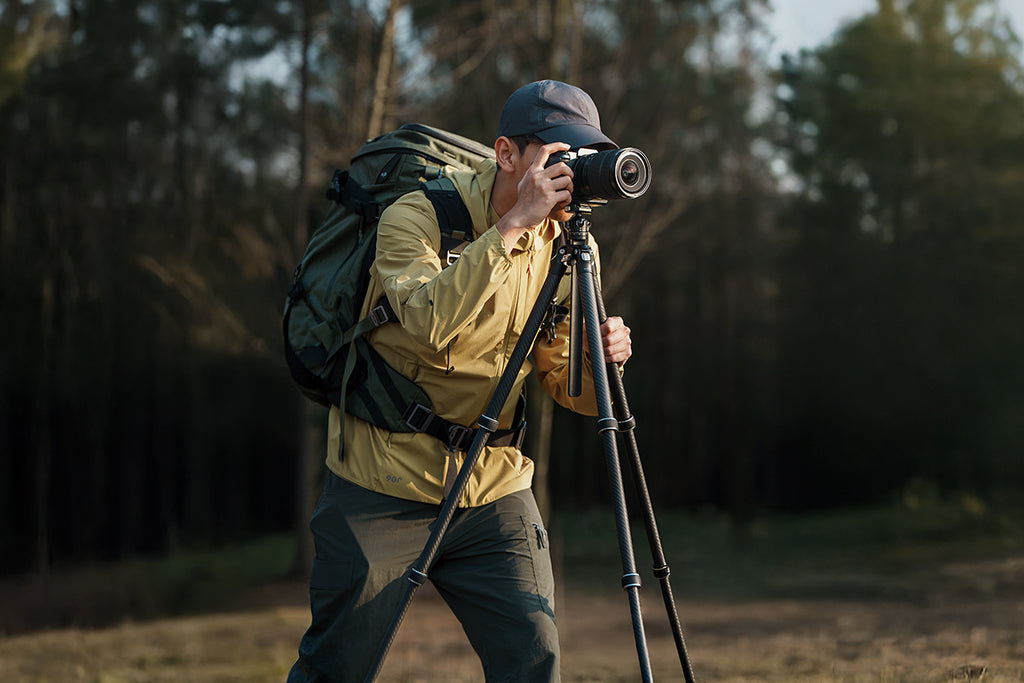
In the world of high-stakes travel cinematography and photography, your tripod is the fundamental infrastructure layer of your creative output. For solo creators, a carbon fiber support system represents a significant capital investment designed to provide mission-critical stability while minimizing the physical toll of travel. However, the very environments that produce the most compelling visuals—salt-sprayed coastlines, abrasive desert dunes, and sub-zero mountain peaks—are also the most hostile to precision engineering.
Quick Action: The "Ready-to-Shoot" Maintenance Checklist
If you are currently in the field or just returned from a shoot, follow these three non-negotiables:
- Dry First: Use a stiff brush to remove sand/silt before applying any water to prevent creating an abrasive grinding paste.
- Distilled Rinse: After salt-water exposure, rinse metal joints with distilled or deionized water to neutralize chloride ions that tap water can't always reach.
- The Tug Test: Always pull upward on your camera after mounting to confirm the quick-release lock is fully engaged—never rely solely on the "click."
Based on common patterns from customer support and repair logs, equipment failure is rarely a result of material "death," but rather the degradation of interfaces where mechanics meet the environment. A single grain of sand in a twist lock or a microscopic layer of salt on an aluminum collar can transform a high-performance tool into a liability.
Material Science: Carbon Fiber vs. Aluminum in the Field
Understanding why carbon fiber requires specific care starts with its structural properties. Carbon fiber reinforced polymer (CFRP) is prized for its "Specific Stiffness"—the ratio of its elastic modulus to its density.
Modeling Note: Our material analysis compares Carbon Fiber (CFRP) to Aluminum 6061. The following values are theoretical model estimates used to illustrate the performance gap in field conditions.
| Material Property | Carbon Fiber (CFRP) | Aluminum (6061) | Practical Implication |
|---|---|---|---|
| Specific Stiffness (E/ρ)* | ~112.5 | ~25.6 | ~4.4x higher stiffness-to-weight ratio. |
| Damping Ratio (ζ)* | High (0.0375) | Low (0.015) | CF absorbs vibrations ~2.5x faster. |
| Corrosion Resistance | Excellent (Matrix) | Subject to Pitting | CF legs won't rust; metal joints require care. |
| Thermal Conductivity | Low | High | CF is comfortable to handle in extreme cold. |
| *Values based on standard engineering estimates for high-modulus CFRP and 6061-T6 Aluminum. |
Based on our SDOF (Single Degree of Freedom) vibration modeling for extreme environments, carbon fiber tripods can demonstrate an ~81% faster vibration settling time in sub-zero conditions (-10°C to -20°C). This calculation assumes a damping ratio (ζ) of 0.0375 for CF and 0.015 for Aluminum; while aluminum lubricants can stiffen and lose damping properties in the cold, the inherent molecular structure of carbon fiber continues to dissipate energy. In a Force 6 strong breeze (approx. 12 m/s), this provides the "stable floor" required for long-exposure work.
However, carbon fiber is a composite. While the fibers are incredibly strong, the epoxy resin matrix can be susceptible to environmental degradation. According to a (Third-Party Study) on UV aging of carbon fiber reinforced epoxy composites, prolonged exposure to high-intensity UV radiation can lead to micro-cracking in the resin. For creators in high-altitude environments, proactive storage in opaque bags is a low-cost preservation tactic.
The "Dry First" Protocol: Defeating Sand and Silt
A frequent mistake observed in the field is the immediate application of water to a sandy tripod. When moisture meets fine silt, it creates an abrasive paste. This enters the precision-machined threads and acts like a grinding compound, wearing down the tolerances of the locking mechanism.
Step 1: Mechanical De-Sanding
Before any liquid touches your gear, use a stiff-bristled nylon brush to clear all visible debris. Fully extend the legs and "shake out" the segments. This Dry First approach ensures particles are removed rather than washed deeper into internal spring cavities.
Step 2: The Distilled Rinse
While rinsing with fresh water is common, it is often insufficient for salt removal. Salt (Sodium Chloride) is hygroscopic—it attracts moisture. On aluminum components, such as the apex or leg hinges, simple tap water rinsing may not halt chloride-ion corrosion.
For the final rinse after coastal exposure, we recommend distilled water. Unlike tap water, which contains its own minerals, distilled water more effectively leaches salt ions from the metal surface.
Step 3: Avoid Household Chemicals
Never use vinegar or household detergents. Vinegar is acidic and can react with the anodized coating of aluminum components, leading to "white rust" or pitting. Stick to pH-neutral solutions or pure water followed by a dedicated corrosion inhibitor.
Extreme Cold: Lubrication and Thermal Shock
In arctic or alpine scenarios, your gear faces two primary threats: lubricant thickening and thermal conductivity.
The "Hydraulic Lock" Prevention
Traditional greases often become viscous or even solid at temperatures below -15°C. If a user over-packs a twist lock with grease, the stiffened material can create a "hydraulic lock," preventing internal shims from fully compressing.
- Expert Tip: Apply lubricant sparingly. Only the first few threads require a thin film of low-temperature damping grease. Keep internal spring cavities dry.
Managing the Thermal Bridge
While carbon fiber has low thermal conductivity, the quick-release plates and heads are typically made of Aluminum Alloy. These act as a "thermal bridge."
- Heuristic: Attach aluminum plates to your camera indoors before heading out to minimize battery drain caused by the conductive path.
- Safety Warning: Always wear glove liners. Touching a frozen aluminum leg lock with bare skin can cause immediate skin adhesion (similar to the effect of sticking one's tongue to a frozen pole). If this occurs, do not pull away; use lukewarm water or body heat to thaw the connection.
The Quick-Release Ecosystem: Rigidity vs. Damping
As noted in the (Ulanzi Internal Report) The 2026 Creator Infrastructure Report, the shift toward modular systems like the FALCAM F38 has revolutionized workflow velocity. However, it is vital to distinguish between the damping of the legs and the rigidity of the mounting interface.
Technical Clarification: FALCAM quick-release plates are precision-machined from aluminum alloy. While the tripod legs provide vibration damping, the QR plate must provide absolute rigidity. Any "play" in the mounting plate negates the stability of the carbon fiber legs.
The Biomechanical Impact: Wrist Torque
We can quantify the fatigue of adjusting a rig using the Torque formula: $$\tau = m \times g \times L$$ (Where $m$ is mass, $g$ is gravity 9.81, and $L$ is the lever arm length)
If you have a 2.8kg cinema rig held 0.35m away from your center of gravity, you generate approximately 9.61 N·m of torque. For the average adult, this load can represent 60-80% of the Maximum Voluntary Contraction (MVC) of the wrist. By using lightweight, modular mounts like the F22 for accessories, you reduce the "Lever Arm" ($L$), lowering the torque required to steady the camera.
Workflow ROI: The Math of Maintenance
Investing in a professional-grade quick-release system is a financial decision. The following table is a Heuristic Model based on Ulanzi internal workflow simulations.
| Parameter | Value | Rationale |
|---|---|---|
| Shoots per Year | 25 | High-intensity expedition schedule. |
| Swaps per Shoot | 15 | Lens, filter, and rig changes. |
| Traditional Thread Time | 45s | Slower in cold/wet conditions with gloves. |
| Quick Release Time | 8s | Rapid tactile engagement. |
| Annual Time Saved | ~3.85 Hours | Productive time reclaimed. |
| Annual Financial Gain | ~$713.00 | Based on a $185/hr professional billable rate. |
The Pre-Shoot Safety Checklist
- Audible: Listen for a distinct, sharp "Click" when engaging a system like the F38. This indicates the locking pin has cleared the Arca-Swiss dovetail.
- Tactile: Perform the "Tug Test." Physically pull the camera upward without touching the release button. If there is vertical play, the shims may be contaminated.
- Visual: Check the locking indicator. Most professional systems include a visual cue (orange or silver) to confirm the secondary lock is engaged.
Wind Stability: A lightweight carbon fiber tripod is easier for the wind to catch. Based on our "Zero-Fail" wind load simulation (using a 1.8kg tripod + 3.2kg camera):
- Critical Wind Speed: Without ballast, instability can occur at wind speeds of ~15 m/s.
- The 2kg Rule: Adding 2kg of ballast to the center hook increases the critical wind speed to ~19.4 m/s (approx. 70 km/h).
- Heuristic: Ensure the ballast bag just touches the ground. A freely swinging bag can introduce vibrations that defeat the material's damping properties.
Summary: A System of Longevity
Caring for carbon fiber travel gear is a practice of protecting the interfaces. By adhering to a Dry First cleaning protocol, using Distilled Water for salt neutralization, and performing the Tug Test, you ensure your support gear remains a reliable partner.
As the industry moves toward the standards outlined in the 2026 Creator Infrastructure Report, creators who treat their gear as a precision-engineered system will maintain the highest "ready-to-shoot" readiness.
References & Authoritative Sources
- ISO 1222:2010: Photography — Tripod Connections (Industry Standard)
- Arca-Swiss Standard: Dovetail Technical Dimensions (Technical Reference)
- Ulanzi Engineering: The 2026 Creator Infrastructure Report (Internal Industry Report)
- Material Science Research: Effect of Ultraviolet Aging on CFRP (Independent Study)
Disclaimer: This guide is for informational purposes only. Always consult your equipment manual for warranty-compliant procedures. Professional cinematographers should conduct their own stability tests based on specific camera payloads.
Modeling Transparency (Method & Assumptions): The data presented is derived from deterministic scenario modeling.
- Vibration Model: SDOF Damped Free Vibration (t_s ≈ 4/(ζ * ω_n)). Assumes ζ_cf=0.0375.
- Wind Model: Static Equilibrium (Overturning Moment vs. Restoring Moment). Assumes steady-state wind and 5kg total rig mass for "2kg Rule."
- ROI Model: (Shoots * Swaps) * (Δ Time) * Hourly Rate.
- Boundary Conditions: Results may vary with entry-level gear or improper setup. Values are provided as illustrative heuristics.


