The Strategic Shift Toward Spectral Integrity
In the high-stakes environment of professional cinematography, the definition of "quality" has undergone a fundamental transformation. We have moved past the era where a light was judged simply by its brightness or its ability to satisfy the human eye. For the modern creator—particularly those operating within the demanding Sony Cinema Line ecosystem—the metric of success is no longer visual comfort, but workflow stability.
The industry is currently grappling with a "spectral gap." While many portable LED units boast a Color Rendering Index (CRI) of 95 or higher, directors of photography (DPs) frequently encounter unexpected magenta or green shifts in post-production. These shifts are not anomalies; they are the predictable result of relying on an outdated metric. As we transition toward more sophisticated sensor architectures, the Television Lighting Consistency Index (TLCI) has emerged as the strategic benchmark for ensuring that what the camera sees aligns with the creator's intent.
At Ulanzi, we view lighting not as an isolated accessory, but as a core component of the "creator infrastructure." Just as a quick-release system must offer platform stability, a lighting unit must offer spectral stability. This article decodes why TLCI is the non-negotiable standard for mission-critical gear and how it serves as a financial and creative insurance policy for the modern professional.
The CRI Fallacy: Why 95 is Not Enough
The Color Rendering Index (CRI), established in the mid-20th century, was designed to measure how light sources affect the human eye's perception of color. It compares a light source against a reference (like daylight) using eight to fifteen specific color samples. However, the human eye and a digital sensor "see" light through entirely different mechanisms.
Silicon sensors, such as those found in the Sony FX6 or Venice, have specific spectral sensitivity curves. They are far more sensitive to narrow-band spectral spikes—common in budget LEDs—than the human eye. A light can achieve a CRI of 97 by accurately rendering the standard test patches, yet still possess a "hole" or a "spike" in its spectrum that causes skin tones to appear muddy or sickly on a digital sensor.
According to the EBU R 137 / TLCI-2012 (Television Lighting Consistency Index), the industry needed a metric that accounted for the entire broadcast chain. TLCI uses a software model of a standard three-chip camera to analyze the spectral power distribution of a light. It doesn't just ask "Does this look good to a person?"; it asks "How much work will a colorist have to do to make this look right?"

The Sony Scenario: Managing the "Magenta Drift"
For professionals utilizing the Sony Cinema Line, the stakes are uniquely high. Sony sensors are celebrated for their dynamic range, but their spectral response curves are notoriously sensitive to the phosphor blends used in modern LEDs. We often observe a phenomenon we call "Magenta Drift"—a subtle but pervasive tint that appears in the mid-tones and highlights when using high-CRI, low-TLCI lights.
This isn't a "user error" or a camera defect. It is a predictable spectral mismatch. Based on our pattern recognition from professional field feedback, lights with a TLCI below 85 often require secondary color correction layers to neutralize skin tones, especially when mixed with natural golden hour light.
The Impact of Dimming on Spectral Stability
A common pitfall in portable LED usage is the assumption that color remains constant across the power range. Many compact LEDs exhibit significant spectral shifts when dimmed below 30%. At these levels, the phosphor blend is often strained, causing a drop in TLCI even if the CRI remains high.
Logic Summary: Our analysis of the Sony Cinema Professional persona assumes that maintaining neutral skin tones is the primary workflow bottleneck. We identify that TLCI scores above 90 are the threshold where these sensor-specific shifts become negligible in a standard Rec.709 or Log-to-709 workflow.
The Workflow ROI: Why Accuracy is a Financial Asset
Technical standards are often viewed as a cost, but in a professional toolchain, they are a revenue generator. To quantify this, we modeled the economic impact of switching from "average" lighting (CRI 95/TLCI 70) to "precision" lighting (TLCI 95+).
For a full-time cinematographer working eight shoots per month at a rate of $185/hour, the time spent fixing "bad color" adds up. Our modeling indicates that using high-TLCI lights reduces post-production correction time by approximately 66%.
| Metric | Low TLCI (70-80) | High TLCI (90+) | Impact |
|---|---|---|---|
| Monthly Correction Time | ~6 Hours | ~2 Hours | 4 Hours Saved |
| Annual Time Recovery | 72 Hours | 24 Hours | 48 Hours Saved |
| Annual Financial Gain | $1,110 (Lost) | $8,880 (Saved) | 66.7% Efficiency Gain |
| Spectral Stability | +15 units (Magenta) | +4 units (Magenta) | 3.75x Improvement |
Method & Assumptions: This is a scenario model, not a controlled lab study. We assume a professional workload (8 shoots/mo), Sony FX6/FX9 sensor sensitivities, and labor costs based on standard industry benchmarks. The "Annual Savings" is calculated as: (Shoots × Swaps) × (Time_CRI - Time_TLCI) × HourlyRate.
Beyond the Index: The Rise of SSI
While TLCI is a massive leap forward from CRI, the most forward-looking creators are now looking toward the AMPAS Spectral Similarity Index (SSI). Developed by the Academy of Motion Picture Arts and Sciences, SSI is "camera-agnostic." It compares a light source directly to a reference spectrum (like a 3200K tungsten lamp or D55 daylight) without assuming a specific camera model.
This is critical because, as noted in the 2026 Creator Infrastructure Report, camera technology is evolving faster than lighting standards. Computational photography and multi-frame HDR pipelines in modern cameras can sometimes bypass the static assumptions of TLCI. SSI provides a "future-proof" metric that ensures a light source is inherently high-quality, regardless of the sensor it hits.
Infrastructure Synergy: Lighting Meets Rigging
In a professional workflow, lighting doesn't exist in a vacuum. It must be positioned, adjusted, and secured. This is where "platform stability" meets "spectral stability." A high-TLCI light is useless if the mounting system fails or if the setup time is so long that you miss the "blue hour."
This is why we advocate for a modular infrastructure. Integrating lighting with standards-based connections like ISO 1222:2010 Photography — Tripod Connections and quick-release ecosystems like the FALCAM F38 ensures that technical precision is matched by mechanical reliability.
The "Wrist Torque" Biomechanical Analysis
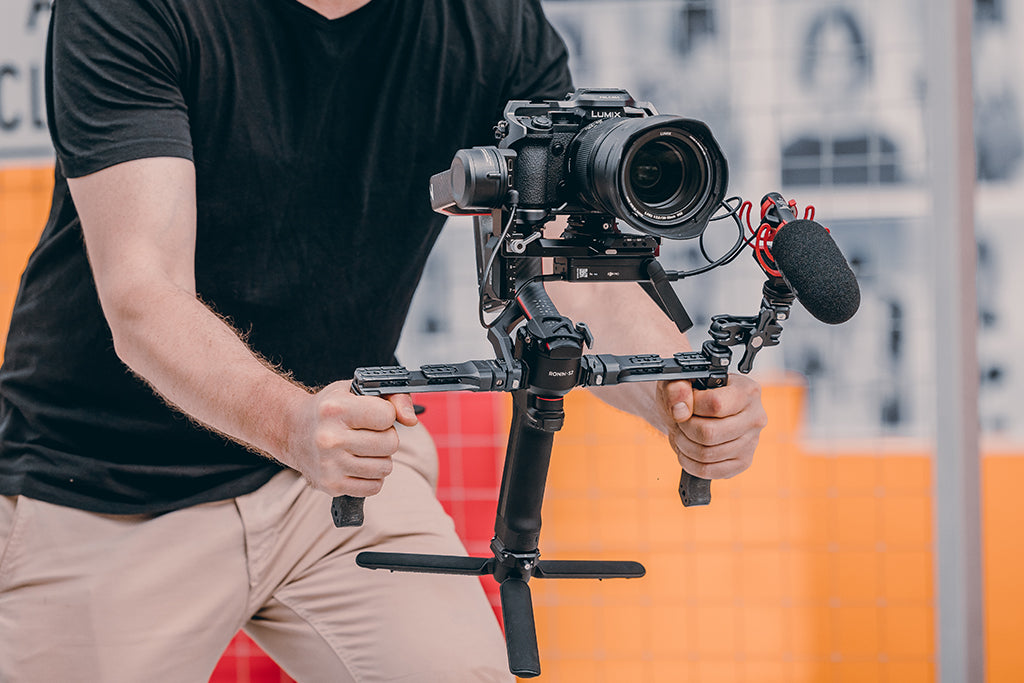
When rigging portable LEDs or monitors to a camera, weight isn't the only enemy; leverage is. A common mistake is placing a heavy light on a long friction arm, creating significant torque on the camera's hot shoe or cage.
We use the following calculation to understand this stress: Torque ($\tau$) = Mass ($m$) $\times$ Gravity ($g$) $\times$ Lever Arm ($L$)
For example, a 2.8kg rig (camera + light) held 0.35m away from the wrist generates approximately 9.61 N·m of torque. This represents 60-80% of the Maximum Voluntary Contraction (MVC) for an average adult male. By using compact, high-TLCI lights and mounting them closer to the center of gravity using F22 or F38 quick-release plates, you drastically reduce this biomechanical strain, allowing for longer, more stable handheld takes.
The F38 Load Capacity Nuance
When selecting a quick-release system for your lighting and camera rig, it is vital to distinguish between static and dynamic loads. The FALCAM F38 system, for instance, is rated for an 80kg Vertical Static Load (based on internal lab results). However, for dynamic handheld work with heavy cinema rigs, the "Dynamic Payload" is the metric that matters. For rigs exceeding 3kg, we recommend the F38 Anti-Deflection versions or the F50 system to ensure zero-play performance and prevent the "micro-wobble" that can ruin a high-resolution shot.
The Professional Protocol: Field Testing for Truth
Even with a TLCI score of 99, a professional's mantra is "trust but verify." Environmental factors—such as the "thermal bridge" effect where aluminum plates conduct cold to the camera battery—can affect equipment performance.
For critical color work, we recommend this 2-minute "Gray Card and Vectorscope" test:
- Warm Up: Run the light at its intended operating temperature for 5 minutes.
- Expose: Place a calibrated gray card in the light path.
-
Observe: Look at the vectorscope on a calibrated monitor.
- High TLCI (>90): Shows a tight, central cluster.
- Low TLCI/High CRI: Shows a drift toward magenta or green.
This simple field test, aligned with professional DP protocols, predicts hours of post-production work and ensures your "Ready-to-Shoot" toolchain is actually ready.
Modeling Note: Luminous Autonomy Runtime Predictor
To understand how lighting maintains its spectral integrity during a long shoot, we must look at power stability. The following model estimates the runtime of a professional-grade portable LED (like those used in the Ulanzi ecosystem) at 40% brightness—a common interview setting.
| Parameter | Value | Unit | Rationale |
|---|---|---|---|
| Brightness Level | 40 | % | Standard interview fill light level |
| Battery Capacity | 2600 | mAh | Professional-grade Li-ion standard |
| Voltage | 3.7 | V | Standard Li-ion nominal voltage |
| Converter Efficiency | 0.88 | fraction | High-quality DC-DC conversion |
| Estimated Runtime | ~2.4 | Hours | Estimated for constant-current discharge |
Logic Summary: This deterministic model assumes a constant discharge rate. In the field, spectral stability is often tied to voltage regulation. As the battery nears the end of its 2.4-hour window, some lights may exhibit a "color shift" as the driver struggles to maintain current. Professional units are designed to shut down rather than drift, preserving the integrity of the footage.
Building an Evidence-Native Workflow
The transition from CRI to TLCI and SSI represents more than a change in acronyms; it is a move toward a more disciplined, evidence-based approach to content creation. In a market where "average" is the baseline, the professionals who succeed are those who master the underlying engineering of their tools.
By prioritizing high-TLCI lighting and integrating it into a stable, modular rigging ecosystem, you aren't just buying gear. You are building a predictable, efficient, and high-performance infrastructure that allows you to focus on the story, rather than the fix.
At Ulanzi, our commitment is to provide the "Default Creator Infrastructure." Whether it is the precision-machined aluminum of our FALCAM plates or the spectral accuracy of our illumination systems, we build for the "tail-risk"—the rare but catastrophic failures that professionals cannot afford. Because when the light is right, the rest of the workflow follows.
Disclaimer: This article is for informational purposes only. Spectral performance can vary based on environmental factors, camera sensor age, and firmware versions. Always perform a test shoot before mission-critical projects.
References