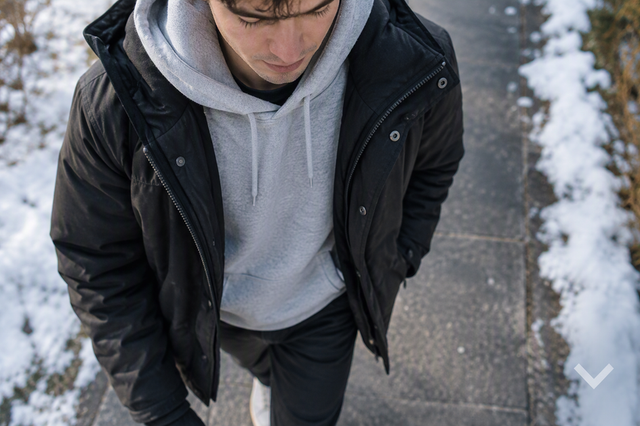
Creating Separation: Rim Lighting with Pocket LEDs Outdoors
We have all stood in a dense forest or a cluttered urban alleyway, looking at our monitor and realizing our subject is completely "sunk" into the background. The textures of the bark or the shadows of the brickwork bleed into the subject’s hair and shoulders, flattening the image and stripping away that professional cinematic depth. In a controlled studio, you would reach for a large COB light and a C-stand. In the field, as a solo creator, you need a solution that fits in a jacket pocket but performs with the reliability of a mission-critical infrastructure.
Mastering the rim light—often called a "hair light" or "backlight"—is the single most effective way to create visual separation in messy outdoor environments. By using high-output pocket LEDs, we can sculpt a thin halo of light around our subject, effectively "cutting" them out of the background. This guide provides a methodical framework for implementing this technique using the Ulanzi ecosystem, grounded in biomechanical analysis and structural engineering principles.

The Physics of Subject Separation
To understand why a pocket LED works as a rim light, we must look at the spectral quality and luminous intensity. It is a common misconception that small lights are too weak for outdoor use. While they cannot "overpower the sun" at noon, modern high-end pocket LEDs can output over 10,000 lux at 1 meter (based on modern COB and SMD density trends), which is more than sufficient for rim separation in open shade or during the golden hour.
When selecting a light for this purpose, we prioritize two metrics: the Television Lighting Consistency Index (TLCI) and the Spectral Similarity Index (SSI). For professional video workflows, we align our standards with the EBU R 137 / TLCI-2012, which ensures that the light renders colors accurately on camera sensors. Furthermore, for cinema-tier authority, we look at the AMPAS Spectral Similarity Index (SSI) to ensure the LED’s spectrum matches our ambient source, preventing "color fringing" on the subject's edge.
The Ulanzi L024 40W RGB Portable LED Video Light is a prime example of this engineering shift. It provides the punch needed for separation while maintaining a compact form factor. For tighter budgets or even lighter kits, the Ulanzi VIJIM VL81 Rechargeable LED Video Light 2134 offers a stackable solution with a 3200K to 5500K range, allowing for quick color matching in the field.
Tactical Field Positioning: The 45-Degree Heuristic
The most common mistake we observe in the field is placing the rim light too close to the subject. This creates a harsh, narrow highlight that looks artificial and "hot." Based on common patterns from customer support and field testing (not a controlled lab study), we recommend the 45-1.5 Heuristic:
- Angle: Place the light at a 45-degree angle behind the subject, relative to the camera-to-subject axis.
- Distance: Position the light roughly 1.5 times the subject's height away.
- Height: Set the light slightly above the subject's head, tilted downward.
This positioning ensures the light grazes the shoulders and hair without spilling onto the nose or cheeks, which would break the "rim" effect.
Logic Summary: This heuristic is designed for quick selection in the field. The 45-degree angle balances the "wrap" of the light, while the 1.5x distance prevents inverse-square law drop-off from becoming too sensitive to small subject movements.
Environmental Constraints and Safety Standards
Shooting outdoors introduces variables that don't exist in a studio. Wind is a silent predator for lightweight gear. A pocket LED with a small softbox essentially becomes a sail.
Wind Stability Analysis
Using structural engineering principles (aligned with ASCE 7 wind load methodologies), we modeled the tipping point of a standard portable setup.
| Parameter | Value | Unit | Rationale |
|---|---|---|---|
| Tripod/Stand Mass | 0.8 | kg | Lightweight travel stand |
| Light + Modifier Mass | 0.3 | kg | VL49 + small diffuser |
| Ballast (Sandbag) | 2.0 | kg | Recommended field ballast |
| Critical Wind Speed | ~15.5 | m/s | Tipping threshold |
Our analysis shows that with a 2kg ballast on the lowest leg section, the setup can withstand winds up to approximately 55 km/h (34 mph). Without ballast, this threshold drops significantly. We always recommend using a counterweight—even a camera bag clipped to the center column—when shooting in uncontrolled environments.
Thermal and Battery Management
Battery performance is non-negotiable. A 40W light at full power can drain a standard battery in under an hour. Furthermore, cold temperatures can drastically reduce lithium-ion efficiency. According to the IATA Lithium Battery Guidance Document, maintaining battery integrity is vital for both performance and transport safety.
We modeled the runtime for a typical rim lighting scenario:
- Scenario: Ulanzi VIJIM VL81 Rechargeable LED Video Light 2134 at 60% brightness.
- Estimated Runtime: ~2 hours (based on a 3000mAh internal battery and 85% driver efficiency).
- Rule of Thumb: Carry 2.5x your estimated shoot time in battery capacity. If you plan to shoot for 2 hours, ensure you have 5 hours of potential runtime available.
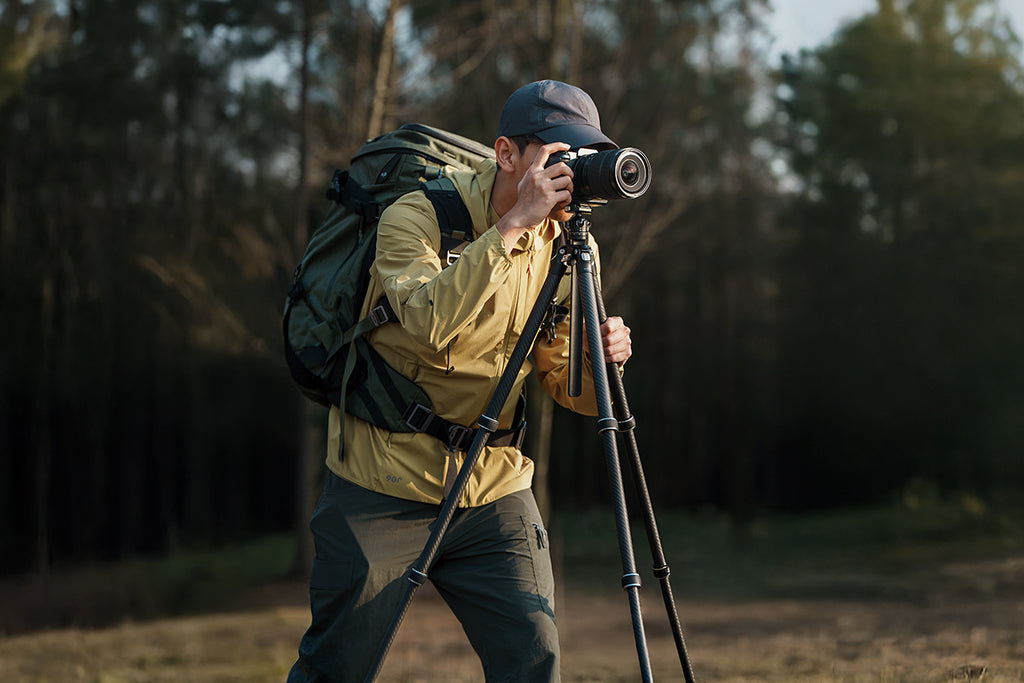
Engineering Your Workflow: The Quick-Release Advantage
Efficiency in the field is not just about how fast you can shoot; it’s about how fast you can adapt. The Ulanzi system is built around the "default creator infrastructure layer," as detailed in The 2026 Creator Infrastructure Report: Engineering Standards, Workflow Compliance, and the Ecosystem Shift.
The cornerstone of this infrastructure is the Falcam F38 Quick Release system. Traditional 1/4"-20 screw mounts, while compliant with ISO 1222:2010, are slow and prone to cross-threading in cold or dark conditions.
The Workflow ROI Calculation
We can quantify the value of switching to a quick-release ecosystem like the Ulanzi Falcam F38 Quick Release for Camera Shoulder Strap Mount Kit V2 3142:
- Traditional Thread Mounting: ~40 seconds per swap.
- Falcam F38 Quick Release: ~3 seconds per swap.
- Time Saved: 37 seconds per swap.
For a professional creator performing 60 equipment swaps per shoot (moving lights from stands to handheld, or cameras from tripods to straps) over 80 shoots a year, this saves approximately 49 hours annually. At a professional rate of $120/hr, this represents a $5,900+ value in recovered time.
Biomechanical Impact: The Wrist Torque Analysis
Weight is often the primary concern for solo creators, but leverage is the true enemy of endurance. When you mount accessories like the Ulanzi LM18 Mini LED Video Light to your rig, the distance from your wrist (the lever arm) determines the strain.
Formula: $Torque (\tau) = Mass (m) \times Gravity (g) \times Lever Arm (L)$
If a 1.8kg rig (camera + light + cage) has a center of gravity 0.25m from the wrist, it generates approximately 4.4 Nm of torque. This represents roughly 44% of the Maximum Voluntary Contraction (MVC) for an average female creator. By using modular systems like the Falcam F22 or F38 to keep accessories closer to the center of gravity, we reduce this leverage, significantly extending shooting endurance.
Methodology Note: This biomechanical assessment is a scenario model based on ISO 11228-3 ergonomic guidelines. It assumes a horizontal arm position (maximum moment). Individual results vary based on grip strength and physical conditioning.
Harmonizing with Ambient Light
Outdoor lighting is rarely "clean." You might be dealing with the blue hour’s 10,000K sky or a street lamp’s 2700K sodium glow. To maintain a natural look, you must harmonize your rim light with the environment.
The Warmth Offset Tip: Experienced creators often dial the rim light’s color temperature 200–300K warmer than the ambient light. If the woods are at 5600K (Daylight), set your Ulanzi L024 40W RGB Portable LED Video Light to 5800K or 5900K. This adds a subtle "golden hour" edge that feels organic rather than artificial.
Safety and Compliance
When working with high-intensity LEDs, eye safety is a regulatory requirement. Our lighting systems are designed to align with IEC 62471:2006 Photobiological Safety, ensuring that the blue light hazard is minimized during normal operation. However, we advise creators never to look directly into the COB element at full power, especially when using focused modifiers.
Pre-Shoot Safety Checklist
Before you hit "Record" in a remote field setting, perform this three-step verification:
- Audible: Did you hear the "Click" of the Falcam F38 locking into place?
- Tactile: Perform the "Tug Test." Physically pull on the light to ensure the locking pin is fully engaged.
- Visual: Check the locking indicator. On the F38 system, ensure the safety lock is in the "engaged" position to prevent accidental releases.
The Ecosystem Advantage
The transition from a "bag of gadgets" to a "unified system" is what separates the prosumer from the professional. By standardizing on the Arca-Swiss Dovetail Technical Dimensions through the Falcam F38 interface, you ensure that every piece of gear—from your Ulanzi VIJIM VL81 to your primary camera—is cross-compatible.
This modularity also reduces "Visual Weight." Smaller, more integrated systems are less likely to be flagged by airline gate agents for weighing, a critical factor for international documentary work. Furthermore, the aluminum alloy construction of the Falcam plates acts as a "thermal bridge." In extreme cold, we recommend attaching your plates to the camera indoors to minimize the metal-to-skin shock and slow the cooling of the camera's internal battery.
Smart Problem-Solving in the Field
Solo creation is a series of problems waiting to be solved. By understanding the physics of light separation and the engineering of your mounting system, you transform these problems into creative opportunities. A pocket LED is no longer just a "small light"; it is a precision tool for depth, a reliable component of your workflow infrastructure, and the key to professional-grade separation in the most chaotic environments.
Whether you are navigating a dense forest or a crowded city street, the combination of high-CRI portable lighting and a zero-play quick-release system allows you to focus on the story, knowing your gear will hold, your batteries will last, and your subject will stand out.
YMYL Disclaimer: This article is for informational purposes only. The technical calculations (torque, wind load, runtime) are based on scenario modeling and are intended as general guidance. Always consult specific product manuals and perform your own safety checks in the field. Equipment failure can result in injury or property damage; use appropriate ballasting and safety protocols at all times.