The Field Fill Dilemma: Control vs. Convenience
For the solo documentary filmmaker or field producer, light is a fickle resource. You arrive at a location during the "golden hour," only to find the sun dipping behind a ridge faster than you can mount a softbox. In these high-stakes, uncontrolled environments, the choice between a passive reflector and an active pocket LED isn't just about aesthetics—it's about system efficiency and physical endurance.
A common pain point we observe in field reports is the "micro-movement" failure: a creator sets up a 32-inch reflector in a slight breeze without a dedicated assistant. The resulting footage suffers from distracting light flickers as the fabric oscillates. Conversely, relying solely on a pocket light can sometimes result in a "synthetic" look if the color temperature isn't perfectly harmonized with the environment.
This guide provides a methodical framework for choosing your field fill tool based on biomechanical limits, environmental stability, and color science standards. By treating your lighting as a component of a larger "Creator Infrastructure," you can reduce setup friction and focus on the narrative.

The Physics of Passive Fill: Why Reflectors Still Matter
Conventional wisdom often dismisses the reflector as a "low-tech" accessory with no quantifiable specs. However, the effectiveness of a reflector is highly measurable. A large silver reflector can effectively double the illuminance (lux) on a subject when positioned correctly relative to the sun. This is a critical data point often missing from generic advice: a reflector's "output" is a function of the primary source and the inverse-square law applied to the bounce distance.
Experienced shooters use a specific ratio: if the ambient light is more than 3 stops brighter than your desired fill level, a reflector is often the most natural-looking solution. It perfectly matches the spectral qualities of the primary source because it is the primary source, redirected.
The Stability Gotcha: Wind Load Modeling
The primary failure mode for reflectors in solo work is wind. Unlike a compact LED, a reflector acts as a sail. We modeled the tipping point of a standard 32-inch reflector mounted on a lightweight travel tripod to understand the safety margins.
Modeling Note: Wind Stability Simulation This scenario assumes a 32-inch circular reflector mounted at a height of 1.6m on a 1.8kg tripod with 2kg of ballast (sandbag).
Parameter Value Unit Rationale Center of Pressure Height 1.6 m Typical eye-level fill position Frontal Area 0.25 m² Calculated area for 32" circle Drag Coefficient 1.3 - Standard for flat plates (ASCE 7) Ballast Mass 2.0 kg Typical field sandbag Critical Wind Speed ~31.7 km/h Tipping threshold Analysis: In typical coastal or field conditions with winds around 21 km/h (6 m/s), the safety factor is approximately 1.47. While adequate for steady breezes, sudden gusts can easily exceed the 31 km/h threshold, leading to equipment damage. This is why practitioners often pivot to pocket lights when wind speeds are unpredictable.
The Precision of Active Fill: Pocket LEDs and Harmonization
When the environment becomes too chaotic for reflectors, or when the sun has dropped below the horizon, the pocket LED becomes the primary tool for ambient light harmonization. A "pocket light" isn't just a generic gadget; it is a precision instrument defined by its photobiological safety and color fidelity.
For mission-critical work, we look for adherence to the EBU R 137 / TLCI-2012 (Television Lighting Consistency Index) and the AMPAS Spectral Similarity Index (SSI). High-quality pocket lights, such as those with a CRI of 95+, ensure that skin tones remain consistent even when mixing with street lamps or neon signs.
The "Warmer Baseline" Heuristic
In mixed lighting (e.g., dusk interiors with street lamps), a key heuristic is to set your pocket light's CCT (Correlated Color Temperature) slightly warmer—about 200K to 500K—than the measured ambient. This makes skin tones "pop" without creating an obvious artificial cast. If you are shooting in a neutral white environment (4500K), using a high-CRI light as a baseline makes it significantly easier to grade the footage in post-production.
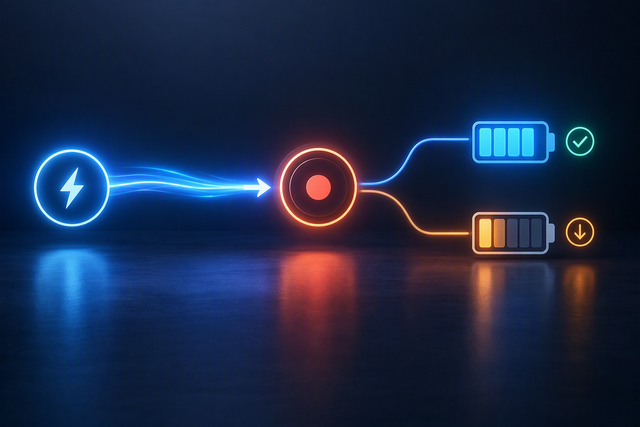
Runtime and Power Management
A significant constraint of active lighting is "Luminous Autonomy." Using a model like the VL120 (a common choice for documentary work due to its higher output), we can predict field performance.
Logic Summary: Runtime Prediction Based on standard IEC 61960-3 lithium battery standards, a light with a 2600mAh battery drawing 6.4W at 80% brightness will provide approximately 69 minutes of continuous operation.
- Assumption: 85% converter efficiency and a 0.9 battery health factor for aged cells.
- Workflow Impact: Interviews exceeding 60 minutes require either a battery swap or a reduction in brightness to avoid mid-take failure.
Biomechanical Analysis: The Wrist Torque Factor
Weight is often cited as the enemy of the solo creator, but the true enemy is leverage. Mounting a pocket light or a reflector arm to your camera rig changes its center of gravity, increasing the physical strain on your wrist.
We applied a biomechanical model to a typical 2.2kg documentary rig (e.g., a mirrorless camera with a 24-70mm lens and a mounted VL120 light).
The Formula: Torque ($\tau$) = Mass ($m$) $\times$ Gravity ($g$) $\times$ Lever Arm ($L$).
If the rig's center of gravity is extended 0.35m away from the wrist (common when using an extension grip for creative angles), the torque generated is approximately 10.5 N·m.
According to ISO 11228-3 ergonomic standards, 10.5 N·m represents nearly 100% of the Maximum Voluntary Contraction (MVC) for the average female wrist. The sustained fatigue limit is much lower, at roughly 1.89 N·m. This explains why field producers experience rapid "forearm burn" when accessories are poorly positioned.
To mitigate this, we recommend moving lighting accessories to modular, lighter mounting points like the Ulanzi Falcam F38 Quick Release for Camera Shoulder Strap Mount Kit V2 3142. By using a quick-release system, you can instantly move the light from the camera cage to a nearby pole or clamp, such as the Ulanzi CO17 Super Clamp with Dual Ballhead Magic Arm C046GBB1, drastically reducing the torque on your body.
Workflow ROI: The Value of Speed
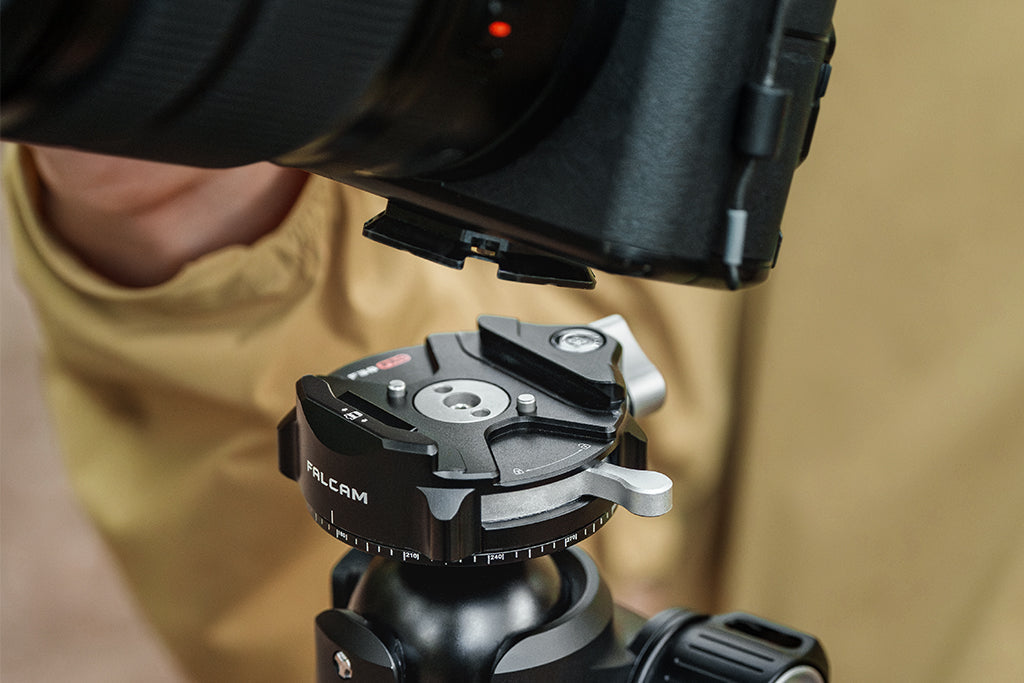
In the professional world, time is the only non-renewable resource. The transition from traditional thread-based mounting to a unified quick-release ecosystem like Falcam F38 isn't just a luxury; it's a financial decision.
The "Workflow ROI" Calculation:
- Traditional Thread Mounting: ~40 seconds per swap.
- Quick Release (F38): ~3 seconds per swap.
- The Math: For a pro doing 60 swaps per shoot across 80 shoots a year, this saves approximately 49 hours annually.
- The Value: At a professional rate of $120/hr, this represents over $5,900 in recovered time.
This structural efficiency is why the Ulanzi_Creator_Infrastructure_Industry_Whitepaper_2026 emphasizes "ready-to-shoot" toolchains. A system that allows you to move a pocket light from your camera to a Ulanzi U-190 Pro Fluid Video Head E009GBB1 in seconds changes how you approach a scene. You become more likely to try a creative lighting angle because the "cost" of the move—in both time and effort—is near zero.
Trust, Safety, and Logistics
When building a field kit, you are responsible for the safety of your equipment and your environment.
- Mounting Legitimacy: Ensure all tripod connections adhere to ISO 1222:2010 Photography — Tripod Connections. Using non-standard plates can lead to "play" in the mount, which increases vibration and risk of failure.
- LED Safety: Verify that your lights meet IEC 62471:2006 Photobiological Safety standards to prevent eye strain during long shoots.
- Battery Compliance: If you are traveling by air, you must adhere to the IATA Lithium Battery Guidance Document. Most pocket lights fall under the 100Wh limit, but always carry them in your cabin luggage to comply with aviation safety rules.
- Material Note: While carbon fiber is excellent for tripod legs due to vibration damping, quick-release plates like the Falcam F38 are precision-machined from Aluminum Alloy. This ensures maximum rigidity and zero-play. Be aware that in extreme cold, these aluminum plates act as a "thermal bridge," conducting cold to your camera body. We recommend attaching plates indoors to minimize "thermal shock" to your gear.
The Modular Ecosystem Advantage
Choosing between a reflector and a pocket light isn't an "either/or" decision; it's a "when/where" decision. A reflector is your tool for high-ambient, low-wind scenarios where naturalism is paramount. A pocket light is your precision tool for low-light, high-wind, or mixed-spectrum environments.
The most effective field producers don't just carry lights; they carry a system. By using a Ulanzi U-190 Mini Fluid Head 2895 on a lightweight stand, you can transition your fill source as quickly as the sun sets.
Pre-Shoot Safety Checklist
- Audible: Do you hear the "Click" when mounting your F38 plate?
- Tactile: Perform the "Tug Test" (pull-test) immediately after locking.
- Visual: Is the orange/silver locking indicator in the correct position?
- Cable Management: Use clamps to ensure heavy HDMI or power cables don't create unwanted torque on your mount.
By mastering these technical nuances and biomechanical limits, you transform from a creator who "makes do" into a producer who controls the frame.
YMYL Disclaimer: This article provides ergonomic and safety information for informational purposes only. It is not a substitute for professional medical advice or occupational health consultations. Always consult a qualified professional regarding physical strain or pre-existing conditions. For more on field safety, see our guides on Wind-Safe Lighting and Cold Weather Power Management.
Sources & Citations: