The Post-Shoot Reality: Why "Drying It Off" Is Often Insufficient
We have all been there: a high-stakes production in a sudden downpour where the priority is capturing the shot, not pampering the gear. You return to the studio, wipe down the camera body, and perhaps towel-dry the tripod legs. However, for professional creators relying on modular infrastructure like the FALCAM system, the most critical vulnerability often isn't the large surfaces—it's the microscopic interfaces within your quick-release (QR) mechanisms.
Rainwater is rarely just $H_2O$. It carries particulate matter, atmospheric pollutants, and—in coastal environments—microscopic salt crystals. When this mixture enters the precision-machined tolerances of an Arca-Swiss standard clamp or a quick-release plate, it can trigger a degradation process. If left unaddressed, this may lead to "crunchy" locking pins, oxidized springs, and potentially a mechanical failure.
This guide outlines a methodical, production-grade recovery protocol based on common maintenance patterns observed in professional workshops. We will move beyond generic cleaning and dive into the biomechanics of workflow, the physics of ingress, and the specific chemical requirements for maintaining aluminum-alloy mounting systems.
The Ingress Protection (IP) Myth in Production Gear
A common misconception among prosumers is that gear marketed as "weather-resistant" is entirely immune to rain. According to the IP Code (IEC 60529), ratings are specific and non-cumulative. For instance, a device rated IPX7 (immersion) may not necessarily pass an IPX6 test (high-pressure water jets), which is often what wind-driven rain simulates.
In the context of quick-release systems, water ingress is frequently a result of dynamic pressure and capillary action. When rain hits a mounting plate under wind pressure, it can be forced past seals or into the ball detent spring cavity.
Logic Summary: Our analysis of moisture trap points assumes standard Arca-Swiss dovetail geometry and typical spring-loaded locking pin tolerances. Based on maintenance experience, we observe that grit often acts as a bridge, potentially compromising the seal's integrity before the water even arrives.
The Risk of Grit and Dynamic Pressure
When grit or sand enters the interface, it acts as an abrasive. As you slide a plate into a clamp, this grit can score the anodized surface of the aluminum. Once the protective oxide layer is breached, moisture trapped in these micro-scratches can accelerate corrosion. This is why a simple wipe-down is often insufficient; the contaminants should be chemically and mechanically displaced.
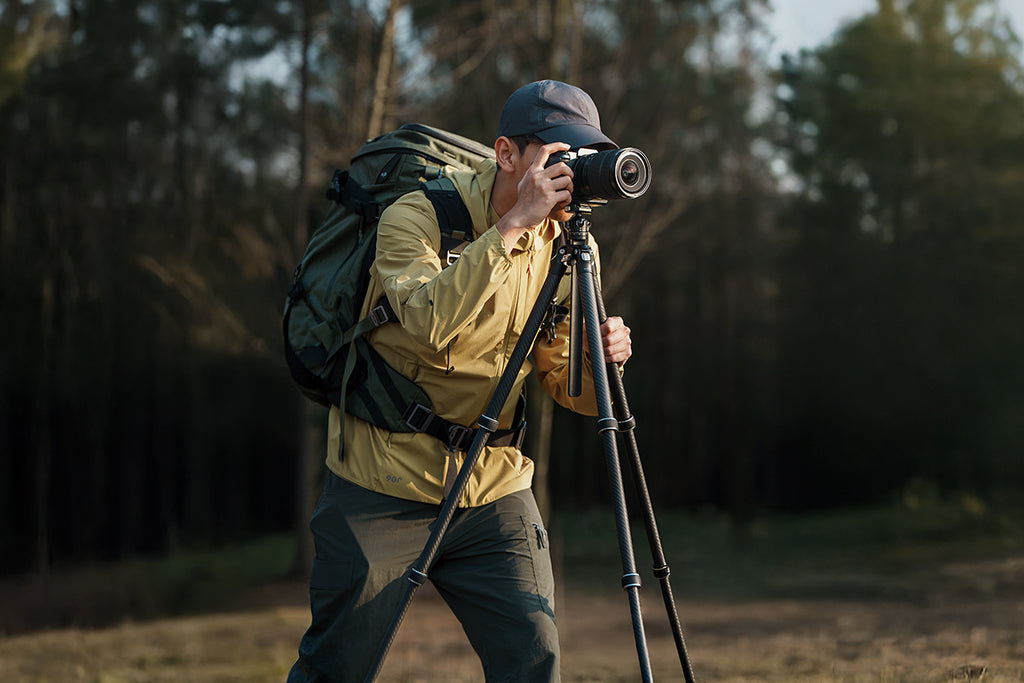
The Post-Rain Recovery Protocol: A Step-by-Step System
To maintain the mechanical precision of your interfaces, we recommend following this protocol as soon as possible after exposure (ideally within 12 hours).
Preparation: The Maintenance Kit
- Required Tools: >90% Isopropyl Alcohol (IPA), a soft-bristled brush (e.g., a clean toothbrush), compressed air (canned or electric), and a small container for holding screws/pins.
- Lubricant: Dry-film or silicone-based lubricant (avoid petroleum-based "wet" greases).
- Estimated Time: 15–20 minutes per system.
1. Complete Disassembly
Do not attempt to clean a quick-release system while it is fully assembled.
- Action: Remove the plate from the camera. If your clamp system allows for user-level disassembly (check your manual), remove the clamp from the tripod head to access the underside.
- Why: Water frequently hides in the "thermal bridge" between the aluminum plate and the camera base.
- Tip: Place all small springs and locking pins in a container immediately to prevent loss.
2. Chemical Decontamination (The Isopropyl Method)
A common mistake is using standard petroleum-based lubricants or multi-purpose sprays like WD-40 on quick-release mechanisms after water exposure. These can trap residual moisture against the metal and may eventually attract more grit.
- The Correct Agent: Use >90% isopropyl alcohol (IPA).
- The Mechanism: IPA is highly miscible with water, allowing it to effectively displace moisture from tight tolerances and evaporate quickly. It also dissolves oils that may have trapped grit.
- The Process: Submerge or liberally spray the components. Use your soft-bristled brush to agitate the locking mechanism and the Arca-Swiss dovetail grooves.
⚠️ SAFETY WARNING: Isopropyl alcohol is highly flammable. Always operate in a well-ventilated area, away from open flames, sparks, or heat sources. Avoid prolonged skin contact; the use of nitrile gloves is recommended.
3. Forced Evaporation and Drying
Thorough drying is a critical step that must precede any lubrication. Applying lubricant to a damp surface can create a pocket for corrosion.
- Technique: Use compressed air to blow out the ball detent spring cavity and the internal threads.
- Verification: If you see any "fogging" or moisture beads after blowing air, repeat the IPA rinse.
- Carbon Fiber Note: If your tripod legs are carbon fiber, ensure your cleaning agents are non-reactive with the resin matrix. While aluminum components are the focus of the QR system, the legs often wick water into the twist-lock sections.
4. Precision Lubrication
Once the metal is dry, you should restore the "glide" of the mechanism.
- Recommended: Apply a minimal amount of a dry-film lubricant specifically rated for stainless steel-on-aluminum contact.
- Avoid: Petroleum-based greases. In many environments, these attract dust and grit, potentially turning into an abrasive paste over time.
Engineering Standards: Materials and Tolerances
Understanding the materials in your hand is the first step toward professional expertise. While many high-end tripod legs utilize carbon fiber, the quick-release ecosystem (such as FALCAM F22, F38, and F50) is typically precision-machined 6061 or 7075 Aluminum Alloy.
The Thermal Bridge Effect
Aluminum is an excellent thermal conductor. In cold-weather rain, an aluminum QR plate attached to your camera acts as a "thermal bridge," siphoning heat away from the camera's internal battery.
- Expert Tip: In extreme cold, consider attaching your plates indoors before heading out. This can help maintain a more stable battery temperature by reducing the rate of radiant cooling through the mount.
Adherence to ISO 1222:2010
Reliable systems generally adhere to ISO 1222:2010 Photography — Tripod Connections. This standard ensures that the 1/4"-20 or 3/8"-16 screw connections provide the foundational compatibility required for professional use. Proper maintenance preserves the integrity of these standardized threads.
| Component | Primary Material | Critical Maintenance Focus |
|---|---|---|
| QR Plate | Aluminum Alloy (6061/7075) | Dovetail edges & screw threads |
| Locking Pin | Stainless Steel | Spring tension & oxidation check |
| Tripod Legs | Carbon Fiber / Aluminum | Internal sleeve cleaning |
| O-Rings | Nitrile/Silicone | Integrity check for grit scoring |
Practical Modeling: Biomechanics and Workflow
Why does this level of maintenance matter? It isn't just about gear aesthetics; it's about the efficiency and physical sustainability of your production.
1. The "Wrist Torque" Heuristic
Weight isn't the only factor on a long shoot; leverage is. When a quick-release system becomes stiff due to poor maintenance, creators often compensate with awkward grip angles.
We can model the physical strain using the formula for Torque ($\tau$): $$\tau = m \times g \times L$$ Where:
- $m$ = Mass (kg)
- $g$ = Gravity (9.8 m/s²)
- $L$ = Lever Arm (m)
Scenario Model: A 2.8kg cinema rig held 0.35m away from the wrist generates $\approx 9.61 N\cdot m$ of torque. Based on general ergonomic datasets for an average adult male, this load can represent a significant portion of the Maximum Voluntary Contraction (MVC). While individual strength varies, a "sticky" QR plate that requires extra force to lock adds unnecessary fatigue to a system already under load. Maintaining smooth-operating mounts helps preserve your physical longevity during 10-hour shoot days.
2. The Workflow ROI (Heuristic Estimate)
Efficiency is a hallmark of professional work. Consider this illustrative scenario:
- Traditional Thread Mounting: ~40 seconds per swap.
- Maintained Quick Release: ~3 seconds per swap.
- Time Saved: 37 seconds per swap.
For a professional creator performing 60 swaps per shoot across 80 shoots per year, this can equate to approximately 49 hours saved annually. By spending 20 minutes on post-rain maintenance, you are protecting the mechanism that enables this "time-wealth."
Logistics and Mission-Critical Safety
In high-pressure filmmaking, "trust" is a technical requirement. As discussed in The 2026 Creator Infrastructure Report, creators are increasingly viewing their mounting gear as essential infrastructure.
The Pre-Shoot Safety Checklist
After your post-rain recovery, perform this three-point check before your next deployment:
- Audible: Do you hear a clear, metallic "Click" when the plate seats?
- Tactile: Perform a "Tug Test." Pull firmly on the camera body in multiple directions to ensure the locking pin is fully engaged.
- Visual: Check the locking indicator. If it is not in the "Locked" position, do not proceed.
Travel and Logistical Enablement
For creators traveling internationally, modular systems offer a logistical advantage. Clean and well-maintained modular systems are less likely to face issues during Logistical Enablement and security screenings compared to corroded or jammed gear that may appear neglected or unsafe.
Long-Term Infrastructure Trust
Maintaining a sealed quick-release system is about ensuring the interface between your creative vision and your technical execution remains frictionless. When you invest in a production-grade ecosystem, you are buying into a standard of reliability that is best defended through disciplined maintenance.
Whether you are navigating the humidity of a rainforest or the sudden squalls of an urban shoot, your recovery protocol separates a "gadget" from a piece of "infrastructure." By following these steps—disassembly, chemical displacement, thorough drying, and precision lubrication—you help ensure your gear is ready to perform the moment the clouds break.
Disclaimer: This article is for informational purposes only. Maintenance protocols should be performed with care; always refer to specific manufacturer guidelines for your equipment. When handling high-percentage isopropyl alcohol, ensure adequate ventilation and keep away from open flames. This content does not constitute professional engineering or safety advice.