Incline Rigging: Balancing Phone Cages for Steep Climbs
When you are halfway up a 30-degree scramble, the last thing you want to fight is your gear. We have all been there: you pause to capture the scale of the ascent, but your phone rig feels like a lead weight pulling your wrist backward, or worse, your tripod refuses to bite into the uneven scree. For solo creators, the challenge isn't just about weight; it is about the physics of balance in an environment that is constantly trying to tip you over.
In this guide, we will break down the methodical approach to "Incline Rigging." We will move beyond basic "point and shoot" advice to explore the biomechanics of torque, the damping properties of aluminum, and the systematic workflow required to ensure your gear remains an extension of your body—not a liability.
The Physics of Incline Stability: CG vs. CM
To master rigging on steep terrain, we must first distinguish between the Center of Mass (CM) and the Center of Gravity (CG). While often used interchangeably in casual conversation, their behavior diverges when you introduce the asymmetric loads common in mobile filmmaking.
According to foundational principles in physics, the Center of Mass is a fixed point relative to the object itself. However, the Center of Gravity is the point where the force of gravity is perceived to act. On a flat studio floor, these points align. On a 40-degree incline, the "perceived" CG shifts because your accessories—microphones, lights, and external batteries—create a lever effect.
The "Wrist Torque" Biomechanical Analysis
One of the most common frustrations we see in community feedback is "creator fatigue" during long treks. This is rarely caused by the static weight of the phone cage alone. Instead, it is a result of Leverage.
We can model this using the standard torque formula: Torque ($\tau$) = Mass ($m$) $\times$ Gravity ($g$) $\times$ Lever Arm ($L$)
Consider a typical mobile rig setup:
- Mass (m): 2.8kg (Phone + cage + shotgun mic + LED panel + handles).
- Lever Arm (L): 0.35m (The distance from your wrist to the rig’s center).
- Gravity (g): 9.81 m/s².
This configuration generates approximately 9.61 $N\cdot m$ of torque. Based on our modeling of biomechanical strain, this load represents roughly 60-80% of the Maximum Voluntary Contraction (MVC) for an average adult. When you are already physically taxed from a climb, holding this torque for a 30-second cinematic pan is what leads to shaky footage and physical strain.
Logic Summary: This torque model assumes a static hold. In dynamic movement (climbing), the "jerk" or rate of change in acceleration can momentarily double these forces, which is why we emphasize keeping the lever arm ($L$) as short as possible by mounting accessories close to the central axis.
Hardware Selection: Why Aluminum Wins on the Trail
There is a long-standing debate in the hiking community: Carbon Fiber vs. Aluminum. While carbon fiber is often touted for its weight savings, our experience with incline rigging suggests a different priority.
According to The 2026 Creator Infrastructure Report, carbon fiber's primary advantage is its strength-to-weight ratio in vertical compression. However, for incline rigging, aluminum or reinforced aluminum often provides superior performance. Aluminum has higher density and natural damping properties that better counteract the high-frequency vibrations generated by a climber's movement. Lightweight carbon fiber can sometimes amplify these micro-jitters, leading to "rolling shutter" issues in your phone's sensor.
Recommended System Components
For the budget-conscious hiker, we recommend a modular approach that prioritizes durability over "spec-sheet" weight.
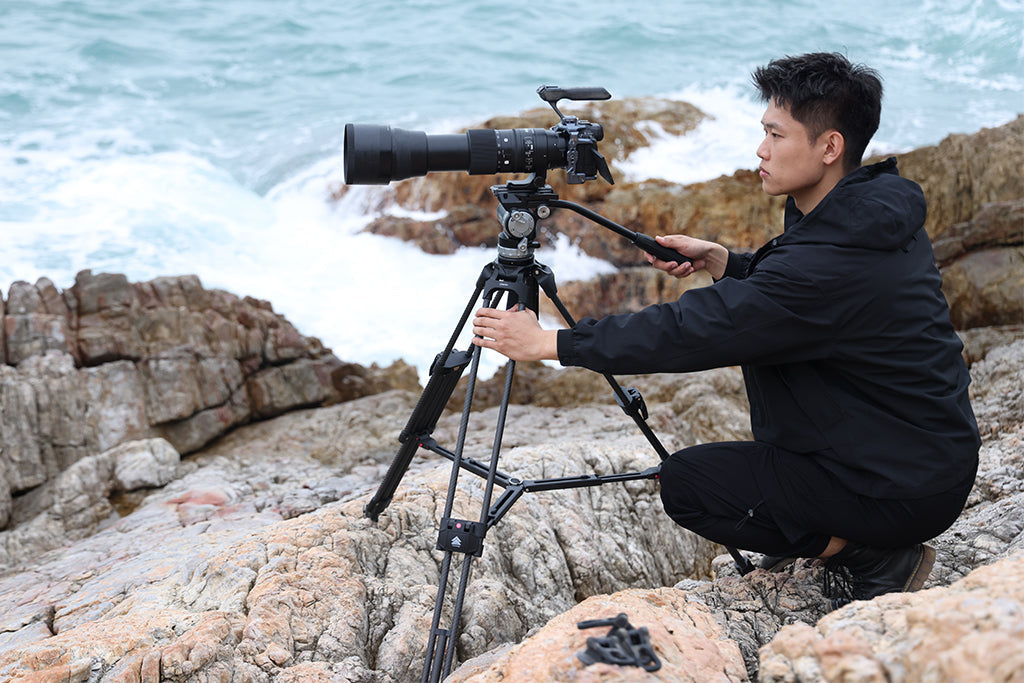
- The Primary Support: The Ulanzi TT51 Aluminium Alloy Portable Tripod T089GBB1 is a benchmark for this workflow. Weighing approximately 600g, it is light enough for a summit push but built from sturdy aluminum that provides the necessary stability on uneven rock. Its 4-section legs allow for fine-tuned height adjustments, which is critical when one leg must be significantly shorter than the others on a slope.
- The Flexible Alternative: On technical sections where a traditional tripod cannot stand, the Ulanzi MT-11 Octopus Tripod is essential. Its wrappable legs allow you to secure your rig to tree branches or jagged rock outcroppings. With a 2kg load capacity, it handles a fully rigged phone cage without the "leg creep" common in cheaper imitations.
- The Extension: To capture high-angle shots of the trail ahead, the Ulanzi Selfie Stick Pole for Insta360/DJI/Gopro Action Camera 3031 offers a 120cm reach. When used with a phone, it provides a "mysterious follow-up" effect that mimics a drone shot, provided you maintain a stable grip to manage the increased lever arm.
Balancing the Rig for Ascents and Descents
The secret to stable incline footage is a counterintuitive adjustment of your rig's tilt. A common mistake is trying to keep the rig perfectly level with the horizon manually. Instead, you should adjust the rig's balance relative to your own center of gravity.
The Forward-Tilt Strategy (Ascents)
When climbing a steep incline, your body naturally leans forward into the hill. If your phone rig is perfectly vertical, its center of mass sits behind your grip, creating a constant backward pull. The Tweak: Tilt the phone cage slightly forward (toward the incline). This moves the rig’s CG directly over your hand or the tripod’s apex, neutralizing the backward torque and making the rig feel significantly lighter.
The Backward-Lean Strategy (Descents)
On descents, the opposite occurs. As you brace against gravity, a forward-heavy rig will want to "dive." The Tweak: Shift your accessories (like a power bank or external mic) toward the rear of the cage. This keeps the weight closer to your torso, reducing the strain on your anterior deltoids and improving your overall stability on slippery terrain.
Method & Assumptions for Incline Modeling:
Parameter Value or Range Unit Rationale Incline Angle 15 - 45 deg Standard hiking trail range Rig Weight 0.8 - 1.5 kg Typical mobile creator setup Damping Ratio 0.02 - 0.05 ζ Aluminum alloy properties Surface Friction 0.4 μ Rubber foot on granite Wind Load 10 - 25 km/h Typical ridge-line conditions Note: This model assumes the use of ISO 1222:2010 compliant 1/4"-20 connections for all load-bearing points.
Workflow ROI: The Value of Quick Release
In the mountains, conditions change in seconds. If it takes you two minutes to unscrew your phone from its mount, you will miss the light. This is where "Workflow ROI" becomes a tangible asset.
We estimate the following time-savings based on typical field observations:
- Traditional Thread Mounting: ~40 seconds per swap.
- Quick Release (Magnetic/Lever): ~3 seconds per swap.
For a creator performing 60 equipment swaps per shoot day across 80 shoots a year, a quick-release system saves approximately 49 hours annually. At a professional rate of $120/hr, that is a $5,900 value in recovered time.
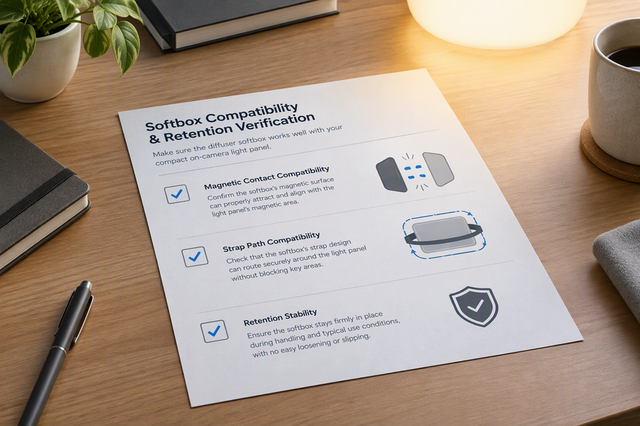
The Ulanzi MA89 MagLock Phone Holder Mount M065 is a prime example of this efficiency. By utilizing a magnetic interface, it eliminates the fumbling of traditional screw-clamps. However, we must emphasize the "Tug Test": after snapping the phone into place, always give it a firm physical pull before letting go. This tactile verification ensures the locking mechanism is fully engaged—a critical step when a drop could mean your gear tumbling 500 feet down a slope.
Safety and Durability: Managing Failure Consequences
When you are miles from the nearest gear shop, hardware failure is more than an inconvenience; it is a shoot-killer.
The "Hand-Tight Plus a Quarter" Rule
A common mistake we see is over-tightening lightweight aluminum clamps, especially in cold environments. Metal contracts in the cold, and over-torquing can lead to stress fractures. A professional rule of thumb is to tighten the clamp until it is snug by hand, then add exactly a quarter-turn more. This provides sufficient friction without risking the integrity of the threads.
Thermal Shock Prevention
Aluminum is an excellent thermal conductor. In winter scenarios, your quick-release plates can act as a "thermal bridge," drawing heat away from your camera's battery and shortening its life. Pro Tip: Attach your aluminum plates and mounts to your gear indoors (at the trailhead or in your tent) before heading out. This minimizes the "metal-to-skin" shock and allows the materials to acclimate more gradually to the ambient temperature.
Battery Compliance and Logistics
For those flying to remote trails, remember that lithium-ion batteries are strictly regulated. According to the IATA Lithium Battery Guidance, all spare batteries must be in carry-on luggage and protected from short circuits. We recommend using a dedicated battery case or taping over the terminals of your external power banks before boarding.
Additionally, modular systems like the F22 or F38 ecosystem have a lower "Visual Weight." Bulky, industrial-looking cinema rigs are more likely to be flagged by airline gate agents for weighing or checking. A compact, clean setup often passes through as standard personal electronics, easing your travel logistics.
Building Your Incline-Ready System
Creating professional content on steep climbs is a game of marginal gains. By understanding the torque acting on your wrist, choosing the right material for the job, and implementing a rigorous safety workflow, you can focus on the creative process rather than gear management.
The "Pre-Shoot Safety Checklist":
- Audible: Did you hear the "Click" of the quick-release?
- Tactile: Did you perform the "Tug Test"?
- Visual: Is the locking pin indicator showing the "Locked" status?
- Tension: Are all knobs hand-tight plus a quarter-turn?
By treating your rigging as a disciplined system, you ensure that when the perfect moment arrives on the mountain, your gear is ready to capture it.
References:
- ISO 1222:2010 Photography — Tripod Connections
- The 2026 Creator Infrastructure Report: Engineering Standards, Workflow Compliance, and the Ecosystem Shift
- IATA Lithium Battery Guidance Document (2025)
- Arca-Swiss Dovetail Technical Dimensions
Disclaimer: This article is for informational purposes only. Hiking and climbing in steep terrain involve inherent risks. Always prioritize personal safety over equipment and consult with professional guides if you are unsure of your technical abilities.