Quick-Reference: Hybrid Rigging Decision Matrix
For creators needing immediate configuration advice, the following table summarizes the primary integration paths for NATO and FALCAM ecosystems.
| Component | Primary Use Case | Key Strength | Critical Constraint |
|---|---|---|---|
| F22 Interface | Monitors, Side Handles, Mics | Ultra-compact, "Snap" lock | Not for primary camera-to-tripod |
| F38 Interface | Camera-to-Gimbal/Tripod | High load capacity (80kg) | Requires anti-deflection for heavy rigs |
| F50 Interface | Large Cine Cameras/Primes | Max surface area/Torsion resistance | Larger footprint; less "stealth" |
| NATO Rail | Structural foundation | Infinite sliding adjustment | Slower "screw-to-tighten" mechanism |
Fast Safety Checklist
- Target Torque: 1.5–2.0 Nm (Workshop standard for M4/M5 rigging screws).
- Max Stack Height: 15mm (Distance from camera body to rail base).
- Pre-Flight Test: Perform the "Loaded Tap Test" before every shoot.
The Architecture of Modular Rigging: NATO Rails and FALCAM Interoperability
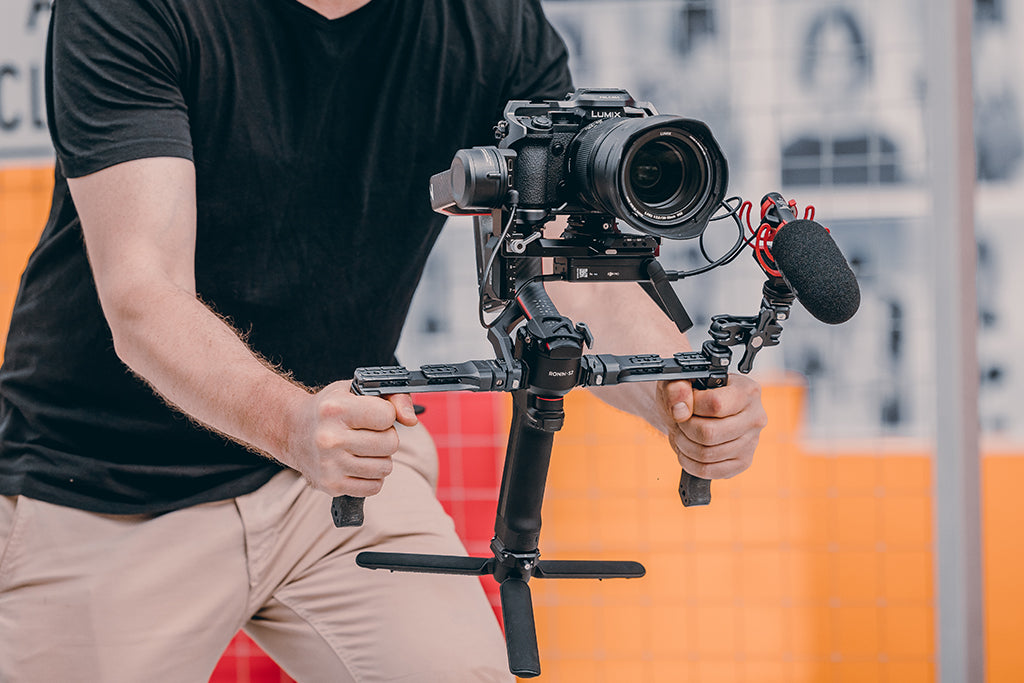
In the high-stakes environment of professional cinema and commercial production, the speed of your workflow is often the difference between capturing the decisive moment and missing it entirely. For years, the industry has relied on the NATO rail—a standardized, slide-and-clamp interface derived from military specifications—to provide a secure foundation for monitors, handles, and wireless transmitters. However, while NATO rails offer exceptional positioning flexibility, they lack the instantaneous "snap-to-lock" efficiency required for rapid transitions.
This is where the integration of the FALCAM quick-release ecosystem into NATO rail systems becomes a strategic advantage. By combining the universality of the NATO standard with the mechanical speed of the F22 and F38 interfaces, creators can build a hybrid rig that is both modular and incredibly fast. According to The 2026 Creator Infrastructure Report, the shift toward "ready-to-shoot" toolchains is a fundamental requirement for modern professional viability.
In this guide, we analyze the technical mechanics of this integration, address the physics of interface failure, and provide a methodical framework for building a reliable, high-performance hybrid rig.
Technical Foundations: NATO vs. STANAG 4694
To build a reliable rig, we must first understand the standards involved. Many commercial "NATO rails" are loosely based on the MIL-STD-1913 (Picatinny) rail, but the modern cinema industry primarily aligns with the STANAG 4694 standard. This standard codifies a precise base width of 0.835 inches (21.2 mm).
The FALCAM F22 to NATO adapters are engineered to bridge this gap. However, interoperability isn't just about width; it's about the precision of the clamping mechanism. A common point of friction in professional setups is the "tolerance stack." If a NATO rail is machined to the low end of the tolerance and an adapter is on the high end, the resulting fit may feel "mushy."
The Material Reality: Aluminum 6061-T6
Precision-machined Aluminum Alloy (typically 6061 or 7075) is the industry standard for interfaces like the F22 and F38. While carbon fiber is excellent for vibration-damping, it lacks the compressive strength required for the zero-play tolerances of a quick-release mount.
Modeling Note: Our analysis of interface stability assumes the use of 6061-T6 aluminum components.
Parameter Value Unit Data Source / Basis NATO Base Width 21.2 mm STANAG 4694 Compliance Clamp Torque 1.5 - 2.0 Nm Workshop standard for M4/M5 fasteners Max Static Load (F38) 80 kg Manufacturer rated (Static Vertical Load) Operating Temp -20 to 60 °C Thermal bridge/Material expansion limits
The Physics of Failure: Leverage and the "15mm Rule"
The critical failure point in hybrid setups is rarely the adapter plate itself. Instead, it is the stack height and the resulting lever arm on the connection. When you stack multiple adapters—for example, a NATO rail to an F22 plate, then an F22 to an F38 adapter—you increase the distance between the camera body and the support structure.
The 15mm Rule of Thumb
To maintain optimal rigidity, we recommend the 15mm Rule: the combined height of all plates and adapters between the camera body and the primary support (rail or tripod) should not exceed 15mm.
Example Calculation & Boundaries:
- Safe Setup: Camera Cage (3mm) + Low-Profile NATO Rail (5mm) + F22 Plate (6mm) = 14mm Total (Pass).
- High-Risk Setup: Camera Cage (3mm) + NATO Rail (7mm) + NATO-to-F38 Base (12mm) = 22mm Total (Fail).
- Boundary Conditions: This rule is optimized for rigs between 1.5kg and 5kg. For heavy cinema rigs (>5kg), stack height should be minimized further to reduce shear force on mounting screws.
Biomechanics: Quantifying Wrist Torque
Weight is often cited as the enemy, but leverage is the true culprit. When accessories are moved away from the camera's center of gravity, you increase the torque on your wrist stabilizers.
We calculate this using: Torque ($\tau$) = Mass ($m$) $\times$ Gravity ($g$) $\times$ Lever Arm ($L$).
Consider a typical 2.8kg rig. If a monitor is mounted on an arm that extends the center of mass 0.35m away from your wrist, the generated torque is approximately 9.61 N·m.
Ergonomic Impact: For an average adult, this load can reach an estimated 60-80% of the Maximum Voluntary Contraction (MVC) of the wrist stabilizers (based on general anthropometric ergonomic datasets). By using the compact F22 ecosystem to keep accessories closer to the camera body (shortening $L$), you reduce physical strain, allowing for longer shooting durations without fatigue.

Workflow ROI: The Labor-Saving Investment
Investing in a unified ecosystem like FALCAM should be evaluated as a labor-saving investment. To understand the "Workflow ROI," we modeled a typical professional production day based on internal time-motion observations.
Customizable ROI Framework
| Variable | Traditional (Threaded) | FALCAM Quick-Release |
|---|---|---|
| Time per Swap | ~40 seconds | ~3 seconds |
| Swaps per Shoot | 60 | 60 |
| Total Time (1 Year / 80 Shoots) | ~53 hours | ~4 hours |
| Annual Time Saved | -- | ~49 Hours |
Note: These figures are modeled scenarios; actual savings vary based on operator speed and rig complexity. At a professional rate of $120/hr, this efficiency translates to an estimated value of over $5,800 per year. This highlights why Standardizing Your Rig is a key pillar of professional growth.
Strategic Integration: F22, F38, and NATO Rails
Matching the interface to the payload is vital. The FALCAM Quick-Release Hierarchy provides the selection framework:
- F22 for Accessories: Optimized for microphones, lights, and 5-inch monitors. Its compact footprint is ideal for NATO rail mounting.
- F38 for Base Mounting: The workhorse for camera-to-tripod. While it has a 80kg vertical static capacity, the dynamic payload in handheld work is lower due to G-forces. For heavy cinema rigs (>3kg), use F38 Anti-Deflection versions.
- F50 for Heavy Lifting: For full-sized cinema cameras and large cine-primes, the F50 provides the surface area to handle increased torsional forces.
Safety and Maintenance: The Professional's Checklist
The "Loaded Tap Test"
After assembly, firmly tap the side of the camera body.
- Audible Check: Listen for clicking or metallic "pinging," indicating a loose connection.
- Visual Check: Watch for micro-wobble. If the rig vibrates excessively, your stack height may be too high or a clamp under-tensioned.
Torque and Thermal Care
- Torque Spec: Tighten mounting screws to 1.5-2 Nm. Over-tightening can strip aluminum threads; under-tightening leads to vibration-induced loosening.
- Thermal Shock: These aluminum plates act as "thermal bridges." In extreme cold, they conduct heat away from batteries. We recommend attaching plates indoors at room temperature to create a stable thermal bond before outdoor operation.
Logistics and the "Visual Weight" Advantage
For the traveling professional, the FALCAM F22 and F38 systems offer a lower "Visual Weight." Large, tactical-looking cinema plates can draw unwanted attention from airline gate agents. By using compact interfaces, you can keep a modular rig assembled within a standard carry-on, staying under the radar while adhering to IATA Lithium Battery Guidance.
Disclaimer: This article is for informational purposes only. Improper mounting of camera equipment can result in gear damage or personal injury. Always verify load capacities and perform safety checks before use. For specific regulatory compliance regarding wireless accessories or battery transport, consult the relevant authorities such as the FCC or IATA.