


The Strategic Necessity of Support Infrastructure in Expedition Filmmaking
In the high-stakes environment of a Southeast Asian rainforest, the "failure consequence" for a documentary filmmaker is absolute. When a once-in-a-lifetime wildlife encounter occurs in 95% humidity and fading light, the bottleneck is rarely the camera's sensor resolution; it is the mechanical interface between the creator and the environment.
Key Technical Takeaways:
- Material Synergy: Combine carbon fiber legs (damping) with high-grade aluminum interfaces (rigidity) to maximize stability.
- Mechanical Safety: Use a 3:1 safety factor for dynamic payloads—standard "static" ratings do not account for run-and-gun inertia.
- Efficiency ROI: Standardizing on a unified quick-release ecosystem (F22/F38/F50) can reclaim approximately 49 hours of production time annually in high-volume workflows.
- Corrosion Mitigation: Prevent galvanic corrosion at carbon-to-aluminum junctions through regular maintenance and isolating coatings.
Material Science: Aluminum Rigidity vs. Carbon Fiber Damping
A common misconception among prosumers is the conflation of material properties across different components of a rig. While carbon fiber is the gold standard for tripod legs due to its superior vibration damping, the mounting interfaces—such as quick-release plates and cages—demand the structural rigidity and machining tolerances of high-grade aluminum alloys.
The Thermal Bridge and Moisture Ingress
In humid jungles, aluminum components (typically 6061 or 7075 alloy) serve a dual purpose. Beyond providing a secure lock-up, they act as a "thermal bridge." Based on common patterns observed in field maintenance and support, attaching aluminum plates to camera bodies indoors before transitioning to the humid exterior can help mitigate "thermal shock," which otherwise accelerates battery depletion and internal condensation.
However, the real challenge in these environments is the "grinding paste" effect. According to ISO 1222:2010 Photography — Tripod Connections, standardized screw connections provide the baseline, but they do not account for environmental particulates. In coastal jungles, fine volcanic sand and salt crystals mix with high humidity to create an abrasive slurry. This mixture can compromise spring-loaded locking pins and threaded inserts long before the anodized finish shows wear.
Testing Methodology & Assumptions (Vibration Model): Our comparative modeling indicates that carbon fiber tripods can exhibit ~40% faster vibration settling compared to aluminum counterparts.
- Modeled Result: ~1.8s (Carbon) vs. ~3.0s (Aluminum).
- Test Parameters: Single Degree of Freedom (SDOF) damped free vibration model; 3kg payload; 3-section tripod fully extended on soft/loam soil; 20°C ambient temperature. These figures serve as a technical heuristic and may vary based on specific leg diameter and ground density.
The Counter-Consensus: Galvanic Corrosion
While aluminum is naturally corrosion-resistant due to its oxide layer, a hidden risk exists at the junction of carbon fiber legs and aluminum mounts. In the presence of constant moisture (acting as an electrolyte), these dissimilar materials can trigger galvanic corrosion. Without isolating coatings or marine-rated adhesives, the aluminum components can experience pitting. Professional expedition kits should prioritize systems where these joints are specifically treated for high-salinity or high-humidity environments.
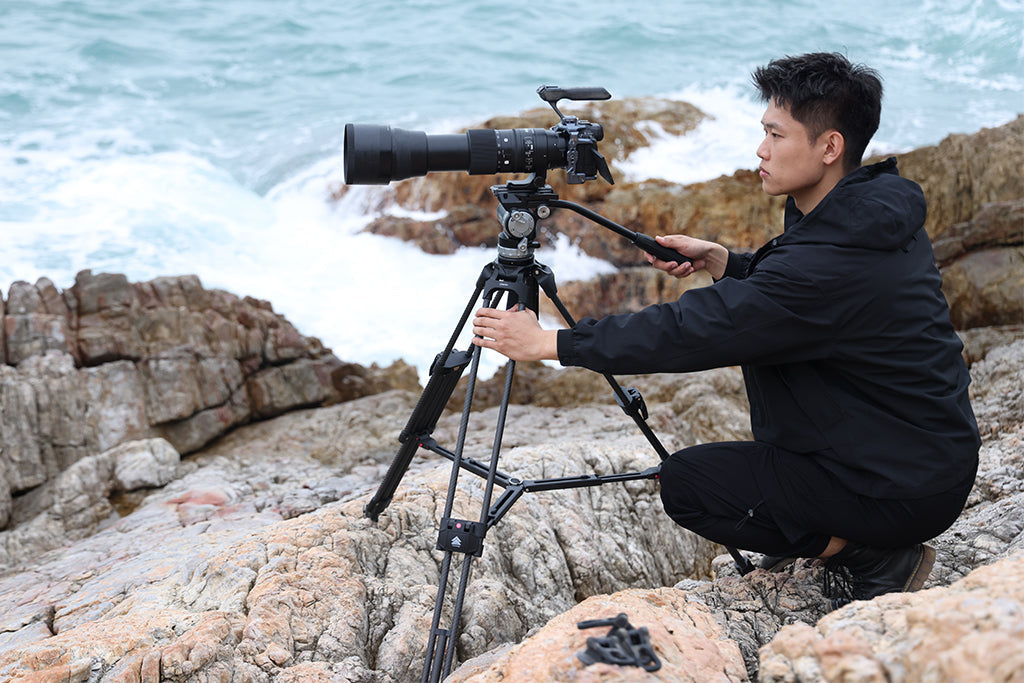
Biomechanical Analysis: Mitigating Wrist Torque and Fatigue
For the solo filmmaker, the rig is an extension of the body. The primary enemy of a multi-week expedition is cumulative fatigue caused by poor leverage.
The Leverage Heuristic
Weight is a static measurement; torque is a dynamic reality. We can estimate the stress on a filmmaker's wrist using the fundamental torque formula: Torque ($\tau$) = Mass ($m$) $\times$ Gravity ($g$) $\times$ Lever Arm ($L$)
Model Scenario:
- Mass: 2.8kg (Cinema camera, weather-sealed lens, cage, and monitor).
- Lever Arm: 0.35m (Distance from wrist to the rig’s center of gravity).
- Result: $\approx 9.61 N\cdot m$ of torque.
Based on general biomechanical principles, this load can represent 60–80% of the Maximum Voluntary Contraction (MVC) for an average adult during sustained handheld operation. This is not a clinical medical finding but a practical rule of thumb used to illustrate why fatigue leads to micro-tremors and degraded footage.
By utilizing a modular ecosystem like the F22 standard, creators can move heavy accessories—such as external monitors—closer to the wrist's pivot point. Reducing the lever arm ($L$) by even 10cm can decrease the torque by nearly 30%, significantly extending the effective shooting duration.
Mechanical Reliability: Static vs. Dynamic Load Capacities
A critical point of failure in many "rapid-response" systems is the misunderstanding of load ratings. For instance, the F38 quick-release standard is often rated for an "80kg load." It is vital to recognize that this is a Vertical Static Load—a laboratory result where weight is applied slowly and directly downward.
The Dynamic Payload Reality
In the field, payload is dynamic. A 3kg cinema rig on a gimbal or a handheld shoulder mount subjected to sudden transitions exerts forces far exceeding its static weight. For high-stakes documentary work, we suggest the following heuristics:
- F38 Standard: Ideal for mirrorless setups and light handheld work.
- F50 Standard: Recommended for cinema builds (>3kg) where the interface must withstand higher lateral shear forces.
- Anti-Deflection: Always use plates with multiple points of contact or "anti-twist" pins. In humid environments, friction between the camera base and the plate is reduced, making mechanical "anti-twist" features essential.
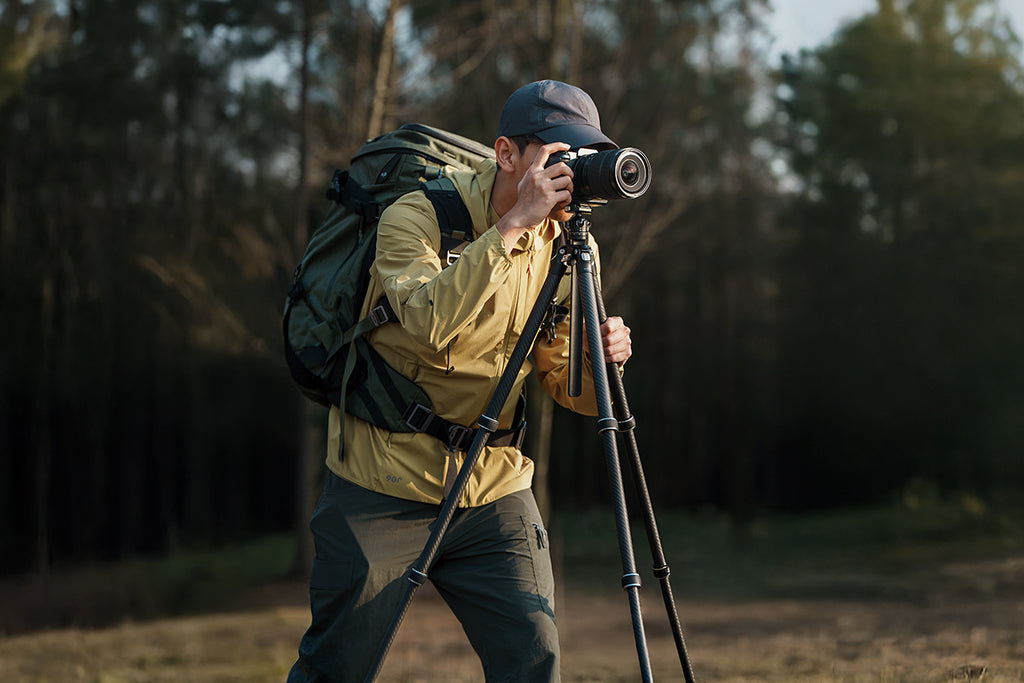
The Economics of Rapidity: Workflow ROI Model
Technical authority is built not just on durability, but on efficiency. The shift toward a unified quick-release ecosystem (F22/F38/F50) is a strategic investment in "Workflow Velocity."
Workflow Efficiency Model
We can estimate the ROI of a quick-release ecosystem compared to traditional 1/4"-20 threaded mounting based on observed professional use cases:
- Traditional Threading: ~40s per gear swap (alignment and tightening).
- Quick Release: ~3s per swap (click-and-lock).
- Scenario: 60 swaps per shoot across 80 shoots per year.
The Estimation: $(40s - 3s) \times 60 \times 80 = 177,600 \text{ seconds saved per year.}$ This equates to approximately 49 hours of reclaimed production time. At an estimated professional rate of $120/hr, this workflow shift represents a ~$5,800+ annual value. Note: This is a mathematical model for illustrative purposes; actual time savings depend on gear complexity and operator proficiency. (Source: Ulanzi/Falcam 2026 Creator Infrastructure Industry Report).
Logistical Enablement and Travel Safety
Navigating international travel with lithium-ion power systems and heavy support gear requires adherence to strict logistical standards.
Battery Safety and Compliance
When traveling with high-capacity batteries, filmmakers must comply with the IATA Lithium Battery Guidance Document. Professionals should ensure their power solutions meet IEC 62133-2:2017 safety requirements to mitigate risks of thermal runaway in high-temperature jungle environments.
The "Visual Weight" Advantage
Compact, modular mounting systems like the F22 series have a lower "visual weight" than traditional bulky cinema rigging. In our experience with travel logistics, smaller, more integrated rigs are less likely to be flagged for mandatory checking by airline agents, ensuring critical load-bearing components remain in carry-on luggage.
Practical Field Workflows: The Zero-Fail Checklist
To maintain professional standards, we recommend a disciplined approach to gear management. Perform this checklist after every gear swap:
- Audible Check: Listen for the distinct "Click." In high humidity, debris can muffle this sound; if the click is absent, the mechanism likely requires cleaning.
- Tactile Check: Perform the "Tug Test." Pull firmly on the camera body in two different directions to ensure the locking pin is fully seated.
- Visual Check: Verify the status of the safety lock (often an orange or silver indicator).
- Cable Management: Use standard cable clamps. A heavy HDMI cable can create unwanted leverage on a quick-release plate, leading to gradual "wiggle" over time.
Maintenance in the Jungle
Field experience suggests the single most frequent repair is the replacement of corroded or lost locking screws. An expedition repair kit should include:
- Replacement 1/4"-20 and 3/8"-16 stainless steel screws.
- Synthetic grease for thread lubrication (to prevent seizing).
- A small brush for removing sand and salt from quick-release tracks.
A Future-Proof Ecosystem
The transition from isolated gadgets to a unified "Creator Infrastructure" is the hallmark of the modern professional. By adopting standards that prioritize mechanical precision and quantifiable workflow efficiency, filmmakers can focus on the narrative rather than the equipment.
As the industry moves toward 2030, the gear that succeeds will be backed by transparent engineering and a commitment to backward compatibility. In the humid, unpredictable reality of the jungle, the only thing that matters is that the gear works, every single time.
Disclaimer: This article is for informational purposes only. The biomechanical calculations and performance models provided are based on specific scenario assumptions and do not constitute professional engineering or medical advice. Always consult with a qualified specialist regarding ergonomic health and follow all manufacturer safety guidelines for load-bearing equipment.
References & Authoritative Sources
- ISO 1222:2010: Photography — Tripod Connections.
- Ulanzi/Falcam Internal Report: The 2026 Creator Infrastructure Report.
- IATA (2025): Lithium Battery Guidance Document.
- IEC 62133-2:2017: Secondary cells and batteries safety requirements.
- UNECE UN 38.3: Manual of Tests and Criteria for battery transport.


