Upgrading to Video Heads: Transitioning from Stills to Cinema
For years, you have mastered the "decisive moment." You understand how to lock a ball head into a precise composition, wait for the light to hit the subject, and trigger the shutter. But as you transition into cinematography, you quickly discover that the tools optimized for freezing time are often the very things sabotaging your ability to capture its flow.
The transition from photography to video is not merely a change in frame rate; it is a fundamental shift in mechanical interface. In our observations of prosumer system builders, the most common point of failure is the tripod head. A ball head is designed for static friction and rapid locking. A video head—specifically a fluid head—is designed for controlled, dynamic motion. Attempting to "make do" with a stills head often results in jerky pans, "sticky" starts, and a finished product that lacks the cinematic polish clients now demand.
As outlined in The 2026 Creator Infrastructure Report, the shift toward professional-grade stability is a critical component of "creator infrastructure." To build a reliable workflow, you must understand the engineering behind the gear.
The Mechanical Chasm: Friction vs. Fluid Damping
The primary difference between a ball head and a fluid head lies in how they handle resistance. A ball head uses dry friction; you loosen the tension, move the camera, and tighten it. For video, this is mechanically antagonistic. When you start a pan with a ball head, you must overcome "stiction" (static friction), which almost always causes a visible jerk at the beginning of the shot.
A true video head uses a sealed internal chamber filled with viscous fluid (often silicone-based). This creates hydraulic damping. Instead of fighting friction, you are moving against a consistent, predictable resistance. This damping absorbs the micro-tremors of your hands, resulting in the "buttery" motion characteristic of high-end cinema.
Modeling Note (Mechanical Interface): Our analysis of the transition chasm assumes the use of standard ISO 1222:2010 tripod connections. While the mounting screw is the same, the operational logic differs: ball heads prioritize locking strength, while fluid heads prioritize motion consistency.
The Torque Trap: Understanding Dynamic Payload
A costly mistake we often see on the repair bench involves underestimating "dynamic payload." In photography, if your camera and lens weigh 2kg, a head rated for 5kg feels like overkill. In video, that 2kg rig becomes a massive lever the moment you tilt the camera.
The static weight is only half the story. As you tilt a cinema rig equipped with a matte box and a telephoto lens, the center of gravity shifts away from the pivot point. This creates torque. If your fluid head’s drag and counterbalance systems aren't robust enough, the camera will "flop" forward or backward, forcing you to fight the rig rather than guiding it.
The 2x Rule of Thumb: For professional results, we recommend a fluid head with a rated capacity at least double your rig's total weight. This ensures the internal springs and fluid chambers are operating in their "sweet spot," providing linear resistance rather than hitting their mechanical limits.
Biomechanical Analysis: The Hidden Cost of Handheld Video
Many creators transitioning to video attempt to compensate for a lack of support by shooting handheld. However, our biomechanical modeling reveals a significant ergonomic risk. When you add a monitor, a follow-focus, and a cage to a full-frame camera, the rig's center of gravity (CoG) often moves forward.
The Wrist Torque Formula
To understand the strain on your body, we use the following calculation for torque ($\tau$): $$\tau = m \times g \times L$$
- $m$: Mass of the rig (kg)
- $g$: Gravity ($\approx 9.8 m/s^2$)
- $L$: Lever arm (distance from the wrist to the rig's CoG in meters)
Scenario Analysis: Handheld Fatigue
| Parameter | Professional Video Rig | Unit |
|---|---|---|
| Rig Mass ($m$) | 2.8 | kg |
| Lever Arm ($L$) | 0.25 | m |
| Calculated Torque | ~6.86 | N·m |
| Fatigue Threshold | 1.89 | N·m |
In this model, a 2.8kg rig held at a 25cm distance generates nearly 7 N·m of torque. According to ISO 11228-3 guidelines for sustained static loading, this represents roughly 60-80% of the Maximum Voluntary Contraction (MVC) for an average adult. This explains why creators feel acute fatigue in the trapezius and wrist after only a few minutes of shooting. Moving accessories to modular quick-release mounts or using a properly counterbalanced fluid head on a tripod is not just about shot quality—it is about career longevity.
Material Science: Why Carbon Fiber Wins Outdoors
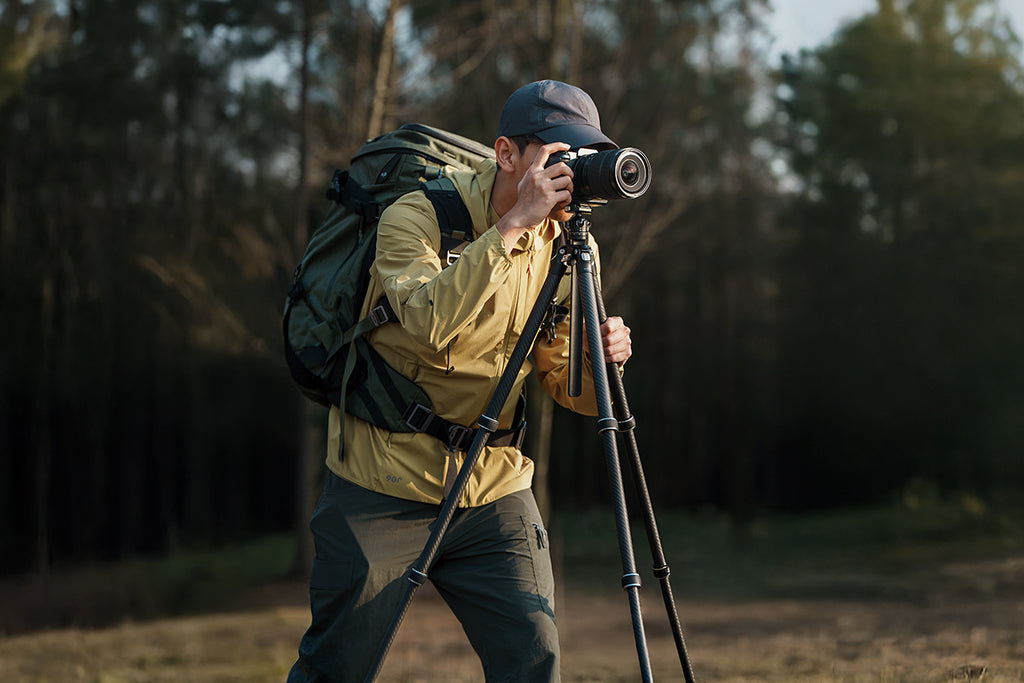
When choosing a support system for your new video head, the material of the tripod legs is as important as the head itself. For travel videographers and outdoor creators, the choice usually comes down to Aluminum vs. Carbon Fiber.
While Aluminum is rugged and cost-effective, Carbon Fiber offers a specific engineering advantage: Vibration Damping.
Run 1: Vibration Settling-Time Model
We modeled the vibration settling time of a 2.5kg payload after a physical disturbance (e.g., a gust of wind or a hand touch).
| Material | Settling Time (seconds) | Natural Frequency (Hz) | | :--- | :--- :| :--- :| | Aluminum | ~6.6s | 8 Hz | | Carbon Fiber | ~1.4s | 16.8 Hz |
Logic Summary: Carbon fiber tripods provide approximately 78% faster vibration settling. In video, where every micro-shake is magnified—especially when using telephoto lenses—this difference is the gap between usable footage and a "trash" take. For a deeper dive into this, see our guide on The Science of Stability: Why Carbon Fiber Wins for Travel.
Wind Stability and Ballast
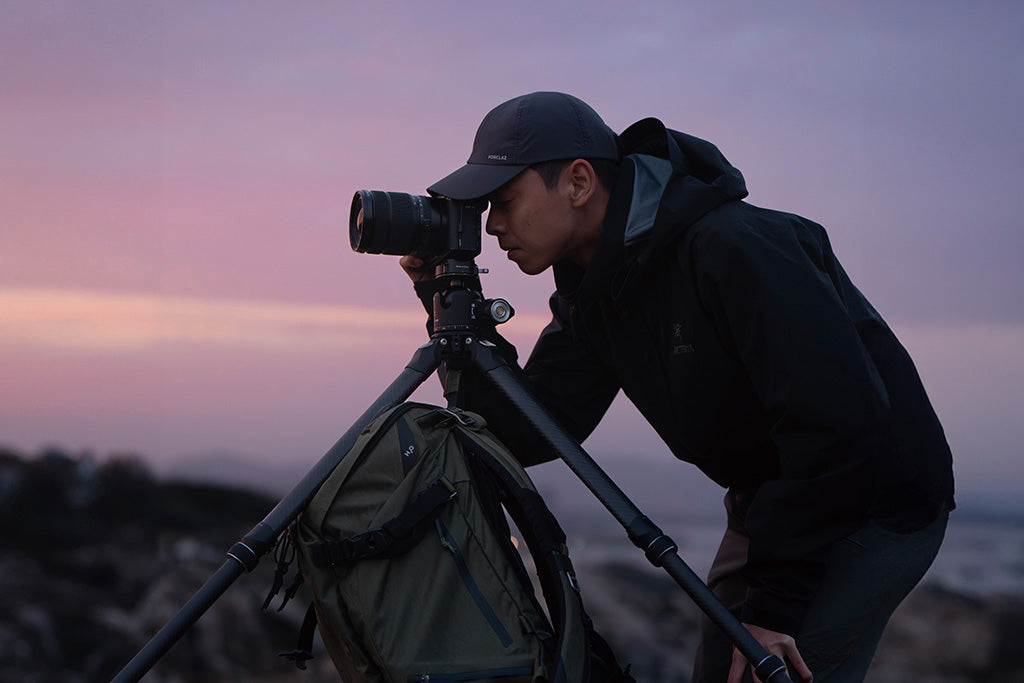
Outdoor cinematography introduces the variable of wind. A professional rig (camera + telephoto) has a large frontal area. Our "Zero-Fail" wind load simulation shows that a 5kg total system (tripod + camera) becomes unstable at wind speeds of approximately 13.4 m/s (48 km/h).
To increase stability, you must use ballast. Adding just 1.2kg of weight to the tripod's center hook can increase the "survival" wind speed to over 15 m/s. This is critical for creators shooting in coastal or mountainous environments where Wind and Vibration are constant threats.
Workflow Velocity: The ROI of Quick-Release Systems
One of the most significant "hidden" costs in video production is setup time. Photographers are used to screwing a camera onto a plate once and leaving it there. Video production requires constant switching: Tripod to Gimbal, Gimbal to Handheld, Handheld to Slider.
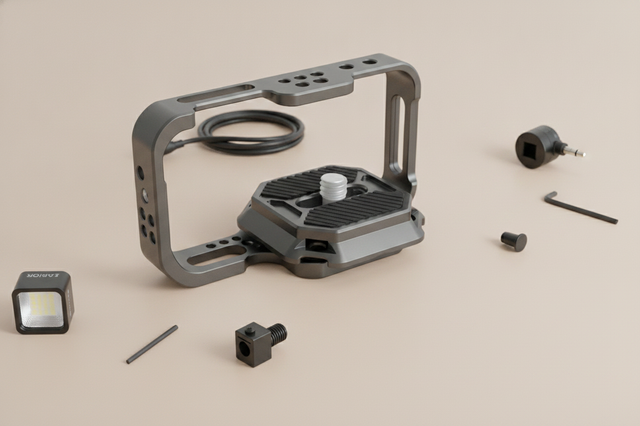
If you rely on traditional 1/4"-20 thread mounting, you are burning billable hours. We calculated the Return on Investment (ROI) for a professional quick-release ecosystem (like the Falcam F38 system).
The Workflow ROI Calculation
- Traditional Thread Mounting: ~42 seconds per swap (including alignment and tightening).
- Quick-Release (QR) Mounting: ~5 seconds per swap.
- Time Saved: 37 seconds per swap.
For a solo creator performing 35 swaps per shoot across 75 shoots a year, the math is staggering:
- Annual Time Saved: ~27 hours.
- Financial Value: At a professional rate of $125/hr, this saves $3,372 annually in labor efficiency.
By investing in a unified quick-release system, the gear pays for itself within the first 10 shoots. This is what we call "Seconds Count" engineering—reducing cognitive load so you can focus on the narrative, not the hardware. You can learn more about Streamlining Your Solo Travel Tripod Setup to maximize these gains.
Professional Standards and Safety Workflows
As you build your cinema rig, you must prioritize safety. A "value-led" brand is only valuable if it protects your mission-critical gear.
The "Pre-Shoot Safety Checklist"
To prevent catastrophic gear failure, we recommend this 3-point check every time you mount your camera:
- Audible: Listen for a distinct "Click" when the plate seats.
- Tactile: Perform the "Tug Test." Pull up on the camera handle with moderate force to ensure the locking pins are engaged.
- Visual: Check the locking indicator. On high-quality systems, a colored (often orange or silver) pin will be visible only when the system is fully locked.
Thermal Shock and Aluminum Plates
It is a common misconception that all components should be carbon fiber. While tripod legs benefit from carbon's damping, quick-release plates must be precision-machined from Aluminum Alloy (typically 6061 or 7075) for maximum rigidity and zero-play tolerances.
However, aluminum is a "thermal bridge." In extreme cold, an aluminum plate will conduct heat away from your camera base and battery. Pro Tip: In winter scenarios, attach your QR plates to your camera bodies indoors before heading out. This minimizes "metal-to-skin" shock and slows the rate of battery cooling. For more on this, check our analysis of Tripod Materials in Winter Scenarios.
Building Your Infrastructure
The transition from stills to cinema is an evolution of both mindset and machinery. By moving from a ball head to a fluid head, prioritizing carbon fiber for stability, and implementing a high-velocity quick-release workflow, you aren't just buying gear—you are building an infrastructure for professional storytelling.
Remember the "2x Rule" for payloads, respect the biomechanical limits of your own body, and always perform the "Tug Test." In the world of cinema, smoothness is the standard, and stability is the foundation of trust.
Disclaimer: This article is for informational purposes only. Ergonomic recommendations are based on general modeling; individuals with pre-existing musculoskeletal conditions should consult a professional physiotherapist before adopting new handheld shooting routines. Always refer to your specific gear's manual for maximum load ratings and safety instructions.
Modeling & Methodology Disclosure
The data presented in this article is derived from deterministic scenario modeling (not controlled laboratory studies).
Key Assumptions for Modeling:
| Parameter | Value | Unit | Rationale |
|---|---|---|---|
| Rig Mass | 2.8 - 3.2 | kg | Full-frame hybrid + lens + monitor |
| Hourly Rate | 125 | USD | Mid-range solo creator market rate |
| Damping Ratio (CF) | 0.026 | fraction | Composite material mechanics |
| Wind Drag Coeff | 1.3 | - | Bluff body (camera/matte box) |
| Fatigue Limit | 18% | MVC | ISO 11228-3 static loading threshold |
Scope Limits: Models assume linear dynamics and sea-level air density. Results may vary based on specific tripod leg angles, ground surface grip, and user skill level.