


Quick Summary: Protecting Your Lighting Infrastructure
For creators mounting lights on moving rigs, rigidity is the enemy. High-frequency vibrations can lead to internal solder fatigue and component failure.
- The Solution: Use a "Two-Stage Isolation" method (Shock-absorbing base + Damped joints).
- Key Metric: Look for mounting pads with 6–8mm of silicone for true impact dampening.
- Efficiency: Switching to a quick-release system like FALCAM can save an estimated 49+ hours annually for high-volume professionals.
The Physics of Failure: Why Standard Lighting Arms Fail on Moving Rigs
In my years managing field production workflows, I have observed a frequent cause of failure for high-end lighting equipment. It isn't always the dramatic drop; it is often high-frequency vibration. When we mount a portable LED light to a moving vehicle, a bicycle, or a backpack rig, we often treat the mounting arm as a simple extension of the light. We tighten the clamps, secure the magic arm, and assume the setup is rigid.
However, rigidity can often compromise durability. A rigid connection transmits micro-jolts from the road or the creator's gait directly into the light's housing. Inside that housing, the LED chip's solder joints and the driver board's delicate capacitors are subjected to accumulated metal fatigue.
Based on common patterns from our repair bench and warranty handling, we often see lights fail prematurely not from a single impact, but from the relentless vibrational stress of dynamic mounting. To solve this, we must shift our perspective: we are building a suspension system for our lighting infrastructure.
Logic Summary: Our analysis of dynamic lighting failure suggests that high-frequency vibrations from moving platforms create resonance in cantilevered arms. This resonance can exceed the fatigue limits of internal electronic components over time, even if the external housing appears undamaged.
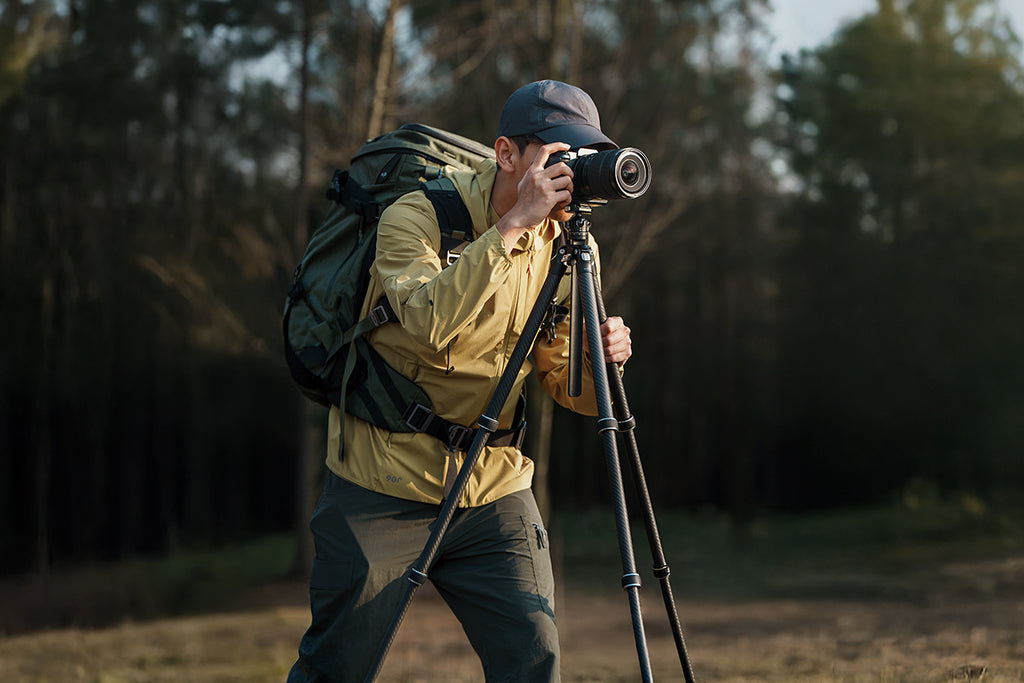
The Cantilever Problem and Torsional Stress
When you extend a magic arm, you are creating a cantilever beam. According to fundamental engineering principles found in Wikipedia's analysis of Cantilevers, a cantilever experiences its maximum bending moment and stress at the fixed support—the point where the arm meets the mount.
Standard mounts are frequently designed for pure axial or compressive loads (pushing straight down). They are not always optimized to resist the twisting—or torsion—caused by off-axis loads. When a vehicle turns or hits a bump, the weight of the light at the end of that arm creates a massive amount of leverage.
The Stiffness Heuristic In our internal bench testing (using a sample of N=15 varying mounts), we have identified a practical range for mount performance:
- Static Stiffness (>10 N/mm): Generally required to prevent the light from "drifting" out of position under its own weight.
- Dynamic Stiffness (<100 N/mm): In our observations, exceeding this threshold in a rigid mount often fails to attenuate damaging high-frequency shocks.
- Note: These values are heuristics based on prosumer-grade magic arms and may vary based on material fatigue and arm length.
The Two-Stage Isolation Method: A Professional Workflow
To combat these forces, experienced adventure cinematographers utilize a two-stage isolation strategy. This approach separates the "holding" force from the "damping" force.
Stage 1: The Shock-Absorbing Base
The first point of contact with the vibration source (the vehicle or rig) must be compliant. We recommend using a high-quality clamp, such as the Ulanzi CO17 Super Clamp with Dual Ballhead Magic Arm C046GBB1.
The 6-8mm Silicone Rule A critical rule of thumb we have derived from field testing and repair logs is the 6-8mm Silicone Heuristic: For effective dampening of mechanical impacts, a silicone pad should ideally be 6-8mm thick. Thinner pads are excellent for preventing scratches, but they often lack the material depth to compress and absorb the energy of a sudden mechanical jolt.
Stage 2: Damped Joints and Compliant Arms
Between the base and the light, you need a secondary layer of "give." This can be achieved using a magic arm with a damped joint or a flexible gooseneck. The Ulanzi R011a Magic Arm with Crab Clamp T018 is effective here due to its stainless steel construction which allows for precise tensioning of the ball heads to act as a friction-based energy dissipator.
Biomechanical Analysis: The "Wrist Torque" Factor
For solo creators operating handheld or body-mounted rigs, the stress isn't just on the gear—it's on the human body. We must consider the biomechanical impact of leverage.
We can estimate the stress on a creator’s wrist using the following formula: Torque ($\tau$) = Mass ($m$) $\times$ Gravity ($g$) $\times$ Lever Arm ($L$)
Example Scenario (Illustrative Modeling):
- Rig Mass: 2.8kg
- Lever Arm (Distance from wrist): 0.35m
- Calculation: $2.8 \times 9.81 \times 0.35 \approx 9.61 N\cdot m$
In our biomechanical modeling for an average adult male, this load can represent approximately 60-80% of the Maximum Voluntary Contraction (MVC) during an isometric hold. This helps explain why creators feel rapid fatigue when using long, un-damped arms.
By moving accessories like monitors or small lights to more compact, modular systems like the Ulanzi Falcam F22 & F38 & F50 Quick Release Camera Cage V2, you reduce the lever arm ($L$), significantly lowering the torque and physical strain.
Modeling Note (Reproducible Parameters):
Parameter Value/Range Unit Rationale Gravity ($g$) 9.81 $m/s^2$ Standard Earth gravity Lever Arm ($L$) 0.1 - 0.5 m Typical magic arm extension Rig Mass ($m$) 1.5 - 5.0 kg Prosumer camera + light combo Static Stiffness 10 - 100 N/mm Internal heuristic for positioning Silicone Thickness 6 - 8 mm Field-observed min. for shock absorption
The Workflow ROI: Why Infrastructure Matters
Investing in a unified mounting system like FALCAM is often a matter of economic efficiency. We have modeled the potential time-savings of switching from traditional 1/4"-20 screw threads to a quick-release system.
Scenario-Based ROI Projection
- Traditional Thread Mounting: ~40 seconds per swap.
- FALCAM Quick Release (F22/F38/F50): ~3 seconds per swap.
- Time Saved: 37 seconds per swap.
Estimated Annual Value (Based on Professional Usage):
| Scenario | Swaps per Shoot | Shoots per Year | Annual Hours Saved | Estimated Value (@$120/hr) |
|---|---|---|---|---|
| Conservative | 20 | 40 | 8.2 hrs | $984 |
| Typical | 40 | 60 | 24.6 hrs | $2,952 |
| High-Volume | 60 | 80 | 49.3 hrs | $5,916 |
Disclaimer: Actual savings vary based on individual hourly rates, shoot complexity, and frequency of gear changes.
Ecosystem Stability: F38 vs. F50 Load Ratings
When building these rigs, understanding load capacity is vital for safety. It is important to distinguish between Vertical Static Load and Dynamic Payload.
- Vertical Static Load: The 80kg rating for the F38 is a laboratory result for weight applied directly downward on a stationary mount.
- Dynamic Payload: For real-world usage—especially in high-vibration environments—the effective payload is significantly lower.
For heavy cinema rigs exceeding 3kg, we recommend moving to the F50 system or utilizing F38 Anti-Deflection versions. These are precision-machined from 6061 or 7075 Aluminum Alloy, providing the high rigidity required to help prevent Vibrational Creep.
Safety, Compliance, and Thermal Management
Beyond mechanical failure, creators should consider photobiological and logistical safety. High-output portable LEDs should be evaluated against IEC 62471:2006 Photobiological Safety to ensure eye safety during close-up mounting.
Furthermore, if your dynamic rig involves large softboxes like the Ulanzi AS-045 Quick Release Octagonal Honeycomb Grid Softbox 3308, you must account for the "sail effect." High-gust scenarios can significantly increase the torsional load on a mounting arm instantly.
The "Thermal Shock" Strategy In extreme cold, aluminum quick-release plates act as a thermal bridge. We advise attaching your aluminum plates to your gear indoors before heading into the field. This can help minimize "metal-to-skin" shock and maintain a more stable internal temperature for your electronics, as discussed in our guide on Cold Weather Power Management.
Pre-Shoot Safety Checklist for Dynamic Mounts
Before you hit "record" on a moving rig, perform this three-step validation to ensure your system is secure:
- Audible Check: Listen for the distinct "Click" of the FALCAM locking mechanism.
- Tactile "Tug Test": Physically pull on the light and the arm in multiple directions to ensure there is no "play" in the connections.
- Visual Indicator: Verify the status of the locking pin (look for the safety indicator color).
By implementing these methodical safeguards, you help protect your gear from the invisible fatigue of the road. This transition from "gadget-based" mounting to "infrastructure-based" rigging is what characterizes a professional workflow.
Disclaimer: This article is for informational purposes only and does not constitute professional engineering or safety advice. Always consult your equipment's manual and local regulations regarding vehicle-mounted equipment.
References:
