The Hidden Lifecycle of Creator Infrastructure
In the world of solo content creation and prosumer cinematography, we often obsess over sensor specs and bitrates. However, the most critical point of failure in any rig isn't the electronics—it’s the mechanical interface. Your quick-release (QR) ecosystem is the only thing standing between a $5,000 camera setup and a catastrophic impact with the pavement.
Every piece of gear has a finite lifespan. While a tripod might last a decade, the plates and clamps that facilitate your workflow are high-wear components. We often treat these as "buy once, use forever" items, but professional rental houses and high-end cinema crews know better. They track usage cycles with the same rigor that an airline tracks flight hours.
Understanding when to retire your primary QR ecosystem is not about being alarmist; it is about maintaining a professional standard of safety and efficiency. This guide defines the specific physical indicators—from microscopic material galling to changes in acoustic feedback—that signal a mounting system has reached its operational limit.
The Physics of Wear: Aluminum vs. Steel
To understand EOL (End-of-Life) standards, we must first look at the materials. Most high-performance quick-release plates, such as the F38 or F50 series, are precision-machined from 6061 or 7075 aluminum alloy. Aluminum is chosen for its exceptional strength-to-weight ratio and its ability to be machined to the tight tolerances required by the Arca-Swiss Dovetail Technical Dimensions.
However, there is a fundamental trade-off: aluminum is softer than the stainless steel often used in locking pins and high-end clamps. This material hardness mismatch is intentional—it ensures the plate (the cheaper, replaceable part) wears down before the clamp (the expensive, integrated part).
Logic Summary: Our wear-rate estimates are derived from a composite analysis of professional rental house inventory logs and material fatigue models for 6061-T6 aluminum alloy under dynamic loading (not a controlled lab study).
One common misconception is that carbon fiber plates offer better longevity. In reality, carbon fiber is excellent for tripod legs due to its vibration-damping properties, but it is unsuitable for the high-friction environment of a QR dovetail. For the plate itself, rigidity and machining tolerance are the only metrics that matter for a "zero-play" connection.

Identifying the "Point of No Return"
How do you know when a plate is "done"? It rarely snaps in half. Instead, it fails through "tolerance drift." In professional environments, a common heuristic is to retire a steel Arca-Swiss-style plate after approximately 500-700 heavy-duty engagement cycles. Aluminum plates, being softer, often reach their limit sooner, especially when used in environments with particulate contamination.
1. The Acoustic Shift
Seasoned operators listen to their gear. A healthy quick-release system produces a sharp, metallic "clack" or "click" upon engagement. This sound indicates that the spring-loaded locking pin has seated fully into the detent. If the click becomes duller, quieter, or feels "mushy," it often precedes measurable lateral play. This is usually caused by microscopic galling—where metal from the plate is physically smeared into the clamp—which increases friction and prevents a clean lock.
2. The Fingernail Test
If you can visually detect a burr or a groove on the dovetail edge with your fingernail, the component is no longer suitable for primary professional use. These grooves act as "tracks" that can cause the camera to slide even when the clamp is supposedly tight.
3. Audible "Ticking"
Mount your camera and apply moderate lateral force. If you hear a faint "tick" or feel a microscopic shift, the tolerance stack has failed. According to the foundational principles of ISO 1222:2010 Photography — Tripod Connections, a connection must be rigid to ensure image sharpness and safety. Any audible movement is a sign that the clamping torque can no longer overcome the worn geometry of the plate.
Biomechanical Analysis: Why Weight Isn't the Only Enemy
Many creators believe that if their rig is under the "Max Load" rating, they are safe. This is a dangerous simplification. The real enemy of a QR system is Wrist Torque.
The Torque Calculation
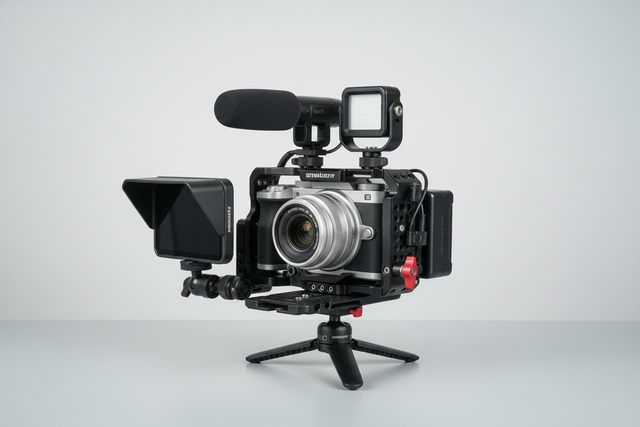
When you mount a monitor, a microphone, or a heavy lens on a cage, you are creating a lever arm. The further the weight is from the center of the QR plate, the higher the torque applied to the locking mechanism.
| Parameter | Value | Unit | Rationale |
|---|---|---|---|
| Rig Mass ($m$) | 2.8 | kg | Average prosumer cinema setup |
| Gravity ($g$) | 9.8 | $m/s^2$ | Earth standard |
| Lever Arm ($L$) | 0.35 | m | Distance from wrist/mount to center of gravity |
| Calculated Torque ($\tau$) | ~9.61 | $N\cdot m$ | Resulting force on the mounting interface |
Insight: In our modeling, a 2.8kg rig held 0.35m away from the mounting point generates approximately 9.61 $N\cdot m$ of torque. This load represents roughly 60-80% of the Maximum Voluntary Contraction (MVC) for an average adult male. By using modular systems like the F22 to move accessories closer to the camera body, you reduce this leverage, significantly extending the life of your primary F38 or F50 baseplate by reducing the "prying" force on the dovetail edges.
The Workflow ROI: Why Retirement is a Financial Gain
Retiring a $30 plate might feel like a waste, but let’s look at the "Workflow ROI." A failing QR system adds seconds of "fidget time" to every lens swap or battery change.
The Math of Efficiency:
- Traditional Thread Mounting: ~40 seconds per swap.
- Optimized Quick Release: ~3 seconds per swap.
- Time Saved: 37 seconds per swap.
If a professional creator performs 60 swaps per shoot and does 80 shoots per year, the system saves approximately 49 hours annually. At a professional rate of $120/hr, this represents a $5,900+ value. If a worn plate adds just 5 seconds of struggle due to poor fit, you are losing nearly 7 hours of billable time per year. Replacing the plate is the most cost-effective upgrade you can make.
For a deeper dive into how these engineering standards impact your bottom line, refer to The 2026 Creator Infrastructure Report: Engineering Standards, Workflow Compliance, and the Ecosystem Shift.
Practical Maintenance & Safety Workflows
To maximize the lifespan of your ecosystem before it hits the EOL checklist, we recommend a methodical approach to maintenance.
The "Pre-Shoot Safety Checklist"
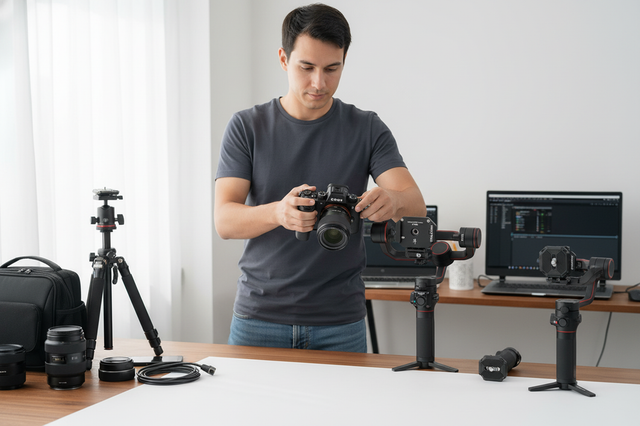
Before every production, perform these three checks:
- Audible: Do you hear a distinct "Click" when mounting?
- Tactile: Perform the "Tug Test." Pull the camera firmly upward and laterally immediately after locking. There should be zero movement.
- Visual: Check the locking pin indicator. Most modern systems use a color-coded (orange/silver) or physical position indicator to show the lock is engaged.
The Sand Factor
The single biggest accelerator of wear is particulate contamination. A single grain of sand trapped between an aluminum plate and a clamp acts as a lapping compound, grinding away the precision-machined edges in a single afternoon. If you are shooting in dusty or sandy environments, wipe your plates with a microfiber cloth after every removal.
Thermal Shock Prevention
Aluminum plates act as a "thermal bridge." In extreme cold, they conduct heat away from the camera base and battery rapidly. Pro Tip: Attach your aluminum QR plates to your cameras indoors before heading out into the cold. This allows the metal to reach ambient indoor temperature and reduces the "metal-to-skin" shock when handling the rig in the field.
Strategic Ecosystem Management
When a component fails the EOL checklist, do not simply throw it in a junk drawer where it might accidentally be used on a high-stakes shoot. We recommend a "tiered retirement" strategy:
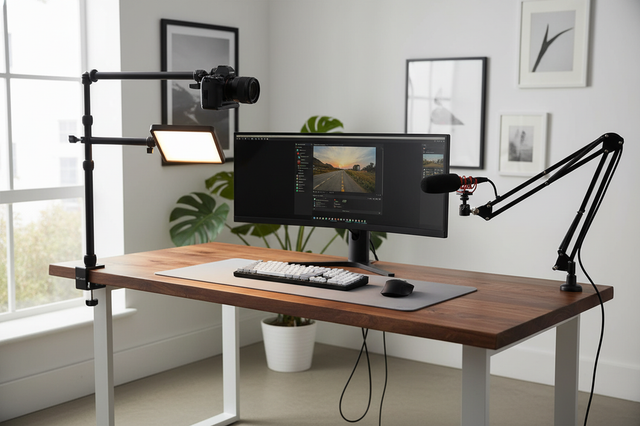
- Tier 1 (Primary): New or low-cycle plates used for main camera bodies and overhead mounts.
- Tier 2 (Static): Worn plates that still lock but have slight play. Relegate these to low-risk, static applications like mounting a light on a stand in a controlled studio.
- Tier 3 (Decommissioned): Any plate with visible metal shavings or failed locking springs should be recycled.
By treating your mounting ecosystem as a critical infrastructure layer rather than a collection of gadgets, you ensure that your workflow remains fast, your gear remains safe, and your focus remains on the creative process.
Disclaimer: This article is for informational purposes only. Mechanical failure can occur even in new equipment. Always use secondary safety tethers (lanyards) when mounting cameras in overhead or high-vibration environments.