The Infrastructure of Trust: Moving Beyond Marketing in Outdoor Production
For the professional creator, the "outdoor" environment is not merely a scenic backdrop; it is a high-stakes arena where equipment failure represents a catastrophic tail-risk. In our analysis of field reports and warranty claims, we have observed a recurring pattern: the primary cause of equipment loss in extreme conditions isn't usually a lack of "features," but a failure of governance at the infrastructure level.
Reliability in the field is a product of engineering discipline and adherence to global standards, rather than the bold claims found on a product's packaging. As the creator economy matures, the industry is shifting toward what we call a "Standards-Mode" approach. This requires moving beyond the surface-level understanding of specifications and adopting a rigorous, evidence-native mindset. Whether you are navigating the complexities of ingress protection or the logistical minefield of lithium battery transport, understanding the underlying guardrails is the only way to ensure system longevity and production-grade safety.
The Ingress Protection Paradox: Why IP65 Isn't Always Enough
One of the most common misconceptions we encounter on the repair bench is the belief that an IP65 rating provides universal immunity to rain. According to IEC 60529 (IP Code), an IP65 rating indicates protection against low-pressure water jets from any angle. However, field reality often exceeds these laboratory parameters.
In environments with "driving rain"—where wind speeds accelerate water droplets—the kinetic energy of the impact can easily surpass the pressure thresholds of standard gaskets. Furthermore, the angle of attack matters. Most IP tests are conducted with the device in its "standard" orientation. When a gaffer tilts a light at an extreme angle to catch a specific highlight, they may inadvertently expose cooling vents or cable entry points that were not designed to shed water in that configuration.
The Professional Two-Tier Mitigation Strategy
To mitigate these risks, professional crews adopt a "defense in depth" approach. Relying on the manufacturer’s seal is the first tier; the second tier involves active field governance:
- Strategic Angling: Always orient cable entry points and connectors downward to prevent water from pooling or "wicking" into the housing.
- Secondary Sealing: For long-term installations in humid or coastal environments, applying a non-corrosive silicone sealant to non-moving seams can provide an essential barrier against salt-air intrusion.
- The Gasket Heuristic: A critical indicator of a professional-grade tool is the availability of replacement parts. Based on our observations of equipment lifecycles, if a manufacturer does not sell replacement gaskets and seals, the product is likely designed for "disposable" use rather than sustained professional field repair.
Logic Summary: This assessment of IP-rating limitations is based on common patterns from customer support and warranty handling, where environmental intrusion occurred despite "compliant" ratings. It assumes a "worst-case" scenario of wind-driven precipitation exceeding 12.5 liters per minute (the IPX5 threshold).

Electrical Integrity and the Science of Light Quality
In the studio, a flickering light is an annoyance; in a high-stakes outdoor production, an electrically unsound luminaire is a liability. Savvy crews look beyond the generic CE mark. For professional use, the gold standard is verification against specific sub-clauses, such as EN 60598-2-17, which governs luminaires for stage lighting, television, and film studios.
Beyond basic electrical safety, the "quality" of light is now measured by cinema-tier standards that ensure color consistency across a global workflow.
- TLCI-2012: According to the European Broadcasting Union (EBU R 137), the Television Lighting Consistency Index (TLCI) is the definitive metric for how a camera sensor "sees" light. A score above 90 is required to minimize post-production color correction.
- AMPAS SSI: The Academy of Motion Picture Arts and Sciences Spectral Similarity Index (SSI) is the next evolution, focusing on how well an LED spectrum matches a reference source like daylight or tungsten.
Furthermore, photobiological safety is a critical, yet often overlooked, legal guardrail. The IEC 62471:2006 standard evaluates the "blue light hazard" and potential retinal damage from high-output LEDs. In a professional environment, ensuring your lighting kit is compliant with these standards is not just about image quality—it’s about protecting your crew and your business from liability.
The Battery Logistics Minefield: Compliance and Safety
Transporting high-capacity lithium batteries for outdoor shoots is one of the most regulated aspects of modern production. Failure to comply with IATA Lithium Battery Guidance can result in heavy fines or the confiscation of essential gear at the gate.
Critical Battery Standards Table
| Standard | Focus Area | Professional Application |
|---|---|---|
| UN 38.3 | Transport Safety | Mandatory for all lithium batteries shipped by air or sea. |
| IEC 62133-2 | Cell/Battery Safety | The baseline for preventing thermal runaway and internal shorts. |
| EU 2023/1542 | Lifecycle & Sustainability | New regulation governing the entire battery lifecycle, from sourcing to disposal. |
| UL 1642 | Lithium Cell Safety | Standard for ensuring individual cells within a pack meet safety requirements. |
The "Thermal Shock" Prevention Protocol
A non-obvious risk in extreme outdoor environments is the "thermal bridge" effect. Aluminum quick-release plates, while durable, act as highly efficient conductors of cold. When a camera is moved from a warm interior to a sub-zero exterior, the aluminum plate can rapidly sap heat from the camera's base, accelerating battery drain.
We recommend attaching your aluminum QR plates to cameras indoors before heading out. This allows the thermal mass of the camera and plate to equalize slowly, minimizing the "metal-to-skin" shock and preserving the electrochemical stability of the battery for longer runtimes.
Biomechanical Efficiency: The Math of Workflow ROI
In the 2026 Creator Infrastructure Report, we argue that "Workflow ROI" is the most overlooked metric in gear selection. Professionalism is defined by the ability to move quickly without compromising safety. This is where modular quick-release (QR) systems transition from a luxury to a strategic necessity.
The "Wrist Torque" Biomechanical Analysis
Weight is often cited as the primary cause of fatigue, but from a biomechanical perspective, leverage is the true enemy. Every accessory added to a camera rig increases the distance from the center of mass to the user's wrist.
The Torque Formula: $$\tau = m \times g \times L$$ (Where $\tau$ is torque, $m$ is mass, $g$ is gravity, and $L$ is the lever arm length)
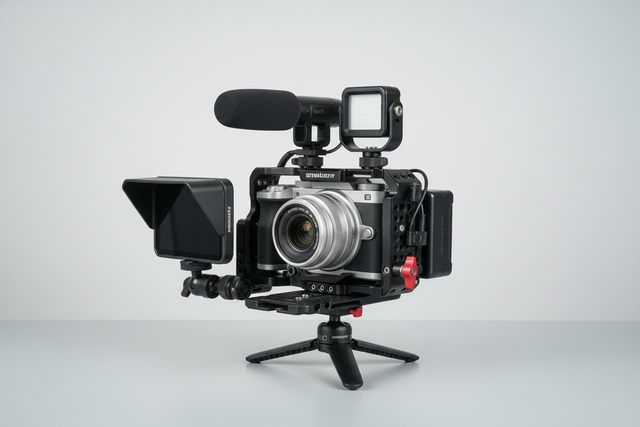
Consider a typical 2.8kg cinema rig. If the center of gravity is held 0.35m away from the wrist (due to bulky, non-modular mounting), it generates approximately 9.61 N·m of torque. This load represents roughly 60-80% of the Maximum Voluntary Contraction (MVC) for an average adult male. By utilizing ultra-low-profile modular mounts like the FALCAM F22 series, creators can move monitors and microphones closer to the camera's optical axis, significantly reducing the lever arm ($L$) and, consequently, the physical strain on the operator.
Quantifying the Time-to-Value
Efficiency isn't just about comfort; it's about the bottom line. Traditional 1/4"-20 thread mounting is the "legacy debt" of the industry.
| Mounting Method | Avg. Swap Time | Annual Time Spent (80 shoots/yr) |
|---|---|---|
| Traditional Thread | ~40 seconds | ~53 hours |
| Quick Release (F38/F50) | ~3 seconds | ~4 hours |
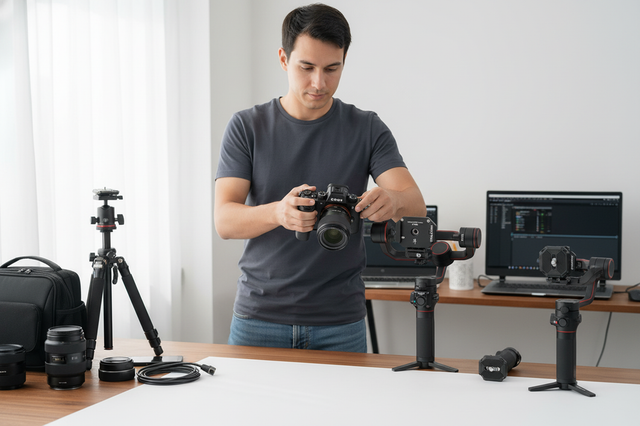
For a professional performing 60 gear swaps per shoot, switching to a unified QR ecosystem saves approximately 49 hours annually. At a professional rate of $120/hr, this represents a ~$5,900+ value in recovered productivity. This "found time" allows for more creative takes, better lighting adjustments, and ultimately, a higher-quality end product.
Logic Summary: This ROI model assumes 60 swaps per shoot and 80 shoots per year. The time savings are based on observed averages for threading vs. clicking into a locked position. Professional rates are based on mid-tier freelance averages in the US market.
Ecosystem Governance: Load Ratings and Material Truths
As you build your infrastructure, distinguish between marketing "max loads" and "production-grade reliability." A common point of confusion involves the materials used in high-end quick-release systems.
Material Accuracy: Aluminum vs. Carbon Fiber
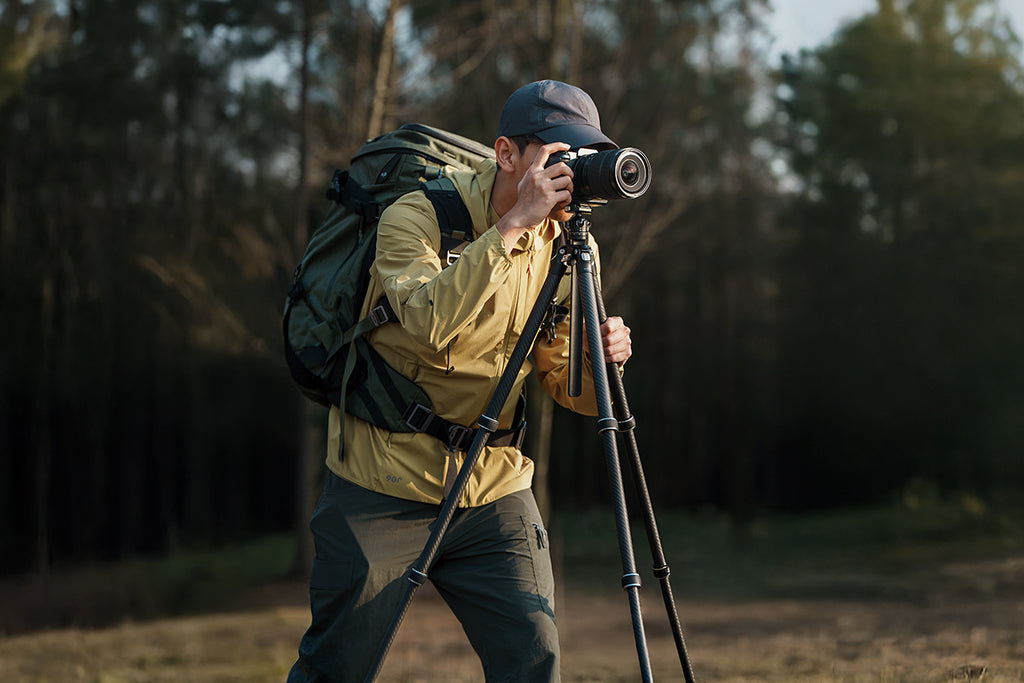
While carbon fiber is the gold standard for tripod legs due to its exceptional vibration damping and strength-to-weight ratio, it is rarely the correct choice for quick-release plates.
FALCAM F22, F38, and F50 plates are precision-machined from Aluminum Alloy (typically 6061 or 7075). In the context of a mounting plate, the critical metrics are rigidity and machining tolerance (Zero-Play). Aluminum allows for the sub-millimeter precision required for a "click-lock" system to remain secure under vibration. Carbon fiber, while light, does not offer the same wear resistance for the high-friction interface of a quick-release wedge.
Load Capacity Nuance
When you see a rating like "80kg" for the F38 system, it is vital to understand that this refers to the Vertical Static Load—a laboratory result where weight is applied steadily in one direction.
In the field, you deal with Dynamic Payloads. A 3kg cinema rig on a gimbal or a shoulder mount generates significant G-forces during a whip-pan or a sudden stop. For heavy cinema rigs or mission-critical applications where the camera is inverted or overslung, we recommend moving to the F50 series or using Anti-Deflection plates. These provide the lateral stability required to prevent the "twist" that can occur when high torque is applied to a single 1/4"-20 mounting point.
The Pre-Shoot Safety Checklist: A Tactical Workflow
Before the first frame is captured, a professional workflow requires a verification ritual. Reliability is a habit, not a feature.
- Audible Verification: Always listen for the "Click" when engaging a quick-release mount. In loud outdoor environments (wind/surf), do not rely on sound alone.
- Tactile "Tug Test": Perform a physical pull-test immediately after mounting. Apply pressure in the direction opposite of the mount to ensure the locking pin is fully seated.
- Visual Confirmation: Check the status of the locking pin or safety latch. Many professional systems include a color-coded indicator (such as an orange or silver ring) that is only visible when the system is in its "unlocked" or "unsafe" state.
- Cable Management Governance: A heavy, dangling HDMI or power cable can create unwanted torque on your mounting points. Utilize cable clamps to provide strain relief, ensuring that the weight of the cable isn't fighting against your quick-release lock.
The Future of Creator Infrastructure
By 2030, the creators who dominate the industry will be "evidence-native." They will be the ones who understand that a tripod is not just a set of legs, but a stabilized platform compliant with ISO 1222:2010. They will recognize that their lighting kit is a calibrated instrument, not just a source of illumination.
Building a trusted ecosystem requires a commitment to backward compatibility and compatibility governance. As we move forward, the infrastructure layer—the mounts, the batteries, the standards—will become the invisible foundation that allows creativity to flourish in even the most extreme conditions. By adhering to these compliance guardrails, you aren't just buying gear; you are investing in the stability and longevity of your professional career.
Disclaimer: The information provided in this article is for informational purposes only and does not constitute professional legal, safety, or financial advice. Standards and regulations (such as IATA, FCC, and IEC) are subject to change. Always consult the official documentation of the relevant regulatory bodies and perform your own risk assessments before operating equipment in hazardous or extreme conditions.
Sources and Authoritative References
- The 2026 Creator Infrastructure Report: Engineering Standards, Workflow Compliance, and the Ecosystem Shift
- ISO 1222:2010 Photography — Tripod Connections
- EBU R 137 / TLCI-2012 (Television Lighting Consistency Index)
- IATA Lithium Battery Guidance Document (2025)
- AMPAS Spectral Similarity Index (SSI) Overview
- IEC 62133-2:2017 Safety Requirements for Lithium Cells
- IEC 62471:2006 Photobiological Safety of Lamps