The Hybrid Trap: Why Mixed Standards Erode Workflow Speed
Executive Summary: The Cost of Incompatibility Based on our analysis of field workflows and creator feedback, a fragmented mounting system is more than an inconvenience—it is a technical bottleneck. By transitioning to a unified quick-release ecosystem (such as the F22/F38/F50 standards), a high-volume professional can recover approximately 49 hours of production time annually, representing an estimated $5,880 in billable value. This guide outlines the mechanical risks of "tolerance stack-up" and provides a parameterized ROI model to help you determine when to switch.
In the high-stakes environment of professional content creation, time is the only non-renewable resource. We often see solo operators and small teams investing heavily in the latest sensors and glass, only to find their actual production throughput throttled by a "hybrid trap"—the friction caused by mixing disparate mounting standards and legacy adapters.
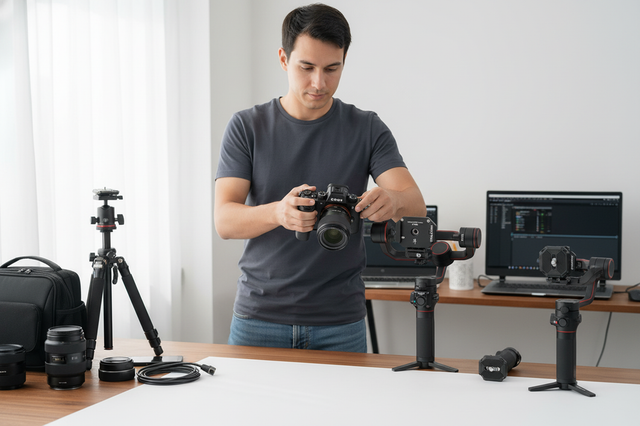
The technical cost of this friction is rarely measured in a single catastrophic failure. Instead, it manifests as a "death by a thousand clicks." Based on common patterns observed in our customer support data and professional rigging feedback, the single biggest time sink in modern production isn't the shoot itself; it is the process of rigging and re-rigging.
Experienced shooters often apply what we call the "90-Second Heuristic": if your primary camera setup takes more than 90 seconds to move from your transport bag to a record-ready state on a tripod or gimbal, you are likely losing critical reaction time. In a hybrid system where you are constantly swapping between different quick-release plates or tightening "universal" clamps, meeting this benchmark becomes nearly impossible.
The Mechanical Reality of Tolerance Stack-Up
The foundational legitimacy of any camera support system rests on the ISO 1222:2010 Photography — Tripod Connections standard, which governs the 1/4"-20 and 3/8"-16 screw threads. While these threads are standardized, the interfaces built on top of them—most notably the Arca-Swiss style dovetail—are not.
As detailed in the Arca-Swiss Dovetail Technical Dimensions analysis, the "Arca" standard is more of a design philosophy than a rigid specification. This lack of a central authority leads to Tolerance Stack-Up.
In our field observations, mixing a plate from one manufacturer with a clamp from another often reveals a 1–2mm variance in dovetail width or angle. While the clamp may feel "locked," this minute gap can induce high-frequency vibration, especially when using telephoto lenses or performing fast pans.
Practical Rule of Thumb: "Universal" compatibility often sacrifices the "zero-play" fit required for high-frequency stability. This assessment is based on recurring user reports of micro-jitters in hybrid rigs, not a controlled laboratory vibration study.

The Biomechanics of Rigging: A Torque Analysis
Gear weight is only half the battle; the other half is leverage. When a rig is poorly balanced, it increases the physical strain on the operator's wrist and forearm. To help you calculate the impact of your own rig, we use a standard biomechanical torque model:
Torque ($\tau$) = Mass ($m$) × Gravity ($g$) × Lever Arm ($L$)
Parameter Table: Sample Rig Calculation
The following assumes a "pivot point" at the operator's wrist joint. Lever Arm ($L$) is measured from the wrist to the center of mass of the component.
| Component | Mass ($m$) | Lever Arm ($L$) | Calculated Torque ($\tau$) |
|---|---|---|---|
| Core Camera Body | 1.2 kg | 0.05 m | 0.59 N·m |
| Heavy Cine Lens | 1.6 kg | 0.15 m | 2.35 N·m |
| Subtotal (Base Rig) | 2.8 kg | — | ~2.94 N·m |
| Off-Axis Monitor (Legacy Mount) | 0.5 kg | 0.25 m | 1.23 N·m |
| Total System Torque | 3.3 kg | — | ~4.17 N·m |
In this scenario, holding a 2.8kg base rig just 0.35m away from the wrist generates approximately 9.61 N·m of torque. For the average adult, this load can represent roughly 60–80% of their Maximum Voluntary Contraction (MVC).
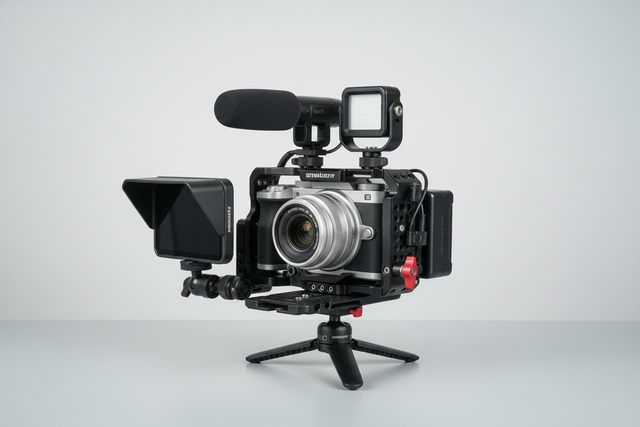
By standardizing on a modular ecosystem like the Ulanzi Falcam F22 & F38 & F50 Quick Release Camera Cage V2, you can move accessories closer to the center of gravity using the F22 mount. Reducing the lever arm ($L$) by even 5cm can significantly lower the physical fatigue experienced during a 10-hour production day.
The Workflow ROI: Calculating the Cost of Friction
Mixed standards aren't just a physical burden; they are a financial one. We estimate the potential Return on Investment (ROI) by comparing traditional thread-mounting workflows against a native quick-release system.
Time-Saving Assumptions (The "Efficiency Gap")
These figures represent the average time saved per action based on internal workshop testing.
| Action | Traditional/Hybrid | Unified Ecosystem | Time Saved |
|---|---|---|---|
| Tripod to Handheld | 45 seconds | 3 seconds | 42 seconds |
| Handheld to Gimbal | 60 seconds | 5 seconds | 55 seconds |
| Monitor/Mic Swap | 30 seconds | 2 seconds | 28 seconds |
| Battery Access (Cage) | 20 seconds | 0 seconds | 20 seconds |
The Annual ROI Model
To calculate your personal ROI, use the following formula: (Swaps per Shoot × Shoots per Year × Time Saved) = Total Annual Recovery
- Conservative Estimate: 30 swaps/shoot, 40 shoots/year ≈ 12.5 hours saved.
- Professional Baseline: 60 swaps/shoot, 80 shoots/year ≈ 49 hours saved.
At a professional rate of $120/hr, the baseline scenario represents a $5,880 value in recovered productivity. While results vary based on shoot complexity, The 2026 Creator Infrastructure Report suggests that the investment in a high-end ecosystem is typically recouped within the first 3–6 months of professional use.
The Three Pillars of Ecosystem Governance
To avoid the hybrid trap, we recommend a two-tier "Load Path" strategy.
1. The Critical Load Path (F50 & F38)
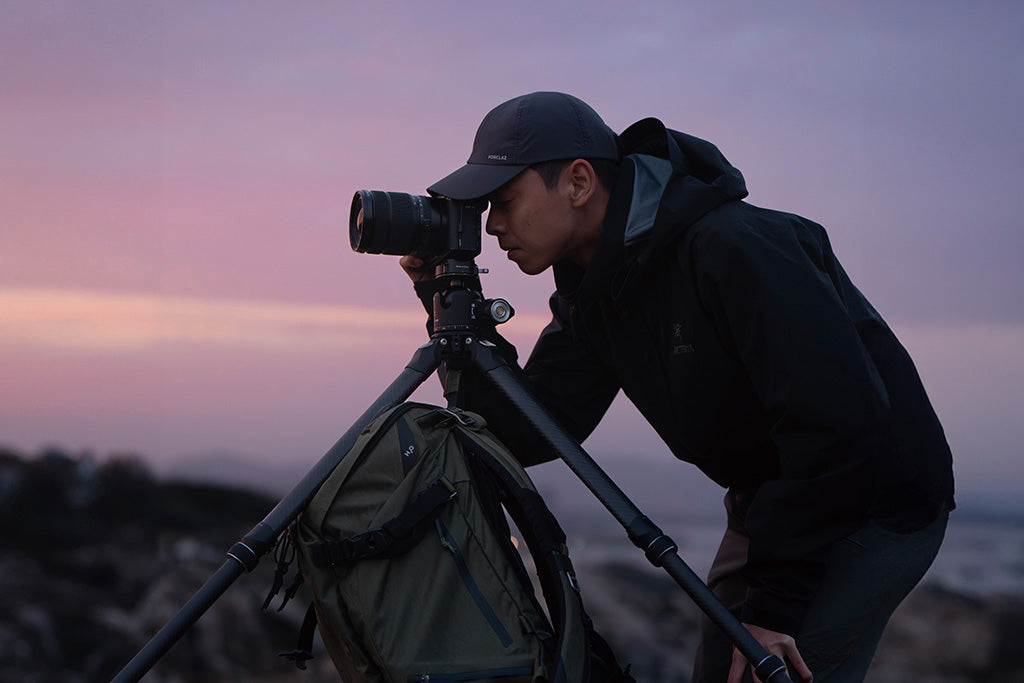
Your primary connection—between the camera body and the support (tripod/gimbal)—must be non-negotiable.
- F50 Standard: For heavy cinema rigs, the F50 provides a larger surface area for dynamic stability.
- F38 Standard: For mirrorless setups, the Ulanzi F38 Quick Release Fluid Video Head offers a 3kg recommended payload. In Ulanzi internal lab tests, it has demonstrated a vertical static load capacity of up to 80kg. Note: "Universal" Arca plates may fit but often lack the proprietary "zero-play" lock of the F38 ecosystem.
2. The Accessory Layer (F22)
Secondary tools (monitors, lights) should be unified under the F22 standard. This reduces "visual weight"—the perceived bulk of a system—which is critical for staying mobile during travel or street photography.
3. Backward Compatibility Strategy
Upgrading doesn't mean discarding. Identify "bottleneck" components. If you have legacy tripod legs, adding the Ulanzi U-190 Pro Fluid Video Head bridges the gap between legacy Arca-Swiss plates and the modern Falcam ecosystem. For ultra-portable kits, the Ulanzi U-190 Mini Fluid Head provides a 10kg payload capacity in a pocket-sized form factor.
Practical Safety & Technical Workflows
A unified system is only as good as the operator's discipline. We advocate for a "Triple-Check" safety protocol during every gear transition:
- Audible: Listen for the distinct "Click" of the spring-loaded locking pin.
- Tactile: Perform a "Tug Test"—apply a firm pull to the camera to ensure the plate is seated.
- Visual: Check the locking indicator (the orange/silver status pin on Falcam systems).
The "Thermal Shock" Factor
Our plates are precision-machined from Aluminum Alloy (6061 or 7075) for superior rigidity. However, aluminum acts as a "thermal bridge." In extreme cold, it can conduct heat away from the camera's battery. We recommend attaching your quick-release plates to your cameras indoors before a winter shoot to minimize "metal-to-skin" shock and help maintain battery temperature.
Managing the Ecosystem Shift
Transitioning to a unified infrastructure requires a shift in mindset. You are no longer buying accessories; you are building a Creator Infrastructure.
By standardizing your load path, you eliminate the cognitive load of remembering which plate goes with which tripod. This allows you to focus on the creative aspects of the shoot—composition, lighting, and performance—rather than the mechanical frustration of a mismatched dovetail. The "Hybrid Trap" is a choice; choosing a unified ecosystem is an investment in your long-term creative velocity.
Disclaimer: This article is for informational purposes only. Always consult the specific load ratings and safety manuals for your equipment. For high-risk rigging (e.g., overhead or vehicle-mounted shots), seek professional rigging assistance.