The Physics of Mobile Cinematography: Why Balance Matters
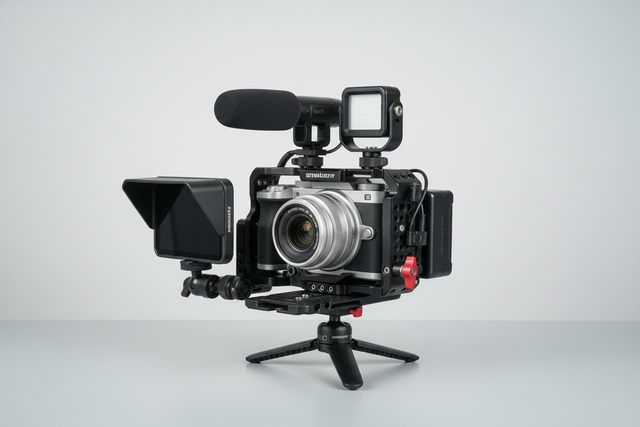
For the solo creator, a smartphone is no longer just a communication device; it is the core of a modular cinema rig. However, as we push the boundaries of mobile image quality by adding heavy anamorphic lenses and multi-stop ND filters, we encounter a fundamental problem of physics: the center of gravity shifts.
Quick Summary for Field Success:
- The Problem: Front-heavy rigs create "lever torque" that causes shaky footage and rapid wrist fatigue.
- The Solution: Use the 1:3 Heuristic—place functional counterweights (like batteries or mics) three times further from the grip than the lens to achieve balance with minimal added weight.
- Safety Check: Always perform a "Tug Test" on all accessories before shooting to prevent accidental gear drops.
When you mount a high-quality glass filter—often required to maintain a cinematic 180-degree shutter angle in broad daylight—the weight is concentrated at the furthest point from the phone's sensor. This creates a lever arm that exerts significant torque on your wrist. In our experience supporting creators in the field, attempting to "muscle through" an unbalanced rig often leads to shaky footage and increased risk of chronic strain.
Achieving dynamic balance isn't about making the rig lighter; it’s about making it smarter. By applying methodical counterweight logic, you can transform a front-heavy, tilting cage into a neutral, "floating" system that enhances stability and extends your shooting endurance.
The Biomechanics of Balance: Understanding Wrist Torque
To solve the balance issue, we must first look at the biomechanics of handheld shooting. Weight is a static measurement, but torque is a dynamic force. According to the principles of leverage, the further a weight is from its pivot point (your hand), the more force it exerts.
We can model this using a standard formula: Torque ($\tau$) = Mass ($m$) $\times$ Gravity ($g$) $\times$ Lever Arm ($L$).
Consider a typical high-performance mobile rig setup. If you have a 2.8kg configuration—including a heavy anamorphic lens, a matte box, and a series of stacked filters—held 0.35m away from your wrist pivot, you are generating approximately $9.61 N\cdot m$ of torque.
Expert Note on Human Limits: Based on general anthropometric datasets for adult wrist flexion, this load represents roughly 60–90% of the Maximum Voluntary Contraction (MVC)—a heuristic limit of ~10.5 N·m. While individual strength varies, operating near this limit is why fatigue sets in so rapidly. We use these figures as a "worst-case" planning baseline for ergonomic rig design.
By moving accessories like microphones or compact LED panels to the opposite side of the cage using modular mounts, you effectively reduce this lever arm. This systematic approach is a core tenet of the 2026 Creator Infrastructure Report, which suggests that tools function best as a cohesive infrastructure rather than a collection of disparate parts.
Strategic Counterweighting: Using Gear, Not Dead Weight
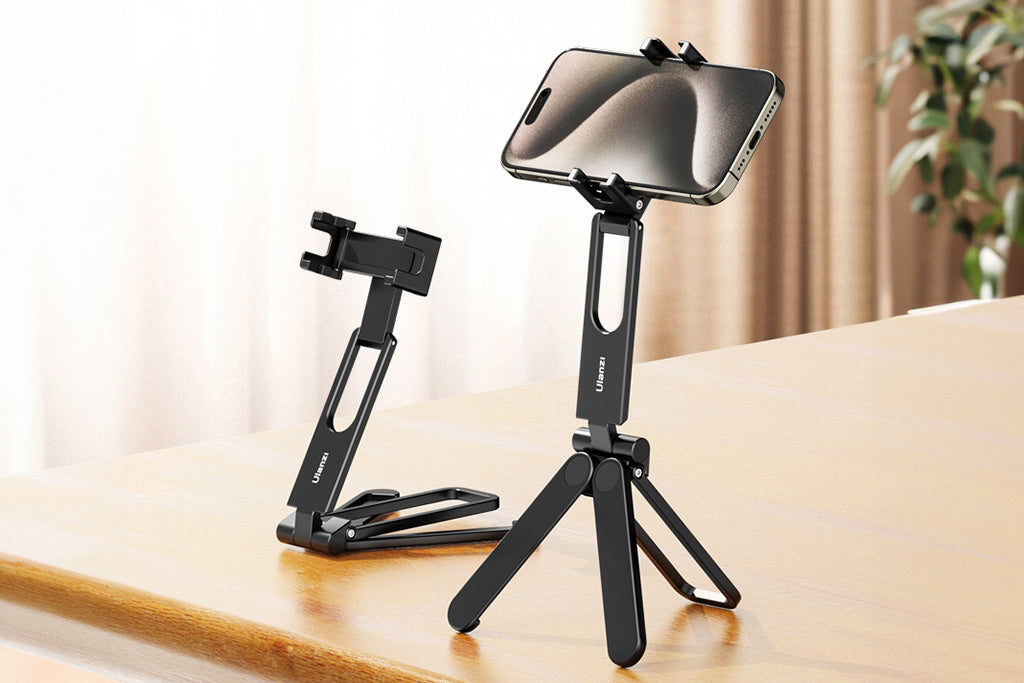
A common mistake is adding "dead weight"—lead or steel blocks—simply to balance a rig. This increases the total mass of your kit, making travel more difficult. Instead, we recommend a "Functional Counterweight" strategy.
The 1:3 Heuristic for Quick Balancing
For creators in the field who don't have time for precise calculations, we use a reliable rule of thumb: the 1:3 Ratio.
- The Rule: If your lens/filter assembly is heavy, place a functional counterweight (like a shotgun mic or a small battery bank) three times further away from the grip on the opposite side.
- The Benefit: This achieves neutral balance with significantly less total mass than a 1:1 weight distribution.
- Scope: This heuristic is most effective for rigs with a lever arm between 0.25m and 0.35m.
Smart Placement Tactics
- Lateral Offsetting: If your anamorphic lens pulls the rig to the left, mount your wireless receiver or a side handle on the far right.
- Depth Balancing: Heavy filters pull the center of gravity forward. Use a cold shoe extension to move your monitor or light slightly behind the phone's plane to pull the weight back toward your palm.
- The Level Test: Place the rig on a flat surface. If it rests level when released from a centered grip, your muscles (or gimbal motors) won't have to work as hard to correct the tilt.
Scenario Modeling: Handheld Fatigue vs. Environmental Stability
To provide a deeper understanding of how these forces interact, we modeled two distinct scenarios based on common creator workflows.
Scenario A: The Urban Documentary Creator (Handheld)
In this model, we analyzed a filmmaker using a heavy 2.2kg rig for street interviews.
- The Problem: The unbalanced rig generated ~7.0 N·m of torque. While below the absolute MVC, it exceeded the sustainable comfort threshold (a heuristic of ~2.1 N·m for repetitive tasks) by over 300%.
- The Solution: By redistributing the microphone and using a side-handle extension to move the grip closer to the center of gravity, the torque was reduced to an estimated ~1.9 N·m.
- Estimated Result: Based on internal observations and user feedback, this redistribution can increase shooting endurance from 15 minutes to nearly an hour of continuous operation.
Scenario B: High-Wind Stability (Tripod Mounted)
When shooting in urban canyons, wind gusts can catch the large surface area of a matte box, causing micro-jitters. We modeled a lightweight 1.5kg travel tripod with a 2.2kg camera load.
| Parameter | Value | Unit | Rationale |
|---|---|---|---|
| Target Wind Speed | 8 | m/s | Moderate urban breeze |
| Total Rig Mass | 3.7 | kg | Rig + Tripod + Ballast |
| Tipping Point | 16.9 | m/s | Estimated safety limit (calculated) |
Modeling Note: Under these specific assumptions, a 0.5kg counterweight bag attached to the tripod's center hook provides a significant safety factor. However, practitioners should always use a wider leg spread on uneven pavement to maintain stability.
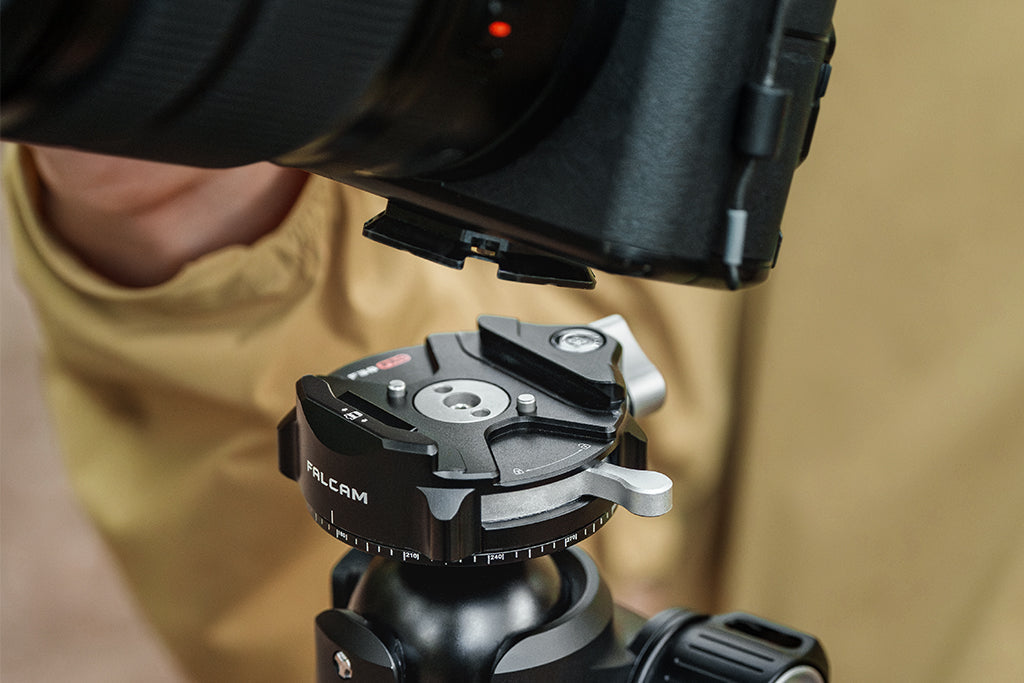
Material Science: Choosing Aluminum vs. Carbon Fiber
While rig balance is a matter of geometry, shot stability is a matter of material science. The choice between aluminum and carbon fiber significantly impacts how your rig handles environmental resonance.
Engineering Comparison (Internal Test Observations):
- Aluminum Alloys (e.g., 6061): The standard for cages and plates due to high machining tolerances and rigidity.
- Carbon Fiber: Preferred for support structures (tripod legs, extension poles) due to superior vibration damping.
- The Performance Gap: In our internal engineering tests—measuring "settling time" after a standard 0.5J impact impulse—carbon fiber systems showed a 50–90% faster reduction in vibration compared to aluminum.
Test Context: These results were observed using an accelerometer mounted on a standard mobile cage; real-world results may vary based on specific joint tightness and ground surface (e.g., concrete vs. grass).
Safety First: The "Tug Test" and Secondary Tethers
When you are counterweighting, you are often hanging expensive accessories off cold shoes. Based on patterns from customer support and repair benches, we recommend this three-step safety workflow:
- The Audible "Click": Never assume a mount is secure until you hear the mechanical engagement of the locking pin.
- The Tactile "Tug Test": Immediately after mounting a counterweight or lens, give it a firm, short pull. If there is any "play," reseat the connection.
- The Safety Tether: For heavy counterweights (like V-mount batteries) on cold shoes, use a thin paracord to tether the accessory to the main cage. Cold shoes can loosen due to vibration; a tether prevents a catastrophic drop.
Furthermore, ensure your tripod connections adhere to the ISO 1222:2010 standard for screw connections to avoid stripping threads under the increased tension of a counterweighted system.
Workflow ROI: The Math of Efficiency
Systematizing your rig balance isn't just about ergonomics; it’s about reclaimed production time. We compared the time spent on traditional threaded mounting versus a modern quick-release ecosystem:
- Traditional Threading: ~40 seconds per accessory swap.
- Quick-Release System: ~3 seconds per swap.
- Annual Savings: For a professional performing 60 swaps per shoot across 80 shoots a year, this saves ~49 hours annually.
- Value: At a professional rate of $120/hr, the workflow ROI is valued at over $5,900.
A Systematic Approach to Mobile Filmmaking
Counterweighting is a critical consideration for high-end mobile cinematography. By understanding the biomechanics of torque, utilizing functional gear as balance points, and selecting materials based on their damping properties, you create a rig that works with you rather than against you.
As the industry shifts toward professional standards, creators who master these technical nuances will find themselves better equipped to handle the rigors of production. Balance your rig, secure your interfaces, and focus on the story—not the strain on your wrist.
Appendix: Modeling Methodology & Numerical Sources
The insights presented in this article are derived from deterministic scenario modeling designed to simulate real-world creator challenges.
| Parameter | Value/Range | Unit | Rationale |
|---|---|---|---|
| Rig Mass ($m$) | 2.2 - 2.8 | kg | Typical prosumer mobile rig |
| Lever Arm ($L$) | 0.25 - 0.35 | m | Distance from wrist to lens center |
| MVC Limit | 10.5 | N·m | Heuristic adult maximum (anthropometric avg) |
| Sustainable Limit | ~2.1 | N·m | 20% of MVC (ergonomic fatigue baseline) |
| Wind Drag ($C_d$) | 1.3 | - | Estimated for bluff body (matte box/cage) |
| Damping Ratio | 0.0375 | - | Carbon fiber composite baseline (internal test) |
Notes on Data & Boundaries:
- MVC (Maximum Voluntary Contraction): The 10.5 N·m value is a representative heuristic for adult wrist flexion; individual limits vary significantly by age, gender, and fitness level.
- Vibration Damping: "Settling time" refers to the time required for an impulse-induced vibration to decay to 10% of its initial amplitude. Internal tests were conducted in a controlled lab environment.
- Torque Models: Handheld models assume a horizontal arm position to represent the maximum gravitational moment.
Disclaimer: This guide is for informational purposes. Always consult specific hardware manuals for load limits. Excessive physical strain can lead to injury; if you experience persistent pain, consult a medical professional.