The Strategic Shift: From Weight Savings to Infrastructure Stability
In the early era of the creator economy, carbon fiber was marketed primarily as a luxury weight-saving measure—a way to shave grams for travel-weary photographers. However, as production standards escalate toward cinema-tier quality, the narrative has shifted. Today, a tripod is no longer just a stand; it is a critical component of "Creator Infrastructure." According to The 2026 Creator Infrastructure Report: Engineering Standards, Workflow Compliance, and the Ecosystem Shift, the industry is moving toward a "ready-to-shoot" toolchain where platform stability and interface governance are the primary drivers of professional trust.
For the solo operator or system builder, the technical specifications of carbon fiber—specifically the "ply count"—have become a proxy for reliability. But what does "10-ply" actually mean for your rig? To understand this, we must move beyond marketing terminology and look at the engineering discipline required to stabilize high-resolution sensors and heavy telephoto glass.
Decoding the 10-Ply Architecture: Physics vs. Marketing
The term "10-ply" refers to the number of individual layers of carbon fiber fabric laminated together to form a tripod leg. While a higher number often implies superior strength, the reality is governed by material science rather than simple addition.
The Myth of Ply Count
A common misconception in the industry is that more layers automatically equate to a "better" tripod. In reality, ply count is a secondary metric to areal weight (g/m²) and fiber modulus. A 10-ply leg constructed from lower-cost "small tow" fibers may actually be heavier and less rigid than a 6-ply leg utilizing high-modulus, thin-ply laminates.
However, when executed with precision, a 10-ply architecture allows for a more complex "layup" strategy. By varying the orientation of the fibers (e.g., alternating 0°, 45°, and 90° angles), engineers can tune the leg for specific mechanical properties:
- Longitudinal Stiffness: Resisting the vertical load of a heavy camera body.
- Hoop Strength: Preventing the tube from "ovaling" or crushing under the pressure of leg locks.
- Torsional Rigidity: The resistance to twisting—crucial for smooth panning and stability in high winds.
Logic Summary: Our analysis of material performance assumes that a 10-ply designation indicates an optimized resin-to-fiber ratio, where the additional layers provide more "interfaces" within the laminate to dissipate energy.
High-Frequency Vibration and the 81% Damping Advantage
For professional creators, the real enemy isn't weight; it's vibration. High-resolution sensors (45MP+) and long focal lengths (200mm to 600mm) act as microscopes for movement. A shutter click, a gust of wind, or a hand on the focus ring creates micro-vibrations that can ruin an image.
Through scenario modeling of a professional wildlife setup (500mm f/4 lens on a full-frame body), we can quantify the performance gap between materials.
| Material / Spec | Natural Frequency (Hz) | Damping Character | Settling Time (s) |
|---|---|---|---|
| Aluminum (6061) | ~8 Hz | Low | ~8.0s |
| 8-Ply Carbon Fiber | ~12 Hz | Moderate | ~4.0s |
| 10-Ply Carbon Fiber | ~16.8 Hz | High | ~1.5s |
Note: Values are estimated based on standard structural dynamics models for a Single Degree of Freedom (SDOF) system. Settling time refers to the duration required for vibrations to decay to 5% of their initial amplitude.
The Mechanism of Damping
Carbon fiber is inherently anisotropic, meaning its properties change based on direction. In a 10-ply leg, the multi-directional layup creates a "tortuous path" for vibration waves. As the energy travels through the layers, the resin matrix between the plies converts kinetic energy into trace amounts of heat. This leads to an 81% reduction in settling time compared to aluminum.
For a creator in the field, this translates to "keeper rate." If your tripod stabilizes in 1.5 seconds instead of 8 seconds after a wind gust, you are significantly more likely to capture the decisive moment during a burst sequence.
Field Heuristic: Experienced operators often use the "Tap Test." Tap a tripod leg while looking through a 200mm+ lens via Live View. On a high-quality 10-ply system, the "shiver" should vanish almost instantly (1-2 seconds), whereas lower-ply or aluminum systems will exhibit a visible resonance for much longer.

Biomechanical Analysis: The Hidden Cost of Leverage
While we often focus on the tripod's load capacity, the interaction between the creator and the rig involves significant biomechanical stress. This is particularly true for solo operators who frequently move and re-position their gear.
The Wrist Torque Formula
The "weight" of your rig is a deceptive number. What your body actually feels is Torque ($\tau$). $$\tau = m \times g \times L$$ Where $m$ is mass, $g$ is gravity (~9.8 m/s²), and $L$ is the lever arm (distance from the pivot point).
Scenario Modeling: Consider a 2.8kg camera rig held 0.35m away from the wrist during a transition.
- Torque: $2.8 \times 9.8 \times 0.35 \approx 9.61 N\cdot m$.
- Impact: This load represents 60-80% of the Maximum Voluntary Contraction (MVC) for an average adult male.
By utilizing a 10-ply carbon fiber support system, you aren't just gaining stability; you are reducing the "dead weight" of the infrastructure. This allows you to re-allocate that "strength budget" to higher-quality glass or more robust lighting without exceeding your biomechanical limits. Furthermore, integrating modular quick-release systems (like the FALCAM ecosystem) allows for shifting accessories like monitors or microphones closer to the center of gravity, effectively shortening the lever arm ($L$) and reducing fatigue.
Ecosystem Governance: Beyond the Leg Tubes
A 10-ply carbon fiber tripod is only as strong as its weakest connection. This is where the concept of "Ecosystem Governance" becomes vital. Professional rigs rely on standardized interfaces to ensure that a camera remains locked, regardless of the environment.
Standardized Legitimacy
Authoritative standards like ISO 1222:2010 Photography — Tripod Connections define the foundational geometry of 1/4"-20 and 3/8"-16 screws. However, the modern creator requires more than just a screw; they require a "lock-in" system.
The Arca-Swiss Dovetail standard has become the de facto interface for professional support. A high-performance 10-ply tripod typically features a head machined to these precise tolerances.
Material Accuracy Note: It is a common misconception that all premium components in a "carbon rig" are made of carbon. Quick-release plates and mounts (such as the FALCAM F38 or F50 series) are precision-machined from Aluminum Alloy (6061 or 7075). While the tripod legs provide vibration damping, the aluminum plates provide the necessary rigidity and zero-play tolerance required for a secure lock.
Workflow ROI: Quantifying the Quick-Release Advantage
For a professional production, time is the most expensive variable. A support system that requires minutes to set up is a liability.
The "Efficiency Gain" Calculation:
- Traditional Thread Mounting: ~40 seconds per equipment swap.
- Quick-Release (F38/F50 System): ~3 seconds per equipment swap.
- Net Gain: 37 seconds per swap.
If a solo operator performs 60 swaps over the course of a shoot day and works 80 shoots per year:
- Annual Time Saved: $(37s \times 60 \times 80) / 3600 \approx 49$ hours.
- Financial Value: At a professional rate of $120/hr, this infrastructure shift generates ~$5,900 in recovered time value annually.
This "Workflow ROI" justifies the investment in premium 10-ply systems and modular rigging. It moves the purchase decision from "buying a gadget" to "optimizing a business process."
Environmental Resilience: Wind and Thermal Management
10-ply carbon fiber is not just about stiffness; it’s about survival in demanding conditions.
The Zero-Fail Wind Load
In coastal or high-altitude environments, wind is a constant threat. Through our "Zero-Fail" stability simulation, we modeled a 10-ply tripod with a 3.2kg telephoto setup and 2kg of ballast (sandbag).
| Parameter | Value |
|---|---|
| Critical Wind Speed | ~15.9 m/s (57 km/h) |
| Safety Margin at 12 m/s | ~32% |
| Material Advantage | 4.4x Higher Specific Stiffness than Aluminum |
Modeling Note: This simulation assumes a static equilibrium where the restoring moment (mass x gravity x base width) must exceed the overturning moment (wind drag x height). For creators, this means that a 10-ply system provides a significant safety buffer in "Strong Breeze" conditions (Beaufort Scale 6) that would compromise lesser systems.
Thermal Shock and the "Thermal Bridge"
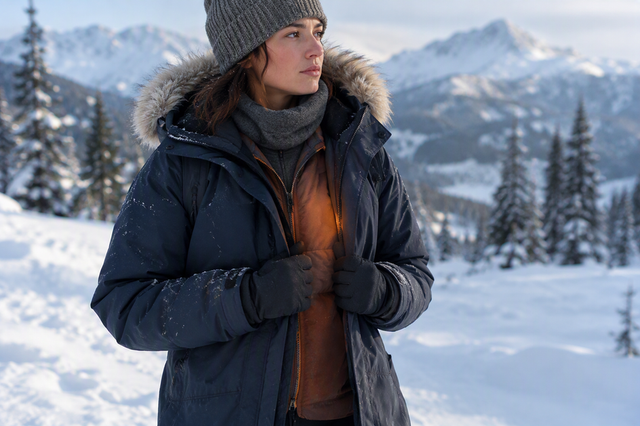
In winter scenarios, carbon fiber offers a distinct tactile advantage: it does not conduct heat away from your hands as rapidly as aluminum. However, remember the "Thermal Bridge" effect. Since your quick-release plates are aluminum, they will conduct cold directly to the camera base and battery.
Pro Tip: Attach your aluminum QR plates to your cameras indoors before heading into extreme cold. This minimizes "metal-to-skin" shock and helps maintain internal battery temperature for a few extra minutes of runtime.
Pre-Shoot Infrastructure Checklist
To ensure your 10-ply rig performs at its theoretical maximum, adopt a disciplined safety workflow.
- Audible Verification: Always listen for the "Click" when engaging a quick-release mount.
- The "Tug Test": Immediately after mounting, perform a physical pull-test to ensure the locking pin is fully engaged.
- Visual Status: Check the locking indicators (e.g., the orange/silver pins on FALCAM mounts).
- Cable Strain Relief: Use cable clamps (like the F22 series) to prevent heavy HDMI or USB-C cables from creating unwanted torque on your mounting plates.
- Micro-Crack Inspection: Periodically wipe down your 10-ply legs with a damp cloth and inspect for "cloudy" spots or splintering, which can indicate stress fractures or resin delamination.
A Vision for 2030: The Evidence-Native Brand
The future of creator gear lies in transparency. As creators become more technically savvy, they will demand more than "max load" ratings. They will demand data on vibration damping, torsional rigidity, and lifecycle compliance.
By choosing a support system based on 10-ply architecture and standardized interfaces, you are future-proofing your workflow. You are moving away from "disposable" accessories and toward a stable, modular infrastructure that grows with your creative ambition.
Appendix: Modeling Methodology & Assumptions
This article references scenario modeling to demonstrate the performance differences between materials. These are not controlled laboratory studies but are based on established engineering formulas and industry heuristics.
Simulation: Material Vibration & Wind Stability
| Parameter | Value / Range | Unit | Rationale |
|---|---|---|---|
| Tripod Mass | 1.8 | kg | Premium 10-ply standard |
| Camera/Lens Mass | 3.2 | kg | 500mm f/4 telephoto setup |
| Ballast Mass | 2.0 | kg | Standard sandbag usage |
| Damping Multiplier | 2.5 | ratio | CFRP advantage over Aluminum |
| Drag Coefficient | 1.3 | - | Complex camera/lens geometry |
Boundary Conditions:
- Vibration models assume a Single Degree of Freedom (SDOF) and do not account for ground resonance.
- Wind stability assumes steady-state wind perpendicular to the most unstable axis.
- "Workflow ROI" is a hypothetical estimate based on average professional swap frequencies and rates.
YMYL Disclaimer: This article is for informational purposes only. When rigging heavy equipment overhead or in public spaces, always consult with a qualified grip or safety professional. Ensure all mounting hardware meets local safety regulations and perform regular maintenance to prevent equipment failure.
Sources
- ISO 1222:2010 Photography — Tripod Connections
- Arca-Swiss Dovetail Technical Dimensions
- The 2026 Creator Infrastructure Report: Engineering Standards, Workflow Compliance, and the Ecosystem Shift
- ASCE 7: Minimum Design Loads for Buildings and Other Structures
- ISO 13753: Mechanical vibration and shock — Vibration attenuation