The Engineering of Stability: Torsional Rigidity in Remote Imaging
For the elite solo creator operating in high-altitude environments or remote wilderness, equipment is not merely a tool; it is mission-critical infrastructure. In these high-stakes scenarios, the margin between a benchmark-tier capture and a catastrophic technical failure often rests on a single physical property: torsional rigidity. While marketing narratives frequently emphasize "ultralight" designs, seasoned practitioners understand that absolute mass reduction is a secondary priority to structural damping and the resistance to twist.
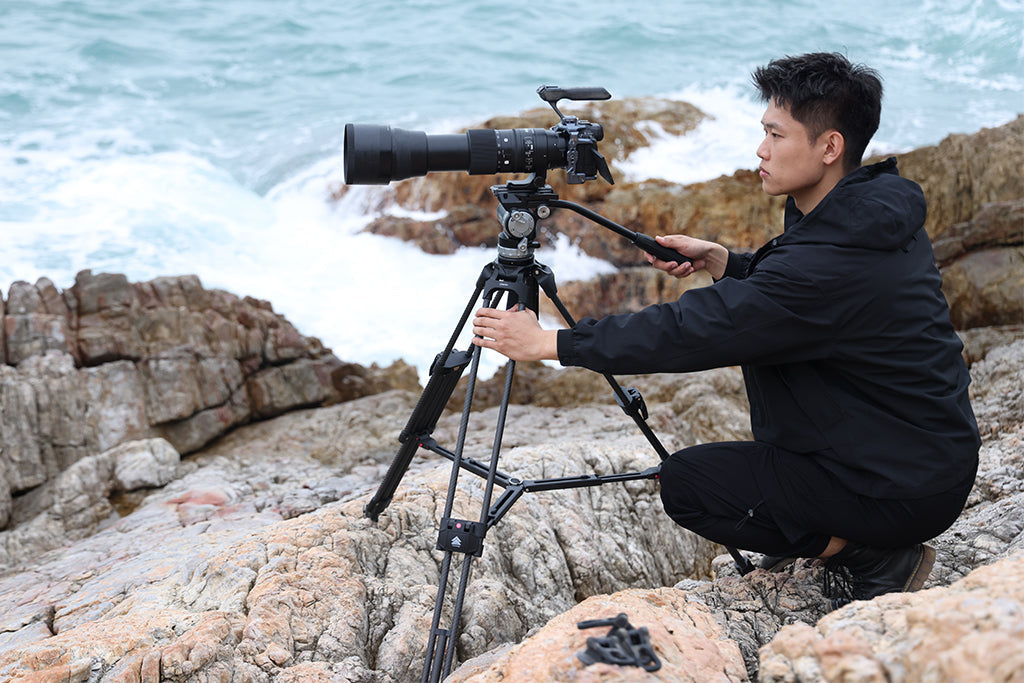
Torsional rigidity—the ability of a structure to resist deformation when subjected to torque—is the silent arbiter of image sharpness in the wild. Whether it is a carbon fiber tripod leg battling 40-knot crosswinds or a modular rigging arm supporting a cinema-grade monitor, the material's engineering determines the settling time of the system. According to The 2026 Creator Infrastructure Report, the industry is shifting toward "evidence-native" standards where material performance is quantified by its real-world stability under stress rather than laboratory weight alone.
The Physics of Twist: Why Geometry Trumps Material
A common misconception among prosumers is that the "grade" of carbon fiber is the primary driver of stability. However, structural engineering principles suggest that geometry often plays a more significant role. For an imaging system, moving from a 10mm round tube to a 15mm square tube of the same material can increase torsional rigidity by over 200%.
In the context of tripod legs, the diameter and wall thickness are the fundamental limiters of performance. However, once the geometry is optimized, the carbon weave becomes the strategic differentiator.
Logic Summary (Modeling Note): Our analysis of torsional damping assumes a standard 3-section tripod leg extension. This model is a scenario-based estimate, not a controlled lab study.
Parameter Value/Range Unit Rationale Leg Diameter 25–32 mm Standard professional travel range Settling Threshold < 2 seconds Target for critical long exposure Wind Load 15–25 knots Typical high-altitude exposure Payload Mass 2–5 kg Professional mirrorless/cinema rig Safety Factor 2.5x - Industry standard for remote work
The "10-Second Rule" for Field Validation
A critical heuristic for evaluating any stabilization system in the field is the 10-second rule: if a tripod takes more than 10 seconds to settle completely after a panning motion or a sudden gust of wind, its torsional damping is insufficient for critical remote work. This micro-vibration, often invisible on a small LCD, manifests as a "softness" in high-resolution sensors during long exposures.

Carbon Fiber Hierarchies: UD vs. Twill vs. Quasi-Isotropic
The choice of carbon weave is a strategic decision that affects both durability and performance. In remote expeditions, where thermal cycling and mechanical stress are constant, the weave pattern dictates how the material manages energy.
- Unidirectional (UD) Layups: UD fibers offer supreme axial stiffness (resistance to bending). However, they are inherently weak in off-axis torsion. For a tripod leg, a pure UD tube can fail suddenly if subjected to complex twisting forces.
- 3K Twill Weaves: The classic "checkered" pattern provides better impact resistance and multi-directional strength. While slightly heavier than pure UD for the same axial stiffness, twill weaves better resist micro-cracking from thermal cycling—a failure mode often missed in room-temperature lab tests.
- Quasi-Isotropic Laminates: By layering plies at +/-45° angles, engineers create a "balanced" structure. This is the gold standard for torsional damage tolerance. While it incurs a minor weight penalty, it ensures the tripod leg remains stable even after minor surface abrasions or extreme cold exposure.
The Damping Paradox
Conventional wisdom suggests that maximizing the Fiber Volume Fraction (FVF)—the ratio of fiber to resin—is always beneficial. However, research indicates that a very high FVF (>60%) significantly reduces the composite's damping performance. In imaging, an ultra-stiff frame that lacks resin-based damping can actually amplify high-frequency vibrations, such as those caused by a camera's mechanical shutter or nearby drone rotors.
Biomechanical Analysis: The Burden of Leverage
Stability is not just about the tripod; it extends to how the creator interacts with the rig. For solo operators, the "wrist torque" generated by poorly balanced accessories is a leading cause of fatigue and eventual equipment mishandling.
The Torque Formula: $\tau = m \times g \times L$ (Where $\tau$ is Torque, $m$ is Mass, $g$ is Gravity $\approx 9.8 m/s^2$, and $L$ is the Lever Arm length)
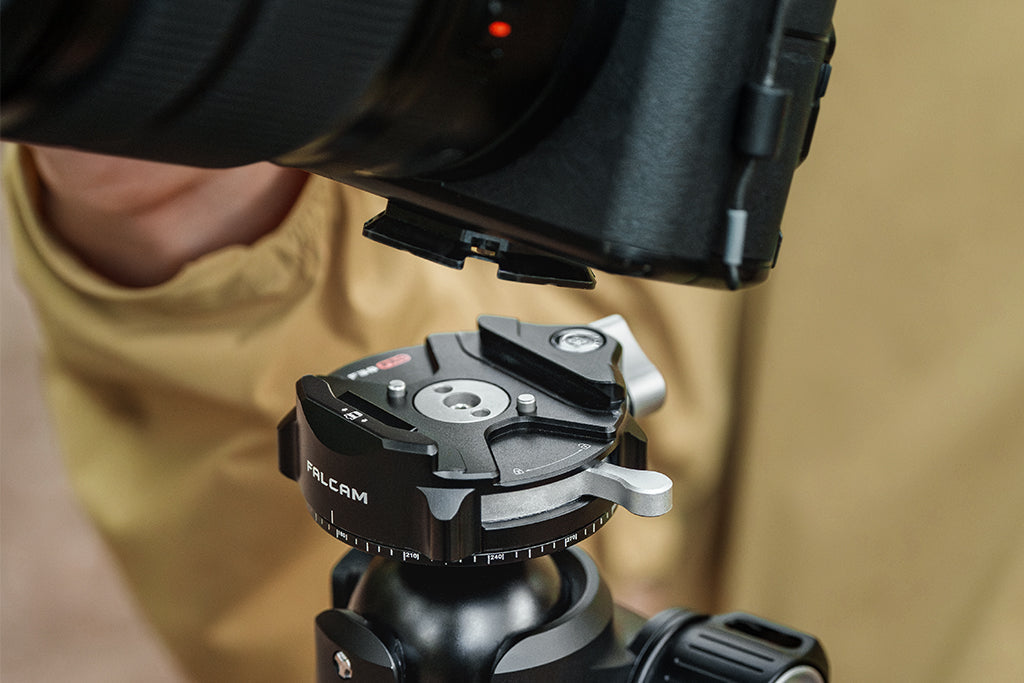
Consider a 2.8kg cinema rig. If a monitor or microphone is mounted on a traditional arm that extends 0.35m away from the center of gravity, it generates approximately 9.61 N·m of torque. For an average adult, this load represents 60–80% of the Maximum Voluntary Contraction (MVC) of the wrist. By utilizing modular quick-release systems like the FALCAM F22 series, creators can move accessories closer to the central axis, drastically reducing the lever arm and preserving both physical stamina and system stability.
Workflow ROI: The Economics of the Quick Release
In mission-critical work, time is the most expensive variable. Traditional threaded mounting systems (governed by ISO 1222:2010 Photography — Tripod Connections) are reliable but slow.
Workflow ROI Calculation:
- Traditional Thread Mounting: ~40 seconds per swap.
- Quick Release (e.g., F38/F50): ~3 seconds per swap.
- Annual Savings: For a professional performing 60 swaps per shoot across 80 shoots a year, this saves approximately 49 hours annually.
At a professional rate of $120/hr, this structural efficiency represents a $5,900+ value per year. This justifies the investment in a unified ecosystem over fragmented, non-standardized accessories.
The Thermal Bridge: Managing Extreme Cold
In sub-zero conditions, material science becomes a survival factor. While carbon fiber legs are excellent insulators, the interfaces—the quick-release plates and tripod heads—are typically precision-machined Aluminum Alloy (6061 or 7075).
Aluminum acts as a "thermal bridge," conducting cold directly from the environment to the camera base and, crucially, the battery compartment. To mitigate this, practitioners should attach their aluminum QR plates to cameras indoors before heading out. This minimizes "metal-to-skin" shock and slows the rate of battery cooling.
Furthermore, it is vital to distinguish between Vertical Static Load and Dynamic Payload. While a plate like the F38 may have a lab-rated static capacity of 80kg, the dynamic payload—the weight it can safely handle during rapid movement or on a gimbal—is significantly lower. For heavy cinema rigs (>3kg), moving to a broader interface like the F50 or an anti-deflection plate is a strategic necessity to prevent plate "creep" or accidental release.
Logistics & Compliance: The Professional Standard
For creators undertaking international expeditions, travel logistics are governed by strict safety standards. Lithium-ion batteries, essential for modern lighting and camera systems, must comply with IATA Lithium Battery Guidance and IEC 62133-2:2017 Safety Requirements.
Modular systems like Ulanzi’s FALCAM ecosystem are designed with "Visual Weight" in mind. Compact, integrated rigs are less likely to be flagged by airline gate agents for weighing compared to bulky, non-modular setups. This logistical enablement is as important as the gear’s performance in the field.
Pre-Shoot Safety Checklist: The Tactical Workflow
Before every remote shoot, professional creators should employ a tactile and audible verification process to ensure system integrity:
- Audible: Listen for the distinct "Click" of the locking mechanism.
- Tactile: Perform a "Tug Test" (Pull-Test) immediately after mounting the camera to ensure the secondary lock is engaged.
- Visual: Verify the status of the locking pin (orange/silver indicators) to ensure it is in the "Closed" position.
- Cable Management: Ensure that heavy HDMI or SDI cables are secured. A dangling cable can create unwanted torque on a QR plate, potentially inducing micro-vibrations or loosening the connection over time.
Strategic Infrastructure
The transition from a "collection of gadgets" to a "unified infrastructure" is what separates the amateur from the professional. By prioritizing torsional rigidity, understanding the biomechanical impact of leverage, and adhering to rigorous safety standards like ISO 1222:2010 and IEC 62471:2006 for photobiological safety, creators build a foundation for success.
In the remote wilderness, there are no second takes. Your infrastructure must be as resilient as your ambition. By choosing materials and interfaces engineered for the reality of the field—rather than the aesthetics of the showroom—you ensure that your vision is never compromised by the very tools meant to support it.
YMYL Disclaimer: This article is for informational purposes only. When operating in high-risk environments such as high-altitude mountaineering or extreme weather, always consult with professional guides and ensure your equipment is rated for the specific environmental conditions. Load capacities and material performances can vary based on wear, temperature, and proper maintenance.