


Executive Summary: How to Stop Mounting Drift
If your camera gear sags or rotates despite tightening your clamps, you are likely dealing with a material mismatch. Hard plastic mounts (ABS/Polycarbonate) have low friction coefficients when paired with smooth, hard-anodized aluminum rails, leading to "creep" and instability.
Quick Fix Checklist:
- Immediate Fix: Switch to rubber-lined or silicone-padded clamps to increase the real contact area.
- Infrastructure Fix: Transition to all-metal quick-release systems (e.g., FALCAM F22/F38) to ensure metal-to-metal "bite."
- Safety Check: Perform the Tug Test—pull gear in the direction of gravity immediately after locking to ensure the pin is seated.
- Thermal Prep: In cold weather, mount your gear indoors to establish a secure fit before materials contract.
The Physics of Rig Instability
We’ve all been there: you’re mid-interview or deep into a complex product shot when you notice it—the slight, agonizing sag of a monitor or the gradual rotation of a side-mounted light. You tighten the clamp until your knuckles turn white, yet the drift continues. In the world of solo content creation, this instability is often a failure of material synergy rather than a "broken" component.
The culprit is frequently a fundamental material mismatch. When we pair hard ABS plastic mounts with smooth, hard-anodized metal rails, we are fighting against the laws of friction. This article explores why these common pairings can fail, the biomechanical toll they take, and how to engineer a high-reliability workflow using system-focused solutions.
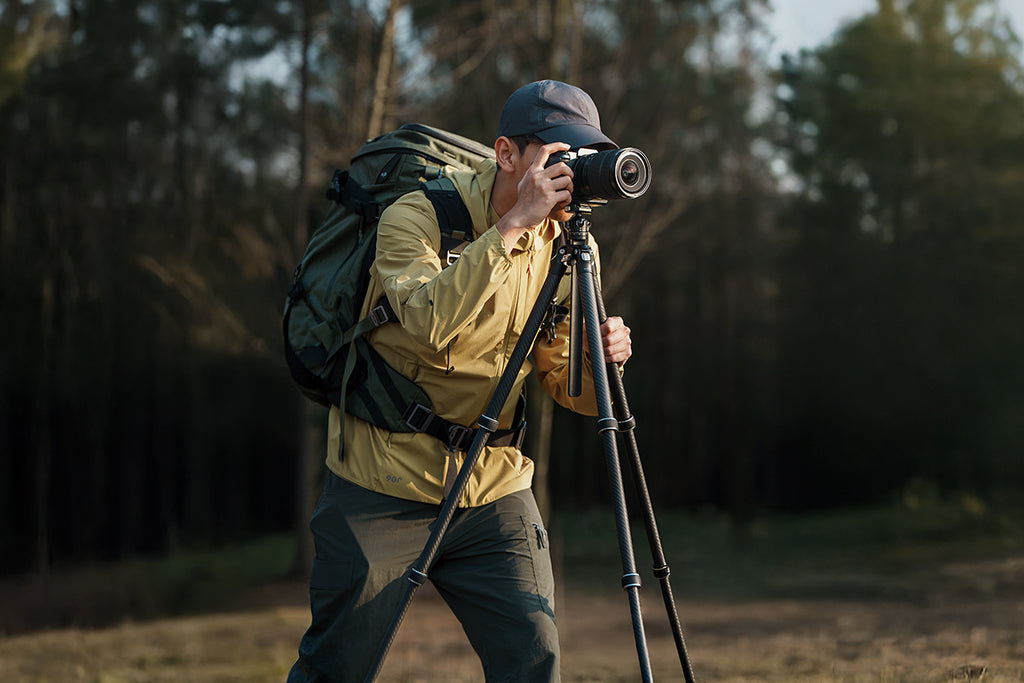
Why Hard Plastic Slips: The Coefficient Crisis
At the heart of every slipping mount is the Coefficient of Friction (CoF). Hard-anodized aluminum—the standard for high-quality tripod legs and cages—is designed to be durable and corrosion-resistant. However, its surface is microscopically smooth.
When you use a mount made of hard ABS or similar rigid plastics, the "real contact area" is surprisingly small. Because both materials are relatively incompressible, they only touch at the highest microscopic peaks (asperities).
Observed Thresholds (Workshop Estimates): Based on internal rigging troubleshooting, we have observed that hard plastic clamps on smooth metal rails can lose grip with as little as 5 to 10 degrees of cantilever angle under a 1kg load. This risk increases in environments with constant micro-vibrations, such as near air conditioning units or on high-traffic studio floors.
The "Knuckle Test" Heuristic
We use a simple "Knuckle Test" to identify a potential material mismatch before a shoot begins. If you find yourself tightening a clamp until your knuckles turn white to prevent it from rotating under moderate hand pressure, the material pairing is likely suboptimal for your payload. A secure mount should ideally achieve lock-up with ergonomic force, not brute strength.
The Temperature Factor
Temperature can be a "silent killer" of rig stability. Plastics typically have thermal expansion coefficients 3 to 10 times greater than metals.
- ABS Expansion: ~70-90 μm/m·°C
- Aluminum Expansion: ~23 μm/m·°C (Source: MISUMI Thermal Expansion Data)
A shift of roughly 30°F (17°C) can create enough differential contraction to potentially transform a secure mount into a sliding hazard. In cold environments (below 40°F), plastic can become brittle; in hot environments (above 95°F), it may become viscoelastic, leading to "creep"—where the material slowly deforms under constant load, causing gear to sag hours into a shoot.
Modeling Rig Stability: Carbon Fiber vs. Aluminum
To understand how material choice impacts the final image, we modeled vibration settling times and wind stability for a standard documentary setup (2.8kg cinema rig).
Methodology & Assumptions (Model-Based Estimates)
Our analysis used a deterministic structural dynamics model (SDOF damped free vibration) with the following parameters. Note: These results are illustrative and vary based on specific joint tension and environmental humidity.
| Parameter | Value | Unit | Rationale |
|---|---|---|---|
| Tripod Mass | 0.9 | kg | Lightweight expedition gear |
| Camera Mass | 2.8 | kg | Cinema camera + lens + audio |
| Natural Freq (AL) | 8 | Hz | Estimated reduction due to thermal effects |
| Damping Ratio (AL) | 0.008 | fraction | Standard for aluminum in cold conditions |
| Damping Ratio (CF) | 0.02 | fraction | 2.5x multiplier for carbon fiber composite |
Key Findings
- Vibration Dampening: In this specific model, a carbon fiber setup like the Ulanzi F38 Quick Release Video Travel Tripod 3318 achieved a vibration settling time of ~1.9 seconds. A comparable aluminum setup took ~10 seconds to stabilize. This estimated 81% reduction in settling time is critical for long-lens photography.
- Wind Tipping Point: For a 2.8kg rig without ballast, the calculated critical tipping wind speed is approximately 13.2 m/s (47.6 km/h). Even moderate gusts can exceed this limit in exposed locations.
Biomechanical Analysis: The Fatigue Factor
The real enemy of the solo creator is often Torque. When you mount a monitor or microphone on an extension arm, you create a lever that multiplies the force applied to your wrist.
Torque ($\tau$) = Mass ($m$) $\times$ Gravity ($g$) $\times$ Lever Arm ($L$)
For a 2.8kg cinema rig held 0.35m away from the wrist, the torque generated is approximately 9.6 N·m.
The Fatigue Threshold
According to generalized ergonomic principles (referencing ISO 11228-3), this load can represent roughly 77% of the Maximum Voluntary Contraction (MVC) for an average adult—nearly 5 times the sustainable fatigue threshold of 1.5 N·m.
To mitigate this, we recommend moving accessories closer to the center of gravity. Using the Ulanzi Falcam F22 Quick Release Portable Top Handle F22A3A12, constructed from aluminum and Micarta, provides a secure grip that doesn't rely on the "white-knuckle" force required by smoother plastic handles.
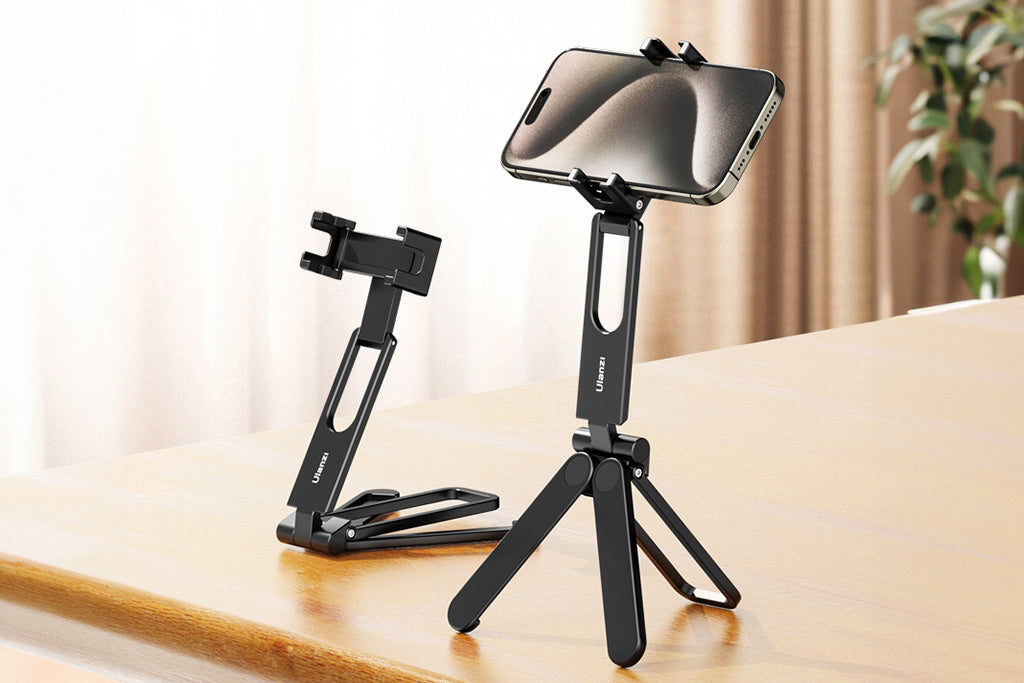
Hypothetical Workflow ROI: Quick Release as Infrastructure
As highlighted in The 2026 Creator Infrastructure Report, rigging is increasingly viewed as "workflow infrastructure."
The Math of Efficiency (Case Study)
- Traditional Thread Mounting: ~40 seconds per swap.
- FALCAM Quick Release: ~3 seconds per swap.
Estimated Savings: If a professional performs 60 gear swaps per shoot across 80 shoots per year, the time saved is approximately 49 hours annually. At a hypothetical billing rate of $120/hour, this represents a ~$5,900 annual value in recovered time.
For mission-critical applications, all-metal interfaces like the Ulanzi Falcam F38 Quick Release for Camera Shoulder Strap Mount Kit V2 3142 eliminate the plastic-slip issue. These plates are precision-machined to ISO 1222:2010 standards for predictable fitment.
Engineering a High-Reliability Rig: Safety Workflows
1. The Triple-Check Mounting Protocol
- Audible: Listen for the distinct "Click" of the locking mechanism.
- Tactile: Perform the "Tug Test." Immediately after mounting, pull the gear in the direction of gravity to ensure the locking pin is fully engaged.
- Visual: Check the locking pin status. On FALCAM systems, ensure the indicator is in the "locked" position.
2. Thermal Shock Prevention
In extreme cold, aluminum plates can act as a thermal bridge. We recommend attaching your Ulanzi Falcam F22 & F38 & F50 Quick Release Camera Cage V2 2635A to your camera indoors at room temperature. This ensures the metal-to-metal contact is established before the materials contract, providing a more stable interface.
3. Load Capacity Nuance
It is vital to distinguish between Static Load and Dynamic Payload. While a system like the F38 is rated for high vertical static loads in lab conditions, the dynamic forces of a handheld rig are significantly higher. For cinema rigs exceeding 3kg, consider the F50 system or using anti-deflection plates to prevent gradual rotation.
Building for the Future
The shift toward modular, all-metal ecosystems like FALCAM is about eliminating the mechanical variables that lead to gear failure. By understanding the material science of friction and the logistics of quick-release systems, you can build a rig that supports your creativity rather than hindering it.
Disclaimer: This article is for informational purposes only. Rigging camera equipment involves inherent risks. Always consult manufacturer load ratings and perform safety tests in a controlled environment before use. Ulanzi is not responsible for equipment damage resulting from improper mounting or exceeding specified load limits.
