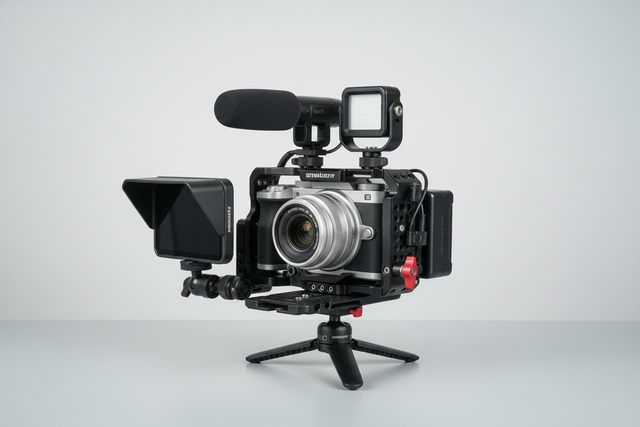
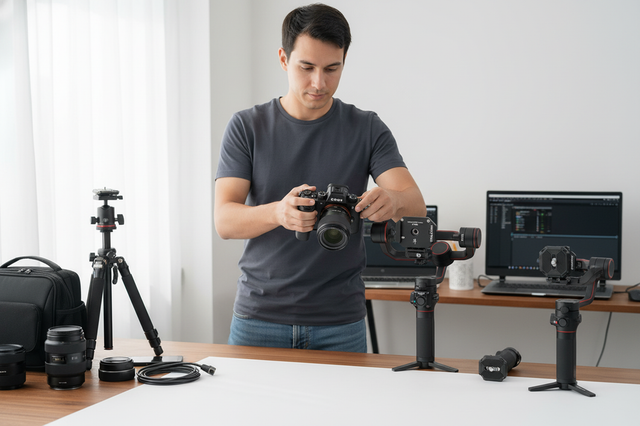
Migrating to F38 mounting standard migration is worth it when your current kit wastes time on repeated screw engagement, extra adapters, or different tightening habits across tripod, camera, and support gear. The safest path is to convert the most-swapped pieces first, then verify each hybrid before you depend on it in the field.

Why Legacy Mounts Slow Down F38 Workflows
Legacy 1/4-20 and Arca-Swiss setups often look flexible, but they usually add small steps every time you change rigs. In practice, that means more alignment, more tightening, and more chances to forget which plate belongs on which support. For creators moving quickly, those little delays become the real cost.
The mechanical baseline is straightforward. ISO 1222:2010 covers the screw connections used between a camera and a tripod or other accessories, including the familiar 1/4-20 and 3/8-16 thread family on official tripod connections. Arca-Swiss-style dovetails are a de facto 38 mm dovetail standard with manufacturer variation and no strict ISO enforcement, so the advantage appears only when your parts actually match.
For most mixed kits, the decision point is not "Can I attach it?" but "Can I swap it without second-guessing the fit?" If every move still needs a different clamp, plate, or tightening routine, F38 mounting standard migration will feel more like another layer than a real upgrade.
If you want a broader look at the transition mindset, Navigating Upgrade Friction When Switching to FALCAM is a useful next stop for readers mapping the switch across a larger kit.
What Can Carry Over From Legacy Gear
Some legacy gear can stay in the kit, but only if the actual interface is stable enough to trust. Start with the plate, clamp, and contact surfaces, not the brand name on the box. That is the fastest way to spot whether you are dealing with a true migration or just a pile of adapters.
Threaded Bodies and Fixed Mount Points
If a body or accessory already uses a standard camera thread, it may still fit into a new workflow with the right plate or base. That does not mean it is automatically worth keeping in the same role. A part that mounts cleanly but takes too long to swap may still be the wrong piece to leave in the fast path.
The safe rule is simple: keep the legacy piece if it is stable, repeatable, and not slowing your most common swaps. Otherwise, move it into a backup role or replace it as part of the migration.
Arca-Swiss Plates and Hybrid Compatibility Checks
Arca-Swiss compatibility is the biggest trap in mixed kits because "Arca-compatible" does not always mean interchangeable. The pattern is common, but the fit can drift across brands and receivers, which is why the Arca plate standard is better treated as a de facto system than a universal guarantee.
That is also why hybrid adapters deserve caution. A stacked setup may work for a transition period, but it can add height, play, or extra handling time. The hybrid mount warning is basically the same practical lesson creators discover on set: if the connection is too layered, you lose the speed and confidence you were trying to gain.
Cages, Clamps, and Accessory Interfaces
Cages, clamp plates, and accessory arms are worth checking separately because they often hide the real friction point. A setup can look standardized from the outside and still behave inconsistently at the contact surface. If the mount seats differently depending on which accessory is attached, that is a sign to simplify the chain before the next shoot.

Build a Clean Migration Path
For a mixed kit, the cleanest F38 migration usually starts with the mount you touch most often. That gives you the biggest time savings first and exposes compatibility problems before they spread across the whole rig. If you only change low-use parts, the workflow still feels messy.
- List every camera, cage, tripod, gimbal, and accessory plate in the kit.
- Mark the pieces you swap most often during a normal shoot day.
- Convert that one path first, not the entire bag at once.
- Test the converted piece in a real setup, then check for twist, play, or awkward release feel.
- Retire redundant adapters only after the new path works reliably in practice.
A step-by-step rollout reduces downtime because you isolate failure points. It also prevents the common mistake of buying a pile of adapters before you know which interface is actually the bottleneck. For readers who want to organize the process more formally, Plate Governance: Organizing Quick-Release for Multi-Camera Kits is a good internal reference point on multi-camera standardization.
If your priority is swapping a camera-side plate first, treat the Falcam F38 Quick Release Basic Bundle as a navigation option for that starting point and verify the exact mounting path you need.
Choose the Right F38 Path
The right starting point depends on how your kit is used, not on how complete you want the migration to feel on day one. A camera-only conversion is the easiest test. A multi-support conversion makes more sense when your work depends on frequent moves between tripod, handheld, and other support systems.
| Legacy Scenario | What Usually Matters Most | Better F38 Starting Point | Main Trade-Off |
|---|---|---|---|
| Threaded camera bodies | Fastest proof of fit and workflow | Camera-side plate or basic conversion | May leave some legacy adapters in place |
| Arca-Swiss-heavy kit | Fewer compatibility surprises across clamps | A direct F38 path that reduces duplicate plates | Requires checking actual plate and clamp tolerances |
| Mixed rigs and cages | Cleaner transitions between support points | A base or top plate that simplifies the most-used connection | More planning up front |
| Travel or on-location kit | Packability and speed between setups | The smallest practical migration that removes the most swaps | Not every accessory needs immediate conversion |
Creators who already own a lot of quick-mount gear should be careful not to overconvert. If a part already moves cleanly and consistently, changing it may add cost without much workflow gain. The better move is to migrate the pieces that create the most friction, then leave the rest alone until they become a real problem.
If you are deciding between a base-first or plate-first path, the Falcam F38 Multi-hole Quick Release Base 3364 and the Falcam F38 Quick Release Top Plate V2 2401A are both reasonable navigation stops. Use them as starting points, not as proof that every legacy interface will convert the same way.
Lock in the Workflow
Before you call the migration finished, verify the mount under real handling conditions. A connection that feels fine on the bench can still loosen, shift, or release awkwardly once you start moving through a shoot day. That is especially true when hybrid adapters are still in the path.
Fit, Tightening, and Release Feel
Every converted mount should seat the same way each time. If you have to guess whether it is fully engaged, the setup is not done yet. The goal is a repeatable lockup, not just a connection that "seems okay."
Anti-Rotation and Plate Movement
Watch for twist and extra play at the contact points. Even a small amount of movement can make a rig feel less trustworthy when you are lifting, panning, or swapping position quickly. If movement appears only with one adapter or one plate, that part is the likely weak link.
Spare Parts, Labels, and Shoot-Day Organization
Label converted plates and bases so a shared kit stays readable. Keep spare screws, tools, and a backup plate nearby, because a missing fastener can slow the whole day down. For a broader safety-minded way to think about the transition, Migration Risk Mapping: Protecting Bodies During System Swaps is a practical follow-up resource.
For a final sanity check, ask three questions: Does it seat the same way every time? Does it release cleanly? Does it still make sense when the rest of the kit is packed and moving fast? If one answer is no, the migration is not fully finished yet.
Related Resources
- Sizing Your Ecosystem: Matching FALCAM Plates to Payload Weight
- Comparing Shear Strength: F22 vs. F38 for High-Speed UseBase
- Applying FALCAM Quick-Release for Rapid Car-to-Handheld Swaps
- Action Camera Quick Release Series
FAQs
Q1. How Do I Know If My Current Plates Can Move to F38?
Start with the actual plate, clamp, and contact surfaces, not the marketing label. If the geometry, seating depth, and locking behavior are unclear, treat the part as a check-before-buying item rather than assuming a direct swap. That is the safest way to avoid hidden fit problems.
Q2. What Should I Replace First in a Mixed Mounting Kit?
Replace the mount you swap most often. That usually gives you the biggest time savings and reveals fit issues early, while the rest of the kit is still easy to adjust. If your most-used connection is already stable, move to the next most frequent swap instead.
Q3. Can I Run F38 Alongside Legacy 1/4-20 or Arca-Swiss Gear?
Yes, but it works best as a transition state, not the final design. Hybrid setups can bridge the gap, yet they may add height, tolerance stack, or extra handling. Use them only when they help you keep production moving while you finish the migration.
Q4. Why Does a Hybrid Setup Sometimes Feel Less Stable?
Each extra adapter or stacked interface adds another place for play or mismatch to show up. That does not mean every hybrid rig is unsafe, but it does mean the feel can change quickly when the parts do not seat perfectly. Simplifying the path usually improves confidence.
Q5. What Is the Fastest Way to Standardize a Travel Kit?
Convert the most frequently used camera-side and support-side pieces first, then test them in a real carry-and-swap routine. That keeps downtime low and shows you whether the new standard actually saves time when you are packing light, moving fast, and working in tight spaces.
Make the Migration Pay Off
A good F38 migration should remove friction, not add another layer of it. If the new path cuts swaps, reduces adapter clutter, and feels repeatable under pressure, you picked the right conversion order. If not, narrow the system, verify the weakest interface, and finish standardizing only after the setup proves itself in real use.