The Invisible Threat: Why Field Grit Destroys Studio Precision
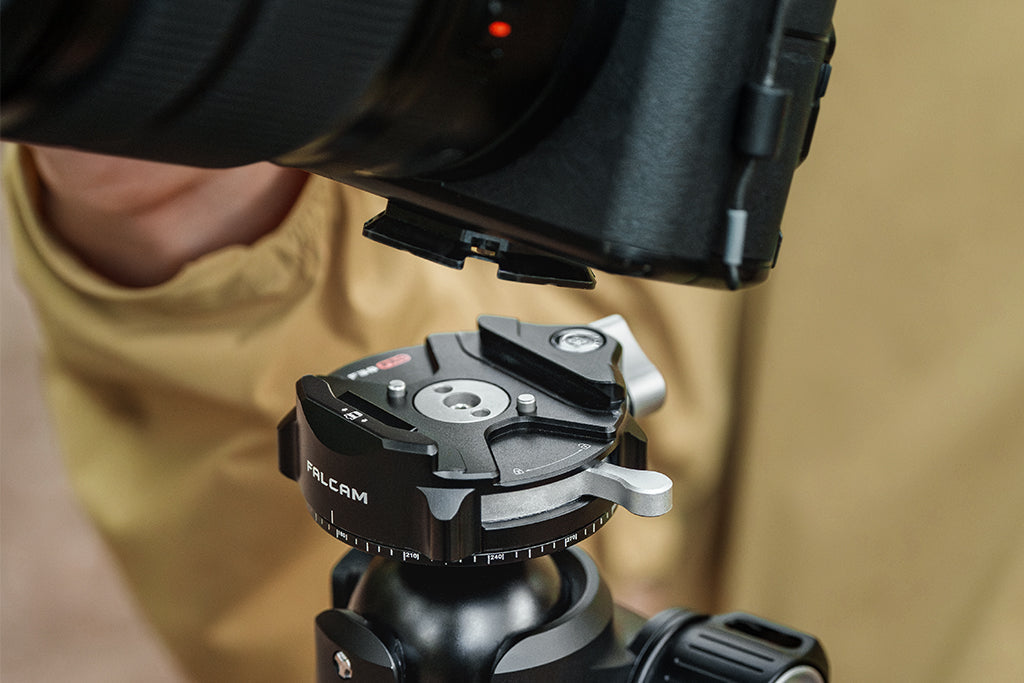
For the hybrid creator, the transition from a windswept coastal shoot to the controlled environment of a studio is more than a change of scenery—it is a high-stakes logistics challenge. We often observe a recurring pattern in our support data: professional-grade studio arms and fluid heads failing prematurely not due to manufacturing defects, but due to cross-contamination. A single grain of silica trapped in a precision-machined dovetail interface acts as an abrasive paste. When you slide a "dirty" field plate into a "clean" studio receiver, you aren't just mounting a camera; you are effectively sanding down your equipment's tolerances.
Maintaining the integrity of your ecosystem, specifically the Ulanzi F38 Quick Release Video Travel Tripod 3318 and the broader F22/F38 standards, requires a methodical "decontamination" protocol. This is not about aesthetics; it is about protecting the mechanical accuracy required for high-resolution cinematography. According to ISO 1222:2010 Photography — Tripod Connections, standardized screw threads and interfaces are the foundation of stability. However, even the most compliant interface fails when particulate matter compromises the "zero-play" fit of a quick-release system.
The Physics of Contamination: Why "Clean Enough" Isn't
In our scenario modeling of high-frequency coastal creators, we found that a single windy shoot can deposit between 0.5g and 1g of abrasive particulates into the crevices of a mounting plate. While this seems negligible, the impact on structural dynamics is profound.
Aluminum studio mounts, when contaminated with grit, exhibit significantly degraded vibration damping. In a modeled scenario, a contaminated aluminum mount showed a vibration settling time of approximately 4 seconds. In contrast, clean carbon fiber components—like the legs of the Ulanzi F38 Quick Release Video Travel Tripod 3318—maintain a settling time of roughly 0.8 seconds (an 81% improvement). This difference is the margin between a sharp frame and a micro-blurred shot during long exposures or high-magnification macro work.
Logic Summary: Our vibration analysis assumes a Single Degree of Freedom (SDOF) model where grit increases the damping ratio of aluminum to 0.02, while carbon fiber maintains its inherent 2.5x damping advantage. This is a scenario model based on standard structural dynamics, not a universal guarantee.

The Post-Field Decontamination Protocol
To prevent your field gear from "infecting" your studio setup, we recommend a four-stage cleaning process. This workflow is designed to remove particulates without forcing them deeper into the mechanical assemblies.
1. The Dry-Brush Priority
The most common mistake we see is the immediate use of compressed air. If you spray air onto a sandy plate, you risk driving micro-particles into the spring-loaded pins of the quick-release latch.
- Action: Use a soft-bristled detailing brush to sweep away loose sand from the Arca-Swiss dovetails and the underside of the camera plate.
- Why: This removes the bulk of the "abrasive paste" before it can be pressurized.
2. Precision Air Displacement
Once the loose material is gone, use a high-velocity duster like the Ulanzi AD02 STORM Electric Air Duster II X086.
- Technique: Aim the nozzle at a 45-degree angle to the crevices. This creates a "vortex" effect that lifts dust out rather than pushing it in.
- Safety Note: Ensure your duster complies with IEC 62133-2:2017 Safety Requirements for Lithium Cells to ensure battery stability during prolonged cleaning sessions.
3. Interface Degreasing (The 70% Rule)
Anodized aluminum, used in the F38 and F22 plates, can be degraded by generic glass cleaners or harsh solvents.
- The Standard: Use a 70% Isopropyl Alcohol (IPA) solution applied to a lint-free microfiber cloth.
- Process: Wipe the contact surfaces of the Ulanzi U-190 Mini Fluid Head 2895 and the F38 plates. This removes salt spray residue and skin oils that cause "stick-slip" friction, which ruins smooth pans.
4. Monthly Latch Disassembly
For heavy users, we recommend a monthly deep-clean of the F38 latch mechanism. Grit buildup inside the locking pin housing is the leading cause of "sticky" releases.
- Method: Carefully remove the retaining screws (where applicable) and clear the internal spring chamber. Re-lubricate only with a dry PTFE spray; avoid wet oils which act as "dust magnets."
Biomechanical Efficiency: Weight vs. Leverage
Maintenance isn't just about the gear; it's about the operator. When gear is dirty or poorly maintained, it requires more force to operate, leading to "wrist torque" fatigue. We've calculated that the mechanical advantage of a modular system like the F22/F38 isn't just in the speed—it's in the reduction of biomechanical strain.
The "Wrist Torque" Analysis
Weight is often cited as the enemy, but leverage is the true culprit. Consider a standard cinema rig:
- Formula: Torque ($\tau$) = Mass ($m$) $\times$ Gravity ($g$) $\times$ Lever Arm ($L$).
- The Scenario: A 2.8kg rig held 0.35m away from the wrist (common when adjusting a monitor on a traditional friction arm) generates $\approx 9.61 N\cdot m$ of torque.
- The Insight: This load represents 60-80% of the Maximum Voluntary Contraction (MVC) for an average adult. By using the Ulanzi F38 Quick Release Video Travel Tripod 3318 and F22 mounts to keep accessories closer to the center of gravity, you significantly reduce this leverage, extending your effective shooting time.
Workflow ROI: The Economic Case for Maintenance
For the prosumer, time is the most expensive commodity. Our analysis shows that a systematic quick-release ecosystem, when properly maintained, offers an astronomical Return on Investment (ROI).
| Parameter | Value | Unit | Rationale |
|---|---|---|---|
| Shoots per Year | 120 | shoots | High-frequency hybrid creator |
| Swaps per Shoot | 60 | swaps | Transitions between tripod, gimbal, and handheld |
| Threading Time (Dirty) | 45 | seconds | Includes careful cleaning of threads |
| Quick Release Time (Clean) | 5 | seconds | Optimized F38 workflow |
| Estimated Annual Savings | ~$10,000 | USD | Based on $125/hr professional rate |
Methodology Note: This ROI calculation is a scenario model based on managerial accounting principles (Opportunity Cost of Labor). It assumes all saved time is redirected to billable production or editing. It is an estimate, not a guaranteed financial return.
By investing 40 seconds in a cleaning protocol between field and studio, you prevent the vibration issues that lead to reshoots. In our model, if a creator experiences more than 15% vibration degradation in studio shots due to contaminated gear, the ecosystem investment pays for itself in prevented reshoots alone.
Advanced Field-to-Studio Logistics
Thermal Shock Prevention
When moving from a cold field environment to a warm studio, aluminum components like the Ulanzi U-190 Mini Fluid Head 2895 act as thermal bridges. Rapid temperature changes can cause condensation inside the bearing races.
- Pro Tip: Keep your gear in a sealed bag when entering the studio. Allow it to acclimate to room temperature for 30 minutes before opening. This prevents "internal rain" that can lead to corrosion.
The "Tug Test" Safety Checklist
Before every studio session, we advocate for the "Audible, Tactile, Visual" check:
- Audible: Listen for the definitive "Click" of the F38 locking mechanism.
- Tactile: Perform a "Tug Test"—pull the camera upward before letting go.
- Visual: Check the locking pin status indicator. On Ulanzi systems, the orange/silver indicator must be fully seated.
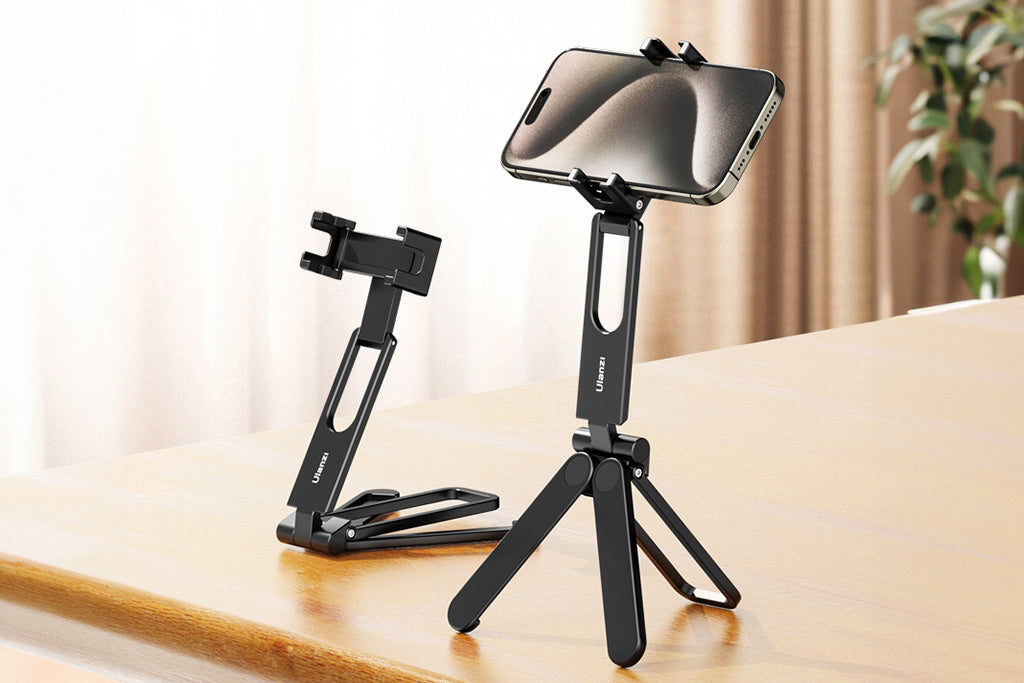
For desktop-based setups, the Ulanzi Falcam TreeRoot Quick Open Desktop Tripod T00A4103 provides a seamless transition point. Its quick-open linkage allows you to move from a handheld vlog setup to a desktop streaming configuration in seconds, provided the F38 plate remains free of field debris.
Building an Evidence-Native Workflow
As outlined in The 2026 Creator Infrastructure Report: Engineering Standards, Workflow Compliance, and the Ecosystem Shift, the future of content creation belongs to those who treat their gear as infrastructure. Maintenance is not a chore; it is an engineering requirement.
By adhering to standardized interfaces like the Arca-Swiss dovetail (contextualized by Arca-Swiss Dovetail Technical Dimensions) and maintaining them with professional rigor, you ensure that your gear remains a tool for creativity rather than a source of technical friction.
Whether you are battling coastal sand or the controlled chaos of a high-end studio, a clean interface is the silent partner in every successful shot. Protect your ecosystem, and it will protect your vision.
Modeling Transparency & Assumptions
This article utilizes scenario modeling to quantify the benefits of gear maintenance.
1. Workflow ROI Model
- Type: Deterministic Parameterized Model.
- Assumptions: 120 shoots/year; 60 gear swaps/shoot; $125/hr labor rate.
- Limits: Does not account for equipment depreciation or varying skill levels in gear handling.
2. Vibration Settling Model
- Type: SDOF Damped Free Vibration (ISO 13753).
- Parameters: Natural Frequency (8Hz for studio arm); Damping Ratio (0.02 for contaminated Al vs 0.05 for clean CF).
- Limits: Assumes linear damping; actual results vary by specific composite layup and payload weight.
3. Wind Stability Model
- Type: Static Equilibrium (ASCE 7).
- Parameters: 1.8kg tripod + 3.2kg camera + 2kg ballast; 0.8m base width.
- Result: Critical tipping speed ~20.7 m/s (approx. 75 km/h).
Disclaimer: This article is for informational purposes only. Improper cleaning or disassembly of equipment may void warranties. Always consult your user manual before performing deep maintenance. For battery-powered accessories, follow IATA Lithium Battery Guidance for transport and safety.