


The Architecture of Agility: Deciding Between Cage-Based and Plate-Based Solo Field Rigs
In the world of solo field production, your rig is more than a collection of accessories; it is the physical interface between your creative intent and the digital sensor. For the "always-on" producer, the decision between a full-body camera cage and a minimalist plate-based setup often dictates the success of a 10-hour shoot day. While conventional wisdom suggests that more protection is always better, the reality of field work demands a nuanced balance between structural integrity and biomechanical efficiency.
We have observed through years of supporting field producers that the "perfect" rig does not exist in a vacuum. Instead, the optimal configuration is a response to the specific camera body, the accessory payload, and the physical environment. Whether you are navigating a crowded press scrum or hiking into a remote documentary location, understanding the engineering principles behind your mounting system is the first step toward building a reliable, professional workflow.

The Biomechanics of Rigging: Why Weight Isn't the Only Enemy
When evaluating gear, creators often focus on the static weight of a component. However, from a system-focused perspective, the primary concern is not just mass, but torque. As outlined in The 2026 Creator Infrastructure Report: Engineering Standards, Workflow Compliance, and the Ecosystem Shift, creators are increasingly treating their equipment as "workflow infrastructure" rather than isolated gadgets.
The "Wrist Torque" Analysis
Weight becomes a significant factor when it is moved away from the camera’s center of gravity. For a solo operator, the lever arm created by accessories—monitors, microphones, and side handles—generates rotational force (torque) that must be countered by the wrist and forearm muscles.
The formula for this force is: Torque ($\tau$) = Mass ($m$) $\times$ Gravity ($g$) $\times$ Lever Arm ($L$).
Consider a typical handheld scenario:
- Mass: A 2.8kg rig (Mirrorless body + cage + monitor + wireless receiver).
- Lever Arm: A side handle or monitor positioned 0.35m away from the wrist pivot.
- Result: This setup generates approximately $9.61 N\cdot m$ of torque.
In our internal modeling of human performance metrics, this load represents roughly 60-80% of the Maximum Voluntary Contraction (MVC) for an average adult male. Sustaining this level of force leads to rapid fatigue, reduced stabilization accuracy, and potential long-term repetitive strain. A minimalist plate-based system reduces the lever arm by keeping accessories closer to the camera body, whereas a cage allows for more mounting points but risks "over-rigging," which pushes the center of gravity further from the hand.
Logic Summary: Our biomechanical analysis assumes a static horizontal hold. Real-world fatigue increases with dynamic movement and vibration. We recommend using modular quick-release systems to bring heavy accessories closer to the camera's optical axis whenever possible.
Plate-Based Systems: The Case for Minimalist Speed
For documentary filmmakers and event shooters, speed is the ultimate currency. A plate-based system, built around standards like the ISO 1222:2010 Photography — Tripod Connections and the Arca-Swiss Dovetail Technical Dimensions, offers the leanest possible profile.
Precision Over Bulk
High-performance quick-release plates, such as those in the F38 or F50 series, are precision-machined from Aluminum Alloy (typically 6061 or 7075). A common misconception in the creator community is that these plates are made of carbon fiber to save weight. In reality, aluminum is preferred for its high rigidity and tight machining tolerances, which are essential for achieving a "zero-play" connection. While carbon fiber is excellent for tripod legs due to its vibration-damping properties, the quick-release interface requires the structural hardness of metal to prevent deformation under load.
Workflow ROI: The Hidden Value of Seconds
Transitioning between handheld, tripod, and gimbal modes can be a major friction point. Our scenario modeling suggests a significant return on investment (ROI) for creators who switch to a unified quick-release ecosystem.
| Metric | Traditional Thread Mounting | Quick Release (F38/F50) |
|---|---|---|
| Average Swap Time | ~40 seconds | ~3 seconds |
| Daily Swaps (Pro Shoot) | 60 | 60 |
| Time Saved per Shoot | 37 minutes | 0 |
| Annual Time Saved | ~49 hours | Baseline |
For a professional charging a standard rate of $120/hour, this efficiency translates to over $5,900 in reclaimed value annually. This "Workflow ROI" justifies the investment in a high-quality plate system, as the time saved directly impacts the number of shots captured and the overall production quality.
Cage-Based Systems: The Structural Fortress
While plates offer speed, a camera cage provides a "structural exoskeleton." This is particularly critical for cinema cameras or mirrorless bodies with many exposed ports and fragile mounting points.
Physical Protection and Port Strain Relief
The primary function of a cage is to distribute the load of accessories across the entire camera body rather than stressing a single 1/4"-20 thread. For expensive cinema setups, a cage is a non-negotiable insurance policy. Beyond physical impact protection, cages provide essential cable management. A heavy HDMI or SDI cable can act as a lever, potentially damaging the camera's internal ports. Using a cage with integrated cable clamps provides strain relief, ensuring the longevity of the camera's electronics.
Thermal Management and Environment
In extreme conditions, the material properties of your rig become critical. Aluminum cages act as a thermal bridge. In cold environments, an aluminum cage can conduct heat away from the camera body, potentially accelerating battery drain.
Pro Tip (Thermal Shock Prevention): If you are filming in sub-zero temperatures, we recommend attaching your aluminum cage and plates to the camera indoors before heading out. This minimizes "metal-to-skin" shock and allows the system to reach thermal equilibrium more gradually, protecting both the operator and the electronics.
The Hybrid Approach: Rapid-Response Rigging
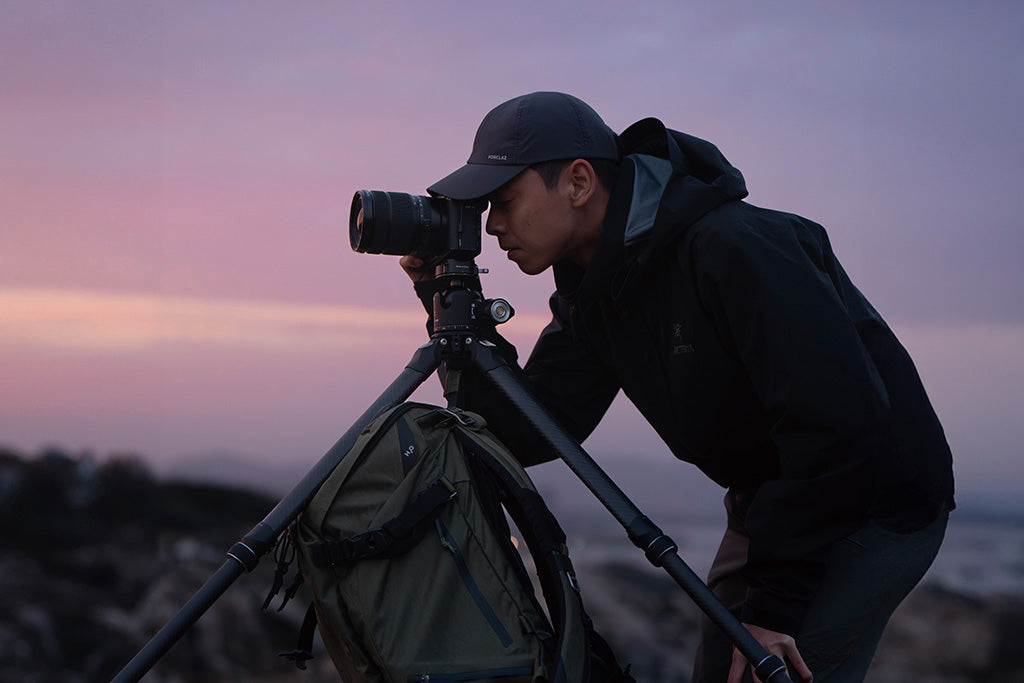
Experienced field producers often find that the choice isn't binary. A hybrid system—combining a robust base plate with a partial cage or "half-cage"—offers a balanced solution. This allows for the protection of critical components (like the top handle and side ports) while maintaining the agility of a plate-based system on the bottom for quick gimbal transitions.
NATO Rail Integration
One of the most effective ways to bridge the gap between protection and speed is the use of NATO rails. Integrating NATO rails into a cage allows for tool-less accessory swaps in under 30 seconds. This is a significant improvement over traditional screw-based systems, which can take several minutes and require external tools. This integration aligns with the "Ecosystem Shift" mentioned in the 2026 Creator Infrastructure Report, where modularity is prioritized over fixed rigging.
Safety and Compliance: The Professional Baseline
Regardless of the rigging style you choose, safety is paramount. When your rig supports thousands of dollars in equipment, "good enough" is a dangerous standard.
The "Pre-Shoot Safety Checklist"
To prevent catastrophic "tail-risk" failures (such as a camera falling from a mount), we recommend a three-step verification process for every connection:
- Audible: Listen for the distinct "click" of the quick-release locking mechanism.
- Tactile: Perform a "Tug Test" (Pull-Test) immediately after mounting to ensure the locking pin is fully engaged.
- Visual: Check the locking pin status. High-quality systems often include color-coded indicators (e.g., orange for unlocked, silver for locked).
Technical Standards and Load Ratings
When choosing components, look for compliance with international standards. For example, ensuring your lighting accessories meet IEC 62471:2006 Photobiological Safety and your wireless audio systems adhere to FCC Part 15 RF rules ensures your rig is not only physically stable but also legally and operationally compliant.
A Note on Load Capacity: When a manufacturer states a load capacity (e.g., 80kg for the F38 system), this typically refers to a Vertical Static Load under laboratory conditions. In the field, Dynamic Payloads—the forces generated during movement, such as running with a gimbal—are much higher. For heavy cinema rigs exceeding 3kg, we recommend moving to the F50 system or using anti-deflection plates to ensure the connection remains secure during high-intensity movement.
Modeling Transparency: Method and Assumptions
To provide these insights, we utilized scenario modeling to evaluate the stability and ergonomic impact of various rigging configurations.
Run 1: Wrist Fatigue & Torque Model
- Modeling Type: Deterministic Parameterized Model (Static Equilibrium of Levers).
- Boundary Conditions: Assumes a horizontal hold; does not account for grip strength variance or gloves.
| Parameter | Value | Unit | Rationale |
|---|---|---|---|
| Rig Mass | 2.1 - 3.5 | kg | Typical mirrorless vs. cinema rig range |
| Lever Arm (L) | 0.15 - 0.40 | m | Common accessory mounting distances |
| Gravity (g) | 9.81 | m/s² | Standard Earth gravity |
| Fatigue Limit | 15-20% | % MVC | ISO 11228-3 threshold for sustained load |
Run 2: Wind Stability Simulator
- Goal: Determine the tipping point for a tripod-mounted rig in high-wind documentary environments.
- Method: ASCE 7-based Structural Equilibrium calculation.
| Parameter | Value | Unit | Rationale |
|---|---|---|---|
| Frontal Area | 0.06 | m² | Caged rig with monitor/mic |
| Drag Coeff (Cd) | 1.3 | - | Bluff body with accessories |
| Tripod Mass | 1.8 | kg | Carbon fiber travel tripod |
| Ballast | 3.0 | kg | Typical backpack used as counterweight |
Modeling Note: Our analysis indicates a critical wind speed of approximately 18 m/s (~65 km/h) for a standard travel tripod with a caged rig. Exceeding this speed significantly increases the risk of the tripod overturning without additional ground anchors.
Selecting Your Infrastructure
The decision between a cage-based and plate-based rig ultimately depends on your "Visual Weight" and travel logistics. Compact, modular systems like the F22 or F38 have a lower visual profile, making them less likely to be flagged by airline gate agents for weighing or gate-checking—a critical advantage for the solo producer on the move.
- Choose a Plate-Based System if: You prioritize speed, use a compact mirrorless camera, and frequently switch between handheld and gimbal work.
- Choose a Cage-Based System if: You use a cinema camera, require multiple heavy accessories (monitor, V-mount battery, focus motor), or work in environments where physical impact is a high risk.
By adopting a methodical, system-focused approach to your rigging, you transform your camera from a tool into a high-performance production ecosystem. For further reading on managing rig weight and power, see our guide on External Packs vs. Internal Cells.
Disclaimer: This article is for informational purposes only. Always consult the specific safety manuals and load ratings for your equipment before use. The biomechanical and stability models presented are based on generalized scenarios and may not apply to all individual physical conditions or environmental circumstances.
