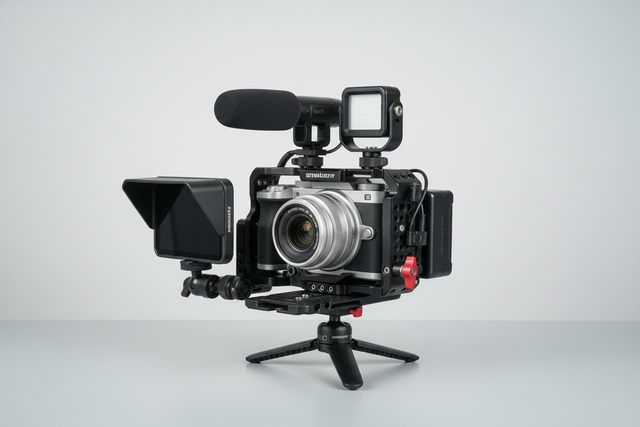
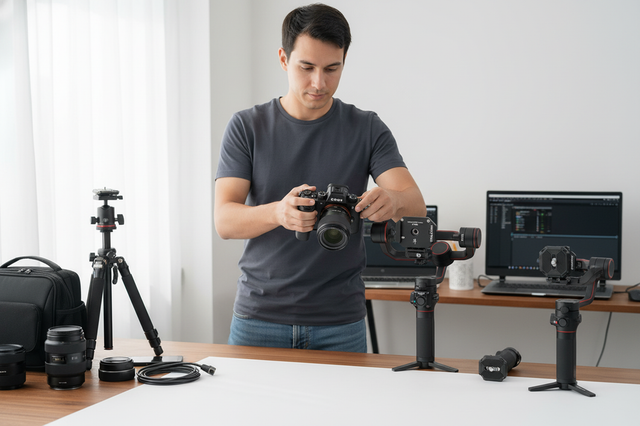
The Architecture of Failure: Why Redundancy is Infrastructure
In the high-stakes environment of remote adventure filmmaking, equipment failure is rarely a matter of "if," but "when." When you are four days' trek from the nearest gear shop, a stripped 1/4"-20 thread or a jammed quick-release plate isn't just a technical glitch—it is a production-ending event. We have observed through years of analyzing field reports and warranty claims that the most catastrophic failures aren't caused by major accidents, but by the accumulation of small, unaddressed "single points of failure" within a rig's mounting architecture.
True redundancy planning for remote expeditions goes beyond simply packing a second tripod. It requires a methodical mapping of backup mounting points and a deep understanding of the mechanical interfaces that hold your system together. Our approach focuses on building a fail-safe infrastructure where every critical component has a secondary path for operation. As highlighted in The 2026 Creator Infrastructure Report: Engineering Standards, Workflow Compliance, and the Ecosystem Shift, treating your gear as "workflow infrastructure" rather than isolated gadgets is the only way to mitigate the tail-risks inherent in professional content creation.
Standardizing the Interface: The Arca-Swiss vs. 1/4"-20 Tension
The foundation of any redundant mounting system is standardization. For most professional adventure creators, the Arca-Swiss dovetail system is the preferred interface due to its speed and security. Based on technical dimensions analyzed in the Arca-Swiss Dovetail Technical Dimensions, this rail system provides a high degree of lateral stability and a standardized geometry that allows for cross-compatibility between different manufacturers.
However, a common mistake we see in the field is over-reliance on a single mounting ecosystem. While standardizing on Arca-Swiss simplifies logistics, it creates a specialized single point of failure. If a proprietary clamp mechanism fails or the locking knob is lost, the entire interface becomes unusable.
The 1/4"-20 Fallback Strategy
To counter this, a robust redundancy map must always include the ubiquitous 1/4"-20 thread as the "fail-safe" layer. Defined by ISO 1222:2010 Photography — Tripod Connections, this standard is the most common point of failure not because of shearing, but because of cross-threading during rapid changes in cold environments.
Logic Summary: Our field analysis suggests that while Arca-Swiss provides the primary workflow speed, the 1/4"-20 thread remains the universal fallback because it can be improvised with common hardware found in most remote villages or industrial sites. We recommend ensuring every Arca-Swiss plate in your kit also features a female 1/4"-20 thread on the underside for emergency mounting.
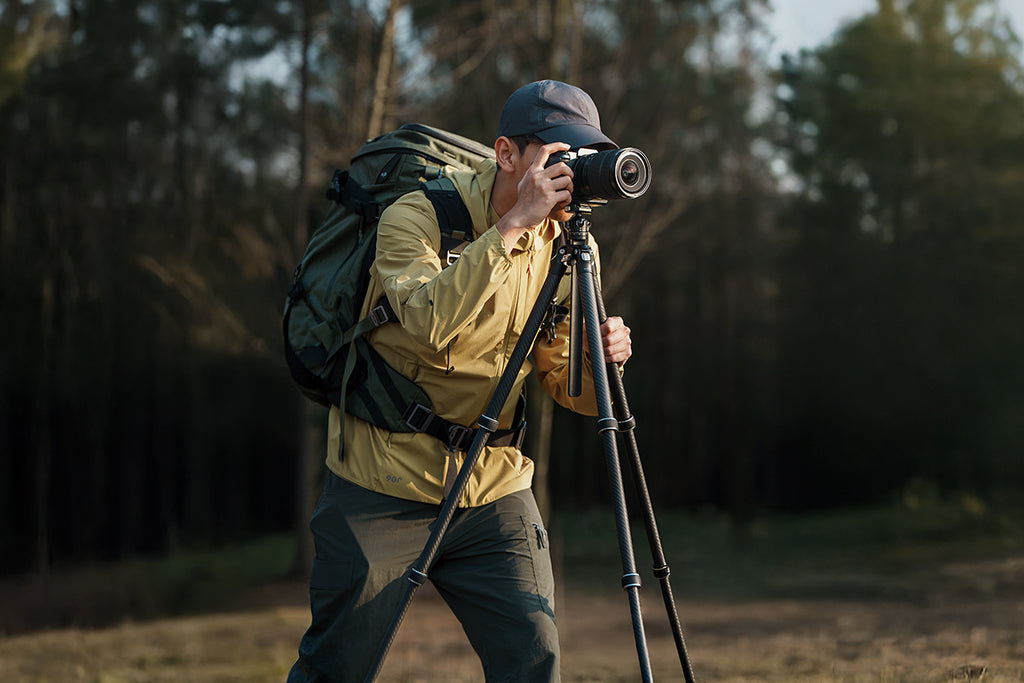
Mapping Backup Mounts: The "Two-Point Rule"
When rigging for high-stakes environments, we utilize a heuristic known as the Two-Point Rule. This rule states that any equipment load exceeding 2kg should have at least two independent, rated attachment points within the rig architecture.
Why 2kg is the Threshold
This threshold is derived from analyzing the stress points on standard aluminum alloy plates. While a single 1/4"-20 screw is technically rated for high static loads, the dynamic forces of hiking, climbing, or vehicle vibration can induce "rotation failure."
| Parameter | Value/Range | Unit | Rationale |
|---|---|---|---|
| Primary Load Limit | 2 | kg | Heuristic threshold for single-point safety |
| Safety Factor | 3:1 | Ratio | Minimum for remote expedition rigging |
| Thread Engagement | 5-7 | Full turns | Required for ISO 1222:2010 compliance |
| Torque MVC Limit | ~10 | N·m | Average wrist fatigue threshold for solo operators |
| Operating Temp | -20 to 45 | °C | Range for aluminum-to-steel thermal expansion |
Implementing Redundancy in the Rig
- Primary Mount: An Arca-Swiss compatible quick-release plate (e.g., F38 or F50 standards).
- Secondary Safety: A dedicated safety tether or a secondary 1/4"-20 "anti-twist" pin.
- Interface Spares: We recommend carrying at least one spare interface plate pre-fitted to the camera. If your primary plate jams or is dropped in deep snow, a sub-30-second recovery is possible only if the spare is already attached or immediately accessible.
Biomechanical Efficiency: The "Wrist Torque" Analysis
Redundancy isn't just about safety; it’s about maintaining the operator's physical ability to continue the shoot. In remote expeditions, "Visual Weight" and physical leverage are often overlooked. Every accessory added to a camera increases the torque applied to the mounting point and the operator's wrist.
We can calculate the impact of rig imbalance using the torque formula: Torque ($\tau$) = Mass ($m$) × Gravity ($g$) × Lever Arm ($L$)
For example, a 2.8kg rig held 0.35m away from the wrist center-of-mass generates approximately $9.61 N\cdot m$ of torque. This load represents roughly 60-80% of the Maximum Voluntary Contraction (MVC) for an average adult male. By utilizing modular, lightweight mounting points (like the F22 system) to move accessories closer to the center of gravity, you reduce the lever arm ($L$), thereby reducing the strain on both the hardware and the human.
Methodology Note: This biomechanical model assumes a static hold. Dynamic movements (walking/running) significantly increase these forces, further justifying the need for secure, dual-point mounting.
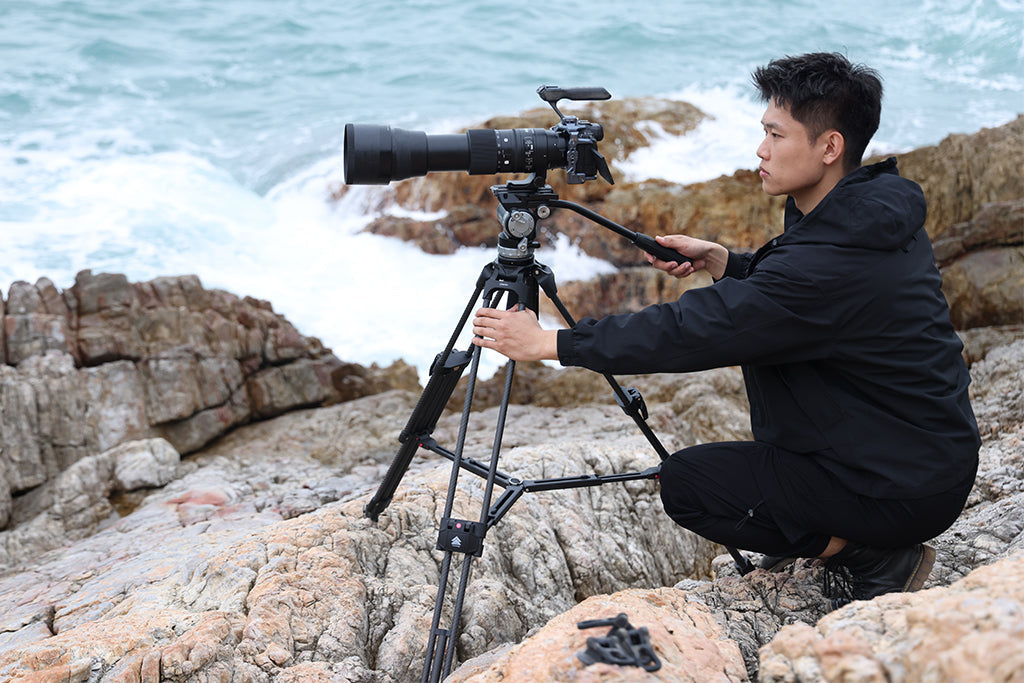
The Workflow ROI of Quick-Release Systems
Investing in a unified quick-release ecosystem (like the Falcam F38 or F50) is often viewed as a luxury. However, when we apply a "Workflow ROI" calculation, the economic and operational value becomes clear.
| Action Type | Traditional Thread Mount | Quick-Release Mount | Time Saved (per swap) |
|---|---|---|---|
| Camera Swap | ~40 seconds | ~3 seconds | 37 seconds |
| Gimbal Transition | ~120 seconds | ~10 seconds | 110 seconds |
| Accessory Change | ~30 seconds | ~2 seconds | 28 seconds |
If a solo operator performs 60 swaps per shoot day and operates 80 days per year, a unified quick-release system saves approximately 49 hours annually. At a professional rate of $120/hour, this represents a value of over $5,900, far exceeding the cost of the hardware. This efficiency is critical in remote environments where "golden hour" light lasts only minutes.
Logistical Enablement and Safety Compliance
Redundancy planning must also extend to the transport and safety of your power and wireless systems. In remote expeditions, battery failure is a primary risk.
Battery Transport and Safety
When traveling to remote locations via air, compliance with the IATA Lithium Battery Guidance Document is non-negotiable. Batteries must be protected from short circuits and carried in cabin baggage. Furthermore, ensuring your batteries meet IEC 62133-2:2017 Safety Requirements ensures they won't become a hazard in extreme pressure or temperature fluctuations.
Thermal Shock Prevention
In extreme cold, aluminum quick-release plates act as a "thermal bridge," conducting cold directly from the tripod to the camera body and battery. We recommend attaching plates to the camera indoors before heading out. This minimizes the "metal-to-skin" shock and slows the rate of battery cooling, preserving runtime.
The Fail-Safe Pre-Shoot Checklist
Before every expedition shoot, perform a "Full Kit Swap" simulation. This involves mimicking a primary failure (e.g., "The tripod head is jammed") and transitioning to your backup mounting solution while wearing gloves and in low-light conditions.
Tactile & Visual Verification Checklist:
- Audible: Do you hear the distinct "Click" of the locking mechanism?
- Tactile: Perform the "Tug Test." Pull the camera firmly in three directions immediately after mounting.
- Visual: Check the locking pin status. On Falcam systems, ensure the orange or silver indicator is in the "Locked" position.
- Cable Strain: Ensure heavy HDMI or power cables are secured with a cable clamp to prevent them from acting as a lever against the mount.
Engineering for the Long Haul
Redundancy is not about packing duplicates of everything; it is about the intelligent selection of components that can serve multiple roles. By standardizing on a high-performance ecosystem like the Arca-Swiss compatible Falcam series, while maintaining 1/4"-20 fallback points and adhering to the "Two-Point Rule," you build a rig that is both agile and resilient.
As you plan your next remote expedition, remember that your mounting system is the literal bridge between your vision and the environment. Ensuring that bridge has a backup is the hallmark of a professional creator.
Disclaimer: This article is for informational purposes only. Equipment rigging and remote expeditions involve inherent risks. Always consult manufacturer specifications for load ratings and safety protocols. For battery transport, always verify current regulations with your specific airline and the IATA Passenger Guidance.