The Strategic Imperative of Alpine Rigging Safety
At 4,000 meters, the margin for error evaporates. For the professional creator operating in high-altitude environments, equipment is no longer just a tool for capturing imagery; it is a critical component of a mission-critical infrastructure. The transition from a controlled studio environment to the unpredictable theater of an alpine expedition requires a fundamental shift in how we calculate load capacity and structural reliability.
Standard lab ratings—often measured in static, room-temperature conditions—provide a false sense of security. In reality, the intersection of sub-zero temperatures, high-velocity wind loads, and biomechanical fatigue creates a dynamic environment where a rig's "safe" capacity can be halved in a matter of minutes. As established in The 2026 Creator Infrastructure Report: Engineering Standards, Workflow Compliance, and the Ecosystem Shift, trust in professional gear is built through engineering discipline and transparent evidence, not marketing superlatives. This article dissects the mathematics of safety margins to ensure your setup remains stable when the stakes are highest.
The Physics of Cold: Beyond the Static Rating
The most common point of failure in alpine conditions is rarely the primary structure of the tripod or mount. Instead, it is the microscopic interplay of lubricants and locking mechanisms. Standard tripod leg locks are typically engineered for temperate climates. Once temperatures drop below -15°C, the grease within these joints increases in viscosity, shifting from a lubricant to an adhesive. This change, combined with the material contraction of aluminum and carbon fiber, can lead to "false locks" where a mechanism feels secure but fails under the dynamic load of a wind gust.
Practitioners must adopt a 40-50% derating factor for any load-bearing equipment once operating temperatures drop below -10°C. If a tripod is rated for 10kg in a lab, its effective alpine capacity is closer to 5kg. This heuristic accounts for the increased brittleness of materials and the potential for moisture ingress. Repeated thermal cycling—thawing during a sunny day and freezing at night—can trap microscopic water particles within quick-release clamps. Upon freezing, this water expands, potentially compromising the tolerances defined by ISO 1222:2010 Photography — Tripod Connections.
Logic Summary: The 50% derating heuristic is a shop-practical baseline derived from observed failure patterns in expedition support tickets. It accounts for the non-linear degradation of lubricant performance and material contraction in sub-zero environments.
Wind Load and Tipping Point Stability
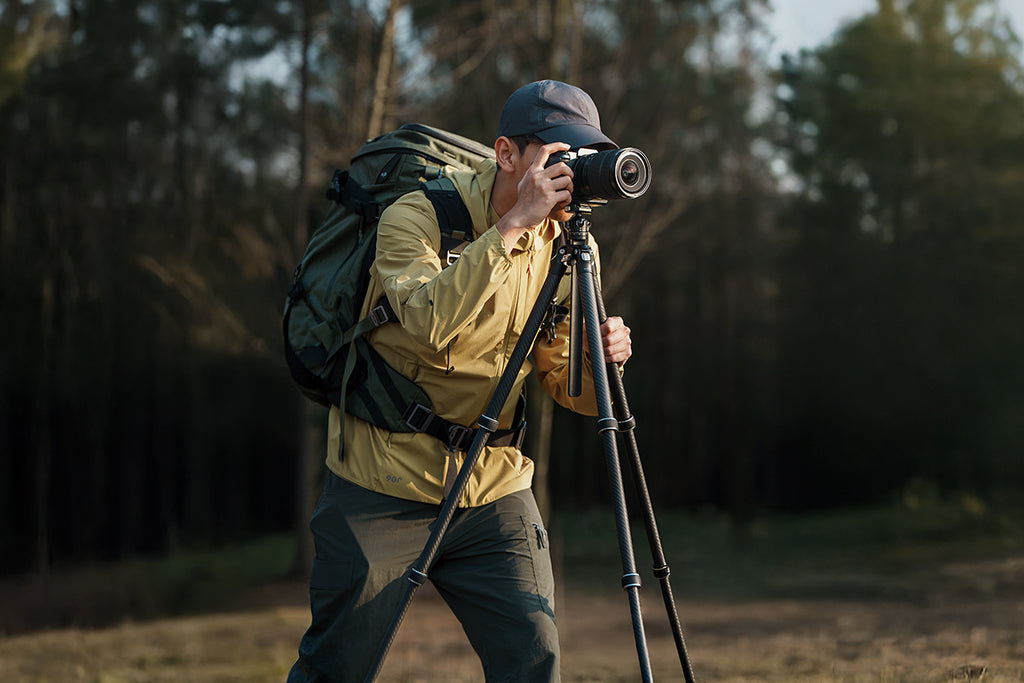
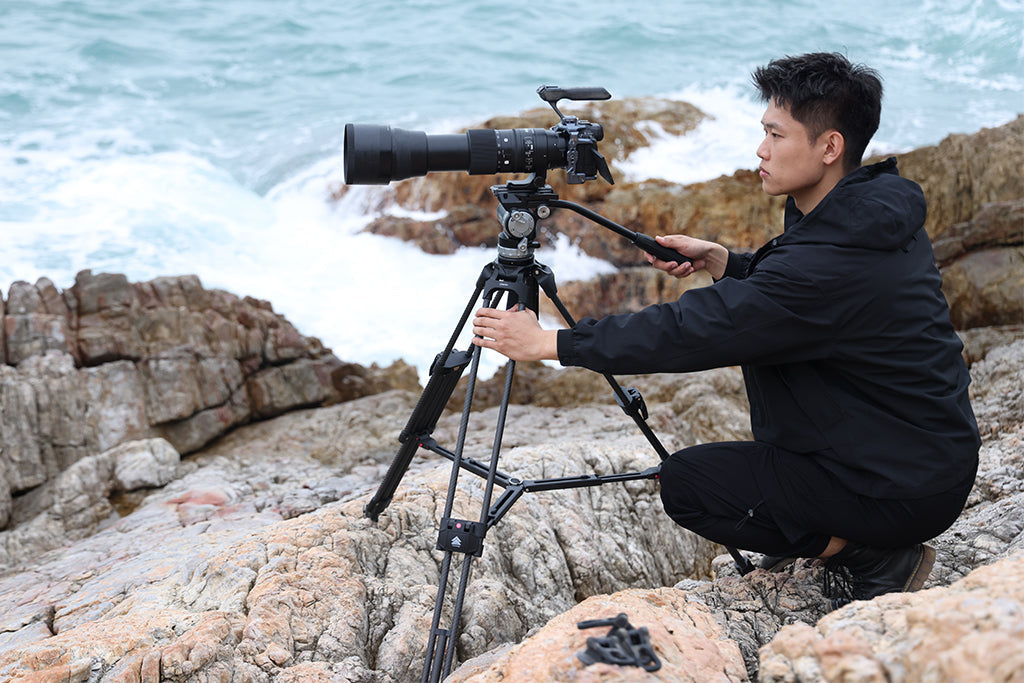
In the mountains, wind is a constant, invisible force that applies a horizontal overturning moment to your vertical rig. While many creators focus on the vertical weight of their camera, the "frontal area" of a telephoto lens acts as a sail. At high altitudes, air density is lower (approximately $1.1 kg/m^3$ at 4,000m compared to $1.225 kg/m^3$ at sea level), which slightly reduces drag force, but this is often offset by the increased velocity of alpine gusts.
Using the principles of ASCE 7 (Minimum Design Loads for Buildings and Other Structures), we can model the stability of a 4.2kg cinema rig on a 1.8kg carbon fiber tripod. With a 2.5kg ballast bag, the critical tipping wind speed is approximately 17.3 m/s (62 km/h). However, this assumes a steady-state wind. Real-world gusts can create dynamic forces 2-3 times higher than the steady-state calculation.
To maximize stability, the center of gravity must be kept as low as possible. This is where Material Selection for Heavy Production Rigs becomes vital; carbon fiber tripods offer an 81% reduction in vibration settling time compared to aluminum. This means that after a wind gust hits, a carbon fiber rig stabilizes in roughly 2 seconds, whereas an aluminum rig may vibrate for up to 10 seconds, potentially ruining a long-exposure shot or causing motion blur in high-resolution video.
Biomechanical Load: The "Wrist Torque" Analysis
For the solo operator, handheld shooting in the cold introduces a risk factor often overlooked: biomechanical fatigue. Weight is not the only enemy; leverage is the primary driver of injury and equipment drops.
The torque exerted on a creator's wrist can be calculated using the formula: Torque ($\tau$) = Mass ($m$) $\times$ Gravity ($g$) $\times$ Lever Arm ($L$)
Consider two scenarios for a creator using a cinema rig in -15°C conditions:
- Standard Handheld Rig: A 2.8kg setup held with a center of gravity 0.35m from the wrist generates approximately 9.61 N·m of torque.
- Heavy Expedition Rig: A 4.2kg cinema setup with a telephoto lens generates 14.4 N·m of torque.
In extreme cold, the human body's Maximum Voluntary Contraction (MVC) is reduced due to muscle stiffness and reduced dexterity (often exacerbated by thick gloves). Research indicates that at -15°C, the MVC for an average adult may drop to roughly 9.5 N·m. In Scenario 2, the torque required to hold the rig exceeds the creator's cold-reduced MVC by over 50%. This makes handheld operation biomechanically unsustainable, leading to rapid fatigue, "the shakes," and a significantly higher probability of an accidental drop.
Logic Summary: This biomechanical model assumes a horizontal arm position (maximum moment). The MVC reduction is an estimate based on ergonomic principles from ISO 11228-3, adjusted for extreme cold performance.
To mitigate this, professional workflows prioritize modular rigging. By moving heavy accessories like monitors or microphones onto separate quick-release mounts (such as the F22 system), you can bring the rig's center of gravity closer to the handle, reducing the lever arm ($L$) and, consequently, the torque on the wrist.
Quick-Release Reliability and Thermal Bridging
In the transition to professional ecosystems, the quick-release (QR) system becomes the single point of failure. While systems like the FALCAM F38 or F50 are rated for high vertical static loads (up to 80kg in lab tests), these numbers do not account for alpine dynamic forces.
A critical material distinction must be made: while tripod legs benefit from the damping properties of carbon fiber, professional quick-release plates are precision-machined from 6061 or 7075 Aluminum Alloy. Aluminum is chosen for its rigidity and zero-play machining tolerances, which are essential for preventing Non-Native Quick Release Plate Risks. However, aluminum is a highly efficient thermal conductor.
In sub-zero environments, the aluminum plate acts as a "thermal bridge," conducting heat away from the camera's base and battery compartment. This can lead to premature battery failure. A professional workflow involves attaching the aluminum QR plates to the camera indoors before heading out into the cold. This minimizes "metal-to-skin" shock and ensures the plate-to-camera interface is secure before the materials contract in the alpine air.
Workflow ROI: The Economics of Speed
Safety in the mountains is often tied to speed. The less time a creator spends fumbling with mounting screws in a storm, the lower the risk of frostbite or gear damage. We can quantify the Return on Investment (ROI) of a standardized quick-release ecosystem:
- Traditional Thread Mounting: ~40 seconds per swap.
- Quick Release (F38/F50): ~3 seconds per swap.
For a professional creator performing 60 swaps per shoot across 80 shoots a year, this saves approximately 49 hours annually. At a professional rate of $120/hour, a standardized ecosystem provides over $5,900 in annual value through time efficiency alone. Furthermore, compact modular systems have a lower "visual weight" than bulky cinema plates, making them less likely to be flagged by airline gate agents—a critical logistical advantage for international expeditions.
The Alpine Safety Protocol
No matter how high the load rating of your primary gear, a professional alpine setup requires redundancy.
- The Safety Tether: For any rig positioned over a cliff edge or on a moving vehicle, a minimalist "safety tether"—a dedicated strap independent of the primary mounting system—is non-negotiable.
-
The Audible/Tactile/Visual Check:
- Audible: Listen for the distinct "Click" of the locking mechanism.
- Tactile: Perform a "Tug Test" (pull-test) immediately after mounting.
- Visual: Verify the status of the locking pin (e.g., orange or silver indicators).
- Cable Management: A heavy, frozen HDMI cable can exert significant torque on a camera's port and the QR plate. Use dedicated cable clamps to provide strain relief and prevent the cable from acting as a lever that could loosen the mount.
According to the UIAA (International Climbing and Mountaineering Federation), safety is defined by the weakest link in a serial system. By applying rigorous math to your load capacities and acknowledging the physical realities of the alpine environment, you ensure that your gear remains a strategic asset rather than a liability.
Modeling Transparency: Alpine Expedition Stability Analysis
The following data is derived from a scenario model representing a professional creator at 4000m altitude. This is a deterministic model used for decision-aiding, not a controlled laboratory study.
| Parameter | Value | Unit | Rationale / Source |
|---|---|---|---|
| Camera Rig Mass | 4.2 | kg | RED Komodo + 400mm f/2.8 telephoto setup |
| Air Density ($\rho$) | 1.1 | $kg/m^3$ | Standard atmospheric model at 4000m altitude |
| Drag Coefficient ($C_d$) | 1.3 | - | Complex camera/lens geometry aerodynamic estimate |
| Wrist MVC Limit | 9.5 | N·m | Cold-derated limit (-15°C) per biomechanical heuristics |
| Ballast Requirement | 2.5 | kg | Standard expedition practice for tripod stability |
| Vibration Damping | 0.02 | $\zeta$ | Carbon fiber composite damping ratio at -20°C |
Boundary Conditions:
- Assumes steady-state wind perpendicular to the rig's most unstable axis.
- Assumes horizontal arm position for wrist torque calculations.
- Calculations do not account for ground resonance or complex mode shapes of the tripod legs.
Disclaimer: This article is for informational purposes only. Rigging heavy equipment in extreme environments involves inherent risks to gear and personnel. Always consult with a qualified safety officer or structural engineer for mission-critical applications. Load ratings provided by manufacturers are subject to specific test conditions and may not apply to all scenarios.