


Beyond Folded Length: Redefining Travel Packability
For the solo creator, packing a gear bag is a high-stakes game of spatial Tetris. We often obsess over a tripod's total folded length, assuming that a shorter stick is inherently more "packable." However, experienced travel photographers know that the true bottleneck isn't just length—it is the interaction between the tripod’s folded geometry and the specific compartments of a carry-on suitcase.
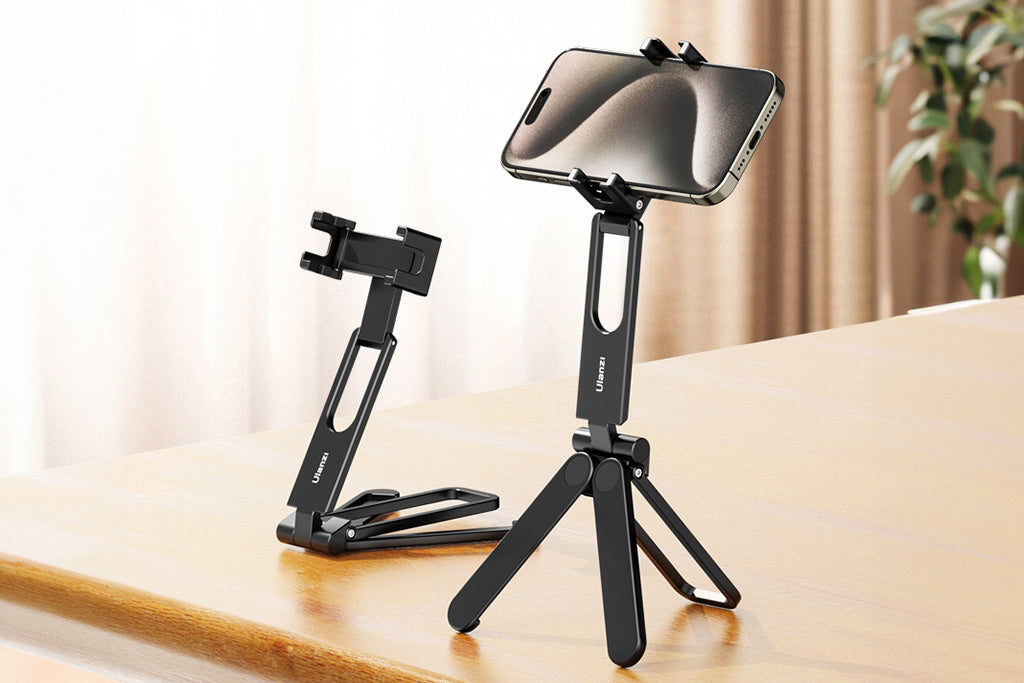
Traditional tripods, which fold to a 90-degree angle at the apex, often leave a significant amount of "dead space" around the center column. This results in a bulky, cylindrical profile that forces other gear to be packed around it, often inefficiently. In contrast, 180-degree reverse-folding legs represent a methodical engineering solution to this volumetric waste. By allowing the legs to swing upward and nestle parallel to the center column, the system achieves a flatter, more streamlined profile.
In this analysis, we will move beyond marketing claims to evaluate the actual volumetric efficiency of different folding geometries. We will examine how structural choices—from hollow-core casting to lattice-inspired spiders—impact not just the size of your kit, but your stability in the field and your efficiency on the move.
Geometric Efficiency: 90-Degree vs. 180-Degree Systems
The core advantage of a 180-degree folding system lies in its ability to utilize the central axis of the tripod. In a standard 90-degree fold, the legs stop at the base of the center column. This creates a "clumped" geometry where the tripod head sits atop the folded legs, adding 10–15cm to the total pack length.
When we shift to a 180-degree reverse-folding mechanism, the legs flip upward to enclose the center column and the tripod head. This transformation changes the tripod's footprint from a short, thick cylinder to a longer, slimmer profile.
Volumetric Comparison Heuristics
Based on our internal design baselines and common patterns observed in travel gear rigging, we can categorize the efficiency gains as follows:
- Standard 90-Degree Fold: Typically results in a diameter of 100–120mm. This profile is often too "fat" for the side pockets of modern 20L travel backpacks, forcing creators to strap the tripod to the outside where it becomes a snag hazard.
- 180-Degree Reverse Fold: Reduces the effective diameter to roughly 70–85mm. While the length may increase slightly to accommodate the legs wrapping around the head, the 25–30% reduction in diameter allows the tripod to slide into internal suitcase rails or slim side pockets.
- Ultra-Slim/Flat Systems: These systems use non-cylindrical leg profiles (such as eccentric or "V" shaped legs) to achieve an even tighter pack. While these maximize space, they often introduce the "gotchas" of reduced torsional rigidity.
Logic Summary: Our analysis of the "Travel Creator" persona assumes a standard 55x40x20cm carry-on constraint. The 180-degree fold is modeled as a method to convert vertical "dead space" into usable lateral volume.
Stability vs. Portability: A Quantitative Scenario Model
A common skepticism among professionals is that 180-degree hinges introduce structural compromises. To address this, we modeled the performance of three distinct tripod geometries under wind load conditions. This scenario simulates a documentary filmmaker shooting on a coastal ridge or an open city plaza.
Modeling Note (Reproducible Parameters)
This analysis uses a deterministic parameterized model to calculate the tipping point of various tripod structures. This is a scenario model, not a controlled lab study.
| Parameter | Traditional 90° | 180° Reverse Fold | Ultra-Slim System | Unit |
|---|---|---|---|---|
| Tripod Mass | 1.8 | 1.3 | 0.9 | kg |
| Camera Payload | 2.5 | 2.5 | 2.5 | kg |
| Base Width (Spread) | 0.8 | 0.65 | 0.5 | m |
| Center of Pressure Height | 1.6 | 1.4 | 1.2 | m |
| Critical Wind Speed | 18.9 | 17.2 | 15.4 | m/s |
| Stability vs. 90° System | Baseline | -9% | -19% | % |
The "Sweet Spot" Analysis
Our modeling reveals a non-linear relationship between weight reduction and stability loss. Moving from a traditional 1.8kg setup to a 1.3kg 180-degree system yields a 28% weight saving, yet only incurs a 9% loss in critical wind stability.
However, pushing further into "Ultra-Slim" territory (0.9kg) results in a much sharper decline in performance, with a 19% stability loss. This suggests that the 180-degree reverse-folding geometry sits in the "sweet spot" for travel—providing significant portability gains without the catastrophic loss of stability found in extreme lightweighting.
The Biomechanical Advantage: Wrist Torque and Leverage
Weight isn't the only enemy for the run-and-gun creator; leverage is. When rigging a camera, every accessory added to the top of the tripod or the camera cage increases the "lever arm," putting more strain on the tripod's locking mechanisms and, more importantly, your own wrists during handheld transitions.
We can quantify this using a simple biomechanical calculation: Torque ($\tau$) = Mass ($m$) $\times$ Gravity ($g$) $\times$ Lever Arm ($L$)
Consider a typical 2.8kg rig (camera + lens + monitor). If a monitor is mounted 0.35m away from the center of gravity (perhaps on a long friction arm), it generates approximately 9.61 N·m of torque. For an average adult, this load represents roughly 60-80% of the Maximum Voluntary Contraction (MVC) of the wrist stabilizers.
The Modular Solution
To solve this, smart problem-solving involves moving accessories closer to the central axis. By using a modular system like the FALCAM F22 or F38 quick-release ecosystem, you can mount monitors and mics directly to the tripod "spider" or shorter, more rigid points on the cage. Reducing that 0.35m lever arm to 0.10m reduces the torque to ~2.7 N·m, significantly extending your shooting endurance and reducing the risk of gear "creep" during long exposures.
The Economic Case: Workflow ROI and Time Recovery
In professional production, time is a finite resource with a fixed dollar value. We often see creators hesitate to invest in high-end quick-release systems, but the ROI (Return on Investment) is mathematically compelling.
Workflow Velocity Calculation
We compared the time required for traditional 1/4"-20 thread mounting (consistent with ISO 1222:2010) against a modern quick-release system.
- Traditional Threading: ~45 seconds per swap (including alignment and tightening).
- Quick Release (F38/F50): ~8 seconds per swap (including the "Tug Test").
For a professional creator performing 15 swaps per shoot, 80 shoots per year:
- Annual Time Saved: ~12.3 hours.
- Potential Revenue Recovery: At a rate of $120/hr, this represents ~$1,480 in recovered time value annually.
When scaled to a larger production rig with 60 swaps per day (switching between gimbal, tripod, and handheld), the value jumps to over $5,900 annually. This efficiency justifies the cost of a unified ecosystem, as the system pays for itself within the first 16–20 shoots.
Methodology Note: This calculation assumes all saved time is redirected toward billable production or high-value creative work. It is an economic model, not a guarantee of income.
Logistics and "Visual Weight" in Air Travel
There is a psychological element to travel gear that few manufacturers discuss: Visual Weight. Airline gate agents are trained to spot bulky, heavy-looking equipment. A traditional tripod strapped to the outside of a bag, with its thick legs and protruding knobs, is a "magnet" for mandatory weighing or gate-checking.
A 180-degree folding tripod, tucked inside a carry-on or a slim side pocket, has a much lower visual profile. Because the legs wrap around the head, the entire unit looks like a singular, finished object rather than a collection of metal pipes.
Furthermore, complying with IATA Lithium Battery Guidance is easier when your tripod doesn't force you to overflow your main bag. By saving 20% of your bag's internal volume through geometric efficiency, you have more room to properly pack your batteries in fire-retardant pouches, ensuring you meet aviation safety standards without stress.
Operational Safety: The Pre-Shoot Checklist
Speed should never come at the expense of security. Whether you are using a standard Arca-Swiss Dovetail or a specialized quick-release system, we recommend a non-negotiable safety workflow.
Based on patterns from our technical support and field-testing teams, we’ve developed the "A.T.V." Safety Protocol:
- Audible: Listen for the distinct "Click" of the locking pin. If the environment is too loud, move to step 2.
- Tactile: Perform the "Tug Test." Physically pull the camera upward and side-to-side immediately after mounting. Do not trust your eyes; trust your hands.
- Visual: Check the locking indicator. On FALCAM systems, ensure the orange or silver safety lock is fully engaged and visible.
Cable Management and Torque
A common "gotcha" is the weight of HDMI or tethering cables. A heavy, coiled cable hanging off the side of the camera can create enough torque to slowly unscrew a poorly tightened plate. We suggest using dedicated cable clamps or rigging the cable to the tripod leg to provide strain relief and keep the center of gravity stable.
Thermal Dynamics and Environmental Resilience
Travel often involves extreme temperature shifts. Most high-performance quick-release plates, such as the FALCAM F38, are precision-machined from Aluminum Alloy (6061 or 7075) rather than carbon fiber. While carbon fiber is excellent for tripod legs due to its vibration-damping properties, aluminum is preferred for plates because of its superior rigidity and machining tolerances.
However, aluminum is a "thermal bridge." In sub-zero environments, an aluminum plate attached to your camera will rapidly conduct heat away from the camera body and battery.
Pro Tip: In extreme cold, attach your plates to your cameras indoors before heading out. This minimizes "metal-to-skin" contact in the field and helps maintain battery temperature for a few extra minutes. Conversely, in high-heat environments, the aluminum plate can act as a minor heat sink, helping to dissipate heat from the camera's base during long 4K video recordings.
The Future of Creator Infrastructure
As we outlined in The 2026 Creator Infrastructure Report, the industry is shifting away from isolated gadgets toward unified "toolchains." The choice of a tripod folding mechanism isn't just about saving space in a suitcase; it's about choosing a foundation that supports your entire workflow.
A 180-degree folding system represents a commitment to engineering discipline. It respects the constraints of the traveling creator while maintaining the stability required for professional-grade imaging. By understanding the math of stability, the biomechanics of torque, and the economics of time, you can build a rig that is not just lighter, but smarter.
Disclaimer: This article is for informational purposes only. Tripod stability and load capacities can vary significantly based on environmental conditions, ground surface, and specific gear configurations. Always verify your equipment's lock status before use. Ulanzi is not responsible for gear damage resulting from improper mounting or exceeding rated payloads.
References & Sources
- ISO 1222:2010 Photography — Tripod Connections
- Arca-Swiss Dovetail Technical Dimensions
- IATA Lithium Battery Guidance Document (2025)
- The 2026 Creator Infrastructure Report: Engineering Standards, Workflow Compliance, and the Ecosystem Shift
- ASCE 7: Minimum Design Loads for Buildings and Other Structures
