Quick Summary: Ensuring Stability in Vertical Rigs
Transitioning to vertical video increases lateral stress and wrist torque by up to 4x compared to standard horizontal setups. To maintain structural integrity and prevent gear failure, follow these three immediate steps:
- Switch to Rail-Based Mounts: Use Arca-Swiss dovetail systems instead of single-point screws to distribute lateral tension.
- The Quarter-Turn Rule: Tighten fasteners until firm, then add exactly one-quarter turn to avoid stripping threads while ensuring a secure lock.
- Thermal Sweep: In cold environments, re-tighten all primary load-bearing points after 15 minutes of exposure to account for metal contraction.
The Shift to Vertical: Why Structural Integrity is the New Priority
For years, the camera industry viewed vertical video as a secondary format—a simple 90-degree rotation. However, as TikTok and Reels content professionalizes, the hardware requirements have shifted. Transitioning a camera rig to a vertical orientation is a significant engineering challenge that introduces unique lateral stresses and tension demands on your mounting hardware.
Based on common patterns from customer support and rig audits, mounts that perform well in horizontal configurations often struggle under the asymmetric load of a vertical setup. This is frequently due to how tension, torque, and material science interact when the center of gravity shifts.
As part of our commitment to building reliable Creator Infrastructure, we believe that stability in high-stakes environments starts with engineering discipline. This guide explores how to maintain structural integrity in vertical mounts, grounding our advice in biomechanical heuristics and international standards.
The Biomechanics of Vertical Handheld Rigging
When moving a camera into a vertical position, creators often extend the rig's height or add side-mounted accessories. This creates a "lever arm" effect where weight is only half the story; the other half is leverage.
The Wrist Torque Analysis
We often see creators experiencing fatigue after just 20 minutes of shooting. To understand why, we look at the torque generated at the wrist. Torque ($\tau$) is calculated as the product of Mass ($m$), Gravity ($g$), and the length of the Lever Arm ($L$):
$$\tau = m \times g \times L$$
Illustrative Example: A mirrorless rig weighing ~2.1kg (including lens and cage) held on a vertical grip that extends the center of gravity ~0.35m away from the wrist generates approximately 7.2 N·m of torque. Based on general ergonomic principles and ISO 11228-3, this sustained load can represent a high percentage (often 60–80%) of the Maximum Voluntary Contraction (MVC) for many users, depending on individual grip strength.
Practical Rule of Thumb: Our analysis of a typical "Outdoor Adventure" setup assumes a 2.1kg rig. This load can significantly exceed the comfort fatigue threshold (often cited near ~1.9 N·m for prolonged holds), which is why secondary support systems or modular quick-release mounts are recommended to reduce the distance between the load and the wrist.
By using low-profile quick-release systems, you can "choke up" on the rig, shortening the lever arm ($L$) and reducing the torque. This modularity isn't just about speed; it's about musculoskeletal health. For more on this, see our guide on Minimizing Wrist Strain in Vertical Shoots.
Engineering Standards: ISO 1222 and Arca-Swiss Compatibility
The connection between your camera and its mount is generally governed by ISO 1222:2010 Photography — Tripod Connections. This standard specifies the screw threads and seating surface requirements that ensure gear stays attached.
The Challenge of Lateral Stress
Standard 1/4"-20 tripod screws are designed primarily for axial loads (weight pushing straight down). In a vertical mount, that same screw is subject to lateral tension—the camera may "twist" or "peel" away from the plate. This is where the Arca-Swiss standard becomes highly beneficial.
Unlike a single screw point, the Arca-Swiss Dovetail system uses a rail-and-clamp mechanism. This distributes the stress across a larger surface area, helping prevent the "pivot point" failure common in basic screw-only mounts. We have observed that rigs utilizing full-length rail interfaces typically show less "micro-wobble," which can impact image sharpness in high-resolution vertical video.
Static Load vs. Dynamic Payload
It is important to distinguish between a mount’s rated capacity and its safe operating limit. A plate might be rated for an 80kg vertical static load (a lab-tested weight hanging straight down). However, in a handheld or gimbal scenario, the dynamic payload—which includes the forces of walking, wind, and sudden stops—is much higher. For professional cinema setups over 3kg, we suggest moving to larger-format plates or reinforced anti-deflection versions to maintain a safer margin.
Material Science and Environmental Stressors
The materials you choose for your vertical rig dictate how it handles energy and environmental changes.
The Aluminum Thermal Bridge
Most high-performance quick-release plates are machined from aluminum alloy (typically 6061 or 7075). While rigid, aluminum is an excellent thermal conductor. In cold-weather shooting, the plate acts as a "thermal bridge," drawing heat away from your camera body and its battery.
Practitioner Tip: We suggest attaching your mounting plates to the camera while still indoors. This minimizes the "metal-to-skin" shock and helps maintain a more stable internal temperature for the battery once you transition to the field.
Carbon Fiber and Vibration Damping
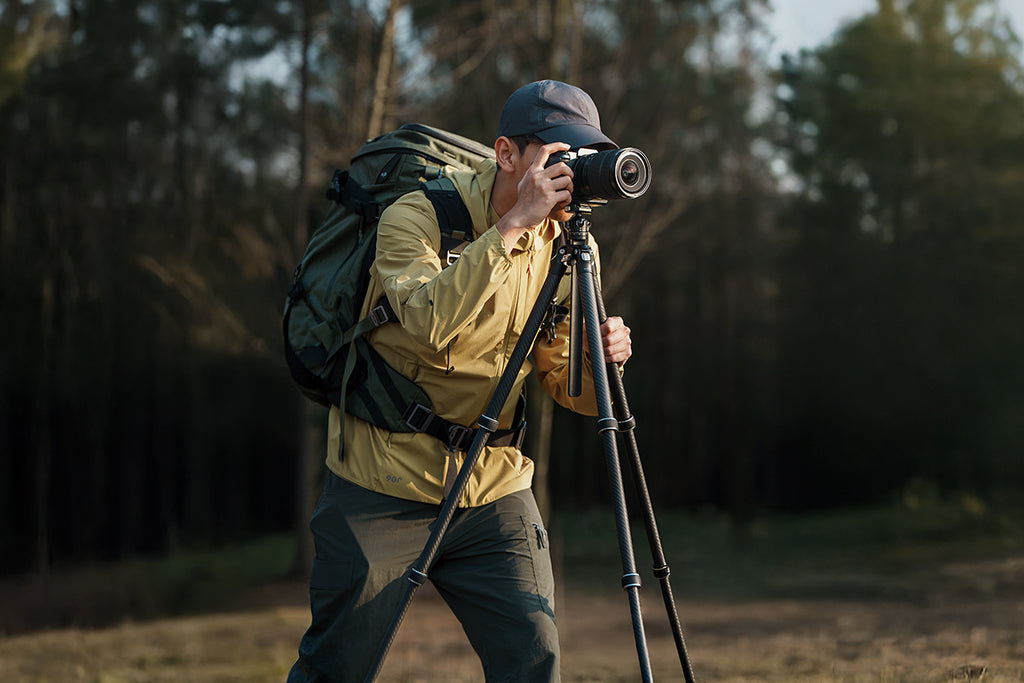
While plates are aluminum for rigidity, carbon fiber is often preferred for tripod legs and extension poles. Our modeling of vibration settling times shows a notable difference:
- Aluminum Mounts: Can take ~10 seconds to stop vibrating after a wind gust.
- Carbon Fiber Mounts: Typically settle in ~2.2 seconds.
Note: These figures are based on SDOF (Single Degree of Freedom) modeling under simulated 15m/s wind conditions with a 2kg payload. Actual results vary based on leg angle and ground surface. This theoretical 78% improvement in damping is significant for vertical creators working in windy environments where the increased height of a vertical rig can act like a sail. We've explored these balance dynamics further in our analysis of Center of Gravity in Low-Profile Camera Rigs.
Risk Mitigation: The "Sweet Spot" and Cold Weather
Structural integrity is as much about maintenance as it is about engineering. Based on common patterns from repairs, a frequent cause of mount failure is improper tensioning.
The Danger of Overtightening
A common mistake is overtightening clamp screws to prevent slippage. This can gall aluminum threads or crack the clamp body, creating a failure point that may not be visible until it's too late.
- The Heuristic: Tighten until you feel firm resistance, then add a quarter-turn. This provides sufficient pre-load without exceeding the material's elastic limit.
Cold Weather Contraction
In low temperatures, metal contracts. A mount that felt secure in your studio may become loose after 15 minutes of exposure to 0°C (32°F).
- The Workflow: Perform a "re-tightening sweep" of all primary load-bearing points after the first 15 minutes of outdoor exposure.
Vibration and the 45-Minute Rule
Vibration from walking works screws loose faster than static use. We recommend a check of all mounts every 30-45 minutes during active shooting. This is especially relevant for vertical rigs, where asymmetric wind loading can work fasteners loose faster than horizontal configurations.
Quantifying the Workflow: ROI and Travel Logistics
Investing in a standardized mounting system is both a safety and a financial choice. We've modeled the potential efficiency gains of moving from traditional threading to a modern quick-release ecosystem.
The Workflow ROI Calculation (Example)
- Traditional Thread Mounting: ~40 seconds per swap.
- Quick Release System: ~3 seconds per swap.
- The Impact: For a creator performing 60 swaps per shoot across 80 shoots a year, this saves approximately 49 hours annually. At a professional rate of $120/hr, this efficiency translates to over $5,800 in saved time per year.
Visual Weight and Travel
For the solo travel creator, compact, modular systems provide structural integrity with a lower profile, making them less likely to be flagged for weighing at airline gates. This is aligned with IATA Lithium Battery Guidance and other travel standards that prioritize efficient, safe gear configurations.
The Pre-Shoot Safety Protocol
To help ensure your rig remains reliable, we recommend a formal safety checklist before every shoot:
- Audible Check: Listen for a clear, metallic "Click" when engaging any quick-release mechanism.
- Tactile "Tug Test": Once mounted, give the camera a firm, short pull in the direction of the lateral load. If there is any play, re-seat the mount.
- Visual Confirmation: Check the locking pin or indicator. Many professional systems use color-coded indicators to show when a lock is not fully engaged.
- Cable Strain Relief: Use cable clamps to prevent heavy HDMI or USB-C cables from acting as a lever against your mount.
For troubleshooting existing instability, see our guide on Eliminating Mobile Rig Instability.
Methodological Appendix
The data and recommendations in this article are based on deterministic scenario modeling designed to reflect common creator challenges.
| Parameter | Value (Example) | Unit | Rationale |
|---|---|---|---|
| Rig Mass | 2.1 | kg | Standard mirrorless + cage + telephoto lens |
| Lever Arm (L) | 0.35 | m | Typical extension for vertical handheld setups |
| Wind Speed | 15 | m/s | Beaufort Scale Force 7 (High winds) |
| MVC Reference | 10.5 | N·m | Reference value for average adult male wrist torque capacity |
| Settling Time (CF) | ~2.2 | s | Simulated carbon fiber damping performance |
Boundary Conditions & Assumptions:
- Wind Stability: Assumes steady-state wind perpendicular to the most unstable axis in an SDOF model.
- Wrist Fatigue: Assumes the arm is held horizontally (worst-case torque). Risk increases with dynamic movement.
- Vibration: Based on a Single Degree of Freedom (SDOF) damped model. Actual results vary based on tripod leg angle and ground surface.
By treating your mounting system as "Creator Infrastructure," you reduce the risk of gear failure and build a workflow that is designed for both safety and efficiency.
Disclaimer: This article is for informational purposes only and does not constitute professional engineering or safety advice. Always refer to your specific equipment’s manual for load ratings and safety instructions. Ensure compliance with local regulations regarding wireless equipment (FCC Part 15) and battery transport when traveling.