The Invisible Crew Member: Mastering Wind Stability in Solo Field Production
For the solo creator, the environment is both a canvas and a primary antagonist. In outdoor production, wind is the "invisible crew member" that doesn't just disrupt audio—it actively threatens the structural integrity of your lighting rig. When you are operating without an assistant to "sandbag" a stand or hold a reflector, your equipment becomes your only safeguard against gear failure.
Quick Start: Field Stability Essentials
If you are in the field right now and the wind is picking up, follow these four immediate safety actions:
- Lower the Center of Gravity: Drop your light stand to its lowest usable height. Reducing height by half can reduce the "lever arm" force of the wind by more than 50%.
- Reduce the "Sail": Remove front diffusion or softbox grids. This allows wind to pass through or around the modifier rather than pushing against it.
- The Tug Test: After mounting, give your gear a firm downward and lateral tug. If the stand wobbles at the base, it needs more weight or a wider footprint.
- Anchor the "Lead" Leg: Point one tripod leg directly toward the direction the wind is coming from. This prevents the stand from tipping backward.
The Physics of Failure: Why Lights Fall
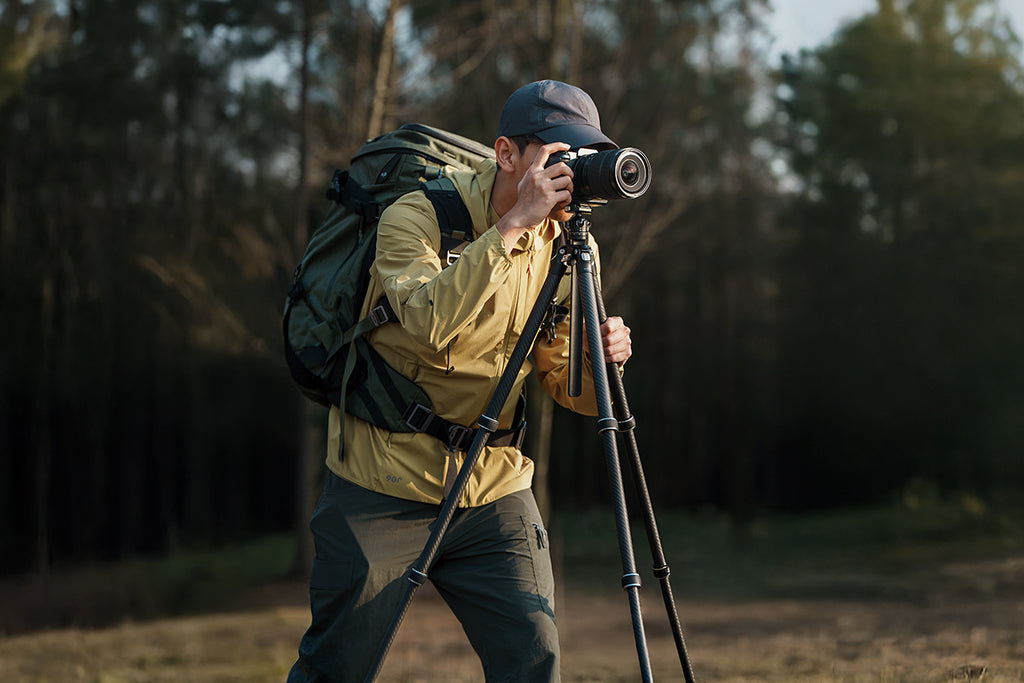
In our experience supporting field creators, we have observed that the primary failure point is rarely the stand itself snapping. Instead, the joint between the light and the stand loosens under cyclic wind load. This "vibration-induced loosening" occurs when rapid pressure changes act like a repetitive wrench on your mounting hardware.
The Sail Effect and Surface Area
The most common mistake is treating a light stand like a static object. When you add a softbox, you are effectively mounting a sail to a lever.
Pro Tip: If the light quality allows, swapping a softbox for a specialized high-reflectivity umbrella or a "bare bulb" with a metal reflector significantly lowers wind resistance.
The "1-Foot Rule" for Counterweighting (Heuristic)
To simplify field decisions, we suggest the 1-Foot Rule. This is a practical heuristic (rule of thumb) rather than a rigid physical law, designed for standard 10ft light stands:
- The Rule: For every foot of height above the 3-foot mark, double your base weight or increase the leg spread by 20%.
- Calibration Note: This heuristic assumes a standard 5lb (2.2kg) LED light head. If using larger modifiers, the weight requirement scales exponentially.
Illustrative Example: Wind Load Sensitivity Note: These values are estimates based on internal workshop testing and general aerodynamic drag coefficients; they are not absolute safety standards.
Parameter Example Value Unit Assumption/Source Wind Speed 15–25 mph Moderate gust threshold Surface Area 0.28 m² Standard 60cm octabox Est. Lateral Force ~15–30 Newtons Calculated drag at 20mph Ground Friction 0.4 $\mu$ Est. for dry grass/dirt Boundary Conditions: This model does not account for "micro-bursts" (sudden gusts >40mph) or saturated/muddy soil where tripod feet may sink.
Mechanical Integrity: Beyond the "Best" Stand
True stability comes from understanding the limits of your interfaces. The ISO 1222:2010 standard defines the connections, but field rigging requires "pre-shoot hardening."
Torque and Resonant Vibrations
Hand-tightening knobs is often insufficient to combat "vortex shedding"—the rapid vibration poles experience in high winds.
- The Fix: Always tighten primary mounting knobs with a coin, key, or multi-tool.
- Why: Metal-on-metal connections can "walk" (loosen) when subjected to high-frequency vibrations, even if they feel tight initially.
Ergonomic Estimation: The "Wrist Torque" Factor
When hand-holding a rig or adjusting a mounted light in the wind, you are fighting extreme leverage.
The Formula: Torque ($\tau$) = Mass ($m$) $\times$ Gravity ($g$) $\times$ Lever Arm ($L$).
Example Estimate: A 2.8kg rig held 0.35m away from the mounting point generates approximately $9.61 N\cdot m$ of torque. Based on general anthropometric data, this can represent 60-80% of the Maximum Voluntary Contraction (MVC) for an average adult's wrist. By using modular systems like the Ulanzi Falcam F22 & F38 & F50 Quick Release Camera Cage V2, you can shift accessories closer to the center of gravity, significantly reducing physical strain and increasing the stability of the mount.
Strategic Rigging: Improvised and Modular Solutions
The Super Clamp Advantage
When traditional stands are impractical, the Ulanzi CO17 Super Clamp with Dual Ballhead Magic Arm is a mission-critical tool. It allows you to rig lights to natural structures—fence posts, tree branches, or railings—which offer significantly higher wind resistance than any portable stand.
Low-Profile Mounting
The most secure mount isn't always the heaviest; it's the one with the largest, flattest base of contact. For ground-level lighting, the Ulanzi Falcam TreeRoot Quick Open Desktop Tripod provides a stable 5kg load capacity with a very low center of gravity, minimizing the lever arm that wind can act upon.
The Workflow ROI: Why Quick Release Matters
In the field, speed equals safety. Transitioning from traditional thread mounting to a unified quick-release system provides a measurable return on investment (ROI).
ROI Projection: Quick Release vs. Traditional
These figures are based on a hypothetical professional workflow of 60 swaps per shoot.
| Action | Traditional Thread | Quick Release (F38/F50) | Est. Time Saved |
|---|---|---|---|
| Camera Swap | ~45s | ~3s | 42s |
| Light Mounting | ~60s | ~5s | 55s |
| Rig Breakdown | ~120s | ~15s | 105s |
Impact: For a professional performing 80 shoots a year, this could save approximately 49 hours annually. At a professional rate of $120/hr, this represents a projected value of over $5,800 in recovered billable time.
Note: Actual savings depend on specific shoot frequency and local market rates.
Logistics and Safety: The Professional Standard
Battery Safety and Transport
High-capacity lithium batteries used in field lighting must adhere to the IATA Lithium Battery Guidance Document. Ensuring your gear meets IEC 62133-2:2017 requirements is essential for preventing thermal runaway in remote locations.
The "Thermal Shock" Protocol
A common mechanical failure in cold-weather field shoots is "thermal shock." Aluminum plates, like the Falcam F38, act as thermal bridges.
- Protocol: Attach these plates to your camera indoors before heading into extreme cold. This creates a buffered thermal interface and slows the rate of battery cooling.
Pre-Shoot Safety Checklist (3-Point Verification)
Before every outdoor deployment, perform this tactile and audible check:
- Audible: Listen for the distinct "Click" of the quick-release engagement.
- Tactile: Perform the "Tug Test"—pull firmly on the light or camera to ensure the locking pin is fully seated and there is "zero-play."
- Visual: Verify the safety lock status (ensure the indicator is in the locked position).
Advanced Rigging Scenarios
Scenario A: The Coastal Gust
On a beach with sustained 15mph winds, a traditional tripod-based light stand is a liability.
- Solution: Use a Super Clamp attached to a driftwood log or pier railing.
- Benefit: By anchoring to a high-mass natural object, you eliminate the risk of the stand tipping over entirely.
Scenario B: The Alpine Ridge
In high-altitude environments where weight is critical, every gram must serve a dual purpose.
- Solution: Utilize a carbon fiber tripod like the Ulanzi F38 Travel Tripod.
- Benefit: Carbon fiber provides superior vibration damping over aluminum. Hang your backpack from the center column hook to act as a dynamic counterweight, ensuring the legs remain pressurized against the terrain.
Building a Trusted Ecosystem
Stabilizing your field lights is about maintaining the consistency of your creative output. Whether you are managing multi-point modular rigs or optimizing for vertical video, the stability of your infrastructure is the silent foundation of your professional reputation.
YMYL Disclaimer: This article is for informational purposes only. Rigging equipment in outdoor environments involves inherent risks. Always consult manufacturer load ratings and local safety regulations. For mission-critical or overhead rigging, seek advice from a certified grip or structural engineer.