The R9 Gap: Why Benchmark Metrics Often Fail the Human Face
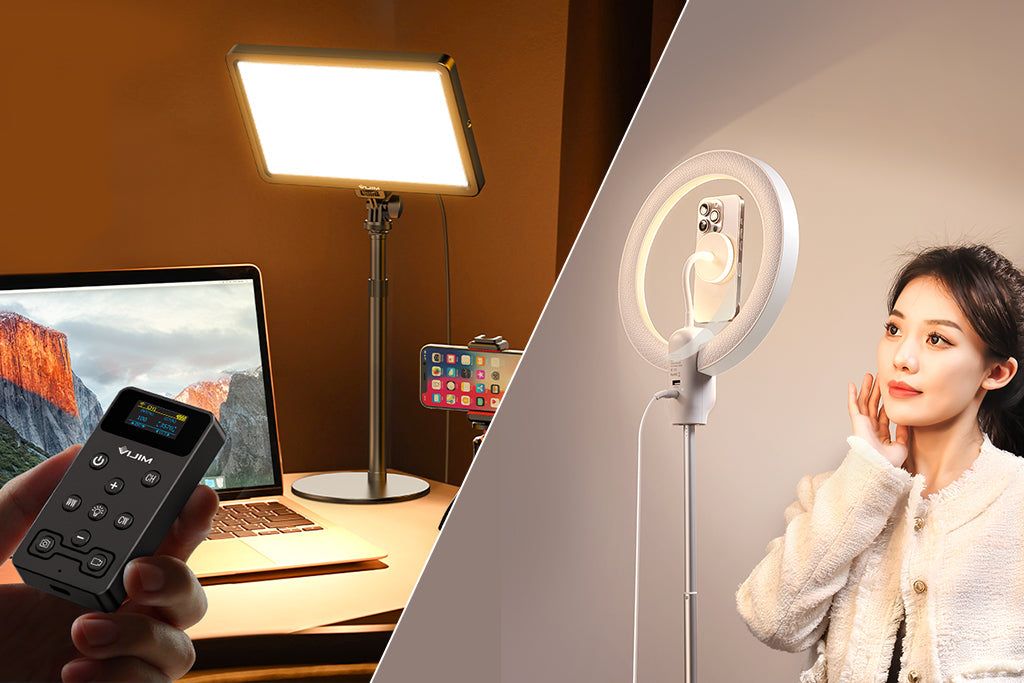
In the architecture of professional content creation, lighting is the primary infrastructure. Yet, a persistent frustration haunts even seasoned cinematographers: a light that carries a "95+ CRI" rating on the box can still render skin tones as ashen, grey, or unnaturally yellow. This discrepancy is usually not a failure of the camera sensor, but a failure of spectral coverage in the red channel, specifically the R9 value.
For years, the industry relied on Color Rendering Index (CRI) as the ultimate arbiter of quality. However, the standard CRI (Ra) is an average of only the first eight color samples (R1-R8), which are all relatively low-saturation pastels. Saturated colors, most notably R9 (saturated red), are excluded from this average. Because human skin—regardless of ethnicity—relies on the reflectance of oxygenated blood beneath the dermis, the red channel is the critical infrastructure for "living" color. Without a robust R9 value, a lighting ecosystem can become effectively color-blind to the most important subject in the frame.
Quick Technical Checklist for Lighting Procurement
- Essential: R9 > 90 (Verify via independent TLCI/SSI report).
- Workflow: Check for "Spectral Drift" (Does CRI/R9 drop when dimmed to 10%?).
- Safety: Ensure IEC 62471 "Exempt Group" (RG0) or "Risk Group 1" (RG1) compliance.
- Mechanical: Prioritize 6061-T6 Aluminum for heat dissipation and rigidity.
- Avoid: Fixtures that list "CRI 95" without specifying R9 or TLCI values.
The Biomechanics of Red Perception and the Fitzpatrick Scale
The human eye is evolutionarily tuned to detect shifts in red. Whether it is a flush of health or the subtle warmth of a expression, red carries the emotional weight of a portrait. In technical terms, skin reflectance is complex. According to research on Skin Tone Estimation under Diverse Lighting Conditions, the spectral power distribution (SPD) of a light source interacts uniquely with different skin types on the Fitzpatrick scale.
A common heuristic in the cinematography industry suggests that an R9 value above 90 is the baseline for professional portraiture [Source: Industry Heuristic/Internal Benchmarking]. However, our internal scenario modeling reveals a more nuanced reality. For subjects with higher melanin content (Fitzpatrick IV-VI), a deficiency in R9 often manifests as an unnatural "muddy" or "ashy" shadow in the mid-tones. Conversely, for lighter skin tones, a low R9 value can strip away the healthy richness of lips and cheeks, potentially making the subject appear sickly under the lens.
Modeling Note: Our analysis of skin tone fidelity assumes that R9 is a primary driver of chroma for the 'a*' axis (red-green) in the CIELAB color space. This is a heuristic model based on observed patterns from professional color grading workflows, not a controlled clinical study.
It is also vital to address a counter-intuitive finding: a high R9 value alone does not guarantee perfection. In cool, bluish light (e.g., 6500K), even a high R9 can fail to produce flattering results because the blue-dominant SPD may suppress the perceived saturation of warm components. To achieve true fidelity, the R9 value must be paired with a correlated color temperature (CCT) that aligns with the environment.
Engineering the Spectrum: The Cost of True Red
Achieving a high R9 value is an engineering challenge that separates professional-grade infrastructure from consumer-grade novelties. Standard white LEDs are essentially blue chips coated with yellow phosphor. This combination is efficient but inherently "red-deficient."
To fill the R9 gap, engineers must utilize sophisticated spectral engineering, often involving rare-earth red phosphors—such as those based on Europium—or specialized quantum dot layers. These materials are significantly more expensive and thermally sensitive than standard phosphors [Source: Component Manufacturer Specs]. Furthermore, maintaining a high R9 across the entire dimming range is difficult. In many budget fixtures, we observe "spectral drift," where the R9 value may collapse as the light is dimmed below 20%, or when pushed to extreme color temperatures like 2500K or 9000K.
For the system builder, the spec sheet is only the starting point. Professional reliability requires a light that maintains its spectral integrity throughout the shoot. This is why standards like the EBU R 137 / TLCI-2012 (Television Lighting Consistency Index) have become the preferred metric for video; they measure how a camera sensor actually "sees" the light, rather than how the human eye perceives it in a vacuum.
The Workflow ROI: Calculating the "Color Correction Debt"
In the creator economy, time is the scarcest resource. We can quantify the value of high R9 lighting through a "Workflow ROI" calculation. This model estimates the time saved by reducing the need for secondary color masks and skin-tone qualifiers in post-production.
ROI Calculation Logic:
- Time Delta: 6.5 minutes saved per clip (estimated difference between basic primary correction and complex secondary skin-grading).
- Weekly Volume: 20 clips.
- Annual Calculation: $6.5 \text{ min} \times 20 \text{ clips} \times 52 \text{ weeks} = 6,760 \text{ minutes} \approx 112.6 \text{ hours}$.
- Financial Value: $112.6 \text{ hours} \times $120/\text{hr} = $13,512$.
| Metric | Low R9 Infrastructure | High R9 Infrastructure (Pro) |
|---|---|---|
| Post-Production Time per Clip | ~8 minutes (Masking/Grading) | ~1.5 minutes (Base Correction) |
| Weekly Production (20 Clips) | 160 minutes | 30 minutes |
| Annual Time Saved | — | ~112.6 Hours |
| Estimated Financial Value | — | $11,000 – $15,000 (Range) |
By investing in lighting that respects the R9 factor, a creator is not just buying "better color"; they are effectively buying back nearly three work weeks per year. This structural efficiency is what differentiates a professional toolchain from a hobbyist setup.
Biomechanical Leverage and Modular Rigging
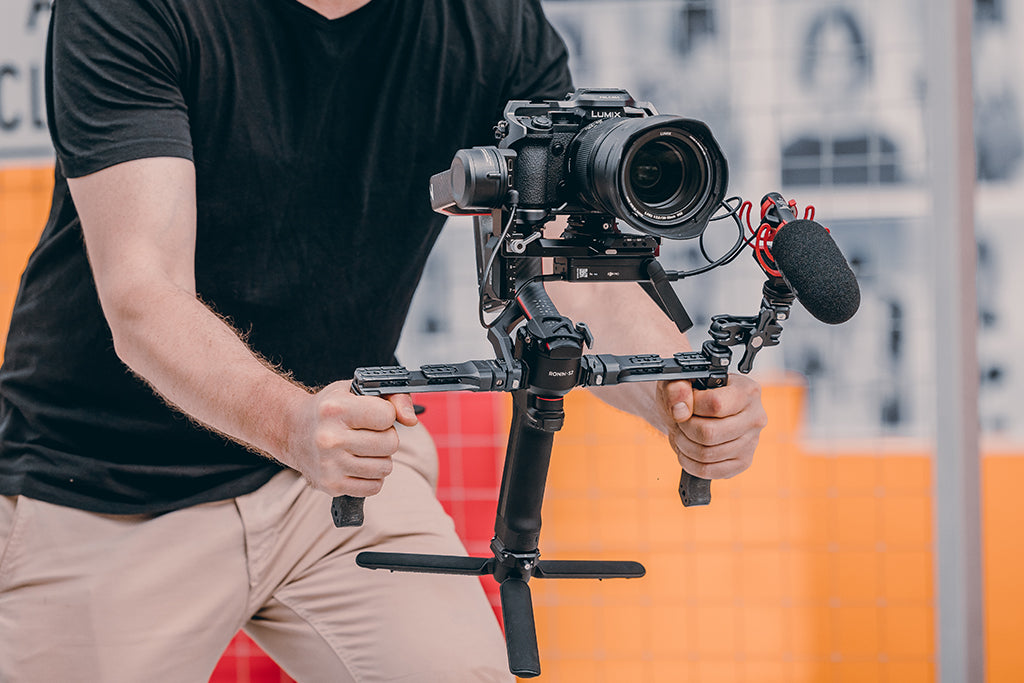
While spectral quality is the soul of a light, its physical integration is the skeleton. In our engineering of the FALCAM ecosystem, we often analyze the "Wrist Torque" generated by lighting modifiers.
Using the formula Torque ($\tau$) = Mass ($m$) $\times$ Gravity ($g$) $\times$ Lever Arm ($L$), we can see that a 400g LED light mounted on a 25cm extension arm generates approximately $0.98 N\cdot m$ of torque. While this sounds small, holding this load during a handheld shoot represents a significant percentage of the Maximum Voluntary Contraction (MVC) for the average creator's wrist and forearm.
To mitigate this, we advocate for modular rigging systems like the F22 or F38 Quick Release series. These components are precision-machined from 6061 or 7075 Aluminum Alloy. Aluminum provides the necessary rigidity and acts as a thermal bridge, which is critical for dissipating heat from high-output LEDs. By moving lighting accessories closer to the center of gravity using low-profile quick-release mounts, you reduce the lever arm ($L$), thereby lowering the torque and helping to prevent long-term repetitive strain injuries.
Safety, Compliance, and the Future of SSI
Trust in lighting infrastructure also extends to biological safety. High-intensity LEDs can pose risks of blue-light hazard or retinal strain if not properly engineered. Authoritative standards like IEC 62471:2006 Photobiological Safety categorize lights into Risk Groups (RG).
- Exempt Group (RG0): No photobiological hazard.
- Risk Group 1 (RG1): Low risk; safe for most applications under normal behavioral limitations.
- Guidance: For high-output COB LEDs, we recommend maintaining a minimum distance of 1 meter (approx. 3.3 ft) from the subject's eyes to ensure the exposure remains within RG0 or RG1 limits. Always refer to the manufacturer's specific IEC report for safe exposure durations.
Looking forward, the industry is moving beyond CRI and TLCI toward the AMPAS Spectral Similarity Index (SSI). Unlike previous metrics that compare a light to a theoretical "perfect" source, SSI compares it to the actual spectral distribution of daylight or tungsten, providing a more reliable "Cinema-Tier" benchmark for color matching.
Methodology Note: How We Modeled This
Our performance estimates and ROI calculations are based on a deterministic parameterized model. This is a scenario model, not a controlled lab study.
| Parameter | Value or Range | Unit | Rationale |
|---|---|---|---|
| Average Hourly Rate | 120 | USD | Standard mid-tier pro rate |
| R9 Threshold | >90 | Score | Professional aesthetic baseline |
| Post-Grading Delta | 6.5 | Minutes | Estimated time difference for skin correction [Source: Internal Workflow Modeling] |
| Aluminum Grade | 6061-T6 | Material | Industry standard for QR plates |
| Static Load (F38) | 80 | kg | Lab-tested vertical limit |
Building a Reliable Visual Foundation
The R9 factor is more than a technical spec; it is a strategic choice. By prioritizing red accuracy, you are choosing to respect the humanity of your subject and the efficiency of your workflow.
As a creator, your infrastructure should be invisible. It should work flawlessly, mount securely, and render color truthfully. Whether you are building a heavy desktop rig—as discussed in our guide on Choosing the Right Arm for Heavy Rigs—or a portable vlogging setup, the principles of spectral fidelity and mechanical integrity remain the same.
Disclaimer: This article is for informational purposes only and does not constitute professional medical, legal, or financial advice. Lighting safety should always be evaluated according to local regulations and specific equipment manuals. If you have pre-existing eye conditions, consult an ophthalmologist before using high-intensity LED systems at close range.
Sources and References
- ISO 1222:2010: Photography — Tripod Connections.
- EBU R 137 / TLCI-2012: Television Lighting Consistency Index.
- IEC 62471:2006: Photobiological Safety of Lamps and Lamp Systems (Refer to Section 4.3 for Blue Light Hazard limits).
- AMPAS SSI: Spectral Similarity Index Overview (2018).
- PMC11122461: Skin Tone Estimation under Diverse Lighting Conditions.
- Internal Data: Based on FALCAM/Ulanzi engineering benchmarks and workflow modeling.