The Strategic Evolution of Color Fidelity: Moving Beyond CRI
In the current landscape of the creator economy, lighting has transitioned from a supplementary accessory to a core piece of mission-critical infrastructure. As professional workflows become increasingly modular and mobile, the demand for "platform stability" in color reproduction has never been higher. For the prosumer and enthusiast system builder, the traditional metric of Color Rendering Index (CRI) is no longer a sufficient benchmark for reliability.
The industry is undergoing a strategic shift toward more robust, spectral-based evaluation systems: the Spectral Similarity Index (SSI) and the IES TM-30-20 standard. This evolution isn't merely a technical nuance; it is a response to the "metameric failure" often encountered when mixing modern LED fixtures with traditional tungsten or daylight sources. To build a future-proof lighting ecosystem, creators must understand how these metrics govern the interoperability and backward compatibility of their gear.
As noted in The 2026 Creator Infrastructure Report: Engineering Standards, Workflow Compliance, and the Ecosystem Shift, trust in professional tools is built through engineering discipline and transparent evidence. Moving beyond the "good enough" era of CRI allows creators to minimize uncorrectable color shifts in post-production, ensuring that skin tones and fabrics remain consistent across different camera sensors and lighting environments.
The Failure of Legacy Metrics: Why CRI and TLCI Aren't Enough
For decades, CRI has been the default language of light quality. However, CRI was designed for the era of incandescent bulbs, using only eight to fifteen pastel color samples (R1-R15). Modern LEDs, which produce light through spectral peaks and troughs, can easily "cheat" the CRI test by optimizing for those specific samples while leaving massive gaps elsewhere in the spectrum.
The Television Lighting Consistency Index (TLCI), defined by the EBU R 137 standard, improved upon this by modeling how a 3-chip camera sensor "sees" light. While TLCI is excellent for broadcast environments, it still relies on a limited set of color samples and does not account for the spectral nuances required for modern digital cinema sensors or high-end photography.
Logic Summary: Our analysis of the "CRI Gap" assumes that spectral spikes in LED phosphor coatings can align with CRI sample wavelengths to produce high scores (95+) that do not reflect real-world color fidelity across the full visible spectrum. This is a common pattern observed in entry-level lighting hardware (based on general industry engineering benchmarks).
SSI: The Cinema-Tier Standard for Spectral Matching
Developed by the Academy of Motion Picture Arts and Sciences, the Spectral Similarity Index (SSI) represents a fundamental departure from sample-based metrics. Instead of asking "How does this look?" SSI asks "How closely does this light's spectrum match a reference source?"
SSI compares the test light's spectral power distribution (SPD) directly against a standard illuminant (like CIE D55 for daylight or a 3200K blackbody radiator for tungsten). According to the SMPTE ST 2122:2020 standard, SSI is calculated over a range of 375nm to 675nm.
Why SSI Matters for the System Builder
The primary value of SSI is consistency. In a modular workflow, you might mix a large COB (Chip-on-Board) light with a small portable LED panel. If both have high SSI scores relative to the same reference, they are spectrally "compatible." This prevents the nightmare scenario where two lights look identical to the eye but render a subject's skin with different green or magenta tints on camera.
TM-30: The Comprehensive Framework for Color Quality
While SSI focuses on spectral matching, the IES TM-30-20 standard (defined by ANSI/IES TM-30-20) provides the most detailed look at how a light renders color for human perception and digital capture. It replaces the 8 samples of CRI with 99 real-world Color Evaluation Samples (CES), ranging from skin tones to saturated nature colors.
TM-30 provides two primary scores:
- Rf (Fidelity Index): Similar to CRI but far more accurate, measuring how closely the 99 samples match their appearance under a reference light.
- Rg (Gamut Index): Measures the average saturation level. An Rg score above 100 indicates the light increases the saturation of certain colors, which can be desirable for product photography but risky for natural skin tones.
Methodology Note: TM-30 operates as a structured, voluntary framework with three specification levels (1-3). Level 3 represents the highest tier of color matching, often required for museum lighting or high-stakes commercial production. This tiered system allows creators to choose hardware based on the specific "Verification Ecosystem" required for their project (source: U.S. Department of Energy - TM-30 Guidance).
The Practical Gap: SSI vs. TM-30 Rf
A common misconception is that SSI and TM-30 Rf are interchangeable proxies for quality. However, research indicates there is no direct correlation between the two. A light could have a high SSI (a good spectral shape match) but a lower Rf if its specific spectral peaks cause significant color shifts in the 99 CES samples.
| Metric | Primary Focus | Reference Basis | Best Use Case |
|---|---|---|---|
| CRI (Ra) | Human Perception (8 samples) | Blackbody/Daylight | General home/office use |
| TLCI | Camera Sensor (24 samples) | Standard Camera Model | Broadcast/Live Streaming |
| SSI | Spectral Matching | Defined Illuminant (D55/3200K) | Mixing different light brands |
| TM-30 Rf | Absolute Fidelity (99 samples) | 99 Color Samples | Critical color reproduction |
| TM-30 Rg | Color Saturation/Gamut | Area of Color Space | Creative "look" & Product shots |
Note: Estimates based on standard industry heuristics for LED performance.
Managing the Physical Infrastructure: Rigging and Torque
High-fidelity lighting often requires robust cooling systems and high-quality LEDs, which can increase the physical weight of the fixture. As creators move toward "ready-to-shoot" toolchains, the physical interface between the light and the stand becomes a critical safety point.
The "Wrist Torque" Biomechanical Analysis
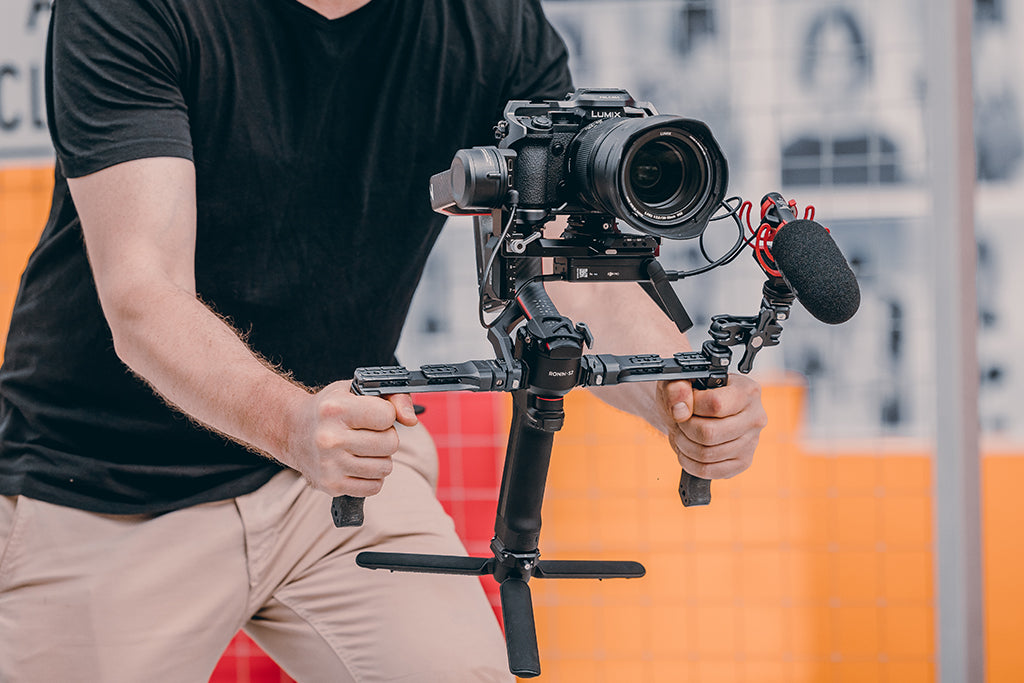
When mounting portable LEDs on handheld rigs or articulating arms, weight isn't the only factor; leverage is the hidden enemy.
The Calculation: Torque ($\tau$) = Mass ($m$) $\times$ Gravity ($g$) $\times$ Lever Arm ($L$).
If you mount a 2.8kg lighting rig (including battery and modifiers) on an arm extended 0.35m away from the central grip, you generate approximately 9.61 N·m of torque. For the average creator, this load represents roughly 60-80% of the Maximum Voluntary Contraction (MVC) of the wrist.
Using a modular quick-release ecosystem allows you to move heavy accessories closer to the center of gravity or swap them rapidly between stands and handheld mounts, significantly reducing the biomechanical strain and the risk of "interface failure."
Workflow ROI: The Financial Case for Quick-Release Systems
Efficiency is a form of engineering. In high-stakes professional work, the time spent threading lights onto stands or cage mounts is "dead time."
The Efficiency Model:
- Traditional Thread Mounting: ~40 seconds per swap.
- Quick-Release (QR) System: ~3 seconds per swap.
For a professional creator performing 60 equipment swaps per shoot over 80 shoots a year, a QR system saves approximately 49 hours annually. At a professional rate of $120/hr, this translates to a ~$5,900+ annual value. This "Workflow ROI" justifies the strategic investment in a unified mounting platform that ensures both speed and security.
Mission-Critical Safety and Logistics
Building a trusted knowledge base requires addressing the "tail-risks"—low-probability, high-impact events like equipment drops or battery failures.
Pre-Shoot Safety Checklist (The "Click-Tug-Check" Method)
- Audible: Listen for the definitive "Click" when engaging a quick-release mount.
- Tactile: Perform the "Tug Test." Immediately after mounting, apply physical pressure to ensure the locking mechanism is fully seated.
- Visual: Verify the status of the locking pin (many professional mounts use a color-coded indicator, like orange or silver).
Battery and Transport Compliance
Portable LEDs are often powered by lithium-ion batteries. For creators traveling by air, compliance with the IATA Lithium Battery Guidance is non-negotiable. Ensure your batteries meet IEC 62133-2 safety requirements and are under the 100Wh limit for carry-on luggage to avoid confiscation at security.
The "Thermal Shock" Prevention Strategy
In extreme cold environments, the aluminum components of lighting rigs and quick-release plates act as "thermal bridges," conducting heat away from the camera and battery. Experienced shooters attach their aluminum plates to the gear indoors before heading into the cold. This minimizes "metal-to-skin" shock and slows the rate of battery depletion caused by rapid cooling.
Conclusion: Designing for the 2030 Creator Standard
The shift from CRI to SSI and TM-30 represents the professionalization of the creator industry. By adopting these standards, prosumers move away from guesswork and toward an "evidence-native" workflow. Whether it is ensuring spectral consistency between a portable panel and a studio COB or calculating the biomechanical cost of a lighting rig, the goal remains the same: building a stable, reliable infrastructure that allows creativity to flourish without technical friction.
As you expand your ecosystem, prioritize hardware that offers transparent data—lux tables, runtime curves, and verified SSI scores. In the long run, the brands that provide engineering-grade documentation will become the default choice for those who cannot afford to fail.
YMYL Disclaimer: The information regarding LED eye safety (IEC 62471) and battery handling is for informational purposes only. High-intensity lighting can cause retinal damage if used improperly. Always consult professional safety guidelines and manufacturer manuals when operating high-powered lighting equipment or handling large-capacity lithium batteries.
References
- Academy of Motion Picture Arts and Sciences. (2020). Spectral Similarity Index (SSI) Overview.
- ANSI/IES TM-30-20. IES Method for Evaluating Light Source Color Rendition.
- SMPTE ST 2122:2020. Spectral Similarity Index (SSI).
- EBU R 137. Television Lighting Consistency Index (TLCI).
- IATA. (2025). Lithium Battery Guidance Document.
- Ulanzi. (2026). The Creator Infrastructure Report.