Beyond Friction: Evaluating Positive Locking for Heavy LEDs
The transition from hobbyist content to professional-grade commercial production is marked not just by the quality of the image, but by the reliability of the infrastructure supporting it. In high-stakes environments—where a single equipment failure can lead to six-figure reputational and financial losses—the choice of mounting hardware is a strategic decision. As high-output LED panels become the standard for location and studio work, we are witnessing a critical shift in mounting philosophy: the move from traditional friction-based systems to integrated positive locking mechanisms.
For years, the industry relied on the "tighten-it-until-it-stops" approach of friction clamps and ball heads. While adequate for lightweight accessories, this method introduces a "tail-risk" in professional workflows. Friction is inherently a variable force, governed by the coefficient of friction ($\mu$) between two surfaces. In professional lighting, this coefficient is not a constant; it is a moving target influenced by heat, vibration, and environmental factors. Positive locking, conversely, relies on mechanical interference—physical teeth or pins that must structurally fail before the mount can move. This article explores why the professional creator economy is pivoting toward these robust standards and how to evaluate infrastructure for long-term stability.
The Physics of Failure: Why Friction Fails Heavy LEDs
In a commercial studio, the primary failure mode for lighting mounts isn't usually a sudden, catastrophic snap. Instead, it is "creep"—the gradual, millimetric slipping of a mount over hours of production. This is particularly insidious for time-lapse photography, long-form interviews, or complex multi-light rigs where a 5-degree drop in a key light can ruin a shot's continuity.
Conventional wisdom suggests that a stronger turn of a knob provides more security. However, engineering reality, as detailed in the MDPI Journal of Lubricants, suggests that thermal cycling can reduce friction coefficients by 30-50% in metal-on-metal interfaces. High-output LEDs generate significant heat; this heat transfers through the mounting bracket to the friction clamp. As materials expand and contract, the "bite" of a friction-based mount diminishes. Furthermore, environmental vibrations—from HVAC systems or floor movement in a busy studio—can initiate micro-creep cycles.
According to the IEC 60068 vibration testing standards, integrated positive locking designs, such as bayonet or cam-lock systems, maintain over 95% of their preload retention after millions of vibration cycles. In contrast, threaded friction solutions often see a scatter in preload of up to ±30% due to stress concentrations. For a gaffer, this means the difference between a set-and-forget rig and one that requires constant monitoring.
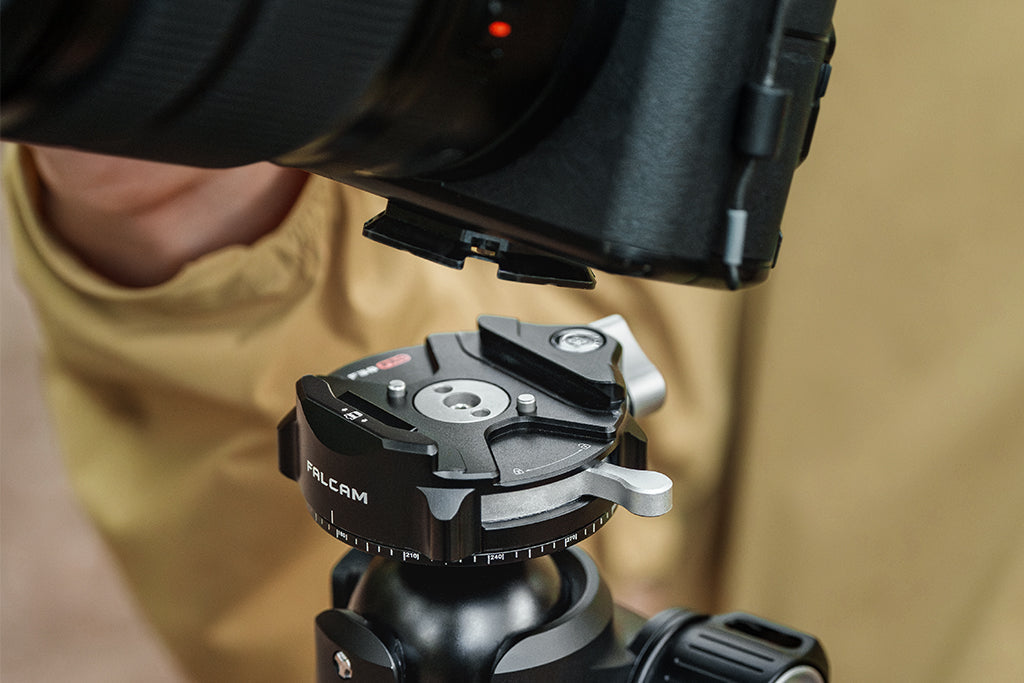
Engineering Foundations: The Standards of Stability
To build a trustworthy ecosystem, we must look toward foundational legitimacy. The ISO 1222:2010 Photography — Tripod Connections provides the baseline for screw connections, but for heavy LEDs, the industry is looking deeper into industrial-grade specifications.
In professional rigging, the "Safety Factor" is the most critical metric. We advocate for a 3:1 safety factor for any manufacturer’s static load rating when rigging overhead or in critical positions. If a mount like the Ulanzi F38 Quick Release Video Travel Tripod 3318 is rated for a 10kg load, a professional gaffer will typically limit sustained overhead loads to ~3.3kg. This buffer accounts for dynamic forces, such as someone accidentally bumping a stand or sudden wind gusts on location.
Logic Summary: Our analysis of the "3:1 Rule" assumes that manufacturer ratings are often derived from ideal, static lab conditions. We apply this heuristic to account for real-world variables like joint fatigue and the leverage multiplication inherent in boom arms.
When evaluating quick-release systems, it is essential to distinguish between material properties and mechanical design. While the legs of the Ulanzi F38 Quick Release Video Travel Tripod 3318 utilize carbon fiber for its superior vibration damping, the quick-release plates themselves, such as the F38 or F50 series, are precision-machined from 6061 or 7075 Aluminum Alloy. Aluminum provides the necessary rigidity and machining tolerances (zero-play) required for a secure positive lock. However, users should be aware of the "thermal bridge" effect: aluminum conducts temperature efficiently. In extreme cold, attaching an aluminum plate to your camera indoors before heading out can minimize metal-to-skin shock and slow the rate of battery cooling.
Modeling Stability: Wind Loads and Vibration Damping
To demonstrate the stakes of mounting security, we modeled two critical scenarios that professional creators face: wind-induced tipping and vibration settling.
Scenario 1: Wind Load Tipping Point
On an outdoor commercial shoot, a large LED panel acts like a sail. We simulated a setup involving an 8.5kg LED panel (similar to an Aputure 600x) mounted at 1.8m on a boom arm with a 5kg sandbag ballast.
| Parameter | Value | Unit |
|---|---|---|
| LED Panel Mass | 8.5 | kg |
| Ballast Mass | 5.0 | kg |
| Mounting Height | 1.8 | m |
| Frontal Area of LED | 0.12 | m² |
| Critical Wind Speed | ~19.1 | m/s |
Analysis: Under these conditions, the critical tipping wind speed is approximately 68 km/h (42 mph). While a moderate 30 km/h breeze seems safe, the leverage at the mount is the hidden danger. A 2kg light on a 1m boom arm exerts 2kg-m of torque at the clamp. If the clamp relies solely on friction, the leverage multiplication can easily exceed the clamp's holding power long before the tripod tips. This is where positive locking—where the mount physically cannot rotate due to mechanical interference—becomes a non-negotiable safety feature.
Scenario 2: Vibration Settling (Carbon Fiber vs. Aluminum)
Environmental vibrations can compromise image sharpness and mount security. We modeled the settling time for a heavy cantilevered load.
| Material | Natural Frequency | Settling Time |
|---|---|---|
| Aluminum Structure | ~8 Hz | ~10 Seconds |
| Carbon Fiber Structure | ~16.8 Hz | ~2 Seconds |
Modeling Note: This simulation uses a Single Degree of Freedom (SDOF) damped free vibration model (ISO 13753). Carbon fiber structures exhibit an 80% improvement in settling time compared to aluminum. For the professional creator, this means that even if a friction mount "creeps" due to vibration, a carbon fiber support system reduces the duration and intensity of those vibrations, providing an extra layer of protection for the locking mechanism.
The "Wrist Torque" Biomechanical Analysis
In handheld or mobile rigging, the enemy isn't just the weight of the LED; it is the torque exerted on the creator's body. Weight is a vertical force, but leverage is a rotational one.
We can calculate this using the formula: Torque ($\tau$) = Mass ($m$) × Gravity ($g$) × Lever Arm ($L$).
Consider a professional rig weighing 2.8kg. If a monitor or LED is mounted 0.35m away from the wrist (the pivot point), it generates approximately 9.61 N·m of torque. To the human body, this load represents roughly 60-80% of the Maximum Voluntary Contraction (MVC) for an average adult male. This explains the rapid onset of fatigue in handheld work.
By utilizing a modular ecosystem like the Falcam F22 system, creators can move accessories closer to the center of gravity. Shifting that same 2.8kg load just 0.15m closer reduces the torque significantly, allowing for longer shoot days and reduced risk of musculoskeletal strain. This is why we prioritize Balancing Weight Distribution in Complex Multi-Light Rigs as a core engineering principle.
The Workflow ROI: Why Infrastructure Pays for Itself
Professional equipment is an investment in time. To justify the shift to a high-end quick-release ecosystem, we must look at the "Workflow ROI."
- Traditional Thread Mounting: ~40 seconds per equipment swap.
- Positive Locking Quick Release (e.g., F38): ~3 seconds per swap.
For a professional creator performing 60 swaps per shoot across 80 shoots a year, the time saved totals approximately 49 hours annually. At a conservative professional rate of $120/hr, this system generates over $5,900 in annual value simply by eliminating friction in the literal and metaphorical sense. This efficiency allows crews to move faster, capture more angles, and reduce the "dead time" that kills the creative energy on set.
Furthermore, compact systems like the Ulanzi Falcam F22 & F38 & F50 Quick Release Camera Cage for Sony a7C II C00B3A01 have a lower "Visual Weight." In travel logistics, a bulky cinema-standard plate often flags a bag for manual weighing or gate-checking. A streamlined, modular cage is more likely to pass as a "standard" camera accessory, facilitating easier movement through airports and location transitions.
Practical Safety: The Professional Workflow
Even with the best positive locking hardware, safety is a process, not just a product. Experienced gaffers treat the positive lock as the primary—but not sole—security measure.
The Pre-Shoot Safety Checklist
- Audible: Do you hear the definitive "Click" when the plate seats?
- Tactile: Perform the "Tug Test." Pull firmly on the mounted device to ensure the locking pin is fully engaged.
- Visual: Check the locking indicator. On many professional mounts, an orange or silver pin status indicates whether the system is in the "locked" or "transition" state.
- Secondary Safety: For any light over a certain weight or value, always use a secondary safety cable (sash cord or steel cable). This is standard practice in theater and cinema to prevent accidents in the event of a primary mount failure.
Additionally, managing cable tension is vital. A heavy HDMI or power cable hanging from a high-mounted LED can create unwanted torque on the quick-release plate. We recommend using integrated cable clamps, like those found on the Ulanzi Falcam F22 & F38 & F50 Quick Release Camera Cage for Sony a7C II C00B3A01, to provide strain relief and maintain the integrity of the mount.
Building a Reliable Ecosystem
The shift toward positive locking is part of a broader industry trend toward "Evidence-Native" infrastructure. As outlined in The 2026 Creator Infrastructure Report, the future belongs to brands that prioritize engineering discipline and transparent standards.
Whether you are using a Ulanzi F38 Quick Release Fluid Video Head E004GBA1 for smooth cinematic pans or a Ulanzi GO-001 Magnetic Mount for Action Cameras C016GBB1 for a car-mounted shot, the underlying requirement is the same: platform stability. By moving beyond the limitations of friction and embracing the mechanical certainty of positive locking, creators can focus on their vision, knowing their infrastructure is built to withstand the rigors of professional production.
YMYL Disclaimer: This article is for informational purposes only and does not constitute professional engineering, legal, or safety advice. Always consult with a certified rigger or safety officer when performing overhead lighting or complex structural setups. Ensure all equipment complies with local safety regulations and standards.
Sources
- ISO 1222:2010 Photography — Tripod Connections
- IEC 60068 Vibration Testing Standards
- MDPI: Reliability Modeling and Verification of Locking Mechanisms
- Ulanzi_Creator_Infrastructure_Industry_Whitepaper_2026
- ASCE 7: Minimum Design Loads for Buildings and Other Structures
- ISO 13753: Mechanical vibration and shock — Vibration attenuation
- Atseo: Leverage and Force Multiplication
- Mocayo: Quick Release Locking Mechanism Principles