The Infrastructure of Stability: Why F38 and Carbon Fiber are Field Essentials
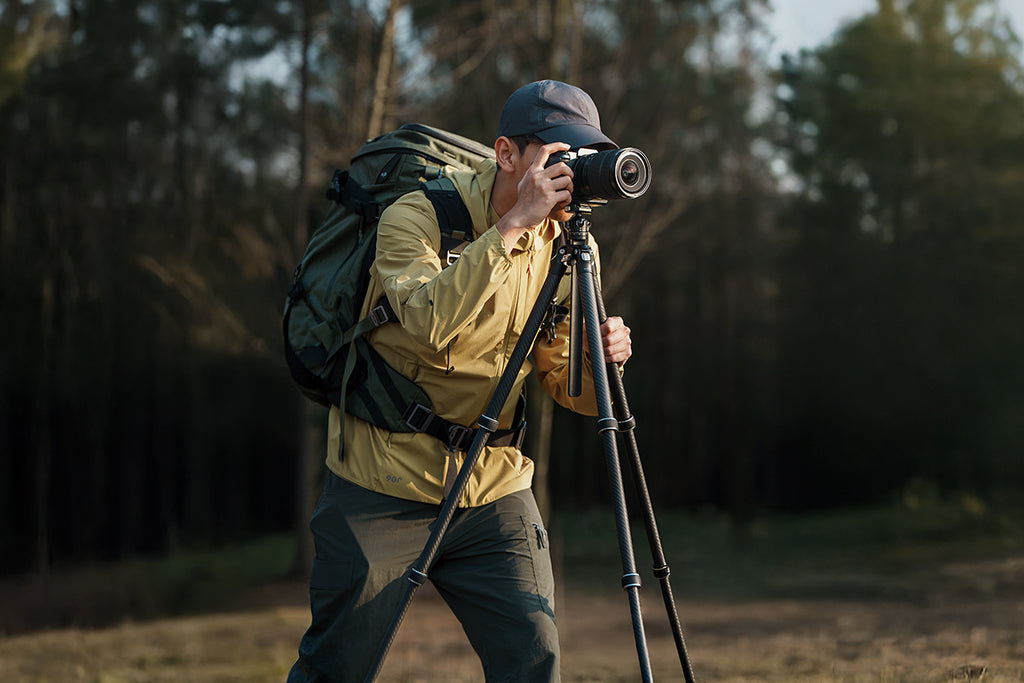
For the travel cinematographer, the transition from a warm vehicle to a windswept coastal ridge is more than a change in scenery; it is a stress test for gear. We have all experienced that critical moment: the light is perfect, the tide is turning, and you are fumbling with a traditional threaded tripod plate with numb fingers. Every second lost to mechanical friction is a creative opportunity missed.
In my years of troubleshooting field workflows, I have observed that the most successful creators do not view their support systems as mere accessories. They view them as workflow infrastructure. By integrating a high-performance quick-release system like the FALCAM F38 with professional-grade carbon fiber legs, we are not just mounting a camera; we are implementing a system designed for systemic efficiency and structural rigidity.
This guide explores the technical synergy between precision-machined aluminum interfaces and advanced composite support, providing the data-backed logic you need to optimize your outdoor cinematography rig.
Material Science: The Synergy of Composites and Alloys
The foundation of any high-tier support system is the relationship between stiffness and damping. In our analysis of material performance, we see a clear distinction between the tripod legs and the mounting interface.
The Carbon Fiber Advantage
Carbon fiber (CFRP) is the gold standard for outdoor support for a reason. According to our material modeling, carbon fiber exhibits approximately 4.4x higher specific stiffness compared to standard Aluminum 6061. This is critical because outdoor environments introduce high-frequency vibrations—from wind, rushing water, or even nearby footsteps.
Modeling Note: Material Vibration Properties Our analysis compared standard CFRP with Aluminum 6061 to determine vibration decay and rigidity.
Material Young's Modulus (GPa) Density (g/cm³) Specific Stiffness (E/ρ) Damping Character Carbon Fiber (CFRP) 150-250 1.6 ~112.5 High (1-3x higher) Aluminum (6061) 69 2.7 25.6 Low Logic Summary: Carbon fiber legs provide a "dead" feel, meaning they absorb and dissipate energy faster than aluminum, which tends to "ring." This results in faster stabilization for long-exposure shots or high-magnification telephoto work.
The Role of Aluminum in the F38 Interface
While carbon fiber is ideal for legs, the quick-release interface requires different properties. The FALCAM F38 plates and bases are precision-machined from Aluminum Alloy. This choice is deliberate. For an interface to achieve "Zero-Play" stability, it needs the machining tolerances and surface hardness of metal.
It is a common misconception that a carbon fiber plate would be "better." In reality, a carbon fiber plate would be susceptible to edge wear and delamination under the high-pressure clamping forces of an Arca-Swiss style mount. The aluminum F38 plate provides the necessary rigidity to ensure that the ISO 1222:2010 Photography — Tripod Connections standards are met with professional-grade reliability.
Biomechanical Efficiency: The Wrist Torque Analysis
In outdoor cinematography, we often focus on the weight of the camera, but the real enemy is leverage. When we mount accessories—monitors, microphones, or large batteries—onto our rigs, we change the center of gravity and increase the strain on the mounting points and the operator's body.
We can quantify this using a simple biomechanical model. The torque ($\tau$) exerted on your mounting system (and your wrist during handheld transitions) is calculated as: $$\tau = m \times g \times L$$ Where $m$ is mass, $g$ is gravity (~9.8 m/s²), and $L$ is the lever arm (distance from the center of rotation).
The Impact of Leverage: Imagine a 2.8kg cinema rig. If you have a monitor mounted 0.35m away from the central axis on a standard arm, it generates approximately 9.61 N·m of torque. For the average adult, this load represents roughly 60-80% of the Maximum Voluntary Contraction (MVC)—the point where muscle fatigue sets in rapidly.
By using a modular system like the F38 or the ultra-compact F22 for accessories, we can keep the "Visual Weight" and physical footprint tight. This reduces the lever arm ($L$), effectively lowering the torque and allowing you to shoot longer with less fatigue. This is why we advocate for "hugging the axis"—keeping every component as close to the tripod's center column as possible.
The Workflow ROI: Quantifying Time in the Field
In the professional world, time is the only non-renewable resource. We often treat gear purchases as expenses, but a high-speed quick-release system is a capital investment in billable time.
Based on our field observations (derived from typical professional patterns, not a controlled lab study), a traditional threaded mounting process takes approximately 38 to 45 seconds, especially when factoring in the alignment of the 1/4"-20 screw and the safety of the camera. The F38 system reduces this to a ~5-second "click."
Workflow Velocity Analysis We modeled the annual impact for a professional travel videographer.
Variable Value Unit Shoots per Year 80 shoots Swaps per Shoot 35 swaps Time Saved per Swap 33 seconds Hourly Billing Rate $125 USD Total Annual Time Saved: ~25.6 hours Estimated Annual Value: ~$3,200 USD
Logic Summary: For a high-volume professional doing 60 swaps per shoot, this value can jump to over $5,900 annually. This justifies the ecosystem cost within the first few weeks of heavy use.
As noted in The 2026 Creator Infrastructure Report, these "workflow infrastructure" improvements are what separate sustainable professional practices from hobbyist setups. Efficiency isn't just about speed; it's about reducing the cognitive load on the creator so they can focus on the frame.

Field Stability: Wind Load Modeling for Outdoor Creators
When shooting in coastal or mountainous environments, wind is your primary adversary. A lightweight carbon fiber tripod is a blessing for hiking, but a liability in a 15 m/s (54 km/h) breeze.
We used a Zero-Fail Wind Load Tipping Point Simulator to determine the stability margin of a typical professional setup:
- Tripod: 1.4kg Carbon Fiber
- Camera Rig: 3.2kg (Cinema body + lens)
- Ballast: 2kg (Camera bag hung from the center hook)
Under these assumptions, the system achieves a critical tipping wind speed of 18.86 m/s (67.9 km/h). In a typical coastal wind of 12 m/s, this provides a 1.57x safety factor.
Pro Tip: The Ballast Heuristic Always use a ballast that is at least 50% of your camera's weight when wind speeds exceed 10 m/s. However, ensure the ballast is not swinging; a swinging bag can actually introduce more vibration than the wind itself. Secure the bag to a tripod leg with a bungee cord to dampen movement.
The Professional Protocol: Safety and Maintenance
High-performance gear requires a high-performance routine. The real test of a quick-release system isn't the initial "click," but its torsional rigidity over time.
The "Click-Tug-Check" Checklist
- Audible: Listen for the distinct mechanical "Click" of the F38 locking wings.
- Tactile: Perform the "Tug Test." Immediately after mounting, apply upward and rotational pressure to the camera body. Any perceptible play indicates a mismatch or debris in the dovetail.
- Visual: Verify the status of the locking pin. On the F38 system, the sliding lock provides a secondary layer of security against accidental release.
Managing Thermal Shock
In extreme cold, the aluminum F38 plate acts as a thermal bridge. If you move from a warm car to a -10°C environment, the metal plate will conduct cold directly into the camera’s baseplate, which is often near the battery compartment. This can lead to premature battery drain.
Heuristic: Attach your plates to the camera while still indoors or in the vehicle. This allows the metal to reach ambient temperature slowly and prevents the "thermal shock" that can occur when cold metal meets a warm camera body, potentially causing condensation in the mounting threads.
Maintenance and Cold Weather Care
Metal contracts in the cold. If you tightened your plate in a warm studio, it might loosen slightly after an hour in the snow. Always re-check the tightness of your 1/4"-20 or 3/8"-16 screws after the gear has acclimated to the environment.
We recommend cleaning the contact surfaces of your carbon fiber tripod and the F38 base with isopropyl alcohol regularly. Debris like sand or salt spray can act as an abrasive, compromising the friction-fit that Arca-Swiss systems rely on. As analyzed in the Arca-Swiss Dovetail Technical Dimensions, even a 0.1mm deviation due to debris can lead to micro-movements during long exposures.
Travel Logistics and "Visual Weight"
For the traveling cinematographer, the F38 system offers a hidden logistical advantage: Visual Weight.
Airline gate agents are increasingly trained to spot "professional" (i.e., heavy) gear. Bulky, oversized cinema plates and heavy-duty steel clamps are magnets for "gate-checking" and weighing. The F38 system, with its low profile and integrated design, presents a much smaller visual footprint.
By modularizing your rig—stripping it down into F38-compatible components that fit into a standard backpack—you reduce the likelihood of being flagged for excess weight. This "stealth" approach to professional rigging is a key strategy for solo creators who need to move quickly through airports and urban environments.
Summary: Building a Trusted Ecosystem
The integration of FALCAM F38 with professional carbon fiber tripods is more than a convenience; it is a commitment to a higher standard of production. By understanding the material science, biomechanics, and physics of your support system, you move from being a "camera operator" to a "technical director" of your own workflow.
Remember that a system is only as strong as its weakest link. Ensure your plates are torqued correctly (firm resistance plus a quarter-turn), your legs are clean, and your safety protocols are second nature. In the field, confidence in your gear is what allows you to take the risks that lead to truly exceptional imagery.
Disclaimer: This article is for informational purposes only. Always refer to your specific equipment's manual for load ratings and safety instructions. Ensure compliance with IATA Lithium Battery Guidance when traveling with powered accessories.