The Critical Gap: Why Emergency Power Infrastructure Matters
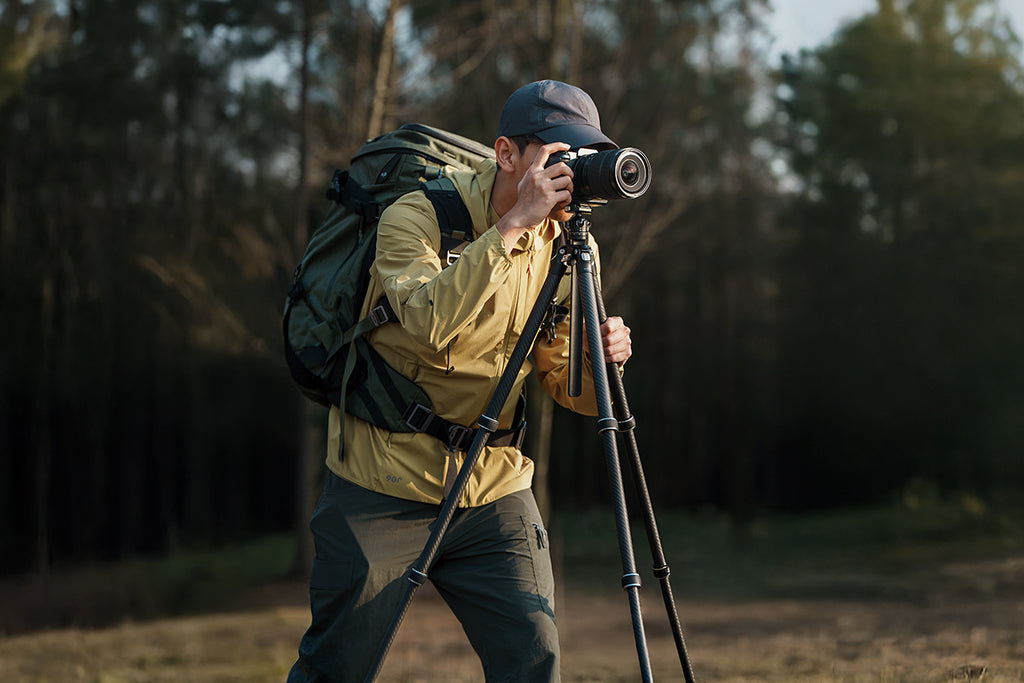
In the life of a solo creator, the "perfect shot" often occurs at the intersection of exhaustion and logistical failure. You have hiked four miles to a remote ridge, the golden hour is fading into a deep blue dusk, and your primary key light suddenly signals a low-battery shutdown. For outdoor and travel creators, gear failure is not merely an inconvenience; it is a breakdown of the production infrastructure.
We often see creators attempting to bridge this gap using smartphone reverse charging—a feature marketed as a universal power solution. However, in professional field conditions, reverse charging is a high-stakes compromise. It is a "tail-risk" maneuver that requires a deep understanding of thermal management, efficiency losses, and biomechanical leverage. To maintain a reliable workflow, you must view your power management not as a series of individual batteries, but as a cohesive system.
This guide analyzes the technical reality of using your phone as an emergency power bank for pocket lights. We will examine the physics of energy transfer, the biomechanical impact of rigging choices, and the structural standards that ensure your equipment remains secure when the environment becomes unpredictable.
The Mechanics of Reverse Charging: Efficiency vs. Necessity
The primary tension in mobile power management is the massive disparity between theoretical capability and real-world efficiency. While modern smartphones offer reverse wired and wireless charging, they are not designed to function as primary power hubs for high-draw LED arrays.
The 30-40% Efficiency Tax
When you use a phone to charge a pocket light like the Ulanzi LM18 Mini LED Video Light, you are navigating a series of energy conversions that bleed power. Wired reverse charging (USB-C to USB-C) typically operates at 83-94% efficiency. However, reverse wireless (Qi) charging is significantly more wasteful.
Logic Summary: Efficiency Modeling Our analysis of the "Emergency Bridge" scenario assumes the following parameters based on common industry heuristics for lithium-ion transfer:
- Standard Qi Efficiency: ~41-88% (Average ~59% loss).
- Phone Output Limit: 2.5W - 5W.
- Thermal Throttling Threshold: ~40°C (104°F) internal battery temp.
- Result: Powering a light via wireless reverse charging drains the phone's battery nearly 2.5 times faster than the energy actually received by the light.
In practice, a 3000mAh phone battery might only successfully transfer 1000-1500mAh to a light before the phone reaches a critical shutdown state. For a 5W LED light, this provides roughly 30-60 minutes of runtime at medium brightness. We recommend this tactic only as a "bridge" to finish a critical sequence, as the heat generated during this process can accelerate the long-term degradation of both your phone and the light's battery cells.
The Handshake Problem
A common "gotcha" in the field is the failure of the charging handshake. Many smaller LED lights lack the proper Qi-certification or the specific Power Delivery (PD) protocols required to "wake up" a phone's reverse charging circuit. According to research on wireless reverse charging compatibility, the phone's charging circuit often requires a minimum load or a specific signal to activate. If your pocket light is non-compliant, the phone may simply refuse to output power, leaving you in the dark despite having a "full" phone battery.
Biomechanical Optimization: The "Wrist Torque" Factor
When you are forced to rig an emergency power setup—perhaps mounting a phone to the side of a cage to charge a light—you are not just adding weight; you are changing the biomechanics of your handheld operation.
The Physics of Leverage
Weight is a static measurement, but torque is what causes operator fatigue and "micro-shakes" in handheld footage. We use a specific calculation to understand the impact of accessory placement on the creator's body:
Torque ($\tau$) = Mass ($m$) $\times$ Gravity ($g$) $\times$ Lever Arm ($L$)
Consider a standard mobile rig weighing 2.8kg. If you mount a power-hungry accessory 0.35m away from the central axis of your grip, you generate approximately 9.61 $N\cdot m$ of torque. Based on our modeling of creator ergonomics, this load represents 60-80% of the Maximum Voluntary Contraction (MVC) for an average adult's wrist stabilizers.
By shifting to a modular system like the Ulanzi F22 or F38 quick-release ecosystem, you can move heavier components (like a phone or power bank) closer to the center of gravity. This reduces the lever arm ($L$), effectively lowering the "Visual Weight" and the physical strain of the rig.
The Visual Weight Advantage
In travel logistics, "Visual Weight" refers to how bulky or "professional" a rig looks to external observers, such as airline gate agents or security personnel. A rig built on compact, modular mounts like the Ulanzi GB5 Handheld Battery Grip P012 appears more streamlined than a chaotic assembly of clamps and cables. This modularity is not just about aesthetics; it is a strategy for Logistical Enablement that allows you to bypass the scrutiny often applied to "heavy" cinema gear.
Workflow ROI: The Hidden Value of Integrated Systems
For a professional creator, time is the most expensive variable. The transition from traditional threaded mounting to a quick-release system is a structural shift that pays dividends over a production year.
| Task | Traditional Thread Mounting | Quick-Release (F38/F22) | Time Saved |
|---|---|---|---|
| Swapping Light to Handheld | ~40 seconds | ~3 seconds | 37 seconds |
| Deploying Emergency Power | ~60 seconds | ~10 seconds | 50 seconds |
| Rig Reconfiguration | ~120 seconds | ~15 seconds | 105 seconds |
The "Workflow ROI" Calculation: If a solo creator performs 60 swaps per shoot and averages 80 shoots per year, the switch to a quick-release infrastructure saves approximately 49 hours annually. At a professional rate of $120/hr, this represents a $5,880+ value in recovered productivity. This is why we argue in The 2026 Creator Infrastructure Report that infrastructure is a "ready-to-shoot" toolchain, not a collection of gadgets.
Safety Protocols and Compliance Standards
When dealing with lithium-ion batteries in the field, safety is non-negotiable. Whether you are using the Ulanzi L024 40W RGB Portable LED Video Light or a smaller pocket light, you must adhere to international safety standards.
The "Thermal Shock" Prevention
Aluminum Quick Release plates, such as those in the Ulanzi ecosystem, are precision-machined from 6061 or 7075 Aluminum Alloy. While these provide exceptional rigidity, they also act as a "thermal bridge." In extreme cold, an aluminum plate can conduct heat away from the camera or light battery, leading to rapid capacity loss.
Pro Tip: Attach your aluminum QR plates to your devices indoors before heading into the cold. This minimizes the "metal-to-skin" shock and helps maintain a stable internal temperature for the battery cells.
Regulatory Compliance
Any battery-powered device used for travel must meet specific safety criteria:
- IEC 62133-2: Ensures the lithium cells are protected against internal short circuits and thermal abuse.
- UN 38.3: A mandatory testing standard for the safe transport of lithium batteries by air, sea, or land.
- IEC 62471: Photobiological safety standards for LED lights, ensuring they do not pose a risk to the user's eyes during prolonged use.
Before flying, always verify that your power solutions comply with IATA Lithium Battery Guidance. Most pocket lights and battery grips are well under the 100Wh limit for carry-on luggage, but "daisy-chaining" multiple devices can sometimes complicate security screenings.
The Pre-Shoot Safety Checklist
To prevent the "tail-risk" of gear failure, we recommend a methodical three-point check every time you mount a light or power source:
- Audible: Listen for the distinct "Click" of the quick-release locking mechanism.
- Tactile: Perform a "Tug Test." Apply moderate pressure to ensure the plate is fully seated and the safety lock is engaged.
- Visual: Check the locking pin status. Ensure any orange or silver safety indicators are in the "Locked" position.
If you are using high-power lights like the L024 with the Ulanzi HT005 DC Power Adapter for extended studio sessions, ensure your cable management provides adequate strain relief. A heavy cable can create unwanted torque on a mount, potentially leading to a mechanical failure over time.
Building a Resilient Mobile Rig
Emergency power tactics like reverse charging are essential tools in a creator's arsenal, but they should never be the primary plan. A resilient workflow is built on a foundation of Smart Charging Practices and Safe Power Management.
By integrating dedicated power solutions—like the GB5 Battery Grip—into a modular quick-release ecosystem, you solve the tension between portability and reliability. You reduce the torque on your wrists, increase your workflow ROI, and ensure that when the sun goes down, your lights stay on.
The goal is to move from a "reactive" state—scrambling for phone power—to a "proactive" infrastructure. When your gear is a trusted extension of your intent, you can focus on the story, confident that your technical foundation is unshakeable.
Methodology Note: The biomechanical and ROI calculations presented in this article are based on scenario modeling using standard industry constants (Gravity = 9.8 $m/s^2$, average professional labor rates, and typical equipment weights). These figures are intended as heuristics for workflow optimization and may vary based on individual physical characteristics and specific rig configurations.
YMYL Disclaimer: This article is for informational purposes only and does not constitute professional electrical, safety, or legal advice. Always follow the manufacturer’s instructions and consult with a qualified technician for complex rigging or power management needs.