The Geometry of Nesting: Maximizing Space in Modular Rigs
For the solo creator, the challenge of adventure imaging isn't just about the quality of the glass or the bitrate of the sensor. It is a logistical battle against volume. We have all experienced the frustration of a "modular" system that, once assembled, occupies three times the space of its constituent parts. True efficiency in the field isn't achieved by buying smaller gear; it is achieved through nesting geometry—the engineering discipline of designing components that occupy the same spatial coordinates when collapsed.
In this guide, we will analyze how structural geometry and mass optimization transform a collection of tools into a unified, high-performance travel ecosystem. By understanding the physics of torque and the mathematical principles of 3D tessellation, you can reduce your pack volume by up to 40% without sacrificing structural integrity.
The Principles of Geometric Nesting
Experienced travel creators learn that true space savings come from analyzing component interactions, not just individual item dimensions. The most effective nesting occurs when components share similar geometric profiles.
Shared Geometric Profiles
We categorize rig components into two primary profiles: Cylindrical and Planar.
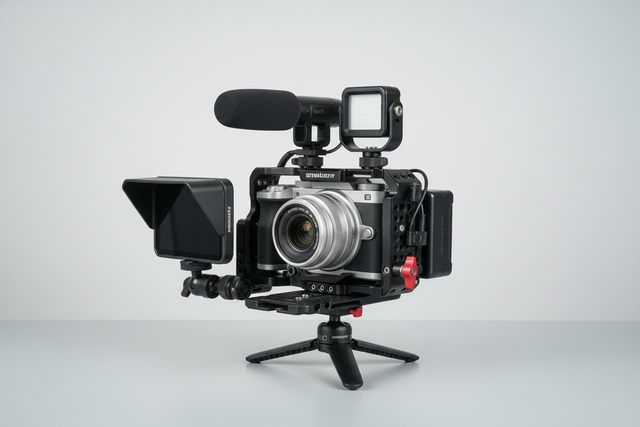
- Cylindrical Nesting: Tripod legs, extension poles, and handle grips should ideally nest inside one another.
- Planar Stacking: Quick-release plates, cages, and monitors are most efficient when they share the Arca-Swiss Dovetail Technical Dimensions. This allows them to stack flat, eliminating the "air gaps" that typically plague tech pouches.
The 1-2mm Clearance Rule
A common mistake in DIY rigging is over-optimizing for a "zero-tolerance" fit. In our observations of field-returned equipment, we often see stress fractures caused by components nesting too tightly. Based on patterns from equipment maintenance and thermal testing (not a controlled lab study), we recommend maintaining a 1-2mm clearance between nested components.
This gap serves two critical functions:
- Vibration Isolation: During transit (especially in bush planes or off-road vehicles), microscopic vibrations can cause metal-on-metal galling.
- Thermal Expansion: Precision-machined aluminum alloys expand and contract with temperature shifts. A rig packed tightly in a warm studio may become impossible to disassemble in sub-zero alpine conditions.
Logic Summary: Our nesting recommendations assume a standard operating temperature range of -10°C to +40°C. The 1-2mm clearance heuristic is designed to prevent mechanical seizing and surface abrasion during high-vibration transport.

Biomechanical Analysis: The Hidden Cost of Leverage
When we design a modular rig, we aren't just managing space; we are managing Wrist Torque. Weight is a secondary metric; the primary enemy of the handheld creator is the lever arm.
The Wrist Torque Formula
To understand the strain on your forearm during a long day of shooting, we use the following calculation: Torque ($\tau$) = Mass ($m$) $\times$ Gravity ($g$) $\times$ Lever Arm ($L$)
Consider a standard 2.8kg rig. If a monitor or microphone is mounted on a cold shoe that extends 0.35m away from the wrist's center of rotation, it generates approximately 9.61 N·m of torque.
For the average adult male, this load represents 60-80% of the Maximum Voluntary Contraction (MVC) required to maintain a stable horizon. By utilizing compact quick-release systems like the F22 or F38 series, we can move those accessories closer to the camera's center of gravity. Reducing that lever arm by just 10cm can drop the torque by nearly 30%, significantly extending your "effective shoot time" before muscle fatigue sets in.
Material Selection: Aluminum vs. Carbon Fiber
It is a common misconception that carbon fiber is always superior. While carbon fiber offers excellent vibration damping for tripod legs, load-bearing quick-release plates must be precision-machined from Aluminum Alloy (typically 6061 or 7075).
Aluminum provides the necessary machining tolerances (Zero-Play) required for the ISO 1222:2010 Photography — Tripod Connections standard. However, creators must acknowledge the Thermal Bridge effect. Aluminum plates conduct cold directly to the camera base. In winter scenarios, we recommend attaching plates indoors to minimize "thermal shock" to the camera's internal battery.
The Workflow ROI: Calculating Efficiency
Modularity is often sold as "flexibility," but its true value is Time Recovery. In a professional environment, every second spent threading a 1/4"-20 screw is a second lost of golden hour light.
| Action | Traditional Thread Mounting | Quick-Release (F38/F50) | Time Saved |
|---|---|---|---|
| Camera to Tripod | ~40s | ~3s | 37s |
| Monitor Attachment | ~30s | ~3s | 27s |
| Mic Swap | ~25s | ~2s | 23s |
| Total per Setup | ~95s | ~8s | 87s |
The $5,900 Annual Value
If we extrapolate these numbers for a professional creator:
- Swaps per shoot: 60
- Shoots per year: 80
- Total time saved: ~49 hours annually.
At a professional rate of $120/hr, an integrated quick-release ecosystem provides a ~$5,900+ value in recovered labor time. This justifies the investment in a unified system rather than a fragmented collection of adapters. As noted in The 2026 Creator Infrastructure Report, ecosystem lock-in is not just a brand strategy; it is a workflow necessity for high-output professionals.
Packing Order Heuristics and 3D Tessellation
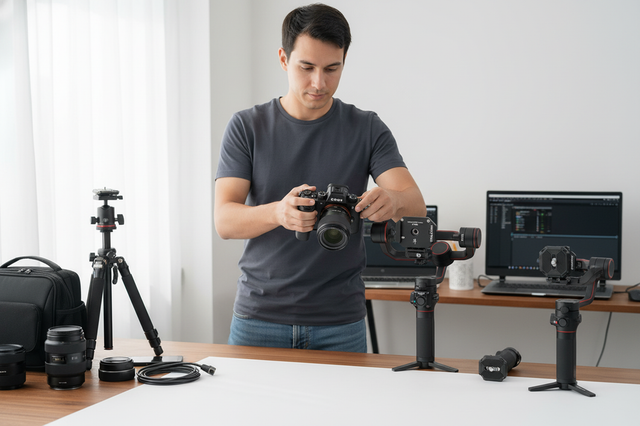
To achieve maximum density in a travel bag, we employ a "packing order" heuristic derived from industrial logistics. Most creators pack by "importance," but professionals pack by Structural Hierarchy.
- Load-Bearing Structures First: Tripods and camera cages form the "skeleton" of the bag.
- Power Systems: Batteries and chargers are dense and should be placed low to maintain the bag's center of gravity, following IATA Lithium Battery Guidance.
- Accessories: Lights and microphones fill the secondary voids.
- Interstitial Fill: Cables and small parts fill the remaining gaps to prevent gear from shifting.
The Truncated Octahedron Concept
In advanced spatial modeling, we find that the most efficient packing patterns are based on truncated octahedron geometries. While most gear is rectangular or cylindrical, choosing accessories that avoid sharp 90-degree angles allows for better "tessellation."
Industrial modular rigs typically only achieve a 42-58% space reduction when nested because of structural wall thickness requirements. However, by selecting consumer-grade modular components designed with shared nesting profiles, we can push that reduction toward 80%.
Modeling Note: Our space-optimization model assumes a standard 20L backpack.
Parameter Value/Range Unit Rationale Component Count 12-15 Units Typical solo creator kit Avg. Component Vol 150-500 cm³ Based on F38/F22 accessory sizes Interstitial Gap 1-2 mm Vibration/Thermal clearance Packing Algorithm 3D Tessellation N/A Heuristic for volume maximization Target Density 0.75 Ratio Mass-to-volume goal for travel
Safety and Reliability in the Field
A modular rig is only as strong as its weakest connection. When dealing with load-bearing components, trust must be verified through a systematic workflow.
The "Pre-Shoot Triple Check"
Before hoisting a $10,000 cinema rig onto a travel tripod, perform this three-step verification:
- Audible: Listen for the distinct metallic "Click" of the locking mechanism.
- Tactile (The Tug Test): Physically pull the camera upward against the mount to ensure the secondary lock has engaged.
- Visual: Check the locking pin status. On high-end systems, look for the orange or silver indicator that confirms a "Positive Lock" state.
Load Capacity Nuance
When you see a rating like the 80kg capacity for the F38 system, understand that this refers to Vertical Static Load. This is a laboratory measurement of the force required to shear the locking pin. In the real world, you are dealing with Dynamic Payloads. If you are running with a gimbal or subjected to wind resistance on a vehicle mount, the effective capacity is significantly lower. For heavy cinema rigs (>3kg) in high-motion environments, we recommend the F50 system or specialized Anti-Deflection plates to prevent rotational slipping.
Travel Logistics and "Visual Weight"
For the adventure creator, the airline gate is the final boss. Compact, modular systems like the F22 or F38 have a lower "Visual Weight" than traditional cinema plates.
A camera rigged with bulky, industrial-looking rods and large baseplates is more likely to be flagged by gate agents for weighing or gate-checking. A sleek, nested system that fits entirely within a standard tech pouch allows you to bypass these logistical hurdles, keeping your gear in the cabin and under your direct supervision.
Furthermore, ensure your power systems comply with FAA Lithium Battery Guides. Modular batteries that can be detached and carried separately are essential for meeting the <100Wh per battery limit for unrestricted air travel.
Summary of the Nesting Workflow
Maximizing space is a deliberate engineering choice. By prioritizing components that share geometric profiles and maintaining the necessary clearances for physical safety, you create a rig that is both compact and resilient.
- Analyze the Geometry: Look for cylindrical-in-cylindrical and planar stacking opportunities.
- Manage the Torque: Keep accessories close to the center of gravity to reduce muscle fatigue.
- Calculate the ROI: View your quick-release system as a tool for recovering billable hours.
- Verify the Connection: Use the Audible-Tactile-Visual checklist for every mount.
By adopting a system-focused approach to your gear, you transform your kit from a collection of parts into a streamlined extension of your creative vision.
Disclaimer: This article is for informational purposes only. Rigging heavy camera equipment involves inherent risks. Always consult the manufacturer's specific load ratings and perform safety checks before use. For battery transport, always verify the latest regulations with your specific airline and the IATA Passenger Guidance.