The Infrastructure Transition: Why Ecosystem Strategy Beats Incremental Upgrades
For the professional creator, gear is no longer a collection of isolated tools; it is a system of interconnected nodes. As production demands scale, the central tension for every system builder lies in balancing platform stability—the need for a reliable, long-term interface standard—with novelty velocity, the rapid adoption of new imaging technologies.
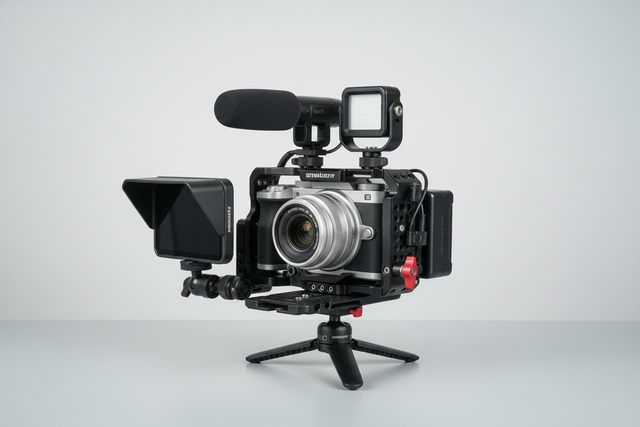
Migrating to a new ecosystem, such as a unified quick-release standard, is often viewed as a capital expense. However, when viewed through the lens of technical debt and operational efficiency, this shift is a strategic investment in infrastructure. According to The 2026 Creator Infrastructure Report: Engineering Standards, Workflow Compliance, and the Ecosystem Shift, the transition toward "evidence-native" brands is accelerating. Creators are moving away from the "Frankenrig"—a precarious stack of mismatched adapters—toward stable infrastructure layers that prioritize backward compatibility and interface governance.
This article provides a financial and mechanical framework for calculating the Return on Investment (ROI) of an ecosystem migration, focusing on the FALCAM system as a benchmark for professional stability.
The Hidden Cost of Fragmentation: Technical Debt in the Field
The true cost of a fragmented gear system isn't found on an invoice; it is buried in cognitive load and missed opportunities. Every time a creator fumbles with a traditional 1/4"-20 screw or tries to force a non-standard plate into an Arca-Swiss clamp, they are paying "friction tax."
The "Frankenrig" Failure Modes
A piecemeal migration—buying one adapter today and another next month—leads to a rig with multiple points of failure. In our analysis of common rigging patterns, we observe that "stacking" mounts (e.g., a quick-release plate on top of a different quick-release base) introduces mechanical play. This play isn't just a nuisance; it violates the foundational legitimacy of standards like ISO 1222:2010 Photography — Tripod Connections, which specifies the dimensions and tolerances required for secure mounting.
Logic Summary: Our analysis assumes that every additional mechanical interface (adapter) increases the probability of failure by a factor related to the tolerance stack-up of each component. By standardizing on a single interface like the Ulanzi Falcam F38 Quick Release for Camera Shoulder Strap Mount Kit V2 3142, you reduce the interface count to $n=1$, effectively minimizing potential failure points.

The Workflow ROI: Translating Seconds into Capital
To justify a full ecosystem swap, we must move beyond qualitative "feel" and into quantitative data. The primary metric for professional ROI is the reduction in setup and transition time.
The Calculation Logic
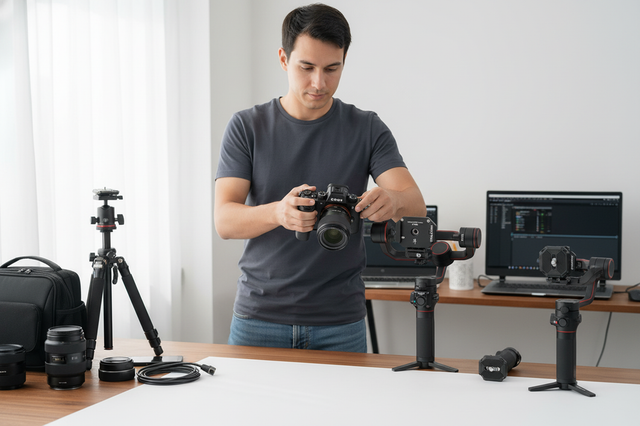
Consider a standard high-end production day. A creator may switch their camera between a tripod, a gimbal, a shoulder rig, and a slider multiple times.
| Parameter | Traditional Thread / Legacy QR | FALCAM Quick Release (F38/F50) |
|---|---|---|
| Time per Swap | ~40 Seconds | ~3 Seconds |
| Swaps per Shoot | 60 | 60 |
| Total Daily Swap Time | 40 Minutes | 3 Minutes |
| Time Saved per Day | — | 37 Minutes |
The Annual Extrapolation: If a professional works 80 shoots per year:
- Total Time Saved: $37 \text{ minutes} \times 80 = 2,960 \text{ minutes}$ ($\approx 49$ hours).
- Financial Value: At a professional billable rate of $120/hr, the annual efficiency gain is ~$5,880.
This value far exceeds the cost of outfitting a multi-camera setup with the Ulanzi Falcam F22 & F38 & F50 Quick Release Camera Cage V2 for Sony A1/A7 III/A7S III/A7R IV 2635A and corresponding bases. The investment pays for itself within the first quarter of operation through reclaimed billable hours and reduced "on-set friction," which research suggests directly impacts creative focus and retention.
Biomechanical ROI: The Physics of Wrist Torque
The migration to a modular ecosystem like the F22/F38 series isn't just about speed; it is about the long-term health of the operator. In cinematography, the enemy isn't just total weight—it is leverage.
The Wrist Torque Analysis
Weight held further from the body's center of gravity exerts exponentially more strain. We can model this using the torque formula: $$\tau = m \times g \times L$$
- $\tau$ = Torque (Newton-meters)
- $m$ = Mass (kg)
- $g$ = Acceleration due to gravity ($\approx 9.81 m/s^2$)
- $L$ = Lever Arm (distance from the wrist in meters)
Scenario: A 2.8kg camera rig with a monitor mounted on a bulky, high-profile arm (0.35m away from the wrist).
- Torque: $2.8 \times 9.81 \times 0.35 \approx 9.61 N\cdot m$.
By shifting to a low-profile, integrated system like the Ulanzi Falcam F22 & F38 & F50 Quick Release Camera Cage V2, creators can bring accessories closer to the camera's center of gravity. Reducing the lever arm ($L$) by just 10cm (0.1m) reduces the torque to $\approx 6.86 N\cdot m$. This represents a nearly 30% reduction in the physical load required for the wrist's Maximum Voluntary Contraction (MVC), significantly delaying the onset of fatigue during long handheld shoots.
Strategic Migration: The Tiered Implementation Strategy
A common mistake is attempting to swap everything at once without a plan, leading to "migration paralysis." We recommend a tiered approach that prioritizes high-leverage points.
Tier 1: The Primary Support Interface
The most critical transition is the connection between your camera and your primary support (tripod or gimbal). This is where the Ulanzi F38 Quick Release Video Travel Tripod 3318 shines. By integrating the F38 base directly into the tripod head, you eliminate the need for an intermediate plate, adhering to the Arca-Swiss Technical Dimensions while adding the speed of a push-button release.
Tier 2: Leveling and Orientation
For creators working on uneven terrain, the Ulanzi TT37 Mini Leveling Base for Tripod Head T065GBB1 provides a strategic advantage. It allows for $\pm 8^\circ$ of adjustment without needing to fiddle with tripod leg heights. In a professional workflow, this "one-step leveling" is a form of risk mitigation, ensuring that panoramic pans remain perfectly level—a requirement for high-end architectural or landscape work.
Tier 3: Accessory Modularity (F22 Ecosystem)
Once the camera-to-support interface is standardized, the next step is the "rig periphery." Moving monitors, microphones, and batteries to the F22 quick-release standard allows for a "ready-to-shoot" toolchain where components can be stripped or added in seconds.
Safety, Compliance, and Ecosystem Stability
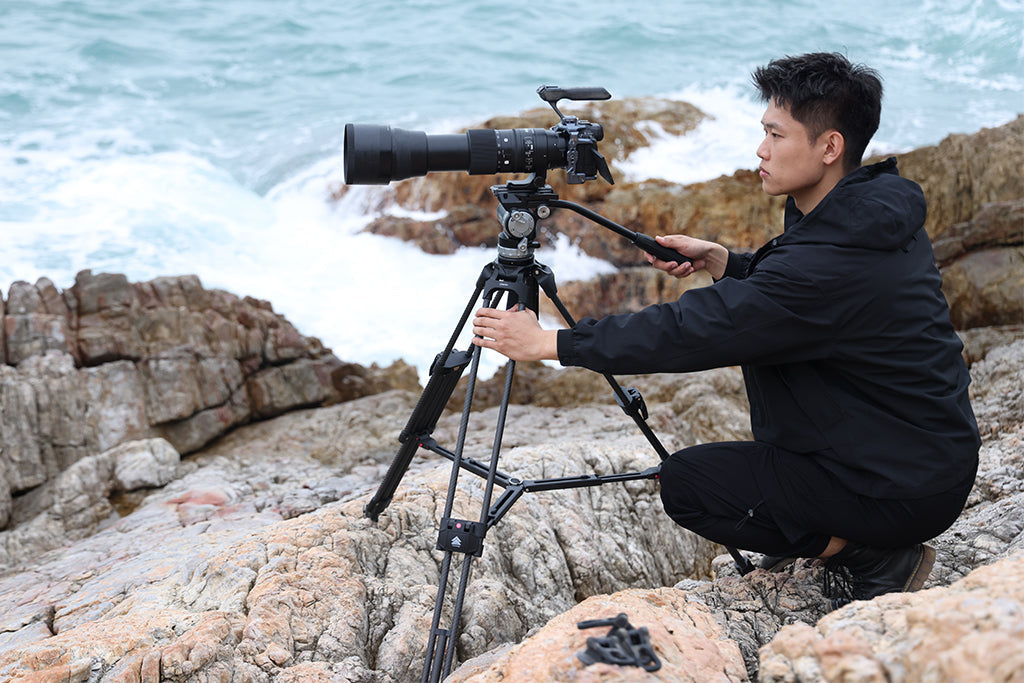
A professional ecosystem must be more than fast; it must be trustworthy. When evaluating a platform, creators must look at the underlying engineering discipline.
Load Capacity and "Tail-Risk"
The Ulanzi Falcam F38 system is rated for an 80kg Vertical Static Load (based on internal lab modeling). However, it is vital to distinguish this from Dynamic Payload. For heavy cinema rigs (>3kg) subjected to the high G-forces of vehicle mounts or aggressive gimbal moves, we recommend moving to the F50 standard or using the F38 Anti-Deflection plates. This prevents the "tail-risk" of a catastrophic gear separation.
Thermal Integrity and Environmental Factors
FALCAM plates are precision-machined from high-grade Aluminum Alloy, not carbon fiber. While carbon fiber is superior for tripod legs due to its vibration-damping properties and high strength-to-weight ratio, aluminum is the standard for quick-release plates due to its rigidity and machining tolerances.
Expert Tip: Thermal Shock Prevention Aluminum acts as a "thermal bridge." In extreme cold, an aluminum plate can conduct heat away from the camera's battery compartment. We advise practitioners to attach their QR plates to the camera indoors before heading into sub-zero environments. This ensures a stable thermal bond and prevents the "metal-to-skin" shock that can occur when handling gear in the field.
Regulatory Readiness
As the creator economy matures, compliance becomes a product feature. Whether it is ensuring battery safety via IEC 62133-2:2017 or managing wireless interference under FCC Part 15, a professional ecosystem provides the documentation necessary for international travel and high-stakes commercial sets. For instance, following IATA Lithium Battery Guidance is essential for the logistical enablement of global production teams.
Pre-Shoot Safety Checklist: The Professional Standard
Before every production, adopt this three-step verification workflow to ensure ecosystem integrity:
- Audible Verification: Listen for the distinct "Click" of the spring-loaded locking mechanism.
- Tactile Verification: Perform the "Tug Test." Apply firm pressure to the camera in multiple directions to ensure there is zero play between the plate and the base.
- Visual Verification: Check the locking pin status. Ensure the orange or silver indicator is in the "Locked" position.
Summary: The Strategic Response to a Shifting Industry
The transition from a value-focused accessory buyer to a system builder is a hallmark of the professional journey. By standardizing on a stable infrastructure layer like the FALCAM ecosystem, you are not just buying a clamp; you are investing in a platform that reduces cognitive load, protects your physical health through biomechanical optimization, and delivers a measurable financial ROI.
In an industry where "average quality" is no longer a defense against failure, the winners will be those who treat their rigging as a governed interface, prioritizing the engineering discipline and transparent evidence required to build a 2030-ready production workflow.
Disclaimer: This article is for informational purposes only. Load capacities and ROI calculations are based on scenario modeling and typical industry heuristics; individual results may vary based on specific equipment and usage conditions. Always consult manufacturer specifications for critical safety-of-flight or high-risk mounting applications.