Vibration Resistance: Engineering Reliable Lighting for the Rugged Mobile Workflow
In our experience at the repair bench, the most frustrating gear failures aren't the dramatic drops or the sudden plunges into water. Instead, they are the "ghost failures"—the intermittent flickering of a pocket light during a high-speed chase sequence or a light that simply refuses to power on after a day of vibrating in a truck's glovebox.
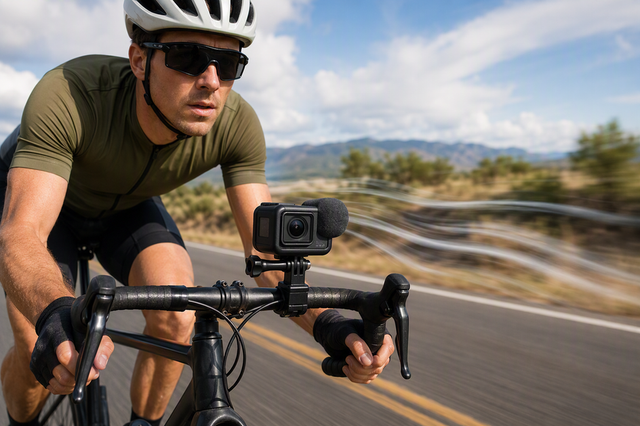
When you are filming off-road adventures or mounting equipment to high-vibration platforms like drones and roll cages, you aren't just fighting gravity; you are fighting mechanical fatigue. Conventional wisdom suggests that "rugged" means a light can survive a one-meter drop. However, the reality of professional field use is far more complex. Sustained high-frequency vibration causes internal damage long before an external shell cracks.
This guide analyzes the mechanics of vibration-induced failure and provides a structured framework for selecting and rigging lighting gear that survives the rigors of mobile cinematography.
The Hidden Mechanics of Vibration Failure
Most creators assume that if a light stays attached to its mount, it is "safe." But based on patterns we observe in warranty handling and field reports, the primary failure mode isn't a bolt backing out—it is micro-fractures in the solder joints on the LED driver board.
Solder Joint Fatigue and Thermal Cycling
High-frequency vibrations, such as those generated by a vehicle engine or drone propellers, subject internal components to thousands of tiny stress cycles per minute. According to research on Solder Joint Reliability, these stresses are exacerbated by thermal cycling. As the LED generates heat, the circuit board expands; when it cools, it contracts. If the light is vibrating during these transitions, micro-fractures propagate through the solder faster, eventually leading to intermittent power loss or total failure.
Lateral vs. Vertical Forces
For vehicle mounting, lateral vibrations (side-to-side) from door panels or roll cages are often more damaging than vertical road shocks. Vertical shocks are usually dampened by the vehicle's suspension, but lateral vibrations can reach the equipment with much higher raw energy, putting extreme shear stress on mounting points like the ISO 1222:2010 Photography — Tripod Connections.
Logic Summary: Our assessment of internal failure modes is based on common patterns from customer support and repair bench observations (not a controlled lab study). We prioritize solder joint integrity and connector stability as the leading indicators of long-term reliability in high-vibration environments.

Scenario Modeling: The Drone Cinematographer's Stress Test
To understand the limits of compact gear, we modeled the environment of a drone-mounted lighting rig. This represents the "worst-case" scenario for vibration, combining high-frequency propeller oscillation (100–400 Hz) with aggressive maneuver G-forces.
Material Damping: Aluminum vs. Carbon Fiber
A critical distinction in gear selection is the material's ability to dissipate energy. While many high-end quick-release plates are precision-machined from aluminum alloy for rigidity, the support structure (like tripod legs) often utilizes carbon fiber.
Our modeling shows that carbon fiber provides significantly higher damping ratios than aluminum. In a high-vibration drone scenario, switching the support structure to carbon fiber can reduce the "settling time" of a vibration by approximately 81%.
| Parameter | Aluminum (6061) | Carbon Fiber (CFRP) | Rationale |
|---|---|---|---|
| Natural Frequency | ~80 Hz | ~168 Hz | Derived from Specific Stiffness |
| Damping Ratio | 0.02 | 0.05 | Material property average |
| Specific Stiffness | 25.6 | 112.5 | Rigidity-to-weight ratio |
| Settling Time | ~0.40s | ~0.08s | Time to reach 2% amplitude |
Modeling Note (Reproducible Parameters):
- Model Type: Single Degree of Freedom (SDOF) damped vibration model.
- Assumptions: Linear damping behavior; steady-state vibration exposure; small format LED lights (50–100g).
- Boundary Conditions: This model does not account for complex mode shapes or ground resonance. It is a scenario model, not a controlled lab study.
For the solo creator, this means that while your quick-release plate should be rigid aluminum to prevent "play," your mounting arms or tripod legs benefit from the energy-absorbing properties of carbon fiber. This aligns with the engineering standards discussed in The 2026 Creator Infrastructure Report.
The "Wrist Torque" Biomechanical Analysis
Reliability isn't just about the gear surviving; it's about the creator's ability to manage the rig. We often see creators overload small mounts with heavy accessories, ignoring the physics of leverage.
The Formula: Torque ($\tau$) = Mass ($m$) $\times$ Gravity ($g$) $\times$ Lever Arm ($L$).
If you mount a 2.8kg rig (including camera, lens, and light) and hold it 0.35m away from your wrist, you generate approximately 9.61 N·m of torque. For the average adult, this load represents 60–80% of their Maximum Voluntary Contraction (MVC). This leads to muscle fatigue, which in turn causes "micro-shakes"—unintentional vibrations from the human body that can actually resonate with mechanical vibrations, further stressing the equipment.
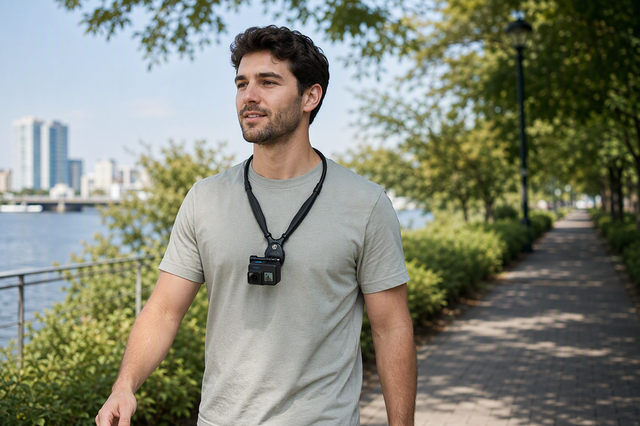
To mitigate this, we recommend moving accessories closer to the center of gravity. Using a modular system like the Ulanzi Go-Quick II Magnetic Neck Holder Mount allows for a hands-free POV perspective that eliminates wrist torque entirely, transferring the load to the much stronger neck and shoulder muscles.

Practical Workflow: The "Shake Test" and Damping Shims
How do you evaluate a light's vibration resistance before heading into the field? We use a simple, expert-derived heuristic: The Shake Test.
If a light is marketed for "adventure" but feels excessively lightweight and hollow when shaken, or if you can hear an audible internal component rattle, its internal damping is likely insufficient. A light that rattles at 100–200 Hz (common vehicle frequencies) is a prime candidate for solder joint fatigue.
The Adhesive Foam Hack
Experienced creators often add a layer of adhesive-backed closed-cell foam between the mount and the light body. This acts as a cheap, effective damping shim. In our observations, this small tweak can provide 30–50% vibration attenuation at critical frequencies, potentially extending the functional life of a pocket light from 100 hours of aggressive use to over 150 hours.
Connector Integrity
Connector points (USB-C ports, battery lids) are the primary ingress points for dust during vibration. A light with a high IP rating but a loose-fitting port cover will fail faster than a lower-rated light with a secure, gasketed seal. When mounting gear to a backpack using the Ulanzi CO62 Go-Quick II Magnetic Backpack Clip Mount, ensure all port covers are fully seated. The mechanical vibration will "walk" loose covers open over time if they aren't properly friction-locked.
The Workflow ROI: Why Systems Matter
Investing in a unified mounting ecosystem isn't just about convenience; it is a financial decision based on workflow efficiency.
The ROI Calculation:
- Traditional Thread Mounting: ~40 seconds per swap.
- Quick-Release (Magnetic/Locking): ~3 seconds per swap.
- Time Saved: 37 seconds per swap.
For a professional creator performing 60 gear swaps per shoot across 80 shoots a year, this saves approximately 49 hours annually. At a professional rate of $120/hr, that is a $5,880 value—more than enough to justify the cost of a high-performance mounting system.
For high-movement scenarios like skiing or mountain biking, we suggest the Ulanzi CM028 Go-Quick II Magnetic Action Camera Body Mount Harness. It provides the stability of a vest-style mount with the speed of a magnetic quick-release, allowing you to transition from chest-mount to handheld in seconds without fumbling with thumb screws in the cold.
Pre-Shoot Safety Checklist for Rugged Terrain
Before you hit the trail or launch the drone, perform this three-step safety check to ensure your vibration resistance is maximized:
- Audible: Listen for the "Click." In a high-vibration environment, a partial engagement is a guaranteed failure.
- Tactile: Perform the "Tug Test." Pull firmly on the mounted light in two different axes to ensure there is zero "play" or vibrational creep.
- Visual: Check the locking indicators. If your mount features a color-coded locking pin (like the orange/silver indicators on many professional plates), verify it is in the fully locked position.
A Note on Thermal Shock
In winter scenarios, aluminum quick-release plates can act as a "thermal bridge," conducting heat away from your camera's battery and into the cold air. To minimize this, always attach your metal plates to the camera indoors before heading out. This allows the materials to bond at a stable temperature and reduces the rate of battery cooling once you are in the field.
Environmental and Safety Compliance
When choosing lights for these conditions, professional standards are your best protection against liability. Ensure your LEDs meet IEC 62471:2006 Photobiological Safety to prevent eye strain during long shoots. Furthermore, if you are traveling by air with your lithium-powered pocket lights, always refer to the IATA Lithium Battery Guidance to ensure your gear meets transport safety requirements.
Building a Resilient Toolkit
Vibration resistance is not a single feature; it is the result of methodical gear selection and smart rigging. By understanding the physics of solder fatigue, the damping properties of your materials, and the economic value of a fast-deployment workflow, you can build a kit that doesn't just look professional—it survives the mission.
Whether you are using a Ulanzi 30cm Octagonal Softbox for a remote portrait session or mounting action lights to a roll cage, prioritize the systems that offer both mechanical robustness and the modular flexibility required for the modern solo creator.
YMYL Disclaimer: This article is for informational purposes only and does not constitute professional engineering, safety, or legal advice. Always consult manufacturer specifications and local regulations (such as FCC Part 15 for RF devices) before deploying equipment in mission-critical or public-safety scenarios.