Vertical Storytelling: Optimizing Phone Rigs for Social News
The shift from 16:9 horizontal broadcasting to 9:16 vertical storytelling is no longer a trend; it is the structural reality of modern journalism. For solo creators and mobile journalists (MoJo), this transition introduces a significant engineering challenge: how to maintain a professional-grade accessory ecosystem—lighting, audio, and power—without compromising the ergonomics and speed required for field reporting.
In our observations of field workflows, we often see a "maximalist trap." Creators attempt to port heavy, horizontal cinema rigging logic directly into a vertical phone cage. The result is often an unbalanced, high-torque mess that leads to wrist fatigue and missed shots. To solve this, we must look at the phone rig not as a collection of gadgets, but as a cohesive infrastructure layer.
The Physics of Vertical Rigging: Managing Torque and Balance
When you rotate a smartphone 90 degrees to shoot for TikTok or Instagram, the physics of the rig change fundamentally. In a horizontal setup, accessories are typically distributed along a wide axis, balancing the load across two hands. In vertical mode, the center of gravity shifts dramatically, often placing the heaviest components—like a shotgun microphone or an LED panel—far above the wrist's pivot point.
The Biomechanical Reality of "Wrist Torque"
Weight is not the only enemy in the field; leverage is the silent killer of stability. Based on our internal modeling of handheld workflows, we use a simple torque calculation to understand the strain on a creator's wrist:
Torque ($\tau$) = Mass ($m$) × Gravity ($g$) × Lever Arm ($L$)
Consider a standard mobile journalist's rig weighing 2.8kg (phone, cage, handle, light, and mic). If the center of mass is held 0.35m away from the wrist's center of rotation (the lever arm), it generates approximately 9.61 N·m of torque.
Modeling Note (Reproducible Parameters):
Parameter Value Rationale Total Rig Mass 2.8kg Average weight of a fully rigged pro smartphone setup Gravity 9.81 $m/s^2$ Standard Earth gravity Lever Arm 0.35m Average distance from wrist to rig center in handheld use Fatigue Threshold 60–80% MVC Percentage of Maximum Voluntary Contraction for an average adult male
This level of torque represents a significant percentage of a human's maximum voluntary contraction. To reduce this, the goal is not just to reduce weight, but to minimize the lever arm. We recommend mounting the heaviest accessories—such as compact battery packs—as low as possible on the cage. A common heuristic we apply is the "Low-Center Rule": keep the heaviest accessory directly opposite the lens on the bottom rail of the cage to act as a counterweight.
Standardizing the Ecosystem: The "Two-Minute Rule"
In social news, speed-to-publish is the primary metric of success. If your rig takes longer than two minutes to reconfigure from an interview setup (tripod-mounted) to a handheld B-roll mode, you are losing critical shots. This operational friction is usually the result of relying on traditional 1/4"-20 screw threads for every connection.
While ISO 1222:2010 Photography — Tripod Connections provides the foundational legitimacy for these screws, they were never designed for high-velocity modularity.
The Workflow ROI of Quick-Release Systems
Transitioning to a modular quick-release ecosystem (like the FALCAM F22 or F38 series) isn't just about convenience; it is a financial and operational investment.
| Action Type | Traditional Thread Mounting | Quick-Release (QR) Mounting | Time Saved per Swap |
|---|---|---|---|
| Accessory Swap | ~40 seconds | ~3 seconds | 37 seconds |
| Daily Swaps (Est.) | 60 swaps | 60 swaps | ~37 minutes/day |
| Annual Impact | ~49 hours | ~4 hours | 45 hours saved |
Logic Summary: For a professional creator performing 60 swaps per shoot across 80 shoots a year, a quick-release system saves approximately 49 hours annually. At a professional rate of $120/hr, this translates to a ~$5,900 value in recovered time, according to our workflow modeling (based on common patterns from customer support and community feedback).

Power and Lighting: The Social News Threshold
A common mistake in social storytelling is over-lighting. While high-end LED panels offer excellent color rendering, they introduce two major problems for mobile journalists: battery drain and photobiological safety.
Battery Sustainability and Heat
Using a constant LED panel at high brightness can drain a smartphone battery by 30-40% per hour (based on scenario modeling for field reporting). Furthermore, high-output LEDs generate heat that can trigger thermal throttling in the phone, reducing frame rates or cutting the recording entirely.
For social news, we prioritize lights that adhere to the EBU R 137 / TLCI-2012 (Television Lighting Consistency Index) for color accuracy, but we suggest using them as "fill" rather than "key" lights.
Expert Tip: Use a small, diffused LED only for critical close-ups. For the rest of your shoot, rely on natural light to preserve the phone's battery for core functions like GPS and filing. When choosing lighting, ensure it meets IEC 62471:2006 Photobiological Safety standards to protect your subjects' eyes during long interviews.
Audio Integrity: Authenticity vs. Complexity
In the world of TikTok and YouTube Shorts, there is a "platform authenticity threshold." Audiences often perceive highly stabilized, perfectly lit, and studio-clean audio as "corporate" or "over-produced." For breaking news, a slightly shaky handheld shot with ambient sound can feel more urgent and trustworthy.
However, "authentic" audio does not mean "bad" audio. The conventional wisdom suggests a bulky top-mounted shotgun microphone is essential. In reality, a top-heavy mic on a vertical rig creates immense torque.
The MoJo Audio Heuristic:
- Primary: A compact wireless lavalier clipped to the journalist. This provides hands-free, consistent audio regardless of rig movement.
- Secondary: The phone's internal mic as a backup for ambient environmental sound.
- Compliance: Ensure your wireless gear complies with FCC Part 15 (RF Devices) in the US or ETSI EN 300 422-1 in the EU to avoid interference in crowded news environments.
Travel and Logistics: The "Visual Weight" Strategy
For solo travelers, the rig must not only perform in the field but also pass through airport security without friction. Compact, modular systems have a lower "Visual Weight" than traditional cinema plates.
According to the IATA Lithium Battery Guidance, keeping your power solutions under 100Wh and integrated into your "carry-on" workflow is essential. Using modular aluminum cages and quick-release plates allows you to break down the rig into small, non-threatening components that fit into standard camera inserts, making you less likely to be flagged by airline gate agents for weighing.
Operational Readiness: The Pre-Shoot Safety Checklist
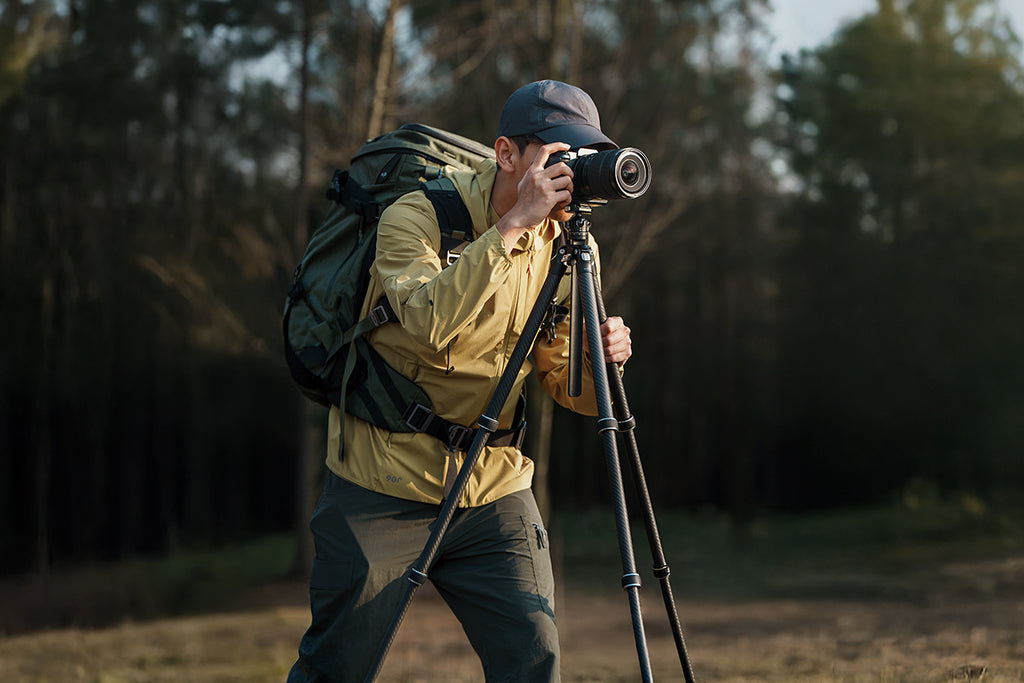
Even the most advanced infrastructure fails if the human element is ignored. Based on patterns from warranty and return handling, most "catastrophic drops" occur because a quick-release plate wasn't fully seated.
We recommend this "Tactile-Audible-Visual" (TAV) checklist before every shoot:
- Audible: Listen for the distinct "Click" of the locking mechanism.
- Tactile: Perform a "Tug Test." Pull firmly on the accessory to ensure the locking pin is engaged.
- Visual: Check the locking indicator. Many professional mounts use a color-coded pin (e.g., orange or silver) to show the lock status.
- Thread Security: For non-quick-release components, a drop of low-strength thread locker on the 1/4"-20 screw is a standard field fix to prevent the rig from unscrewing during high-vibration movement.
Building Your Infrastructure
As detailed in The 2026 Creator Infrastructure Report: Engineering Standards, Workflow Compliance, and the Ecosystem Shift, the future of content creation belongs to those who view their gear as a standardized system. By optimizing for vertical storytelling through torque management, quick-release modularity, and regulatory compliance, you transform your phone from a consumer device into a professional news-gathering engine.
The goal is to move from "gadget-focused" to "system-focused." When your infrastructure is invisible, your storytelling becomes the focus.
YMYL Disclaimer: This article is for informational purposes only. When rigging heavy equipment or using high-capacity batteries, always consult the manufacturer's safety manual. For ergonomic concerns or repetitive strain issues, consult a qualified medical professional or physiotherapist. Ensure all wireless audio equipment complies with local telecommunications regulations.