Quick-Start Summary: Is Your Rig Secure?
If you are in a hurry on set, use these three "Rules of Thumb" to decide if you need to upgrade your mounting strategy:
- The Risk Threshold: If your rig costs over $2,000 or weighs more than 1.5kg (3.3lbs), a single-point connection is a high-risk failure point.
- The 3-Step "Tug Test": Listen for the Click, perform a Vertical Pull, and check for the Color Indicator (orange/silver) before every shoot.
- Environmental Alert: In temperatures below freezing, metal contracts. Re-tighten all plates after 15 minutes of outdoor acclimation.
In the high-stakes world of run-and-gun filmmaking, speed is often the primary metric of success. We have all been there: the sun is dipping below the horizon, the subject is moving, and you need to transition from a handheld gimbal to a tripod in seconds. In these moments, we rely heavily on quick-release systems to bridge the gap between different mounting platforms. However, as our rigs grow in complexity and value, a critical question arises: when does a standard single-point connection become a liability?
For solo creators and documentary filmmakers, equipment failure is not just an inconvenience; it is a project-ending event. Based on common patterns we observe in technical support and field repairs, the transition from "enthusiast" to "professional" rigging is marked by a shift in focus: moving from mere compatibility to mission-critical stability.
The Physics of Failure: Dynamic Load vs. Static Capacity
One of the most common misconceptions in rigging is over-reliance on static load ratings. When a manufacturer states a quick-release plate has a "80kg load capacity," they are typically referring to a Vertical Static Load—a lab-tested measurement of how much weight the mechanism can hold when the force is applied directly downward in a controlled environment.
In the field, we deal with Dynamic Payloads. A rig that weighs 3kg on a scale can exert significantly higher forces during a fast pan, a sudden stop on a slider, or the rhythmic vibrations of walking.
The $2,000 / 1.5kg Risk Heuristic
To help creators manage risk, we utilize a specific practical heuristic for identifying when a single-point connection is no longer sufficient. This is not a formal ISO standard, but rather a "rule of thumb" derived from internal analysis of equipment failure modes and the "tail-risk" associated with high-value gear:
- Financial Threshold: Total value of camera, lens, and accessories exceeds $2,000.
- Mechanical Threshold: Any single component (like a telephoto lens or cinema monitor) weighs over 1.5kg.
Why this matters: This heuristic accounts for the "consequence of failure." The cost of adding a secondary lock or a more robust ecosystem is negligible compared to the total rig value or the mechanical stress of a 1.5kg+ cantilevered load.
The "Wrist Torque" Biomechanical Analysis
Weight is only one part of the equation; leverage is the real enemy. When we mount accessories like monitors on long arms, we increase the "Lever Arm," which exponentially increases the torque applied to the mounting point.
We can model this using the standard torque formula: $$\tau = m \times g \times L$$
- $\tau$ (Torque): The rotational force applied to the quick-release plate.
- $m$ (Mass): The weight of the rig in kilograms.
- $g$ (Gravity): Approximately $9.81 m/s^2$.
- $L$ (Lever Arm): The distance from the center of gravity to the pivot point.
Scenario Modeling (Illustrative Example): Consider a 2.8kg cinema rig held 0.35m away from the wrist or the tripod center. This generates approximately $9.61 N\cdot m$ of torque. Based on general ergonomic principles and average adult strength data, this load can represent 60–80% of the Maximum Voluntary Contraction (MVC).
Note: These percentages are illustrative estimates to highlight strain; actual MVC varies significantly by individual. This level of strain leads to operator fatigue and places immense lateral stress on the mounting plate's locking pin. By utilizing modular ecosystems like the FALCAM F22 for smaller accessories, we move these loads closer to the center of gravity, reducing the lever arm.
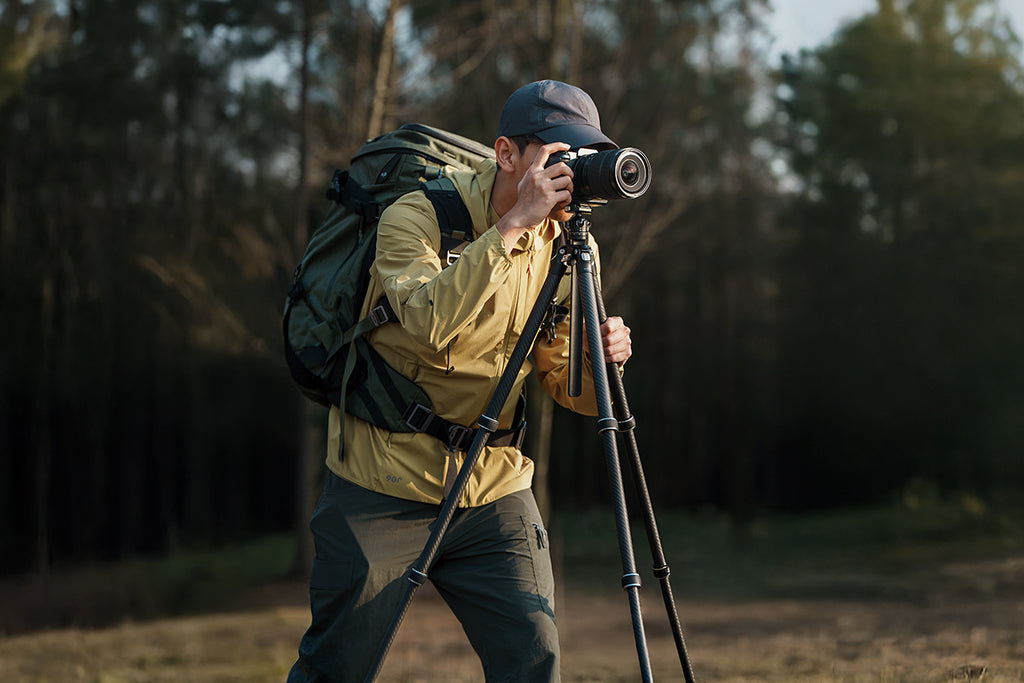
Identifying the "Creep": The Silent Failure Mode
The most dangerous failure in a mounting system is rarely a sudden, catastrophic detachment. Instead, it is a gradual, imperceptible "creep." This occurs when lateral stress—often from a heavy HDMI cable or a side-mounted handle—causes a single-point screw to slightly loosen over time.
According to the ISO 1222:2010 Photography — Tripod Connections, screw connections are the foundational standard. However, a single 1/4"-20 screw, while standardized, often lacks the rotational resistance required for modern, high-torque video workflows.
The Anti-Deflection Solution
To combat "creep," professional-grade systems like the FALCAM F38 and F50 prioritize "Zero-Play" machining. While many users assume quick-release plates are interchangeable, the Arca-Swiss Dovetail Technical Dimensions reveal subtle variations. A mismatch of even 0.5mm can lead to vibration and eventual loosening.
When upgrading, look for these three mechanical safeguards:
- Dual-Screw Mounting: Using both 1/4"-20 and 3/8"-16 points simultaneously.
- Retractable Locating Pins: These act as a secondary mechanical stop, preventing rotation even if the main screw loses tension.
- Contoured Cages: A full camera cage provides multiple points of contact, turning the camera body into a rigid extension of the plate.
Environmental Factors: The "Thermal Shock" Variable
As a technical strategist, I must highlight a factor often overlooked: material science in extreme weather. FALCAM quick-release plates are precision-machined from Aluminum Alloy (typically 6061 or 7075). While aluminum offers an exceptional strength-to-weight ratio, it is highly conductive.
The Thermal Bridge Effect
In winter, an aluminum plate acts as a "thermal bridge," conducting cold directly from the tripod into the camera's baseplate. This can accelerate battery drain. Furthermore, metal contracts in the cold. A locking mechanism that feels tight in a 20°C (68°F) studio may experience a reduction in clamping force at -10°C (14°F) due to differential contraction between the plate and the receiver.
Winter Workflow Tip: Always attach your plates to the camera while indoors. This ensures the initial "bite" of the screw is set at room temperature. Once outside, perform a "Tug Test" after 15 minutes of acclimation to ensure the connection remains secure.
The Workflow ROI: Why Seconds Matter
The transition to a unified quick-release ecosystem is a safety upgrade, but the true return on investment (ROI) is efficiency. For the solo creator, every minute fumbling with a mounting screw is a minute lost on creative execution.
ROI Calculation: Traditional vs. Quick Release
Disclaimer: This model uses hypothetical professional assumptions. Actual savings depend on your specific billable rate and shoot frequency.
| Parameter | Value | Rationale |
|---|---|---|
| Traditional Thread Swap Time | 40 seconds | Average time to unscrew and re-tighten. |
| Quick Release Swap Time | 3 seconds | Time for a "Click-and-Lock" transition. |
| Average Swaps per Shoot | 60 | Handheld to tripod, gimbal to overhead, etc. |
| Shoots per Year | 80 | Standard professional workload. |
| Professional Hourly Rate | $120 | Industry average for mid-tier creators. |
The Calculation:
- Time saved per swap: 37 seconds.
- Total annual time saved: $(37s \times 60 \times 80) / 3600 \approx 49.3$ hours.
- Total Annual Value: ~$5,916.
By investing in a standardized infrastructure, you aren't just buying safety; you are reclaiming over a full work week of billable time every year. This is the "Ecosystem Shift" discussed in The 2026 Creator Infrastructure Report.
Visual Weight and Travel Logistics
For the documentary filmmaker, "Visual Weight" is as important as physical weight. A bulky, over-rigged camera attracts unwanted attention and can be a red flag for airline gate agents.
According to the IATA Lithium Battery Guidance Document, traveling with powered gear requires strict adherence to safety. Compact systems like the F22 and F38 allow you to strip a rig down to its core components in seconds, making it easier to pack batteries and bodies separately for compliance.
The Professional Safety Protocol
To ensure the longevity of your equipment, we recommend this three-step Pre-Shoot Safety Checklist for every mount transition:
- Audible Check: Listen for the distinct mechanical "Click." In a quiet environment, the engagement of the locking pin is the first indicator of a successful seat.
- Tactile Check (The Tug Test): Immediately after mounting, apply firm rotational torque and a vertical pull to the camera body. Any movement indicates the plate is not fully seated.
- Visual Check: Verify that the locking indicator (often orange or silver on FALCAM series) is in the "Locked" position before taking your hands off the rig.
Pro Tip: Consider cable management. A heavy HDMI cable can act as a lever, applying constant lateral stress. Utilizing F22 cable clamps provides strain relief, protecting both your camera ports and your mounting stability.
Building a Trusted Infrastructure
As we move toward 2030, the creators who succeed will be those who treat their equipment as workflow infrastructure rather than a collection of gadgets. The shift from basic Arca-Swiss plates to a robust, modular ecosystem like FALCAM represents a commitment to engineering discipline.
By identifying the moments when secondary locking points are required—based on rig value, dynamic payload, and environmental stress—you move from "hoping" your gear is safe to "knowing" it is secure.
Disclaimer: This article is for informational purposes only. While we provide heuristics and calculations based on industry patterns and engineering principles, equipment safety depends on proper installation and regular maintenance. Always consult your camera and tripod manufacturer's manuals for specific load limits and safety guidelines.