The Hidden Cost of the POV Perspective
For solo creators in the DIY, crafting, and cooking niches, the point-of-view (POV) shot is more than a stylistic choice; it is the primary bridge between the creator’s expertise and the audience’s understanding. However, as we move toward higher production values, the weight of our rigs—incorporating smartphones, cages, microphones, and lighting—begins to take a physical toll. What starts as a twenty-minute "quick tip" often evolves into a multi-hour session where the burning sensation in the trapezius and the dull ache in the neck become the primary obstacles to creativity.
In our experience monitoring community feedback and support patterns, physical fatigue is the leading cause of "creator burnout" in the technical DIY space. We often observe that creators prioritize optical quality and lighting intensity without considering the biomechanical load of the mounting system. This article provides a methodical, system-focused approach to reducing physical fatigue in heavy POV rigging setups, ensuring your workflow remains sustainable for years to come.

The Physics of Fatigue: A Biomechanical Analysis
To solve the problem of fatigue, we must first understand that weight is not the only enemy; leverage is the true culprit. In rigging, we use the concept of Wrist Torque to measure the strain placed on the body. The formula is straightforward: Torque ($\tau$) = Mass ($m$) $\times$ Gravity ($g$) $\times$ Lever Arm ($L$).
Modeling the Petite Creator Scenario
To illustrate this, we modeled a scenario involving a "Petite Female Creator" (representative of a 5th percentile female, approximately 152cm tall). This persona often faces disproportionate fatigue risks because standard rigging gear is rarely scaled to smaller anthropometric dimensions.
| Variable | Balanced Configuration | Top-Heavy (Mistake) | Unit |
|---|---|---|---|
| Rig Mass ($m$) | ~0.5 (iPhone + Cage + Mic) | ~0.7 (Large Light + Accessories) | kg |
| Lever Arm ($L$) | 0.15 (Close to neck) | 0.25 (Tilted forward) | m |
| Calculated Torque | ~0.74 | ~1.72 | N·m |
| % of Max Strength | ~9.8% | ~22.9% | MVC |
Logic Summary: Our analysis assumes a Maximal Voluntary Contraction (MVC) of 7.5 N·m for a petite female wrist. While 0.74 N·m is sustainable for sessions under 2 hours, the torque in the top-heavy configuration exceeds the 15% fatigue threshold for sustained static loading defined by ISO 11228-3: Handling of low loads at high frequency.
The insight here is profound: by simply adding a larger light and mounting it high (increasing the lever arm), the torque load increases by 133%. This explains why a rig that feels "light" in the hand can become agonizing when mounted to the body for an extended shoot. To mitigate this, we recommend moving secondary accessories to lower mounting points or using lightweight, diffuse sources like the Ulanzi 30cm Octagonal Softbox with Mini Bowens Mount and Grid L083GBB1, which provides high-quality light at a net weight of only ~300g (0.3kg).
Systematizing the POV Workflow: Neck vs. Chest
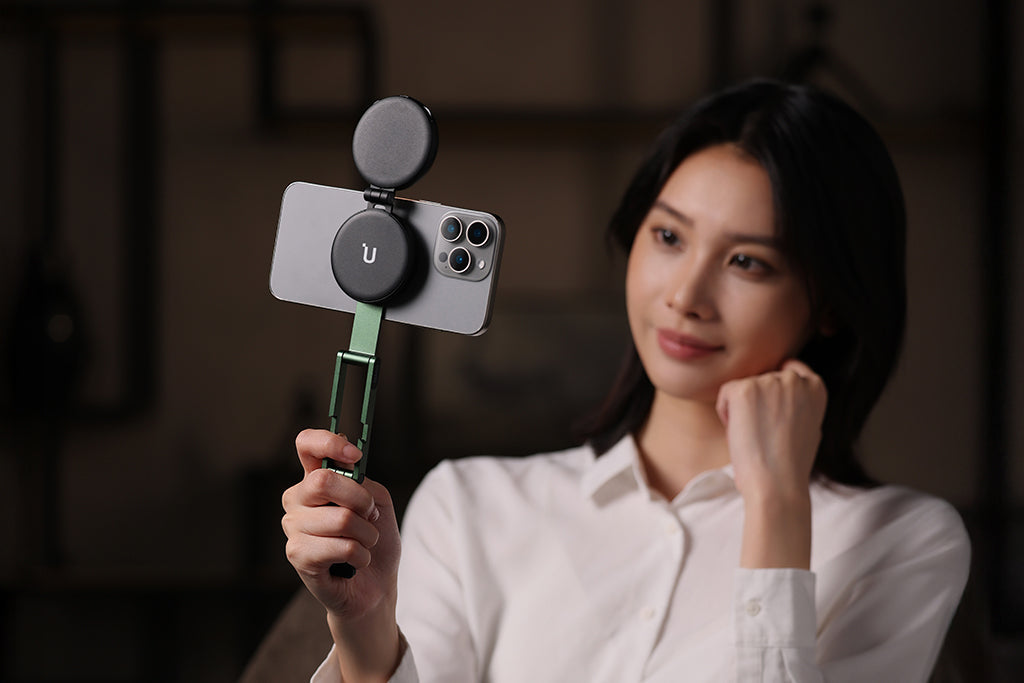
Choosing the right mounting platform is the first step in managing the load. The two most common solutions are magnetic neck mounts and chest harnesses, each serving a distinct purpose in a modular ecosystem.
The 500g Heuristic for Neck Mounts
Magnetic neck mounts offer the highest "novelty velocity"—they are incredibly fast to deploy. However, practitioners note that the advertised 1kg load capacity is typically safe only for static shots. For any movement, we suggest a 500g heuristic: keep the total weight under 500g (approximately 1.1 lbs) to prevent the mount from bouncing. Bouncing creates dynamic loading, which can multiply the perceived weight of the rig by 2x or 3x during a stride, leading to rapid neck fatigue.
The Chest Harness "Finger's Width" Rule
For heavier setups involving mirrorless cameras or complex phone cages like the Ulanzi Falcam F22 & F38 & F50 Quick Release Camera Cage V2 for Sony A1/A7 III/A7S III/A7R IV 2635A, a chest harness is the superior ergonomic choice. It distributes weight across the shoulders and upper back.
A critical lesson from multi-hour cooking shoots is that even a perfectly balanced harness becomes uncomfortable if the straps are overtightened. Based on common patterns from creator feedback, we recommend leaving a finger's width of slack in the shoulder straps. This allows for natural chest expansion during breathing, which dramatically extends wearing comfort and prevents the feeling of "rigging claustrophobia."
Workflow ROI: The Financial Value of Quick Release
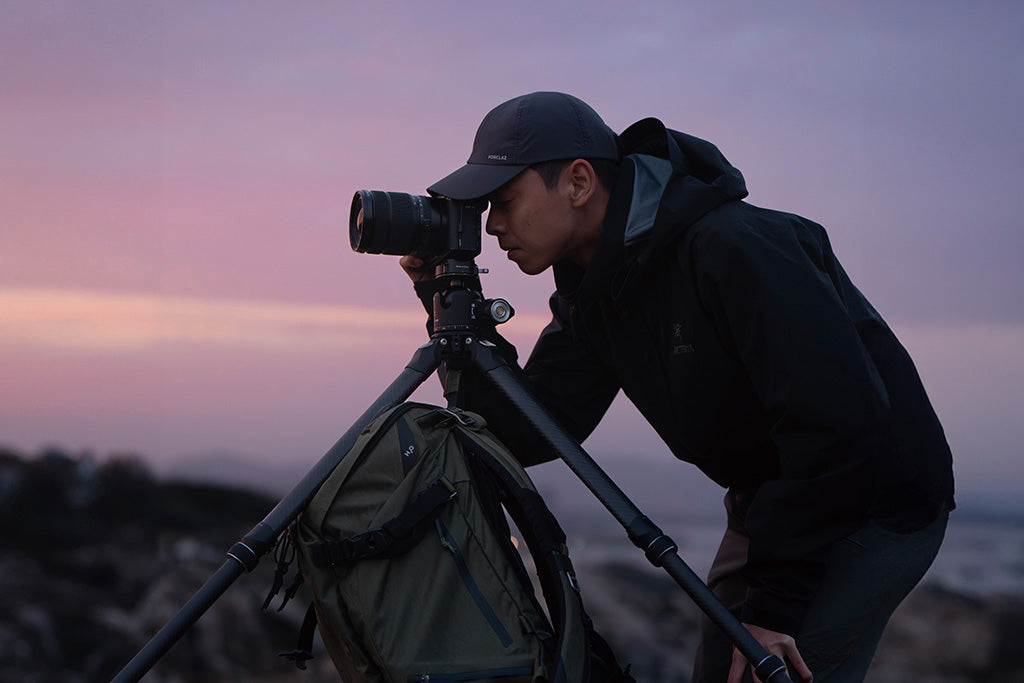
Efficiency is a form of ergonomic protection. Every second spent fumbling with a traditional 1/4"-20 screw—a standard defined by ISO 1222:2010 Photography — Tripod Connections—is a second your body is supporting a static load.
When we transition to a modular system like the Falcam F38, the "Workflow ROI" becomes clear. Consider the following calculation:
- Traditional Thread Mounting: ~40 seconds per swap.
- Quick Release (F38/F22): ~3 seconds per swap.
- Time Saved: 37 seconds per swap.
For a professional creator performing 60 swaps per shoot (switching from POV to tripod to handheld) across 80 shoots a year, this saves approximately 49 hours annually. At a professional rate of $120/hour, adopting a system-focused mounting strategy represents a ~$5,900+ value in recovered time alone. This efficiency allows you to set up, get the shot, and de-rig before fatigue sets in.
Furthermore, these plates are precision-machined from Aluminum Alloy (not carbon fiber), providing the necessary rigidity to eliminate "ghost play." As noted in our guide on Eliminating 'Ghost Play', a slight wobble at the plate interface magnifies into distracting micro-shakes in POV footage, forcing the creator to tense their muscles to compensate—a primary source of secondary fatigue.
Advanced Balancing: The Center of Mass Strategy
The goal of any heavy POV rig is to keep the Center of Mass (CoM) as close to the body as possible. When a rig is top-heavy, it naturally tilts forward, pulling on the neck straps and straining the upper back.
The Leveling Base Advantage
When using a tripod for overhead DIY shots, achieving a level horizon on uneven surfaces often requires tedious leg adjustments. Using a tool like the Ulanzi TT37 Mini Leveling Base for Tripod Head T065GBB1 allows for -8°/+8° of quick adjustment. By leveling the base rather than the camera, you ensure the weight remains centered over the tripod’s apex, preventing the "topple risk" associated with off-center loads.
Counterweighting and Component Placement
If you must use a heavy microphone or light, mount it lower on the rig. In our scenario modeling, moving a 50g accessory from the top cold shoe to a side-mounted F22 point reduced the lever arm distance significantly. For petite creators, this small tweak can reduce wrist torque by approximately 20%.
Methodology Note: This estimate is based on the static equilibrium of levers. We assume the rig is held at a 90-degree angle to the forearm, representing the maximum gravitational moment.
Safety, Trust, and the Ecosystem Shift
As the industry moves toward "ready-to-shoot" toolchains, the reliability of your mounting ecosystem becomes paramount. According to The 2026 Creator Infrastructure Report, the shift toward integrated ecosystems like Falcam is driven by the need for "flawless compatibility governance." When your gear works together seamlessly, you spend less time troubleshooting and more time creating.
The Pre-Shoot Safety Checklist
To ensure the long-term stability of your system, we recommend a three-point check every time you mount a rig to your body:
- Audible: Listen for the distinct "Click" of the quick-release mechanism.
- Tactile: Perform a "Tug Test"—pull firmly on the camera to ensure the locking pin is fully engaged.
- Visual: Check the locking indicator (often an orange or silver pin) to confirm the system is in the "Locked" position.
Thermal Considerations
Because high-performance plates like the F38 are made of aluminum alloy, they act as a "thermal bridge." In extreme cold, they can conduct heat away from the camera base. We suggest attaching your plates to your camera indoors before heading out into the cold. This minimizes "metal-to-skin" shock and helps maintain battery temperature, which is critical given the strict IEC 62133-2 battery safety standards that govern lithium-ion performance in cold weather.
Building a Sustainable Creative Engine
Reducing physical fatigue is not about buying lighter gear; it is about building a smarter system. By understanding the biomechanics of torque, implementing modular quick-release solutions, and following a methodical setup process, you transform your rig from a burden into an extension of your creative intent.
Whether you are using the Ulanzi Go-Quick II Magnetic Quick Release Backpack Strap Clip for GP Mount 3169 for a quick POV stroll or a full Falcam cage for a multi-hour studio build, the principles remain the same: balance the load, reduce the leverage, and trust the system.
Appendix: Modeling Assumptions & Reproducible Parameters
Our fatigue estimates are derived from deterministic scenario modeling based on the following parameters. This is a decision-aid model, not a clinical lab study.
| Parameter | Value | Unit | Rationale |
|---|---|---|---|
| Rig Mass (Static) | 0.5 - 1.2 | kg | Typical range for mobile and mirrorless POV rigs. |
| Lever Arm ($L$) | 0.15 - 0.35 | m | Distance from wrist/neck pivot to rig Center of Mass. |
| MVC Limit (Female) | 7.5 | N·m | Conservative estimate for female wrist extension strength. |
| MVC Limit (Male) | 12.5 | N·m | Midpoint estimate for male wrist extension strength. |
| Fatigue Threshold | 15 - 20 | % | % of MVC for sustained static loading (ISO 11228-3). |
Boundary Conditions:
- Assumes neutral wrist/neck posture; deviations increase risk.
- Does not account for dynamic "g-force" during rapid movement.
- Individual muscle endurance and prior injuries will significantly affect fatigue onset.
Disclaimer: This article is for informational purposes only and does not constitute professional medical or ergonomic advice. If you experience persistent pain, numbness, or tingling while filming, please consult a qualified healthcare professional or ergonomist. Adopting new rigging setups should be done gradually to allow your body to adapt to the new load distributions.