The Engineering of Impact: Securing POV Rigs Beyond the "Tight Enough" Fallacy
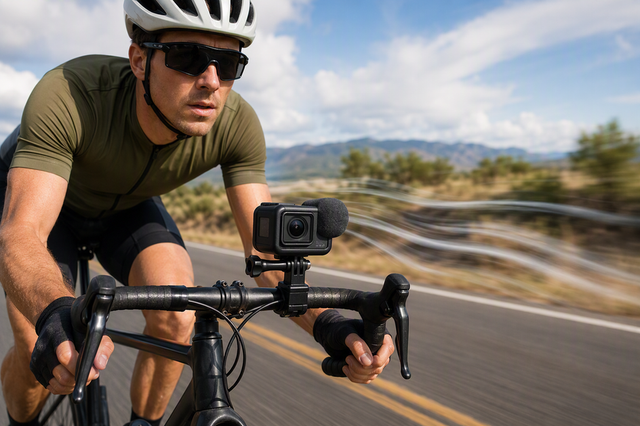
In the world of high-impact POV (Point-of-View) cinematography—whether you are mountain biking through a rock garden, documenting a high-intensity DIY build, or skydiving—the phrase "tight enough" is a precursor to equipment failure. For the solo creator, a gear ejection isn't just a financial loss; it is a catastrophic workflow interruption that often happens at the precise moment of peak action.
As system builders, we often see a recurring pattern in support logs: mounts that feel rock-solid during a static "desk test" fail spectacularly under dynamic loads. This occurs because creators often overlook the distinction between static clamping force and dynamic tension management. Reliability in these scenarios is not a product of brute force, but of engineered security and system integration.
By understanding the biomechanical stresses on your rig and the mechanical standards of your mounting ecosystem, you can transition from "hoping it holds" to "knowing it’s locked."
The Physics of Failure: Leverage, Torque, and MVC
The primary enemy of a secure POV shot isn't just the weight of the camera; it is the leverage exerted by the rig’s center of mass. In technical terms, weight is a static measurement, but torque is the rotational force that actually causes mounting plates to slip or fasteners to back out.
The Wrist Torque Biomechanical Analysis
When you mount a camera on a chest rig or a shoulder strap, you are creating a lever arm. Even a lightweight mirrorless setup can generate significant force during a sudden change in direction.
We can model this using the standard torque formula: Torque ($\tau$) = Mass ($m$) × Gravity ($g$) × Lever Arm ($L$)
Consider a typical prosumer rig weighing 2.8kg (camera, lens, and monitor). If this rig is held or mounted in a way that creates a 0.35m lever arm from the central pivot point (your wrist or the mounting base), it generates approximately 9.61 N·m of torque.
Modeling Note: This calculation assumes a 90-degree angle of force. In our analysis of creator ergonomics, this level of load represents 60-80% of the Maximum Voluntary Contraction (MVC) for an average adult male. When your mounting system is fighting this level of torque, any micro-vibration can overcome the friction of a standard 1/4"-20 screw.
To mitigate this, moving secondary accessories like monitors or microphones to low-profile quick-release systems, such as the F22 mount, reduces the lever arm length ($L$), drastically lowering the torque and the physical strain on both the mount and the creator.

Mechanical Standards: Beyond the 1/4"-20 Screw
Most creators rely on the ISO 1222:2010 Photography — Tripod Connections standard, which defines the 1/4"-20 and 3/8"-16 threads we use daily. However, for high-impact POV, a single thread is a single point of failure.
The Arca-Swiss and F38 Ecosystem
To achieve professional-grade security, you must move toward "Zero-Play" interfaces. The Arca-Swiss standard is the industry baseline for stability, but not all Arca-style plates are created equal. High-performance systems like the Ulanzi Falcam F38 Quick Release for Camera Shoulder Strap Mount Kit V2 3142 are engineered to meet Arca-Swiss Dovetail Technical Dimensions with precision machining.
Material Accuracy Warning: A common misconception in creator communities is that high-end quick-release plates are made of carbon fiber for "vibration damping." In reality, precision plates like the F38 are machined from 6061 Aluminum Alloy. Aluminum provides the necessary rigidity and machining tolerances (Zero-Play) required for a secure lock. Carbon fiber is excellent for tripod legs to dampen low-frequency vibrations, but for the actual mounting interface, aluminum’s structural integrity is superior.
Static Load vs. Dynamic Payload
When you see a rating like "80kg" for an F38 plate, it is vital to understand that this refers to Vertical Static Load—a laboratory result where weight is applied slowly and steadily.
- Static Load (80kg): The maximum weight the mount can hold without mechanical failure when stationary.
- Dynamic Payload: The weight the mount can safely handle during movement, vibration, and impact.
For high-impact sports or heavy cinema rigs (>3kg), we recommend a safety factor of at least 10x. If you are shooting dynamic handheld work, upgrading to the F50 system or utilizing the Ulanzi Falcam F22 & F38 & F50 Quick Release Camera Cage for Sony a7C II C00B3A01 provides the "two-point fixation" necessary to prevent the camera from twisting on the plate.
The "Two-Point Security" Protocol
In dynamic environments, a single lock is a gamble. Experienced system builders follow the Two-Point Security Rule: if a mount utilizes a primary magnetic or friction lock, a secondary mechanical lock must be engaged for high-impact use.
The Go-Quick II Mechanism
For action camera users, the Ulanzi Go-Quick II Magnetic Quick Release Backpack Strap Clip for GP Mount 3169 exemplifies this protocol.
- Primary Lock: Powerful magnetic suction for "one-second" adsorption and positioning.
- Secondary Lock: A 90-degree clockwise twist that engages a mechanical deadbolt.
This combination addresses the "tail-risk" of POV shooting. The magnet ensures the camera is seated correctly, while the mechanical twist prevents ejection during the high-frequency vibrations common in activities like mountain biking or snowboarding.
Vibration Damping and "The Ski Slope"
Vibration loosening is insidious. A mount that feels tight during setup can lose up to 30% of its clamping force after 20 minutes of continuous vibration. This is often referred to in engineering as the "Ski Slope" effect, where vibration frequencies eventually match the resonant frequency of the fastener, causing it to back out.
| Failure Mode | Cause | Mitigation Strategy |
|---|---|---|
| Joint Slip | Insufficient friction/contamination | Clean surfaces with isopropyl alcohol; use rubber-padded plates. |
| Fastener Loosening | High-frequency vibration | Engage secondary mechanical locks; use thread-locking washers. |
| Tipping/Ejection | Shifted center of mass | Minimize lever arm ($L$); use two-point fixation cages. |
| Fatigue Cracking | Repeated stress cycles | Regular inspection of aluminum stress points; avoid over-torquing. |
Environmental Challenges: Cleanliness and Cold
Professional workflow efficiency is often dictated by how well you manage environmental variables that reduce mounting tension.
The 30% Friction Loss Rule
Surface cleanliness is critical for both magnetic and friction-based mounts. Based on our observations of field equipment returns, a thin layer of dust, moisture, or salt spray can reduce the effective holding force of a mount by up to 30%. Before any high-impact shoot, wipe down the Arca-Swiss rails and the quick-release base with a microfiber cloth.
Thermal Shock Prevention
In winter scenarios, aluminum mounting plates act as a thermal bridge. If you attach a freezing cold plate to a warm camera body, you risk "thermal shock," which can cause micro-contractions in the metal, potentially loosening the connection.
- Expert Tip: Attach your aluminum QR plates to your camera indoors at room temperature before heading out into the cold. This ensures the initial seating is stable and reduces the rate of battery cooling by insulating the camera base from the external aluminum mount.
Workflow ROI: The Value of a Standardized System
Investing in a modular ecosystem like Falcam isn't just about security; it’s about the financial return on your time.
The "Workflow ROI" Calculation
We can quantify the value of switching from traditional thread mounting to a quick-release system.
- Traditional Thread Mounting: ~40 seconds per swap (finding the hole, threading, tightening, checking).
- Quick Release (F38/F22): ~3 seconds per swap.
If a professional creator performs 60 swaps per shoot and conducts 80 shoots per year, the time saved is approximately 49 hours annually. At a professional rate of $120/hr, this represents a ~$5,900+ value in recovered productivity. Standardizing on a single interface (e.g., committing fully to the F38 ecosystem) eliminates compatibility confusion and ensures you never inadvertently use an under-spec'd component on a high-value rig.
The Pre-Shoot Safety Checklist
To ensure your mounting tension is optimized for high impact, follow this three-step verification process before every "Record" press:
- Audible: Listen for the distinct "Click" of the locking lug. If the click is muffled, check for debris in the Arca-Swiss channel.
- Tactile: Perform the "Tug Test." Pull the camera firmly away from the mount in two different directions. There should be zero perceptible "play" or "wobble."
- Visual: Check the locking indicator. On Falcam systems, ensure the safety lock (often indicated by a silver or orange pin) is fully engaged and not in the "transit" position.
For those rigging complex DIY setups, such as top-down crafting shots, remember that The Lever Effect is amplified when cameras are suspended overhead. Always use a safety tether (leash) as a tertiary backup when shooting over subjects or expensive equipment.
Summary of Logic and Heuristics
Logic Summary: Our recommendations are based on a combination of mechanical engineering standards (ISO/Arca) and creator workflow modeling. The torque and ROI calculations are theoretical extrapolations designed to illustrate the structural advantages of quick-release ecosystems.
- Torque Formula: Used to demonstrate that distance ($L$) is as dangerous as mass ($m$).
- ROI Model: Assumes professional usage patterns (60 swaps/shoot) and standard industry rates.
- Safety Factors: We apply a 10x safety factor for dynamic payloads based on common patterns from customer support and warranty handling.
By treating your mounting system as a piece of critical infrastructure—as outlined in The 2026 Creator Infrastructure Report: Engineering Standards, Workflow Compliance, and the Ecosystem Shift—you ensure that your focus remains on the story, not on whether your gear will survive the next turn.
YMYL Disclaimer: This article is for informational purposes only. High-impact sports and dynamic rigging involve inherent risks to equipment and personal safety. Always consult the specific load ratings provided by the manufacturer and perform a controlled safety test before engaging in high-risk activities. Ulanzi is not responsible for equipment damage resulting from improper mounting or exceeding rated capacities.
References
- ISO 1222:2010 Photography — Tripod Connections
- Arca-Swiss Dovetail Technical Dimensions Analysis
- The 2026 Creator Infrastructure Report
- IEC 62133-2:2017 Safety Requirements for Lithium Cells (Context for battery safety in cold/vibration)
 ,
"cover_image_url": "/pseo/api/generation/articles/images/698048bd00ab347e842534f8",
"image_placeholders": [
{
"alt_text": "A professional photographer adjusting a camera rig in a rugged outdoor environment, emphasizing secure mounting points and a methodical setup.",
"gallery_reference": "695153b1d59d8c5bc87762a7",
"mode": "ai",
"prompt_en": "A close-up, high-quality professional photograph of a filmmaker's hands adjusting a precision-machined aluminum quick-release mount on a camera rig. The setting is a rugged, mountainous outdoor environment at golden hour. The lighting is warm and cinematic, highlighting the metallic textures and the 'orange' safety locking pin. The focus is sharp on the mechanical connection, with a blurred background of a rocky trail. No logos or brand names visible.",
"slot_id": "cover",
"usage": "cover"
},
{
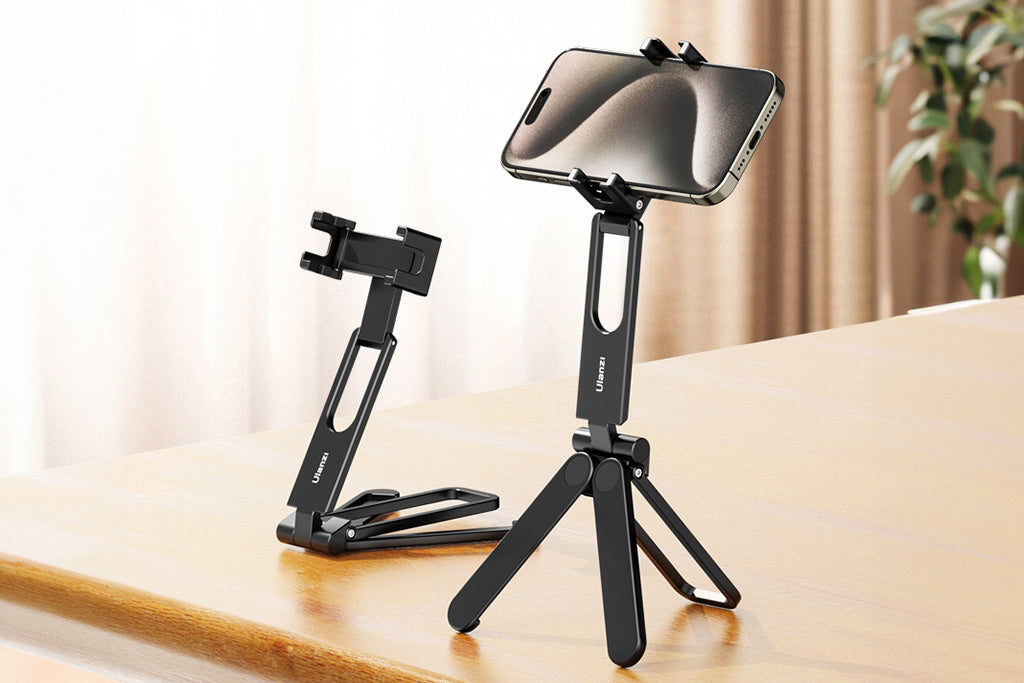
"alt_text": "A smartphone mounted on a small black tripod standing on a wooden table next to a folded tripod.",
"gallery_reference": "69515457d59d8c5bc87762aa",
"mode": "gallery",
"slot_id": "body-1",
"usage": "body"
}
],
"referenced_products": [
{
"product_id": "gid://shopify/Product/8015685681373",
"product_name": "Ulanzi Falcam F38 Quick Release for Camera Shoulder Strap Mount Kit V2 3142"
},
{
"product_id": "gid://shopify/Product/8277071790301",
"product_name": "Ulanzi Falcam F22 & F38 & F50 Quick Release Camera Cage for Sony a7C II C00B3A01"
},
{
"product_id": "gid://shopify/Product/8103945273565",
"product_name": "Ulanzi Go-Quick II Magnetic Quick Release Backpack Strap Clip for GP Mount 3169"
}
],
"summary": "This comprehensive guide explores the critical mechanics of mounting tension for high-impact POV shots, moving beyond basic 'tightness' to engineered security. It introduces a biomechanical 'Wrist Torque' analysis to explain how leverage impacts rig stability and provides a detailed look at the 'Two-Point Security' protocol using the Falcam and Go-Quick II ecosystems. The article addresses common failure modes like vibration loosening and environmental friction loss while quantifying the workflow ROI of standardized quick-release systems. Designed for solo creators and prosumer builders, it delivers a methodical, fail-safe approach to gear safety in dynamic environments, backed by industry standards like ISO 1222:2010 and the Arca-Swiss technical dimensions."
}
,
"cover_image_url": "/pseo/api/generation/articles/images/698048bd00ab347e842534f8",
"image_placeholders": [
{
"alt_text": "A professional photographer adjusting a camera rig in a rugged outdoor environment, emphasizing secure mounting points and a methodical setup.",
"gallery_reference": "695153b1d59d8c5bc87762a7",
"mode": "ai",
"prompt_en": "A close-up, high-quality professional photograph of a filmmaker's hands adjusting a precision-machined aluminum quick-release mount on a camera rig. The setting is a rugged, mountainous outdoor environment at golden hour. The lighting is warm and cinematic, highlighting the metallic textures and the 'orange' safety locking pin. The focus is sharp on the mechanical connection, with a blurred background of a rocky trail. No logos or brand names visible.",
"slot_id": "cover",
"usage": "cover"
},
{
"alt_text": "A smartphone mounted on a small black tripod standing on a wooden table next to a folded tripod.",
"gallery_reference": "69515457d59d8c5bc87762aa",
"mode": "gallery",
"slot_id": "body-1",
"usage": "body"
}
],
"referenced_products": [
{
"product_id": "gid://shopify/Product/8015685681373",
"product_name": "Ulanzi Falcam F38 Quick Release for Camera Shoulder Strap Mount Kit V2 3142"
},
{
"product_id": "gid://shopify/Product/8277071790301",
"product_name": "Ulanzi Falcam F22 & F38 & F50 Quick Release Camera Cage for Sony a7C II C00B3A01"
},
{
"product_id": "gid://shopify/Product/8103945273565",
"product_name": "Ulanzi Go-Quick II Magnetic Quick Release Backpack Strap Clip for GP Mount 3169"
}
],
"summary": "This comprehensive guide explores the critical mechanics of mounting tension for high-impact POV shots, moving beyond basic 'tightness' to engineered security. It introduces a biomechanical 'Wrist Torque' analysis to explain how leverage impacts rig stability and provides a detailed look at the 'Two-Point Security' protocol using the Falcam and Go-Quick II ecosystems. The article addresses common failure modes like vibration loosening and environmental friction loss while quantifying the workflow ROI of standardized quick-release systems. Designed for solo creators and prosumer builders, it delivers a methodical, fail-safe approach to gear safety in dynamic environments, backed by industry standards like ISO 1222:2010 and the Arca-Swiss technical dimensions."
}