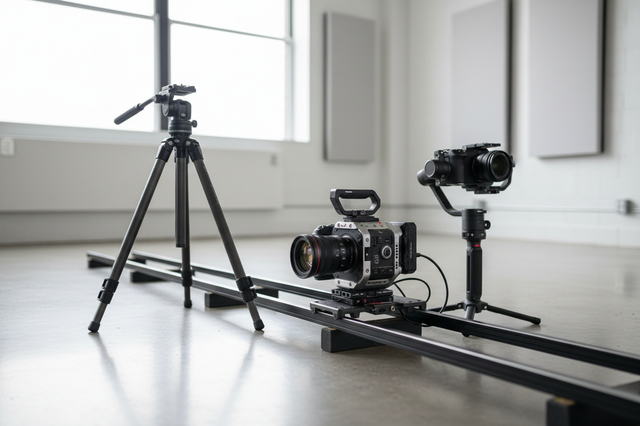
A hybrid quick release ecosystem makes sense when you already own mixed gear and want faster swaps without rebuilding everything. The goal is not brand purity, but a repeatable workflow that keeps your most common move quick, your compatibility checks simple, and your risk of mismatch low.

Why Hybrid Rigs Become Necessary
Most mixed rigs happen by accumulation, not by design. A creator buys one plate, then a different clamp, then an older mount from a previous setup, and the kit slowly turns into a hybrid quick release workflow. That is normal for working shooters, especially when the same bag needs to handle tripod, handheld, and support changes in one day.
The useful question is not "Which ecosystem is best?" It is "Which connection slows me down most?" A hybrid workflow for creators is really about moving between modes or support systems with less friction, so this article focuses on how to keep that movement clean instead of forcing a full rebuild.

If your current setup already works well, you do not need to standardize every mount at once. If your swaps feel clumsy, the first fix is usually to simplify the part you touch most often, not the least-used accessory.
What Actually Has to Match
The first thing to check is the exact plate-and-clamp pair, not the brand name on the box. In mixed ecosystems, the interface matters more than the label. An Arca-compatible fit can still vary across clamps or plates, so the real test is how your exact combination locks, releases, and sits under normal handling. Treat compatibility labels as a starting point, not proof.
That matters because mismatch usually shows up in small ways before it becomes obvious. The plate may need extra pressure to seat. The clamp may feel slightly vague on release. An adapter may add one more step that seems harmless in the studio but slows you down during a live shoot. If you are trying to mix Falcam and Arca-Swiss parts, this is the point where you confirm the actual connection path instead of trusting the ecosystem name alone.
Legacy mounts usually enter the rig through adapters, cages, or older plates you are not ready to retire yet. That can be fine, but every added layer becomes another place for tolerance mismatch or setup confusion. For that reason, camera plates are often the cleanest place to start when you want to inspect what is actually carrying the load path, and the right move is to keep legacy parts only where they still solve a real workflow need.
Ways to Mix Systems Without Losing Speed
The best hybrid setups keep one path simple and let the rest stay flexible. That is why standardizing the most frequent swap usually matters more than converting the entire kit. If your camera-to-tripod move happens constantly, make that connection the cleanest part of the rig first.
In practice, there are three useful patterns. First, you can standardize the main camera mount and leave accessory mounts more adaptable. Second, you can centralize multiple standards around one hub-like piece, so the camera cage or support point does the organizing. Third, you can keep a trusted fast path for the everyday move and accept that the less common path may stay a little slower. A multi-standard cage workflow can help when one mount point needs to coordinate more than one standard.
That is where a hybrid quick release ecosystem earns its keep. You reuse what already works, but you stop spreading adapter logic across every connection. For readers building around Falcam, the F22 quick release options make the most sense when the accessory side needs quick attachment, while a more camera-centered part of the rig stays on its own fast path.
A useful habit is to keep adapters in one place. If every connection uses a different workaround, the rig becomes hard to remember under pressure. If the hybrid logic lives in one zone, the workflow becomes easier to repeat, pack, and check. That is especially important for solo operators who have to rebuild the setup quickly between scenes.
How to Choose the Right Hybrid Strategy
Use the simplest strategy that solves your busiest transition. If you are mostly a new builder, a cleaner single-system path may be easier to live with. If you already own useful gear, a selective hybrid setup can preserve value while cutting the worst friction. If your rig changes roles several times per shoot, standardizing the most repeated move is usually the better long-term call.
The table below helps you compare the main paths without turning the decision into a brand loyalty contest.
| Scenario | Best fit | Why it fits | Main tradeoff | What to check first |
|---|---|---|---|---|
| Mostly new builder | Mix ecosystems cautiously, or standardize first if simplicity matters most | Starting from scratch gives you room to choose the least disruptive path and avoid inheriting older mismatch points | More choice can mean more setup effort and more room for compatibility confusion | Start with the core workflow you will use most: camera body, lenses, power, and file transfer |
| Mixed existing gear | Mix ecosystems selectively | You can keep what already works and only bridge the parts that create the least friction | The workflow can become uneven, with different apps, mounts, menus, or accessories | Identify the busiest swap and check whether adapters, batteries, media, or software will slow it down |
| Frequent multi-role shooter | Standardize the busiest swap | Repetition makes consistency valuable; one common path usually reduces errors and handoff time | Standardizing too much can limit flexibility if roles need different strengths | Find which item changes most often between jobs and test whether one ecosystem can cover it cleanly |
| One-part upgrade only | Upgrade one part first | This is the safest way to improve the weakest link without rebuilding the whole setup | A single upgrade may not solve cross-ecosystem friction elsewhere | Check whether the bottleneck is body, lens, audio, storage, or power before buying anything |
If you want a practical rule, use this one: mix ecosystems when it preserves gear you already trust, but standardize the busiest swap when speed and repeatability matter more than flexibility. If the adapter count keeps growing, the hybrid setup may be costing more time than it saves.
Setup Checks Before You Trust the Rig
- Assemble the exact plate, clamp, and adapter chain you plan to use, not a close-looking substitute.
- Lock and unlock the rig several times so the release action feels the same on every cycle.
- Check for wobble, twist, or unclear seating before the setup leaves the bench.
- Confirm that the same steps work in the same order every time.
- Keep the adapter count as low as possible on the path you use most.
- Inspect any legacy part for wear, looseness, or rough seating before you rely on it again.
- If the connection feels uncertain, simplify the path before putting camera weight on it.
This checklist reduces risk, but it does not guarantee safety. A mixed rig can feel fine in the hand and still show problems once the camera is moved, angled, or used under time pressure. That is why repeatability matters as much as fit.
Final Takeaway
A hybrid quick release ecosystem works best when you treat it like a workflow tool, not a philosophy. Keep the most frequent swap simple, leave the least important parts flexible, and verify the exact connection before trusting it on a real shoot. If you are still deciding, inspect your current swap path first, then compare it with a cleaner single-system path or a focused Falcam option if you want to reduce adapter friction and clean up the parts you touch every day.
FAQs
Can You Mix Falcam and Arca-Swiss Parts in One Setup?
Sometimes, yes, but only if the exact plate, clamp, and adapter combination fits cleanly. Do not assume the label alone proves compatibility. The practical check is whether the part seats predictably, releases cleanly, and still feels stable after repeated swaps. If the fit is vague or forced, treat that as a sign to simplify the connection path.
What Is the Safest Way to Test a Hybrid Quick-Release Workflow?
Start with low-risk use on a bench or in a controlled setup, then repeat the same swap several times before you depend on it for paid work. The key signal is repeatability: if the connection behaves differently from one try to the next, it is not ready for a fast-moving shoot. A calm test tells you more than a single successful lock.
Why Does a Hybrid Rig Sometimes Feel Slower Than a Single System?
Because adapters, extra decisions, and unfamiliar connection paths can erase the speed benefit you expected from quick release. A hybrid quick release ecosystem only feels fast when the main path is simple and the rest stays out of the way. If you keep reaching for different parts or checking different fit points, the setup is too fragmented.
Can a Hybrid Setup Be a Good Long-Term Choice?
Yes, if it keeps your most-used swap path clean and the remaining complexity contained. It becomes a weaker long-term choice when every transition depends on a different adapter or workaround. The best sign is that you can pack, rebuild, and swap the rig the same way every time without guessing.
What Should I Replace First If My Setup Keeps Causing Mismatch Issues?
Replace the bottleneck connection first, not the whole kit. In most cases, that means the mount you touch most often or the part that shows the most wear. If one link in the chain keeps causing hesitation, looseness, or repeatability problems, fixing that link usually gives you the biggest workflow gain for the least money.