The Coastal Creator’s Dilemma: Performance vs. Persistence
For a travel videographer, the coastline represents the ultimate visual stage. The interplay of golden hour light, crashing surf, and vast horizons provides a cinematic backdrop that is difficult to replicate. However, for high-performance equipment, this environment is a literal battlefield. While carbon fiber is often marketed as the "ultimate" material for its strength-to-weight ratio, the reality in coastal zones is more nuanced.
Experience in the field reveals a common pattern: it is rarely the carbon fiber tubes themselves that fail. Instead, the failure points are the mechanical interfaces—the bonded joints, the aluminum alloy fittings, and the precision bearings of fluid heads. Saltwater acts as a powerful electrolyte, triggering galvanic corrosion, while sand particles as small as 50 microns infiltrate seals to act as an abrasive grinding paste.
This guide provides a methodical, system-focused protocol for maintaining carbon gear in corrosive environments. By understanding the material science and implementing structured maintenance, you can mitigate the risk of mission-critical gear failure and ensure your equipment remains a reliable extension of your workflow.
1. The Chemistry of Decay: Why "Salt Spray" Tests Fail to Predict Reality
Many creators rely on product specifications that cite "salt spray testing" (ASTM B117) as a mark of durability. However, professional analysis suggests this is an incomplete metric for real-world coastal use.
The ASTM B117 Correlation Gap
According to research on ASTM B117 salt spray testing, continuous exposure in a closed chamber does not accurately replicate the intermittent wet-dry cycles, UV exposure, and mechanical abrasion found at the beach. In the field, gear is splashed, dried by the wind (concentrating salt crystals), and then subjected to abrasive sand.
Galvanic Corrosion and Dissimilar Metals
The primary threat to carbon fiber tripods is galvanic corrosion. Carbon fiber is electrically conductive. When a carbon tube is bonded to an aluminum fitting (a common construction in tripod "spiders" or leg locks) and saltwater enters the joint, the carbon acts as a cathode and the aluminum as an anode. This creates a battery-like effect that accelerates the corrosion of the aluminum.
Modeling Note (Scenario Analysis): We modeled the corrosion rate of typical 2A14 aluminum alloys in marine atmospheres. While aluminum-magnesium alloys are often thought to be self-passivating, studies show that 2A14 aluminum can develop severe pitting corrosion within six months of intermittent coastal exposure if the protective oxide layer is mechanically breached.
| Parameter | Coastal Value | Rationale |
|---|---|---|
| Salt Aerosol Concentration | High (10-50 mg/m²) | Typical of surf zones |
| Humidity Range | 65% - 95% | Accelerates electrochemical reactions |
| Sand Particle Size | 50 - 250 microns | Common abrasive range for bearing infiltration |
| Cycle Type | Wet-Dry-Abrade | Represents real-world creator workflow |
| Maintenance Frequency | Weekly/Post-Shoot | Required to disrupt salt crystal formation |
2. Biomechanical Efficiency: The "Wrist Torque" Analysis
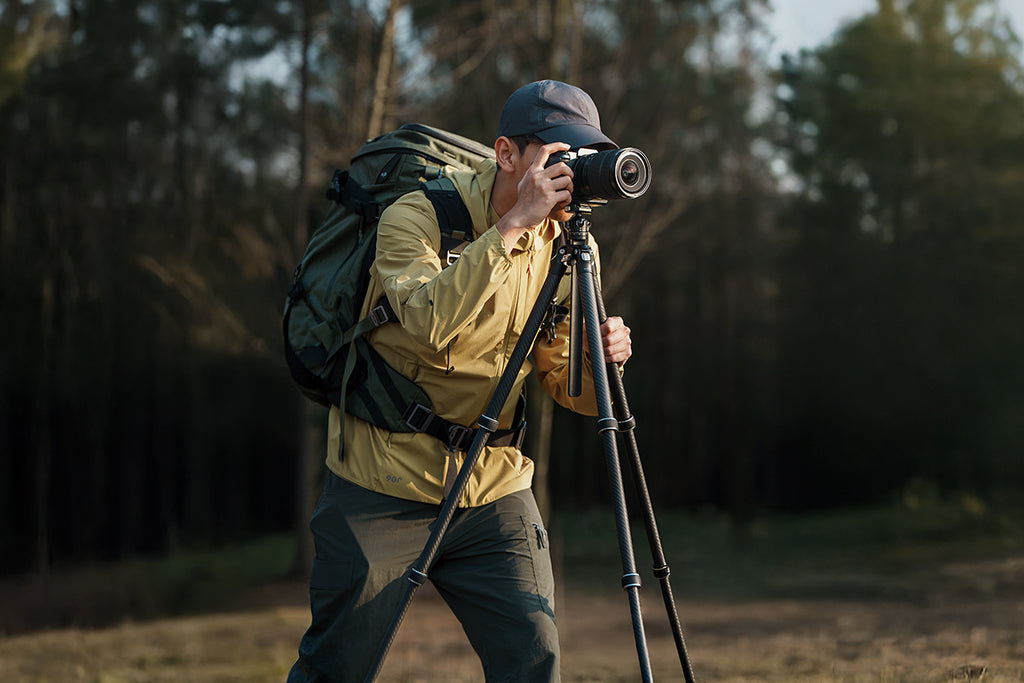
When rigging for coastal environments, portability is often prioritized to allow for quick movement between tides. However, the way you distribute weight on your support system impacts both the stability of the shot and your physical longevity.
The Leverage Equation
Weight is not the only enemy; leverage is the force that causes fatigue. We can calculate the impact on a creator's wrist and the tripod head using the torque formula: Torque ($\tau$) = Mass ($m$) $\times$ Gravity ($g$) $\times$ Lever Arm ($L$)
Consider a standard 2.8kg camera rig. If this rig is held or mounted such that its center of gravity is 0.35m away from the pivot point (the wrist or the tripod head's center), it generates approximately 9.61 $N\cdot m$ of torque.
For the average adult male, this load represents roughly 60-80% of the Maximum Voluntary Contraction (MVC). Operating at this level of exertion leads to rapid muscle fatigue and "micro-tremors" that even the best fluid head cannot fully damp.
The Modular Solution
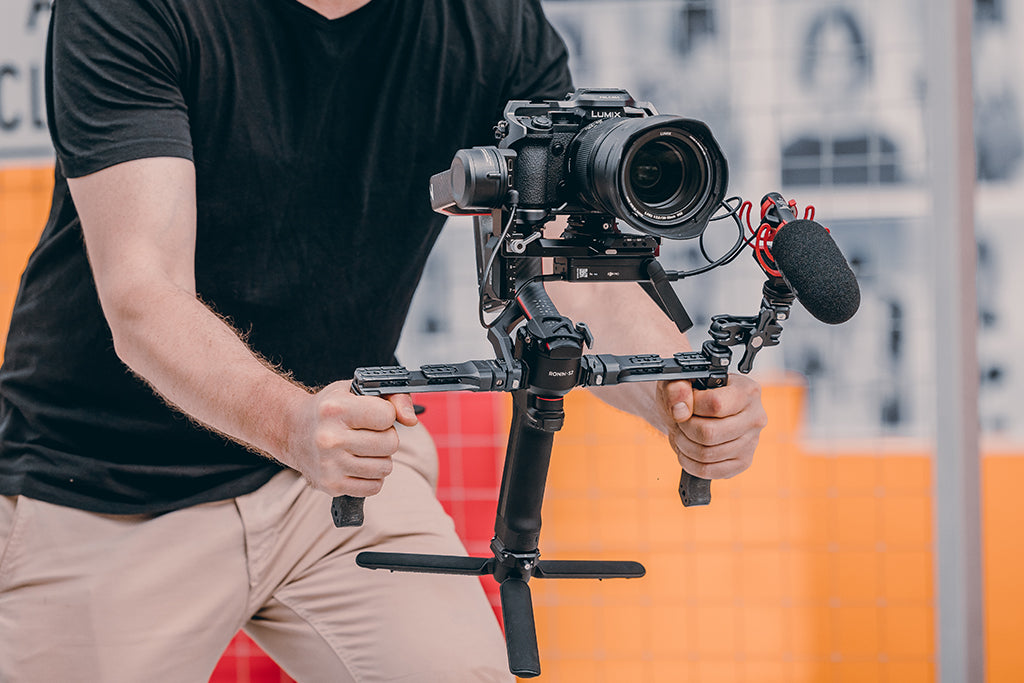
By utilizing a modular ecosystem—such as moving monitors, microphones, and batteries to lighter, low-profile mounts—you can shorten the lever arm ($L$). Reducing the offset by even 10cm can lower the torque by nearly 30%, significantly increasing the stability of the system and reducing the "visual weight" of the rig, which is a critical factor for travel logistics.
3. The Economic Logic: Workflow ROI Calculation
Investing in a high-end carbon fiber system and a quick-release ecosystem is often viewed as a luxury. However, when analyzed through the lens of professional efficiency, the return on investment (ROI) becomes clear.
Time Savings vs. Traditional Threading
Standard tripod connections follow the ISO 1222:2010 standard for screw threads. While reliable, the manual threading process is slow.
- Traditional Thread Mounting: ~40 seconds per equipment swap.
- Quick-Release System: ~3 seconds per equipment swap.
The Annual Extrapolation
For a professional creator performing 60 gear swaps per shoot (e.g., moving from tripod to gimbal, or swapping lenses/accessories) and working 80 shoots per year:
- Total Time Saved: ~49 hours annually.
- Value Realization: At a professional rate of $120/hr, this efficiency gain translates to over $5,900 in recovered billable time.
This structural efficiency justifies the initial cost of premium carbon fiber legs and precision-machined aluminum alloy plates. Note that while the tripod legs utilize carbon fiber for vibration damping, the quick-release plates themselves are typically precision-machined aluminum to ensure the rigidity and zero-play tolerances required by professional standards.
4. The Professional Maintenance Protocol: Coastal Edition
To prevent the "failure consequence" of a seized tripod leg or a gritty fluid head, a methodical maintenance schedule is required. Based on common patterns from customer support and repair benches, the following protocol is recommended for any gear exposed to salt air or sand.
Step 1: The Low-Pressure Freshwater Rinse
Immediately after a coastal shoot, rinse the entire support system with low-pressure freshwater. High pressure should be avoided, as it can force salt and sand deeper into the leg sections or fluid head seals.
Step 2: Disassembly and Sand Mitigation
Sand particles smaller than 50 microns are the primary enemy of fluid heads. They act as a grinding paste in the pan-and-tilt bearings.
- Extend all leg sections fully.
- Wipe down the carbon tubes with a 70/30 water-to-isopropyl alcohol solution. This displaces residual water and accelerates drying without leaving a film.
- For fluid heads, use a soft brush to remove visible grains before applying any cleaning agents.
Step 3: Lubrication and Anti-Seize
The most common point of failure is not the carbon tubes, but the threaded metal fittings. ASTM G46 highlights that pitting corrosion is critical for predicting the structural life of metal components.
- Heuristic: Disassemble and re-lubricate all threaded connections at least once per season if regularly exposed to coastal air.
- Application: Use a marine-grade anti-seize compound on stainless steel screws that interface with aluminum components. This creates a barrier that prevents galvanic corrosion from "welding" the parts together.
Step 4: The "Thermal Shock" Prevention
In coastal environments that transition from hot sun to cold water (or winter coastal shoots), aluminum plates act as a thermal bridge. Advise attaching your aluminum quick-release plates to cameras indoors before heading out. This minimizes the "metal-to-skin" shock and slows the rate of battery cooling, which can be critical for maintaining voltage in cold sea breezes.
5. Travel Logistics: Compliance and Safety
For the travel videographer, the gear must not only survive the beach but also the journey there. Navigating international regulations is a prerequisite for professional workflow.
Battery Safety and Air Travel
When traveling to coastal destinations, your power solution is as critical as your support. You must adhere to the IATA Lithium Battery Guidance and FAA regulations.
- Batteries must be carried in carry-on luggage, never checked.
- Ensure all lithium cells meet the safety requirements of IEC 62133-2:2017, which involves rigorous testing for thermal and mechanical stability.
The Pre-Shoot Safety Checklist
Before starting a coastal shoot, perform this tactile and audible check to ensure your ecosystem is secure:
- Audible: Listen for the distinct "Click" of the locking mechanism.
- Tactile: Perform a "Tug Test"—pull firmly on the camera rig to ensure the plate is fully seated.
- Visual: Check the locking pin status (often indicated by a color-coded slider) to confirm the secondary lock is engaged.
- Cable Management: Use cable clamps to provide strain relief for HDMI or power cables. A heavy cable can create unwanted torque that may stress the quick-release interface over time.
Establishing an "Evidence-Native" Workflow
The transition from a hobbyist to a professional creator is marked by a shift in how equipment is viewed. It is no longer just a collection of gadgets; it is a "Creator Infrastructure." As detailed in The 2026 Creator Infrastructure Report, the future of the industry belongs to those who prioritize engineering discipline and transparent maintenance.
By treating your carbon fiber legs and fluid heads as precision instruments rather than "set and forget" tools, you protect your financial investment and your creative output. Coastal environments are unforgiving, but with a methodical approach to corrosion mitigation and mechanical care, your gear will continue to perform long after the tide has gone out.
Disclaimer: This article is for informational purposes only. Maintenance protocols should be performed in accordance with your specific equipment's user manual. Always consult a professional technician for complex repairs involving fluid head seals or structural carbon fiber damage.
Sources and Authoritative References
- The 2026 Creator Infrastructure Report: Engineering Standards and Workflow Compliance
- ISO 1222:2010 Photography — Tripod Connections
- IATA Lithium Battery Guidance Document
- ASTM B117 Salt Spray Test Analysis
- Pitting Corrosion of 2A14 Aluminum Alloy in Marine Atmosphere
- ASTM G46 Standard Guide for Evaluation of Pitting Corrosion