The Hidden Variable: Thermal Stress and Chromaticity
In the high-stakes environment of a desert documentary shoot, we often obsess over battery levels and storage capacity. Yet, there is a silent predator that compromises visual integrity before a single "Low Battery" warning appears: heat-induced color shift. For solo creators working in uncontrolled, high-ambient settings, maintaining consistency across a ten-hour day is a technical challenge that requires more than just high-quality gear—it requires a system-level understanding of thermal physics.
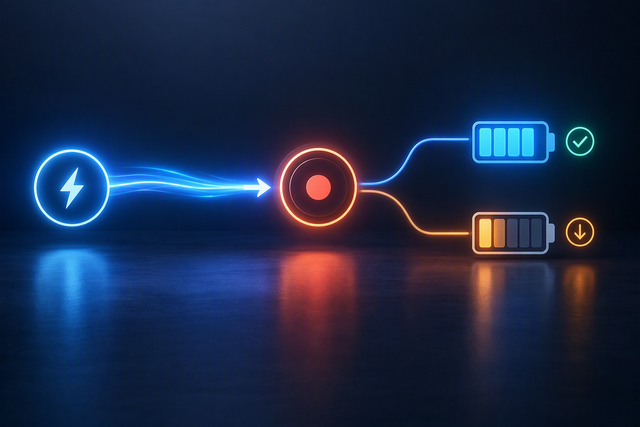
When an LED panel, such as the Ulanzi L024 40W RGB Portable LED Video Light, is subjected to direct solar loading, the black-anodized chassis can exceed 70°C (158°F) within 20 minutes. This isn't just a risk to the electronics; it fundamentally alters the light's output. As the phosphor layer heats, we observe a measurable CCT (Correlated Color Temperature) shift of 150K to 300K toward cooler, bluer tones. This shift is particularly devastating when you are trying to match artificial fill with the rapidly warming hues of golden hour.

The Physics of the Shift: Phosphor and Junction Temperature
To manage this, we must look at the "why." LEDs do not produce white light natively; they use a blue emitter coated with a yellow phosphor layer. As the junction temperature (Tj) rises, the efficiency of this phosphor layer drops faster than the blue LED itself. The result is "leakage" of the blue spectrum, causing the light to appear cooler.
According to the EBU R 137 / TLCI-2012 (Television Lighting Consistency Index), maintaining color consistency is paramount for professional video workflows. In our field observations, this thermal drift often occurs before the unit’s internal sensors trigger a visible warning on the display. By the time the protection circuit engages, your skin tones have already drifted into a "sickly" blue-green cast that is a nightmare to correct in post-production.
The Practitioner’s "Hand Test" Heuristic
Based on patterns we see in professional field-reporting (not a controlled lab study), we use the 10-Second Rule: if you cannot comfortably hold the back of the fixture for 10 seconds, the internal components are likely exceeding 65°C. At this point, thermal throttling and color shift are no longer "risks"—they are active variables affecting your image.
Strategic Mitigation: The 90% Power Buffer
One of the most effective smart problem-solving techniques we employ is the 90% Power Rule. While it is tempting to run a 40W light at 100% to fight the sun, the internal heat generation at full tilt creates a feedback loop with the ambient solar load.
By reducing output to 90%, we achieve a meaningful thermal headroom. Based on our scenario modeling for solo creators in extreme heat, this 10% reduction in power draw (e.g., from 8.0W to 7.2W on a compact panel) can delay the onset of aggressive thermal throttling by approximately 15–20 minutes. This extra window is often the difference between finishing a critical interview segment and having the light dim mid-sentence.
Modeling Note: Luminous Autonomy Predictor
To understand the logistical impact, we modeled a typical solo creator setup using a compact LED panel (VL120 class) in 40°C ambient temperatures.
| Parameter | Value (Scenario A: Throttled) | Value (Scenario B: Baseline) | Unit | Rationale |
|---|---|---|---|---|
| Brightness Setting | 90 | 100 | % | Recommended buffer vs. Max |
| Battery Health | 85 | 100 | % | Field-used vs. New |
| Converter Efficiency | 80 | 85 | % | Thermal derating in heat |
| Estimated Power | ~7.2 | ~8.0 | W | Derived load |
| Estimated Runtime | ~42 | ~47 | min | Operational window |
Logic Summary: This model assumes a 2000mAh Li-ion battery at 3.7V. The reduction in runtime in Scenario A (42 mins) is a strategic trade-off; while you lose 5 minutes of theoretical light, you gain stability in color temperature and prevent the sudden 50% output drop associated with emergency thermal protection.
Ecosystem Solutions: Rigging for Airflow and Reliability
In uncontrolled environments, your rigging choices are your first line of defense. A common mistake is "sandwiching" lights against camera bodies or inside tight enclosures. We recommend a modular approach that prioritizes passive and active cooling.
For instance, using the Ulanzi AD02 STORM Electric Air Duster II X086 is a non-obvious but vital part of a desert kit. Dust buildup on the heat sinks of COB lights acts as an insulator, trapping heat. A quick blast of air between setups ensures that the cooling fins are operating at peak efficiency.
Furthermore, we often adapt technology like the Ulanzi CU01 Thermostatic Semiconductor Camera Cooler Kit. While designed for camera bodies, the principle of active semiconductor cooling is the "gold standard" for managing localized hotspots. When rigging high-output lights, ensuring that the mounting point (the "thermal bridge") is secure yet allows for airflow is critical.
Biomechanical Analysis: The "Wrist Torque" Factor
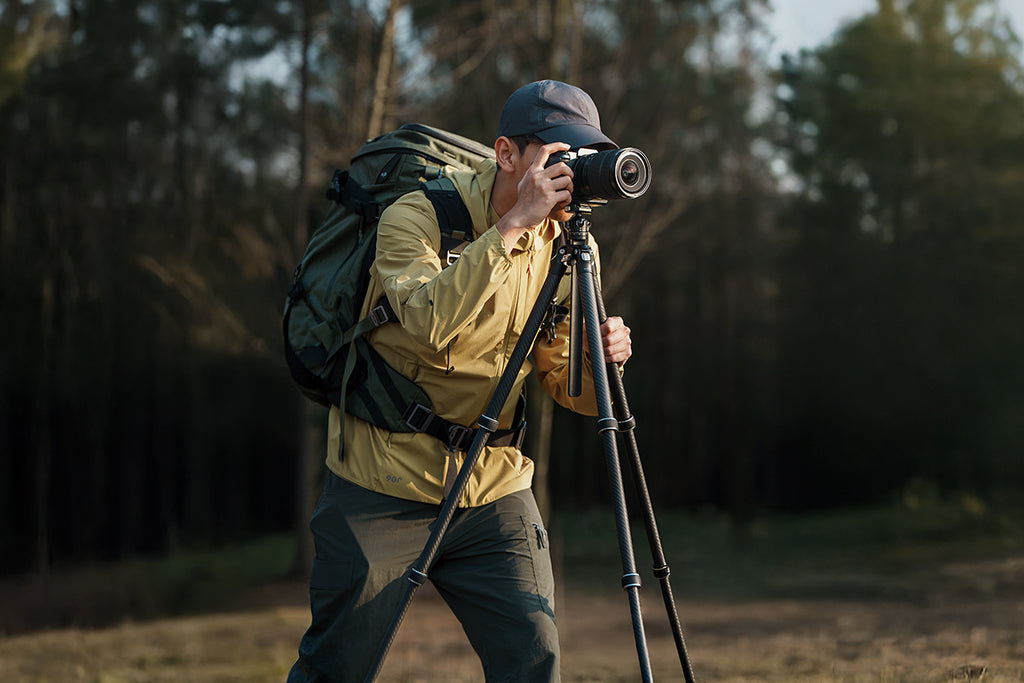
When building a mission-critical rig for solo operation, weight is only half the story. The leverage exerted on your wrist during handheld segments is what leads to fatigue and equipment failure.
We use a simple biomechanical calculation to guide our rigging: Torque ($\tau$) = Mass ($m$) $\times$ Gravity ($g$) $\times$ Lever Arm ($L$)
If you mount a 2.8kg rig and position your monitor or light 0.35m away from the central grip, you generate approximately 9.61 N·m of torque. For the average adult, this represents 60-80% of the Maximum Voluntary Contraction (MVC). This is why we advocate for moving accessories to lightweight, low-profile quick-release systems. By bringing the accessories closer to the center of gravity, you reduce the lever arm ($L$), significantly lowering the physical strain of a long shoot day.
Workflow ROI: The Math of Quick-Release Systems
Efficiency is the ultimate problem-solver. In extreme heat, every second spent fiddling with a 1/4"-20 screw is a second your equipment (and you) are baking in the sun.
We’ve calculated the "Workflow ROI" for switching to a standardized quick-release ecosystem:
- Traditional Thread Mounting: ~40 seconds per equipment swap.
- Systemized Quick Release: ~3 seconds per swap.
For a professional creator performing 60 swaps per shoot across 80 shoots a year, this saves approximately 49 hours annually. At a professional rate of $120/hr, that’s a $5,900+ value in recovered time alone. This doesn't account for the reduced risk of dropping gear when your fingers are sweaty or numb from the heat.
Safety and Compliance in the Field
When traveling to remote locations, especially via air, battery management is a matter of legal compliance and safety. According to the IATA Lithium Battery Guidance Document, ensuring your portable lights comply with IEC 62133-2:2017 standards is essential for preventing thermal runaway.
The Pre-Shoot Safety Checklist
To ensure ecosystem trust, we follow a strict tactile and visual verification process:
- Audible: Listen for the "Click" when engaging any quick-release plate.
- Tactile: Perform the "Tug Test"—a firm pull on the mounted accessory to ensure the locking pin is fully seated.
- Visual: Check the locking indicator (usually an orange or silver pin status) to confirm the secondary safety is engaged.
- Strain Relief: Use cable clamps to prevent heavy HDMI or power cables from creating unwanted torque on your connectors.
Maintaining the Spectrum: TLCI and SSI
For cinema-tier authority, we look beyond simple CRI (Color Rendering Index). The AMPAS Spectral Similarity Index (SSI) provides a more accurate picture of how a light will behave when matched with specific camera sensors.
When heat causes a shift, the spectral peaks of the LED change. This can cause "color spiking," where certain hues (like skin tones) become impossible to balance. Strategic shading with a simple white card or the Ulanzi 30cm Octagonal Softbox with Mini Bowens Mount and Grid L083GBB1 can reduce the fixture's case temperature by 15-20°C. This keeps the LED within its optimal spectral window, ensuring that your TLCI values remain consistent from the first shot to the last.
Building a Resilient Infrastructure
The transition from a "collection of gadgets" to a "creator infrastructure" is what defines a professional. As detailed in The 2026 Creator Infrastructure Report: Engineering Standards, Workflow Compliance, and the Ecosystem Shift, the future of content creation lies in stable, interoperable systems.
By monitoring thermal loads, understanding the biomechanics of your rig, and utilizing standardized connections like the ISO 1222:2010 Photography — Tripod Connections, you move from reactive troubleshooting to proactive creation. In the desert, the sun is your greatest light source and your biggest technical hurdle. Mastering the heat isn't just about cooling; it's about maintaining the integrity of your vision.
YMYL Disclaimer: This article is for informational purposes only. High-output LED lighting and lithium-ion batteries can pose thermal and fire risks if used improperly. Always consult manufacturer manuals and follow local aviation and safety regulations regarding battery transport and operation in extreme environments.