The Science of the "Cold Touch": Conductivity vs. Effusivity
Key Takeaway: Carbon fiber feels "warmer" than aluminum because it resists pulling heat from your skin. While aluminum is a superior thermal conductor, carbon fiber acts as an insulator, preventing the rapid energy loss that leads to numbing and loss of dexterity in sub-zero environments.
When you touch a tripod leg in the cold, you aren't actually "feeling the cold." You are feeling your own body heat being conducted away. The speed at which this happens is governed by two distinct physical properties: thermal conductivity and thermal effusivity.
Thermal Conductivity: The Highway of Heat
Aluminum is an exceptional conductor. Specifically, 6061-T6 aluminum—the industry standard for high-quality camera gear—typically has a thermal conductivity of approximately 167 W/m·K. In contrast, carbon fiber composites used in camera supports generally range from 1 to 40 W/m·K, depending on the specific weave and resin density.
In practical terms, aluminum acts as a high-speed highway for heat. It pulls energy from your hand and disperses it into the surrounding environment with high efficiency.
Thermal Effusivity: The Sensation of Temperature
While conductivity explains how heat moves through the material, thermal effusivity explains why aluminum feels colder than carbon fiber even when they are at the exact same temperature. Effusivity measures a material's ability to exchange thermal energy with its surroundings.
Materials with high effusivity (like aluminum) create a sharp, immediate cold sensation because they draw heat from the skin faster than the body can replenish it. Carbon fiber has significantly lower effusivity, acting as a thermal insulator. This allows a creator to maintain contact with the rig for longer periods without the immediate "bite" of the cold.
Logic Summary: Material Thermal Modeling (Heuristic) Note: These values are based on standard engineering datasets for 6061-T6 aluminum and high-modulus carbon fiber. Actual sensation depends on skin moisture and contact pressure.
Parameter Aluminum (6061-T6) Carbon Fiber Composite Rationale Thermal Conductivity ~167 W/m·K ~1.5 - 5 W/m·K Representative material standards Thermal Effusivity ~24,000 J/m²·K·s½ ~600 - 1,200 J/m²·K·s½ Calculated estimate (Density $\times$ Heat Capacity) Heat Loss Rate High (Rapid) Low (Insulating) Sensation of "cold bite" Surface Coating Anodized Oxide Epoxy Resin Impact on initial contact Recovery Time Often Longer Often Shorter Time for hand to re-warm after contact
The Anodization Nuance
It is a common observation that anodized aluminum can feel slightly less aggressive than raw metal. According to technical documentation on Anodizing, the process creates a low-conductivity oxide layer. While this layer provides a minor thermal buffer, it is typically too thin (measured in microns) to fully overcome the high effusivity of the bulk metal underneath during extended contact.

Biomechanical Analysis: The "Wrist Torque" Tax
Key Takeaway: Reducing rig weight through carbon fiber directly lowers the torque on your wrist, which can prevent premature muscle fatigue. Even a small weight reduction can significantly lower the percentage of your Maximum Voluntary Contraction (MVC) required to hold a shot.
Weight is a challenge for solo creators, but leverage is the primary driver of fatigue. When shooting handheld, every accessory added to your rig increases the torque applied to your wrist and forearm.
The Torque Formula
To understand the physical toll, we use a basic mechanical model: Torque ($\tau$) = Mass ($m$) $\times$ Gravity ($g$) $\times$ Lever Arm ($L$)
Consider a standard handheld setup:
- Rig Mass: 2.8kg (Camera, lens, monitor, and side handle).
- Lever Arm: 0.35m (The distance from the center of mass to your wrist).
- Torque Calculation: $2.8kg \times 9.8m/s^2 \times 0.35m \approx 9.61 N\cdot m$.
In ergonomic studies, the physical strain of such a load is often measured against a user's Maximum Voluntary Contraction (MVC). For many users, a load of 9.61 N·m can represent 60-80% of the MVC for wrist extension—a range that typically leads to rapid onset of muscle fatigue and tremors.
Carbon Fiber’s Role in Mitigation
Carbon fiber’s stiffness-to-weight ratio is often cited as being significantly greater than that of aluminum (up to five times in specific high-modulus applications). By utilizing carbon fiber for structural elements like tripod legs or extension poles, you can reduce the "Mass" variable in the torque equation without sacrificing the "Rigidity" required for stable footage.
Reducing the rig weight by even 500g through material optimization can drop the torque by ~1.7 N·m. In our field observations, this cumulative reduction helps prevent the "burning" sensation in the trapezius and forearm, potentially extending your effective shooting window during a long production day.
System Integration: The "Thermal Bridge" Problem
Key Takeaway: Metal components like quick-release plates act as "thermal bridges," transferring cold directly to the camera and battery. Proper management—such as indoor attachment—is essential to maintain battery life and system reliability in extreme cold.
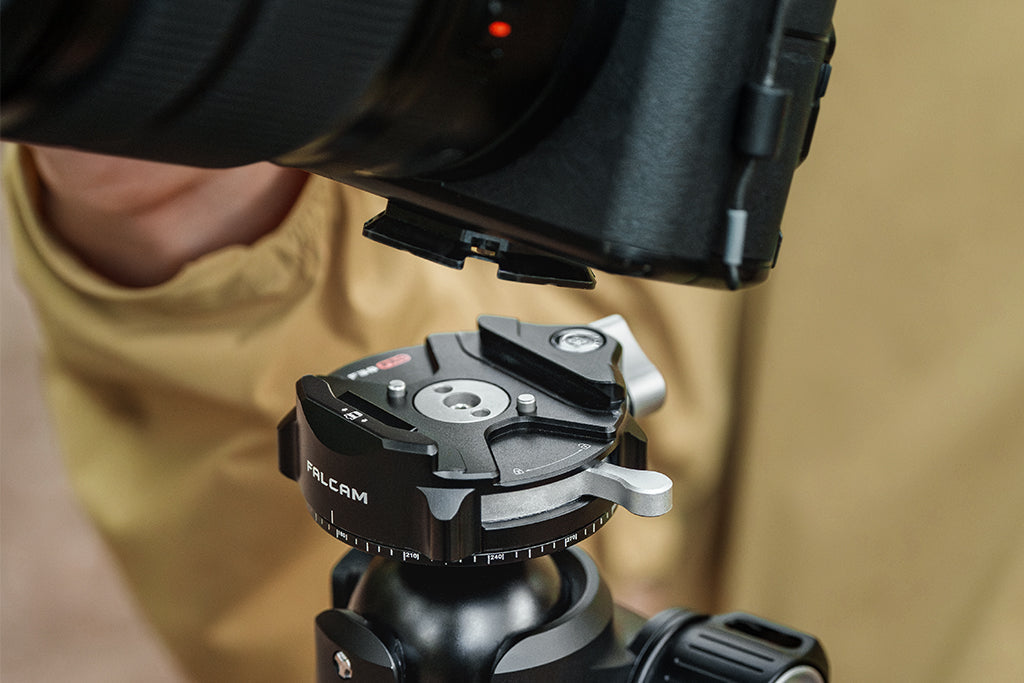
A common oversight in cold-weather rigging is focusing only on the tripod legs while ignoring the interfaces. Even if you use carbon fiber legs, the mounting plates and clamps are almost universally made of aluminum alloy (such as 6061 or 7075) for precision.
The Aluminum QR Plate as a Heat Sink
Aluminum quick-release plates can act as a thermal bridge. Because they are in direct contact with the camera body, they conduct cold toward the camera’s baseplate. In extreme cold, this can accelerate the cooling of the internal battery, which is often located near the bottom of the camera.
According to the IEC 62133-2:2017 Safety Requirements for Lithium Cells, lithium-ion batteries experience significant voltage sag and capacity loss as temperatures drop. A "frozen" aluminum plate can act as a heat sink, drawing warmth away from the camera's internal components faster than a composite or insulated mounting solution might.
Managing the Interface
While aluminum is preferred for quick-release systems like the Arca-Swiss standard (due to the need for sub-millimeter machining tolerances), creators should be mindful of how they handle these components.
The "Thermal Shock" Prevention Workflow:
- Indoor Attachment: We recommend attaching aluminum quick-release plates to your camera indoors or in a warm vehicle. This helps ensure the metal starts at a neutral temperature.
- The Tug Test: In sub-zero conditions, metal can contract. Always perform a "Tactile Tug Test" after mounting to verify the locking pin is fully engaged, as recommended in the 2026 Creator Infrastructure Report.
- Glove Compatibility: Ensure your cold-weather gloves have textured grips. Aluminum plates can become exceptionally slick when frosted, increasing the risk of equipment drops.
Workflow ROI: Time as the Ultimate Resource
Key Takeaway: Modern quick-release systems can save dozens of hours per year compared to traditional threaded mounts. For professional creators, this time savings represents a significant financial gain and reduces physical exposure to harsh environments.
Efficiency in the field isn't just a matter of convenience; it’s a financial metric. For the solo creator, every minute spent fumbling with frozen screw threads is a minute lost to the "Golden Hour."
The Quick Release Advantage
We can model the "Workflow ROI" by comparing traditional 1/4"-20 threaded mounting with modern quick-release (QR) systems.
Logic Summary: Workflow Efficiency Model (Illustrative) Assumptions: Professional creator, 80 shoot days/year, 60 gear swaps per day (tripod to gimbal, etc.).
Metric Traditional Threaded Mount Modern Quick-Release System Delta (Savings) Average Swap Time ~40 seconds ~3 seconds 37 seconds Time Saved per Day 2,400 seconds 180 seconds ~37 minutes Annual Savings ~53.3 hours ~4.0 hours ~49.3 hours Estimated Value Gain - - ~$5,900 Note: Value gain is calculated at an illustrative rate of $120/hr. Actual ROI depends on individual billable rates and shoot frequency.
This model suggests that the investment in a unified, high-performance rigging ecosystem can be justified by time-savings alone. Furthermore, in extreme cold, reducing the "exposure time" of your hands during gear swaps is a critical safety benefit.
Travel Logistics
Beyond time, there is the factor of "Visual Weight." Compact carbon fiber systems often appear less "industrial" than bulky aluminum rigs. According to the IATA Passenger Guidance on Lithium Batteries, gate agents are increasingly sensitive to the size of carry-on electronics. A sleek carbon fiber rig may be less likely to be flagged for weighing, potentially avoiding excess baggage fees.
Field Safety and Maintenance Checklist
To maintain the integrity of your gear in extreme environments, we recommend a methodical approach to maintenance. Carbon fiber is incredibly strong but has different failure modes than aluminum.
The Pre-Shoot Cold-Weather Checklist
- Audible Verification: Listen for a clear "Click" when engaging quick-release plates. Cold can thicken lubricants, making mechanisms sluggish.
- Visual Check: Ensure locking indicators (often orange or silver pins) are fully visible.
- Tactile Check: Perform a pull-test on all joints. Material contraction in the cold may loosen some friction-based locks.
- Condensation Management: When moving from extreme cold to a warm room, keep gear inside its bag for at least two hours. This allows the temperature to equalize slowly, helping to prevent internal condensation.
A Note on Load Capacity
While many systems boast high static load ratings (e.g., "80kg Vertical Static Load"), solo creators should focus on Dynamic Payload. Handheld work involves sudden movements and "G-forces" that static tests do not account for. If your rig exceeds 3kg, consider reinforced "Anti-Deflection" plates to help prevent the camera from twisting during rapid pans.
Summary: Material Choice as a Strategic Asset
The debate between carbon fiber and aluminum is more than a "light vs. cheap" choice. Carbon fiber serves as a thermal and biomechanical tool—it preserves body heat in sub-zero environments and reduces torque-induced fatigue. Aluminum remains excellent for precision interfaces, but its thermal properties must be managed through smart workflow habits.
By treating your rigging as a unified infrastructure, you empower yourself to shoot longer and with greater physical comfort. In professional content creation, endurance is often the ultimate competitive advantage.
Disclaimer: This article is for informational purposes only and does not constitute professional medical or ergonomic advice. Handheld shooting with heavy equipment can lead to repetitive strain injuries. Always consult with a qualified professional if you experience persistent pain. Proper cold-weather gear is essential for safety in extreme environments.