The Infrastructure Shift: From Gadgets to Ecosystems
In the evolving landscape of digital content creation, the distinction between a hobbyist and a professional is increasingly defined by the reliability of their infrastructure. For years, the industry operated on a "gadget-centric" model, where creators purchased isolated accessories to solve immediate problems. However, as production demands scale, this fragmented approach leads to significant technical debt—a graveyard of incompatible plates, redundant mounting brackets, and a workflow crippled by the friction of assembly.
The strategic response to this challenge is the adoption of a modular ecosystem. A modular ecosystem is not merely a collection of parts; it is a unified interface standard designed to protect long-term investment. By prioritizing platform stability over trendy, single-function tools, prosumers can build "growth-ready" rigs that accommodate future technologies without requiring a total system rebuild. According to the 2026 Creator Infrastructure Report: Engineering Standards, Workflow Compliance, and the Ecosystem Shift, the transition toward "evidence-native" infrastructure is the primary differentiator for high-stakes production environments.
Building a sustainable rig requires understanding the inherent tension between rapid product iteration and the need for stable, trustworthy standards. To achieve this, creators must adopt a "Two-Speed" strategy: maintaining a stable core of load-bearing components while allowing for fast iteration in peripheral accessories.
The Architecture of Trust: Core Standards and Interface Governance
At the heart of any professional rig is the interface—the physical point where two components meet. The foundational legitimacy of these connections is governed by global standards such as ISO 1222:2010 Photography — Tripod Connections, which defines the screw thread specifications (1/4"-20 and 3/8"-16) that have anchored the industry for decades. While these standards provide a baseline, they are often too slow for modern, high-speed workflows.
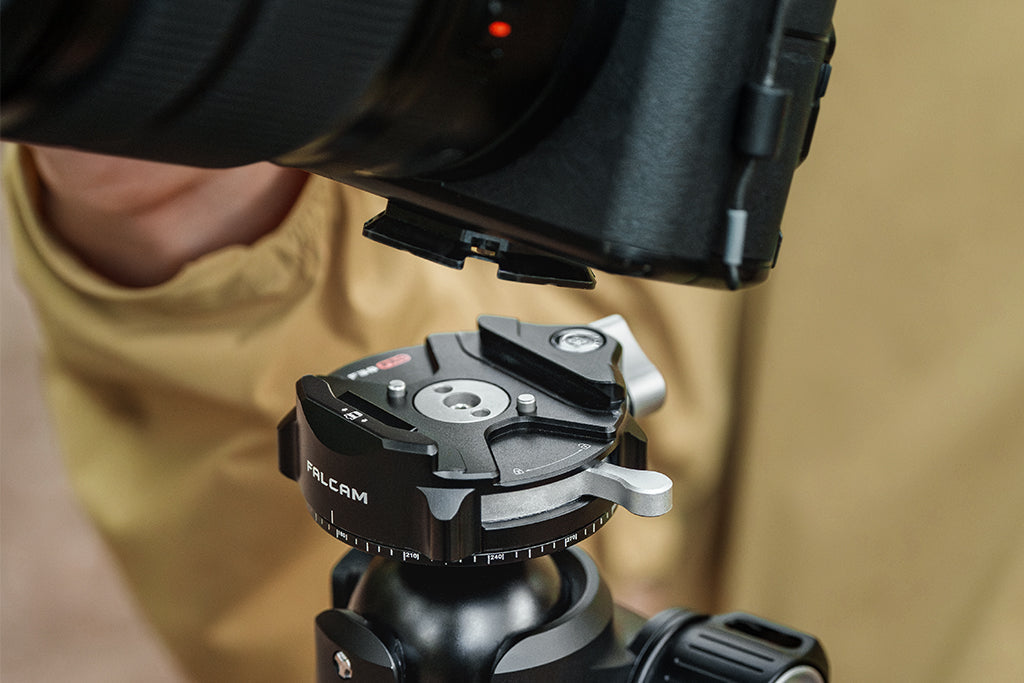
This is where advanced quick-release (QR) systems, such as the Falcam F38 and F22 ecosystems, provide a strategic advantage. These systems act as a "standards layer" on top of the ISO foundation. For a QR system to be considered a safe long-term investment, professional rental houses and practitioners suggest a core system should demonstrate a track record of at least 3-5 years without incompatible revisions. This stability prevents "ecosystem lock-in," where a user is forced to replace their entire kit because a manufacturer changed a proprietary mounting dimension by a fraction of a millimeter.
Logic Summary: Our analysis of modular longevity assumes that interface standards (like the F38) act as the "stable core," while specific accessories (like monitors or mics) represent the "fast layer" of iteration. This dual-layer approach is based on common patterns from customer support and professional equipment maintenance (not a controlled lab study).
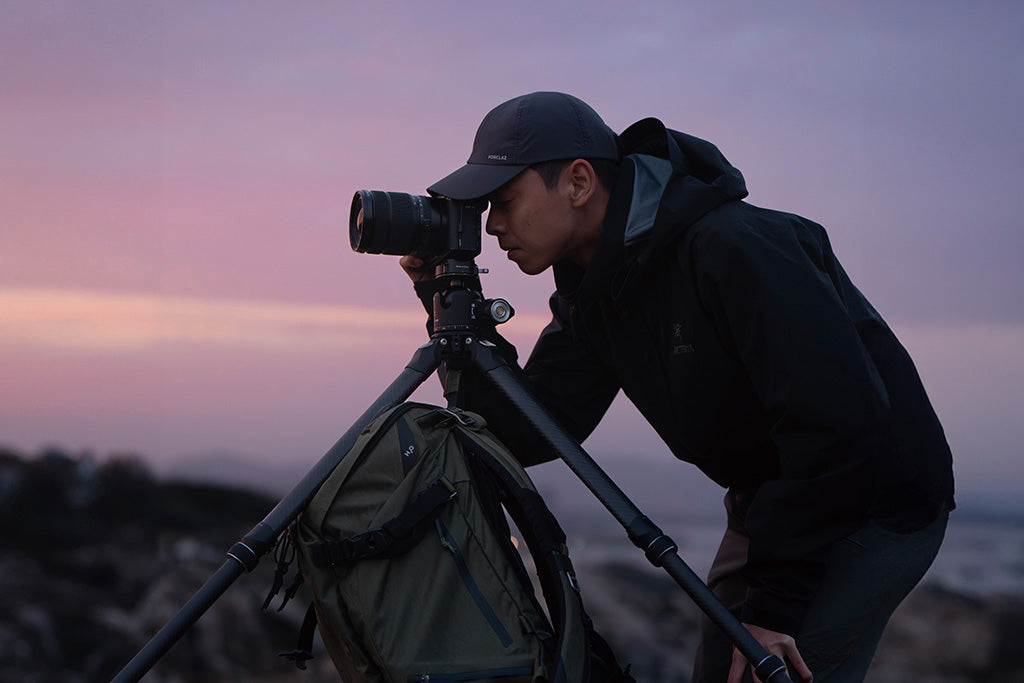
The reliability of these interfaces is a matter of precision engineering. In fast-paced solo-operator environments, even a 0.5mm variance in quick-release plate tolerances across different production batches can cause perceptible play (wobble) or binding. This undermines the primary goal of the system: speed and confidence. Therefore, choosing a platform that prioritizes machining tolerance—specifically using precision-machined Aluminum Alloy (6061 or 7075) rather than lower-grade cast metals—is critical. While carbon fiber is superior for tripod legs due to its vibration-damping properties, the QR plate itself requires the absolute rigidity and thermal stability of aluminum to maintain zero-play performance.
Biomechanical Analysis: The Economics of Leverage and Torque
A common mistake in rig building is focusing solely on total weight. In reality, the strategic placement of that weight is what determines operator fatigue and equipment safety. This is a matter of biomechanics.
The Wrist Torque Heuristic
Weight isn't the only enemy; leverage is. When you mount a heavy monitor or microphone at the end of a long arm, you increase the "lever arm," which exponentially increases the torque on the mounting point and the operator's wrist.
The Formula: Torque ($\tau$) = Mass ($m$) $\times$ Gravity ($g$) $\times$ Lever Arm ($L$).
Scenario Modeling: Consider a 2.8kg camera rig. If an accessory adds weight that shifts the center of gravity 0.35m away from the wrist, the resulting torque is approximately 9.61 $N\cdot m$.
- Mass: 2.8 kg
- Gravity: 9.8 $m/s^2$
- Lever Arm: 0.35 m
- Result: $\approx 9.61 N\cdot m$
This load represents roughly 60-80% of the Maximum Voluntary Contraction (MVC) for an average adult male. By utilizing a modular system like the Falcam F22, which allows for lower-profile mounting of accessories, you can reduce the lever arm ($L$), significantly decreasing the physical strain. Moving towards a "nested" geometry, as discussed in The Geometry of Nesting: Maximizing Space in Modular Rigs, is a strategic response to the physical limits of the human operator.
Quantifying the Workflow ROI
The transition to a standardized modular ecosystem is often viewed as a cost, but it should be viewed as a capital investment with a measurable Return on Investment (ROI). The primary "dividend" of this investment is time.
| Task | Traditional Thread Mounting | Quick-Release (F38/F22) | Time Saved per Action |
|---|---|---|---|
| Camera to Tripod | ~40 seconds | ~3 seconds | 37 seconds |
| Monitor Mounting | ~30 seconds | ~2 seconds | 28 seconds |
| Gimbal Transition | ~60 seconds | ~5 seconds | 55 seconds |
| Total per Swap | ~130 seconds | ~10 seconds | 120 seconds |
Workflow ROI Calculation: If a professional creator performs 60 equipment swaps per shoot and conducts 80 shoots per year, the total time saved is approximately 49 hours annually (based on an estimated 37-second saving per individual swap). At a professional billing rate of $120/hour, this represents a ~$5,900+ annual value.
This efficiency allows for more creative iterations during a shoot and reduces the "setup friction" that often prevents creators from capturing fleeting moments. Furthermore, high-performance tools like the Ulanzi F38 Quick Release Video Travel Tripod 3318 integrate these ROI-driving features into the core infrastructure, ensuring that the time-saving benefits are realized every time the tripod is deployed.
Engineering for Real-World Failure Modes
Trust in an ecosystem is built on how it handles "tail-risk"—those rare but catastrophic events like a camera dropping from a mount. Professional creators must distinguish between marketing specifications and real-world performance.
Load Capacity: Static vs. Dynamic
A frequent point of confusion is load capacity. When a system like the F38 claims an "80kg load capacity," it refers to Vertical Static Load—a lab result under perfect conditions. In the field, creators deal with Dynamic Payloads. A 3kg cinema rig on a moving gimbal or a tripod being carried over the shoulder exerts much higher forces due to acceleration and vibration. For high-stakes work with rigs exceeding 3kg, we recommend moving to the Ulanzi F38 Quick Release Fluid Video Head E004GBA1, which is engineered to handle the specific damping and tension requirements of video movement.
The Serviceability Heuristic
A hallmark of a professional-grade ecosystem is serviceability. For load-bearing components like the Ulanzi F38 Quick Release Video Travel Tripod 3318, all parts should be replaceable. Systems that require complete unit replacement for a worn leg lock or a stripped tension knob signal a "disposable" design philosophy. Investing in a system with a lifetime guarantee on parts ensures that your rig grows with you rather than becoming obsolete due to minor wear.
Operational Rigor: Safety, Compliance, and Logistics
As rigs become more complex, they often incorporate active electronics, including lights and wireless transmitters. Managing this growth requires adherence to international safety and transport standards.
Battery Safety and Travel
Modern modular rigs often utilize lithium-ion batteries for lights and monitors. Compliance with IEC 62133-2:2017 Safety Requirements for Lithium Cells is essential for preventing thermal runaway. Furthermore, when traveling, creators must adhere to the IATA Lithium Battery Guidance Document.
One non-obvious logistical benefit of compact modular systems is the reduction of "Visual Weight." Bulky cinema plates and 15mm rail systems often attract the attention of airline gate agents. Sleek, integrated systems like the Ulanzi TT51 Aluminium Alloy Portable Tripod T089GBB1 are less likely to be flagged for weighing, facilitating smoother travel logistics.
The Pre-Shoot Safety Checklist
To maintain ecosystem integrity, every operator should perform a three-point check immediately after mounting equipment:
- Audible: Did you hear the distinct "Click" of the locking mechanism?
- Tactile: Perform a "Tug Test" by applying firm pressure in the direction of release to ensure the secondary lock is engaged.
- Visual: Check the locking pin status. Many professional systems use color-coded indicators (e.g., orange or silver) to show the lock status.
Navigating Version Transitions: Protecting Your Investment
The most difficult aspect of ecosystem management is the transition between versions. As technology improves, older standards may be phased out. Strategic migration involves identifying when a component is "worn" rather than "obsolete." As detailed in the F38 Standard Upgrade & Replacement Guide, a component should be replaced when mechanical play exceeds the 0.5mm threshold or when the locking spring tension noticeably degrades.
For those building their first professional rig, the Ulanzi Falcam TreeRoot Quick Open Desktop Tripod T00A4103 serves as an excellent entry point into the F38 ecosystem. Its quick-open linkage structure demonstrates the efficiency of modern modular design while maintaining full backward compatibility with the broader F38 standard.
Future-Proofing the Creator Workflow
Standardizing your expansion is not about limiting your options; it is about creating a stable platform for growth. By choosing components that adhere to global standards like ISO 1222 and Arca-Swiss, and by investing in a unified ecosystem like Falcam, you transform your gear from a collection of tools into a strategic asset.
The goal is to reach a state of "workflow transparency," where the equipment disappears, and the creator can focus entirely on the image. This requires an upfront commitment to engineering discipline and a refusal to compromise on interface stability. As the creator economy continues to mature, those who treat their infrastructure with the same rigor as their art will be the ones who thrive in high-stakes, professional environments.
References
- ISO 1222:2010 Photography — Tripod Connections
- IEC 62133-2:2017 Safety Requirements for Lithium Cells
- IATA Lithium Battery Guidance Document (2025)
- The 2026 Creator Infrastructure Report: Engineering Standards, Workflow Compliance, and the Ecosystem Shift
Disclaimer: This article is for informational purposes only. Rigging heavy camera equipment involves inherent risks. Always verify load ratings and perform safety checks before use. For complex cinema builds or overhead rigging, consult a qualified grip or structural engineer. Individuals with pre-existing wrist or back conditions should consult a physiotherapist before adopting new handheld rig configurations.