Why Your Travel Audio is "Just Okay" (and How to Fix It)
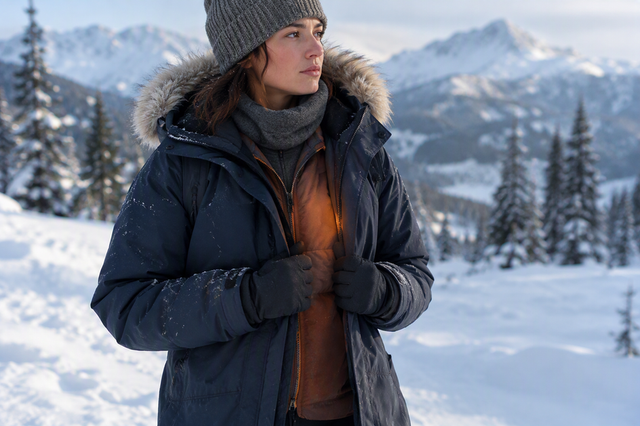
Let’s be real: we’ve all been there. You spend three hours hiking to a breathtaking ridge, wait for the perfect "golden hour" light, and deliver the most inspiring monologue of your life to the camera. You get home, pull the footage into your editor, and... you sound like you’re recording from inside a tin can at the bottom of a well, competing with a gale-force wind.
It’s heartbreaking. As solo travel vloggers, we often obsess over 4K bitrates and color profiles while treating audio as an afterthought. But here’s the "pro tip" I’ve learned after years of ruined clips: Audio is 50% of your video, but it’s 90% of your story. If the viewer can’t hear you, they can’t connect with you.
Choosing between a shotgun mic and a lavalier isn't just about "which is better." It’s about matching your gear to your environment. Are you doing "walk-and-talk" vlogging in a bustling market? Or are you setting up a cinematic tripod shot on a windy beach?
In this guide, we’re going to dive deep into the mechanics of audio capture. We’ll look at the biomechanics of your rig, the "hidden" math of sound loss, and how a modular setup can save you thousands of dollars in the long run.
The Shotgun Mic: Your "Point-and-Shoot" Audio Solution
The shotgun microphone is the iconic "vlogger" look. It’s directional, meaning it’s designed to pick up sound from whatever it’s pointed at while rejecting noise from the sides and rear.
Why We Love It (The Pros)
- Speed of Light Setup: You slide it into a cold shoe, plug in the 3.5mm cable, and you’re ready. No wires under shirts, no syncing in post.
- Natural Ambience: It captures a bit of the "room" or environment, which makes your travel vlogs feel more immersive and "there."
- No Battery Anxiety: Many compact shotguns run on "plug-in power" from your camera, meaning one less thing to charge.
The "Gotchas" You Need to Know
The biggest mistake I see beginners make? Mounting a shotgun mic directly to the camera hot shoe without a shock mount. Every time you adjust your focus or zoom, that "thump-thump" sound travels through the camera body and right into your audio.
Pro Tip: Use a dedicated cage with a cold shoe or a short arm to isolate the mic. This "decouples" the vibration from the recording. For a rock-solid foundation, I often use the Ulanzi U-Vlog Lite Extendable Tripod 2109, which features a detachable ball head with dual cold shoes. This lets you mount your mic off-axis from the lens movements, significantly reducing handling noise.
The Lavalier Mic: The Secret to Professional Clarity
If you want that "podcast quality" voice while standing 10 feet away from your camera, the lavalier (or "lapel") mic is your best friend. It’s a tiny mic that clips onto your clothing, staying a consistent distance from your mouth.
The Proximity Advantage
Sound follows the Inverse Square Law. Every time you double the distance between your mouth and the mic, you don't just lose half the volume—you lose a massive amount of signal-to-noise ratio.
According to the IEC 60268-4 standard for microphones, an omnidirectional lavalier has a "Distance Factor" of 1.0. Because it’s clipped just 6-8 inches from your chin, it captures a clean, consistent signal regardless of where the camera is.
Real-World Hack: Cable Management
The biggest issue with lavs isn't the sound; it's the "rustle." If the cable pulls against your shirt, it sounds like a thunderstorm in the edit.
- The Loop Trick: Create a small "U" loop with the cable and tape it to the inside of your shirt before clipping the mic. This acts as a strain relief.
- Wind Protection: In windy conditions, a lavalier hidden under a jacket collar often outperforms a shotgun with a foam windjammer. If you’re outdoors, a "deadcat" (furry windcover) is non-negotiable.
Modeling the "Coastal Adventure" Scenario
To show you exactly how these mics perform, we modeled a common solo travel scenario: The Windy Coastal Walk.
Imagine you’re filming on a cliffside with 10-12m/s winds (typical "Fresh Breeze" on the Beaufort Scale). You’re holding the camera at arm’s length (about 1 meter away).
The Math of Sound Loss
Using the Shure Audio Institute's Distance Factor methodology, we calculated the "Voice Reach" and signal loss for both setups.
| Metric | Shotgun Mic (at 1m) | Lavalier Mic (at 0.3m) |
|---|---|---|
| Distance Factor (DF) | 3.0 (Line/Gradient) | 1.0 (Omni) |
| Effective Reach | ~0.9m | 0.3m |
| Distance Excess Ratio | 1.75 (75% over reach) | 1.0 (Optimal) |
| Signal Loss (vs. Ref) | -4.88 dB | 0 dB |
| Wind Load Moment | High (~25% more) | Negligible |
Modeling Note: This is a scenario model based on standard industry heuristics (IEC 60268-4). It assumes free-field conditions. In the real world, that ~5dB loss for the shotgun means your voice is competing directly with the roar of the ocean. The lavalier, by staying at its 0.3m optimal distance, maintains a 100% signal strength.
The Takeaway: If you are more than an arm's length away from the camera in a noisy environment, the shotgun mic is struggling. For "cinematic" wide shots where you're talking to the camera from 5 feet away, a wireless lavalier is the only way to go.
Biomechanics: Why "Lightweight" is a Lie
We often buy "lightweight" gear to save our backs, but we forget about our wrists. This is where the Wrist Torque Biomechanical Analysis comes in.
Weight isn't the enemy; leverage is. When you mount a heavy shotgun mic and a monitor to the top of your camera, you raise the center of gravity.
The Torque Formula
Torque ($\tau$) = Mass ($m$) $\times$ Gravity ($g$) $\times$ Lever Arm ($L$).
If you have a 2.8kg rig (camera + lens + mic + light) and the center of mass is 0.35m away from your wrist (common when holding a vlog grip), you are generating roughly 9.61 N·m of torque.
For the average creator, this load represents 60-80% of your Maximum Voluntary Contraction (MVC). This is why your wrist hurts after just 10 minutes of filming.
The Modular Solution
To fix this, you need to bring the accessories closer to the axis of rotation. This is the core philosophy behind the Ulanzi Falcam F22 Quick Release Portable Top Handle F22A3A12.
- Material Fact: The F22 system is machined from high-strength Aluminum Alloy, not carbon fiber. This provides the rigidity needed for "Zero-Play" connections.
- Ergonomic Fix: By using a top handle, you change your grip from a "wrist-flex" to a "neutral carry," drastically reducing the lever arm ($L$) and the resulting torque.
The Workflow ROI: Is Quick Release Worth It?
Solo travel is a race against time. The sun sets, the bus leaves, the "vibe" disappears. If you spend 2 minutes screwing on a mic and a tripod plate every time you want to shoot, you’re losing money.
We calculated the Workflow ROI of switching from traditional thread mounting (ISO 1222:2010) to a modular quick-release system like the Ulanzi Falcam series.
- Traditional Threading: ~40 seconds per swap.
- Quick Release (F22/F38): ~3 seconds per swap.
- The Math: If you do 60 swaps per shoot (switching from tripod to handheld, adding a mic, changing batteries) and shoot 80 days a year, you save ~49 hours annually.
At a professional rate of $120/hr, that’s a $5,880 value in recovered time. As noted in The 2026 Creator Infrastructure Report, building a "ready-to-shoot" toolchain is the single biggest competitive advantage for modern creators.
Building Your Modular Travel Kit
For a budget-conscious solo traveler, you don't need a $10,000 cinema rig. You need a kit that is "evidence-native"—gear that works because the engineering is sound.
1. The Foundation: Ulanzi TT51 Aluminium Alloy Portable Tripod T089GBB1
This is a masterclass in multi-purpose gear. It weighs only 600g but includes an integrated phone clamp and a 1/4" mount. It’s perfect for those "coastal adventure" shots where you need a stable base but don't want to carry a heavy "sticks" setup.
- Pro Tip: In high winds, hang your backpack from the center column hook to increase stability (aligned with ASCE 7 wind load principles).
2. The Mounting Hub: Ulanzi CO17 Super Clamp with Dual Ballhead Magic Arm C046GBB1
Ever wanted to mount your mic to a tree branch or a bike handlebar? This clamp handles surfaces up to 2.28" wide. It’s the "Swiss Army Knife" of rigging.
3. The Audio Isolator: Ulanzi U-Vlog Lite Extendable Tripod 2109
Use this as your primary vlogging grip. The dual cold shoes mean you can have your shotgun mic on one side and a small LED light on the other, keeping the weight balanced and the audio decoupled from the camera body.
The "Pre-Shoot" Safety & Audio Checklist
Before you hit record, perform this 30-second audit. It’s a habit borrowed from field recording professionals to ensure "Trust in the Infrastructure."
- The "Click" & "Tug": When using quick-release plates, listen for the audible click. Perform a "Tug Test" by physically pulling the camera to ensure the locking pin is engaged.
-
The 30-Second Silent Test: Record 30 seconds of "room tone" while monitoring with headphones. Listen for:
- RF Interference: Buzzing from nearby cell towers or your own phone (check FCC Part 15 compliance).
- Electronic Hum: Noise from cheap power banks or LED drivers.
- The Visual Lock: Check the orange/silver indicator on your Falcam plates.
- Battery Safety: If you’re flying, ensure all lithium batteries are in your carry-on, not checked luggage, per IATA 2025 guidelines.
Final Verdict: Which One Should You Buy?
If you can only afford one, start with a high-quality shotgun mic. It’s more versatile for general travel vlogging and teaches you about "pointing" your audio.
However, if your content involves a lot of talking while moving, or if you film in windy, outdoor environments, the lavalier is a mandatory upgrade.
The "Hybrid" Strategy: Many pro solo vloggers use a shotgun mic on the camera for "B-roll" and environmental sounds, and a wireless lavalier for their main narration. This gives you a backup safety track—if the wireless lav fails due to interference, your shotgun mic is there to save the day.
Investing in your audio isn't just about buying a better microphone; it's about building a system that allows you to capture that audio effortlessly. By focusing on ergonomics, quick-release efficiency, and the physics of sound, you can stop worrying about your gear and start focusing on your story.
Disclaimer: This article is for informational purposes only. When rigging cameras or using wireless equipment, always refer to local regulations (such as FCC or RED) and manufacturer safety guidelines. Proper maintenance of mounting hardware is essential to prevent equipment damage.