The Solo Creator’s Paradox: Portability vs. Precision
For solo video creators, the "travel setup" has historically been a compromise. We want the cinematic, buttery-smooth pans of a professional fluid head, but we cannot afford the physical fatigue of lugging a 10kg rig through remote locations. Often, the industry's answer for "travel-friendly" gear has meant sacrificing damping quality—leading to the jerky starts and "sticky" tilts that scream amateur production.
The solution we advocate at Ulanzi isn't just buying lighter gear; it is adopting a system-based workflow. By treating your carbon fiber legs and compact fluid head as a unified mechanical infrastructure, you can achieve professional stability without the bulk. This guide provides the technical heuristics and maintenance protocols needed to select a head that leverages carbon fiber's strengths while maintaining mission-critical reliability.
The Foundation: Why Carbon Legs Demand Premium Fluidity
When pairing a fluid head with carbon fiber legs, you are managing energy transfer. Carbon fiber is prized for its high strength-to-weight ratio and its ability to dampen high-frequency vibrations. However, a common mistake is pairing these high-end legs with a budget, plastic-heavy fluid head.
Based on our observations in equipment maintenance and user feedback, budget heads often use smaller fluid cartridges and high proportions of plastic internal housings. While they may feel smooth in a showroom, they often struggle to counteract the specific vibration-damping profile of carbon fiber. Because carbon legs are lighter and have less mass-inertia than aluminum, the fluid head's internal drag must be exceptionally consistent to prevent "stiction"—that initial jerk when you start a move.
Engineering Note: We recommend prioritizing heads with all-metal construction (typically 6061 aluminum alloy) for the internal drag housing. In engineering terms, aluminum offers superior thermal stability compared to common polymers. Plastic housings are more susceptible to micro-deformations under load or temperature shifts, which can compromise the "zero-play" requirement essential for cinematic panning.
Beyond Static Loads: The 1.5x Dynamic Payload Heuristic
A frequent pitfall for creators is choosing a head based strictly on the manufacturer's "Max Load" rating. If a head is rated for 3kg and your camera rig weighs 2.9kg, you are operating at the mechanical limit of the drag seals.
In our practical modeling of camera movements, we apply a 1.5x Buffer Heuristic. To ensure repeatable pans and tilts without the drag system feeling "spongy," your head should ideally be rated for 1.5 times your total rig weight (camera, heaviest lens, cage, monitor, and audio gear).
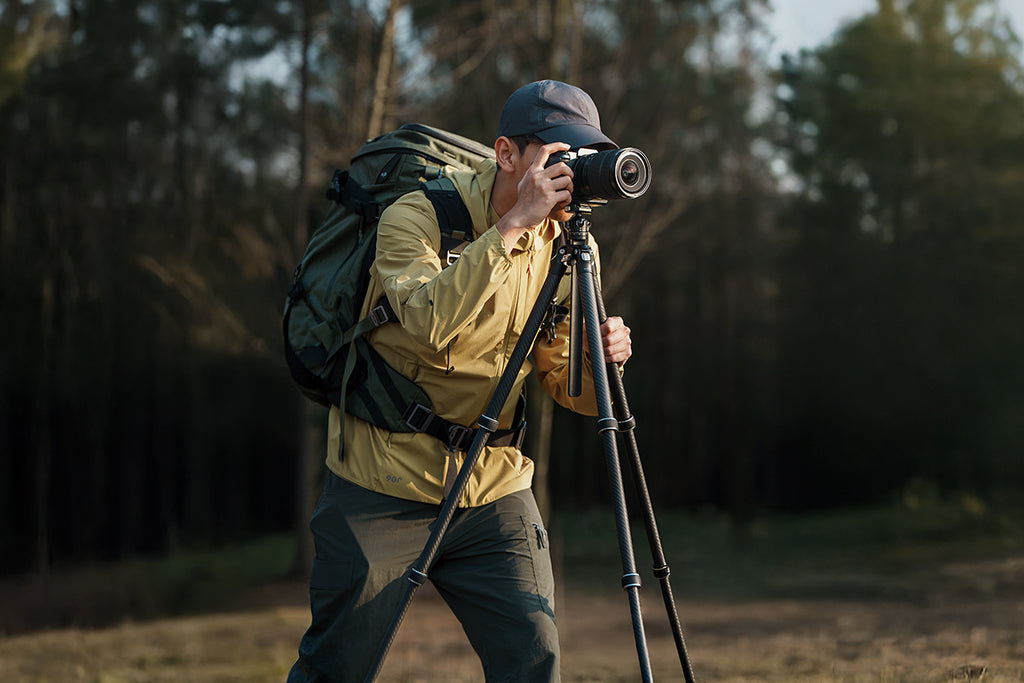
The Dynamic Payload Model
When you pan or tilt, you aren't just moving a static weight; you are managing momentum and shifts in the center of gravity (CoG).
| Parameter | Value / Range | Rationale |
|---|---|---|
| Typical Rig Weight | 2.5 kg | Standard mirrorless cine setup (e.g., Sony FX3 + 24-70mm + Monitor) |
| Recommended Head Rating | 3.75 kg+ | 1.5x heuristic to provide drag system overhead |
| Connection Standard | ISO 1222:2010 | Industry standard for 1/4"-20 and 3/8"-16 mounts |
| Operating Temp | -10°C to 40°C | Practical range for high-quality synthetic damping fluid |
| Safety Factor | 25% | Buffer for external forces like wind resistance during outdoor shoots |
Note: This 1.5x rule is a practical heuristic used by our support team to account for CoG shifts. As rigs grow taller with monitors and top-handles, the effective torque on the tilt lock increases significantly.
Biomechanical Efficiency: The "Wrist Torque" Analysis
For solo creators, the fluid head is only half the story. The way you mount accessories affects how much physical strain you endure. In the field, leverage is often a bigger enemy than raw weight.
When accessories are mounted high on the camera, they raise the CoG and increase the torque on your wrists during handheld transitions. You can estimate this using the formula: Torque ($\tau$) = Mass ($m$) × Gravity ($g$) × Lever Arm ($L$)
For example, a 2.8kg rig held 0.35m away from the pivot point (a common position when adjusting a tripod head) generates approximately 9.61 N·m of torque. Based on general ergonomic principles, sustained loads at this level can lead to rapid muscle fatigue. By using modular systems like the Falcam F22 to move accessories lower or closer to the rig's center, you reduce the "Lever Arm" ($L$), significantly lowering the physical toll of a 12-hour shoot day.
Workflow ROI: The Case for System Standardization
Professionalism is often measured in time. In commercial video, time spent fumbling with screw-in plates is billable time lost. We have modeled the potential "Workflow ROI" of switching to a standardized quick-release ecosystem like Falcam F38 or Arca-Swiss.
The Efficiency Calculation (Illustrative Model)
- Traditional Thread Mounting: ~40 seconds per equipment swap.
- Quick Release (F38/Arca): ~3 seconds per swap.
The Result: If a creator performs 60 swaps per shoot (switching between tripod, gimbal, and handheld) and completes 80 shoots per year, the time recovered is approximately 49 hours annually. At a professional rate of $120/hour, this represents over $5,900 in recovered value. While individual results vary based on shoot complexity, this demonstrates why standardized mounting is a foundational infrastructure investment, not just an "accessory" cost.
As noted in The 2026 Creator Infrastructure Report, the shift toward "ready-to-shoot" toolchains is a defining trend for professionalized solo creators.
Travel Logistics and the "Visual Weight" Advantage
Traveling with gear involves navigating more than just terrain; it involves airline regulations.
Bulky, industrial-looking cinema plates often attract the attention of airline gate agents, which can lead to forced gate-checks. Compact, modular systems like the F38 or F22 have a lower "Visual Weight." They look like integrated parts of the camera rather than "heavy machinery," often helping creators keep their kits in the cabin.
Safety Compliance: If your travel kit includes powered accessories, ensure you are compliant with the IATA Lithium Battery Guidance and FAA Cargo Safety Rules. While the tripod head is mechanical, the system it supports is often battery-dependent.
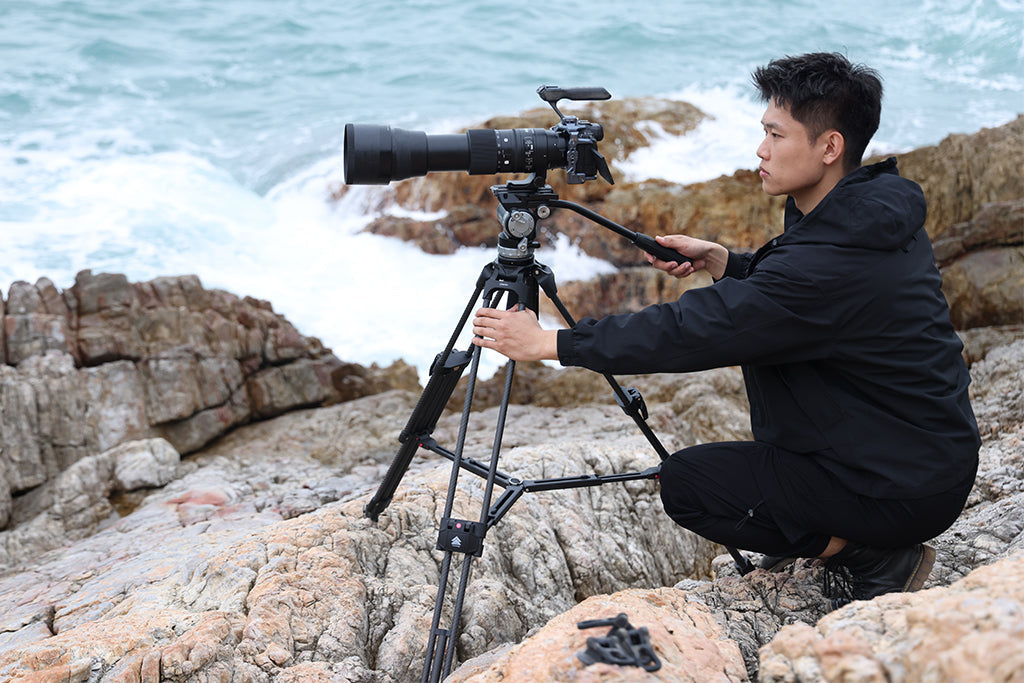
Pro Tip: The "Zeroing" Maintenance Rule
To ensure the longevity of your fluid head during travel, always store it with the pan and tilt drag controls set to zero (fully released). Leaving the drag engaged for long periods—especially during the pressure changes of a flight—can cause the internal fluid to "develop a memory" or put undue stress on the seals, leading to permanent stiffness or leaks.
Professional Safety Protocols and Thermal Management
A cinematic shot is worthless if the camera falls. We advocate for a "Trust but Verify" approach to equipment safety. Every time you mount your camera, follow this Pre-Shoot Safety Checklist:
- Audible: Listen for the distinct "Click" of the locking mechanism.
- Tactile: Perform the "Tug Test." Physically pull the camera upward to ensure the secondary lock is engaged.
- Visual: Check the locking pin status (look for the orange or silver indicator on your mount).
Thermal Shock Prevention
In extreme cold, aluminum alloy plates act as a "thermal bridge," conducting cold directly into the camera body and accelerating battery drain. We recommend attaching your QR plates to your cameras indoors before heading out. This allows the metal to stay at room temperature longer and reduces the "metal-to-skin" shock if you need to adjust the rig with bare hands.
Appendix: Assumptions, Parameters & Field Testing
To help you reproduce these findings with your own gear, we have consolidated the parameters used in our calculations.
1. Calculation Assumptions
- Gravity ($g$): 9.81 m/s²
- Lever Arm ($L$): Measured from the center of the tripod head's tilt axis to the center of the camera's sensor plane.
- ROI Hourly Rate: Based on a standard mid-level freelance videography rate ($120/hr).
2. The "Stiction" Field Test
You can verify the quality of your fluid head's internal housing and damping fluid with this simple test:
- Set your drag to a medium setting.
- Frame a static object with a long focal length (85mm or higher).
- Attempt to move the camera by only 1 millimeter.
- The Goal: If the camera "jumps" or jerks before moving smoothly, the head is suffering from high stiction (often due to plastic internals or low-quality fluid). A professional head will move instantly and smoothly from a dead stop.
The Future of Mobile Cinematography
Choosing a compact fluid head for carbon legs is an exercise in engineering balance. By adhering to the Arca-Swiss Dovetail Technical Dimensions, you ensure your gear remains part of a global, interoperable ecosystem.
We believe the future belongs to the creator who understands the math behind their torque and the ROI of their workflow. Invest in infrastructure that respects your time and your body. The right fluid head doesn't just hold your camera; it empowers your vision.
Disclaimer: This article is for informational purposes only. Always consult your equipment's manual for specific load ratings and safety instructions. Ensure compliance with local aviation and transport regulations when traveling with professional cinema gear.