The Physics of Overhead Mounting: Why Safety Margins Matter
In professional cinematography and high-end content creation, "good enough" is a risky metric. When you suspend a $5,000 camera or a heavy LED fixture above a talent's head, you are no longer just a creator; you are a technician responsible for structural integrity. The creator community often discusses the 3:1 Safety Factor, a heuristic suggesting that your mounting hardware should be capable of supporting around three times the expected working load.
However, based on common patterns in professional rigging and our own product and failure analysis (not a controlled study), the 3:1 ratio is better treated as a baseline rather than a performance target. In higher-risk environments, such as moving sets or public spaces, experienced riggers often move to a 5:1 or even 10:1 safety factor as a matter of practice. This shift from thinking about “can it hold the weight right now?” to “how much margin do I have if something goes wrong?” is what separates improvised setups from professional-grade infrastructure.
The goal of this guide is to move beyond guesswork. We will break down the mechanical limits of mounts, the impact of leverage on load capacity, and how to implement a system-focused safety workflow using the Ulanzi ecosystem.
Deconstructing the 3:1 Rule: Heuristic vs. Reality
It is a common misconception that the 3:1 rule is a universal structural requirement. In reality, structural safety for overhead equipment is often determined by calculating specific dead loads (the weight of the gear) and live loads (dynamic forces), then applying a safety factor. According to The Structural World, safety factors for static loads in construction might start at around 1.5 for some situations, but for applications where failure has higher consequences (such as theatrical or overhead rigging), the required safety margins are typically more conservative.
Logic Summary: In this article, we treat the 3:1 ratio as a common creator-industry heuristic for quick selection. It does not, by itself, account for environmental variables like wind, vibration, or accidental impact. Our recommendations follow a cautious "fail-safe" mindset where the hardware’s rated capacity should significantly exceed the theoretical maximum load.
Static Load vs. Dynamic Payload
When you see a rating like the 80kg capacity on a Ulanzi F38 Quick Release Fluid Video Head E004GBA1, it is vital to distinguish between Vertical Static Load and Dynamic Payload:
- Vertical Static Load: The maximum weight the mount can hold when the force is perfectly perpendicular to the base in a controlled lab environment, with no movement or impact.
- Dynamic Payload: The weight the system can manage during movement, tilt, or when subjected to external forces (like a hand adjusting the camera, or an arm being bumped).
For overhead use, a simple practical approach is to apply a derating step. For example:
- Identify the manufacturer’s rated capacity (e.g., 3kg).
- Decide on a safety factor (e.g., 3:1 for low-risk static use, higher if there is movement or people underneath).
- Compute a conservative Safe Working Load (SWL):
- SWL ≈ Rated Capacity ÷ Safety Factor
So if a mount is rated for 3kg and you choose a 3:1 safety factor for a simple overhead application with minimal movement, you would treat its SWL as approximately 1kg. If your rig involves frequent motion, vibration, or public traffic below, using a higher factor (such as 5:1 or more) and derating further is a safer practice.
The "Wrist Torque" Biomechanical Analysis: Why Leverage is the Real Enemy
One of the most frequent mistakes in rigging is focusing solely on mass while ignoring the lever arm. In mechanical engineering, weight is only part of the story; torque is often the primary cause of joint slippage, gradual "creep," and sudden failures.
The Torque Formula
To estimate the stress on a mounting point, use the following formula: Torque ($\tau$) = Mass ($m$) × Gravity ($g$) × Lever Arm ($L$)
Consider a typical overhead scenario:
- Mass ($m$): A 2.8kg rig (Camera + Lens + Monitor).
- Gravity ($g$): $\approx 9.81 m/s^2$.
- Lever Arm ($L$): The distance from the mounting point to the center of gravity of the rig, for example 0.35 meters when using an extension arm.
Calculation: $2.8 \times 9.81 \times 0.35 \approx 9.61 N\cdot m$ of torque.
Interpreting the Torque (Without Overclaiming)
From a human-factors point of view, this level of torque can feel demanding on the wrist, which is why holding a rig at arm’s length feels dramatically harder than keeping it close to your body. In our product and support experience, loads in this torque range are where many users begin to struggle with control and fatigue (this is a qualitative observation, not a medical or biomechanical standard).
In a rigging context, this torque puts significant stress on the ball head or the locking teeth of a magic arm. This is why we emphasize modular systems like the Ulanzi Falcam F22 Quick Release Portable Top Handle F22A3A12. By using the F22's compact, high-rigidity interface, you can move accessories like monitors or microphones closer to the main mounting axis, shortening the lever arm ($L$) and reducing the total torque on the system.

Material Science: Aluminum vs. Carbon Fiber in Support Systems
A common debate in our community involves the choice of materials. While carbon fiber is prized for its vibration-damping properties in tripod legs, the requirements for quick-release plates and overhead mounts are different.
Precision-Machined Aluminum
The Ulanzi TH04 Overhead Camera Mount T088 and FALCAM series plates (F22, F38, F50) are constructed from high-grade Aluminum Alloy (typically 6061 or 7075). Unlike carbon fiber, which can be prone to brittle failure under certain shear or impact conditions, aluminum tends toward more predictable deformation and maintains high rigidity when properly engineered.
The "Thermal Bridge" Factor: One technical nuance often overlooked is that aluminum acts as a thermal bridge. In extreme cold, an aluminum plate will conduct heat away from the camera base and battery much faster than plastic or many composite materials.
- Pro Tip: If you are shooting in freezing conditions, attach your aluminum QR plates to your cameras indoors first. This helps minimize rapid thermal changes at the mounting interface and slows the rate of battery cooling once you move outside.
Rigidity and Tolerance
For overhead safety, minimizing play is crucial. Any wobble in a mounting plate can create a "hammering effect" during movement, where a small gap allows the rig to gain momentum before hitting the edge of the mount, effectively increasing the dynamic load. FALCAM systems are engineered with tight machining tolerances to reduce this play, helping your chosen safety factor remain meaningful even during active adjustments.
Standardizing the Workflow: The ROI of Quick Release
Safety should complement efficiency, not fight it. A standardized rigging system often pays for itself through time savings. According to The 2026 Creator Infrastructure Report, the shift toward "ready-to-shoot" toolchains is a major trend for professional creators, with quick-release systems playing a key role.
Workflow ROI Calculation
The table below illustrates a simple, assumption-based example comparing traditional 1/4"-20 screw mounting with a quick-release system like the F38. The time values are approximate and will vary by operator.
| Task | Traditional Thread Mounting | Quick Release (F38/F22) | Time Saved |
|---|---|---|---|
| Single Device Swap | ~40 seconds | ~3 seconds | ~37 seconds |
| Daily Swaps (Example: 10) | ~400 seconds | ~30 seconds | ~6 minutes |
| Annual Savings (Example: 80 Shoots) | ~8.8 hours | ~0.7 hours | ~8 hours |
Logic Summary: If a professional operator charges around $120/hr, saving roughly 8 hours a year would correspond to about $960 in potential recovered billable time. For high-volume studios doing many more swaps per shoot (for example, 60+), the annual time savings can be much higher and can justify investment in a unified quick-release ecosystem.
Professional Rigging Safety Checklist
Based on patterns from customer support, product returns, and real-world failure analysis (experience data, not formal lab trials), we use a three-pillar safety protocol for overhead mounts. Before you step under a rig, perform the "A.T.V." Test:
1. Audible: The "Click"
Listen for the mechanical engagement. In systems like the Ulanzi R011a Magic Arm with Crab Clamp T018, the locking mechanism should provide clear acoustic feedback. If the click sounds unusually weak or incomplete, debris may be trapped in the locking channel or the mechanism may not be fully engaged.
2. Tactile: The "Tug Test"
Do not rely on sight alone. Immediately after mounting a camera to an overhead arm, perform a firm "pull-test" in the direction of gravity. This helps confirm that spring-loaded pins are fully seated and that the plate has not "half-locked"—a known failure pattern in rushed setups.
3. Visual: The Indicator Check
Check the status of the locking pin or indicator. Many professional mounts, including the FALCAM series, feature visual indicators (often orange or silver) that are intentionally visible only when the system is in the "Unlocked" or "Transition" state. If you see the indicator, treat the rig as not safe for overhead use until it is fully locked.
Cable Management as Safety
A heavy HDMI or SDI cable can create unexpected torque. If a cable is pulled taut, it acts as a lever, potentially unscrewing a 1/4"-20 bolt or putting lateral pressure on a QR plate. Use cable clamps and strain relief so the cable’s weight and any pulls are supported by the stand or arm, not the camera’s connection point.
Visual Weight and Travel Logistics
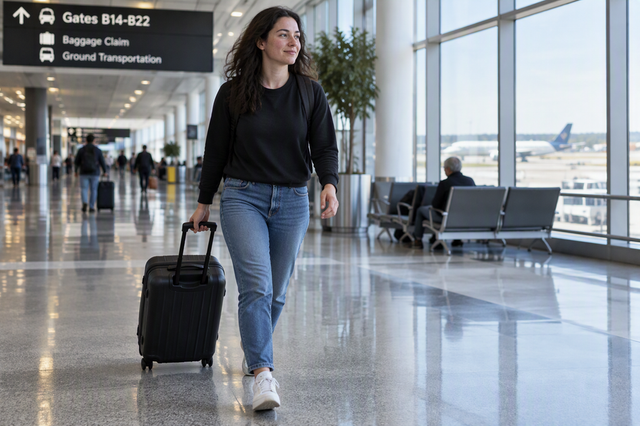
For traveling creators, safety margins also extend to logistical compliance. Large, bulky cinema-standard plates often have a high "visual weight"—they look heavy and industrial. This can attract the attention of airline gate agents, leading to forced gate-checks or weighing of carry-on gear.
Modular systems like the F22 and F38 have a lower visual profile. By breaking down your overhead rig into smaller, modular components, you can distribute the weight more effectively in your bag. This not only protects your gear from the thermal stress of a cargo hold but also helps you stay within the IATA Lithium Battery Guidance for carrying powered accessories in the cabin.
Addressing Common Pitfalls: The "Gotchas" of Overhead Rigging
The Modifier Trap
A frequent on-set mistake is calculating the Safe Working Load (SWL) based only on the light fixture's weight. You must also account for the mass of:
- Softboxes and grids.
- Heavy-duty power cables and ballasts.
- The mounting bracket itself.
A 2kg light can easily become a 5kg load once a large octabox and accessories are attached. If your arm is only rated for 3kg, you have already exceeded a 3:1 safety margin before the shoot begins.
Quick SWL Calculation Example:
- List all components on the arm:
- Light head: 2.0kg
- Large softbox + grid: 2.0kg
- Cables and small accessories: 1.0kg
- Total mass: 5.0kg
- Choose a safety factor based on risk:
- 3:1 for basic static use with no people underneath.
- 5:1 or higher when people are under the fixture, or when movement/vibration is expected.
- Compute required rated capacity:
- At 3:1: Required rating ≈ 5.0kg × 3 = 15kg.
- At 5:1: Required rating ≈ 5.0kg × 5 = 25kg.
If the arm is only rated to 3kg, it is underspecified for this load even before applying any safety factor.
Cross-Threading Risks
According to ISO 1222:2010, tripod connections rely on specific thread dimensions and tolerances to function correctly. ISO 1222 specifies the geometry and engagement needed for compatible 1/4" and 3/8" photographic threads, but it does not protect against improper use.
Inspect your mounting threads regularly. A cross-threaded screw can lose a substantial portion of its structural strength while still "feeling" tight to the hand. If you feel resistance unusually early in the threading process, back out and restart rather than forcing the connection.
Building a Trusted Infrastructure
As the creator industry matures, the shift toward engineering discipline becomes unavoidable. The setups that tend to perform best over time are those designed with explicit safety factors, consistent materials, and repeatable workflows.
Using a 3:1 safety margin is a practical starting point, but robust rigging practice comes from understanding torque, material properties, and the value of standardized processes. Whether you are using the Ulanzi TH04 Overhead Camera Mount T088 for a top-down cooking video or a complex multi-light rig for a commercial, the core steps are the same:
- Calculate your loads (including modifiers, cables, and brackets).
- Respect the leverage (shorten lever arms where possible to reduce torque).
- Apply an appropriate safety factor (higher for dynamic or public environments).
- Perform the A.T.V. checks before anyone stands under the rig.
For more on optimizing your setup, see our guide on Balancing Weight Distribution in Complex Multi-Light Rigs or explore how to Standardize Your Rig to reduce workflow friction.
Disclaimer: This article is for informational purposes only and does not constitute professional engineering or safety advice. Always consult with a certified rigger or structural engineer for complex overhead installations. The safety of any rigging setup is the sole responsibility of the operator. Our recommendations are based on product design intent, internal testing, and field experience, and are not a substitute for compliance with local codes or standards.