Sustainable Camera Accessories: The 2026 Guide to Eco-Friendly Rigs
In 2026, sustainability has evolved into a core professional requirement for creators who need to reduce their environmental footprint without compromising the mechanical reliability their work demands. Building a sustainable camera rig involves more than choosing "green" labels; it requires a strategic focus on verified recycled materials, modular ecosystems that extend product lifecycles, and maintenance-heavy workflows.

Why Sustainable Camera Accessories Matter: A Practical Framework
The environmental impact of a creator’s setup is primarily driven by two factors: the energy-intensive production of raw materials and the frequency of hardware replacement. For independent filmmakers and videographers, transitioning to eco-friendly creator gear is often a long-term value play—reducing waste while ensuring precision for professional use.
The 5-Step Sustainable Gear Checklist
To move from marketing claims to measurable impact, use this hierarchy when auditing new equipment:
- Verify Certifications: Look for GRS or ISO 14021 claims rather than generic "eco-friendly" tags.
- Assess Material Composition: Prioritize metals (like aluminum) over complex composites for better end-of-life recoverability.
- Evaluate Repairability: Can individual parts (screws, plates, clamps) be replaced, or is the whole unit disposable?
- Check Ecosystem Compatibility: Does the accessory work across multiple devices (smartphone, mirrorless, cinema) to prevent duplication?
- Review Packaging & End-of-Life: Seek FSC-certified paper and designs that are easy to disassemble for recycling.
Verifying Eco-Friendly Creator Gear: Navigating Standards
One of the more rigorous verification methods for recycled content is the Global Recycled Standard (GRS). While GRS requires at least 50% recycled content for a product to carry its label, it also audits social and environmental practices across the entire supply chain. When evaluating gear, the presence of a GRS-certified chain of custody is a stronger signal of transparency than self-reported manufacturer claims.
ISO 14021:2016 provides the technical framework for environmental labels. It is important to distinguish between pre-consumer recycled material (industrial scrap) and post-consumer material (waste diverted from landfills). While both reduce the need for virgin resources, post-consumer content is generally considered to have a higher environmental "offset" value in a circular economy.
Creators should also be cautious of "recyclable" claims. FTC guidelines state that such claims may be misleading if the necessary recycling infrastructure is not available to at least 60% of consumers in a given area. Complex accessories made of bonded plastics and metals are often technically recyclable but practically destined for landfills because they are difficult to separate.
The Role of Recycled Aluminum in Professional Rigs
Industry benchmarks from the International Aluminium Institute indicate that recycling aluminum saves approximately 95% of the energy required for primary production. This makes recycled aluminum a high-leverage choice for structural components like cages, tripod legs, and mounting plates.
Unlike many polymers that degrade during the recycling process, aluminum can often be recycled repeatedly while maintaining its structural integrity. In 2026, professional-grade accessories increasingly utilize recycled 6061 or 7075 alloys. These materials are capable of matching the strength-to-weight ratio of virgin alloys, provided the manufacturer maintains strict purification and alloy-control standards during processing.
Recycled Aluminum Cuts Energy and Carbon vs Primary Aluminum
Recycled aluminum offers a clear environmental advantage for camera rigs while keeping the material fully usable in metal applications.
View chart data
| Category | Primary aluminum | Recycled aluminum |
|---|---|---|
| Energy intensity (kWh/kg) | 51.7 | 2.3 |
| Carbon footprint (kg CO2e/kg) | 15.1 | 0.52 |
| Material recoverability (%) | 99 | 99 |
The chart above illustrates the potential energy savings when choosing recycled aluminum. While the 95% figure is a widely cited industry average, the actual environmental benefit for a specific accessory depends on the manufacturer’s specific supply chain and energy mix.
Balancing Durability and Sustainability: The Reliability Bar
A common concern among creators is the "durability gap"—the fear that recycled materials might fail under the stress of a professional shoot. For high-wear items like quick-release clamps that may see dozens of swaps per day, the material's origin is often less critical than the precision of the machining and the quality of the surface treatment (such as hard anodizing).
Recycled aluminum can achieve comparable tolerance retention and fatigue life to primary aluminum when subjected to the same rigorous cycle testing. From a practical standpoint, sustainability is often a result of maintenance rather than just material. Using thread locker (like Loctite) and performing regular inspections can prevent the vibration-induced wear that leads to premature gear failure, regardless of whether the metal is virgin or recycled.
Modular Rigs as a Waste-Reduction Strategy
A unified modular system is a strategic way to reduce "gear churn"—the accumulation of proprietary mounts that become obsolete with every new camera body. The Falcam F38 Quick Release Series, for example, allows creators to move a single camera across tripods, gimbals, and shoulder straps using a standardized interface.
By concentrating mechanical wear on small, replaceable plates rather than the main support structure, modular systems enable component-level repair. This approach is particularly effective for creators who frequently switch between different shooting styles, as it minimizes the need for duplicate accessory sets.
Building an Environmentally Conscious Videography Setup
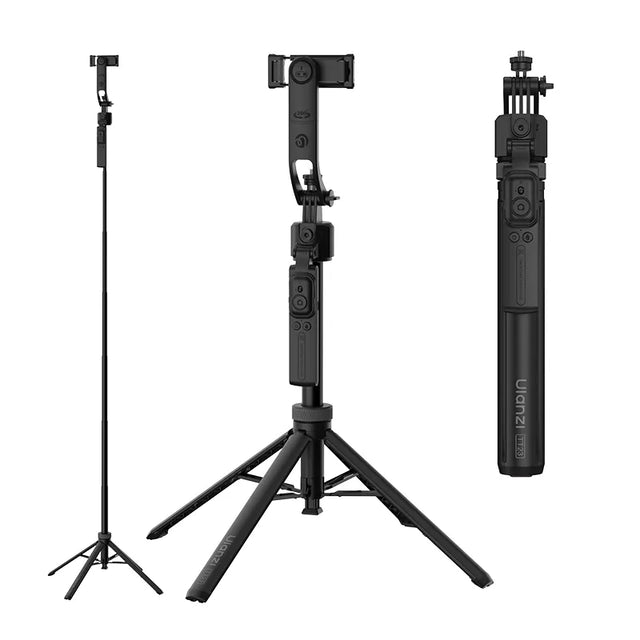
When assembling a rig, start with a core support system designed for longevity, such as the Ulanzi Zero F38 Quick Release Travel Tripod 3131 or other durable options in the Tripods collection.
Beyond the hardware, consider the "soft" side of sustainability:
- Storage: Proper storage in dry, organized environments prevents corrosion. Guides like How to Properly Store Your Camera Cage offer practical steps to extend gear life.
- Packaging: Look for FSC-certified cardboard and soy-based inks, which are easier to integrate into existing paper recycling streams.
- Maintenance: Regular pin inspections and cleaning of mounting surfaces are the most effective ways to ensure a rig lasts for years rather than months.

Investing in Longevity: The Future of Creator Infrastructure
The ultimate form of sustainability in the creator economy is durability. A product that stays in a professional's kit for five years has a significantly lower environmental impact than three "eco-friendly" products that fail within eighteen months.
By prioritizing modular systems like the Ulanzi Uka Quick Release System and verifying material claims through recognized standards, creators can build rigs that are both high-performing and lower-impact.
FAQs
What does GRS certification actually verify for camera accessories?
GRS (Global Recycled Standard) verifies that a product contains at least 50% recycled content and meets specific social and environmental requirements during production. It provides a third-party audited chain of custody, which is generally more reliable than unverified "recycled" labels.
Is recycled aluminum mechanically weaker than primary aluminum?
Not inherently. When refined to the same alloy specifications (e.g., 6061-T6), recycled aluminum can meet the same hardness and tensile strength requirements as primary aluminum. The performance depends on the manufacturer's quality control and purification processes.
How can I tell if a "recyclable" claim is legitimate?
Under FTC and ISO 14021 guidelines, a product should only be labeled "recyclable" without qualification if recycling facilities are available to a substantial majority (usually 60%) of consumers. For complex gear with mixed materials (plastic bonded to metal), these claims are often aspirational rather than practical.
Does a modular rig like the F38 really reduce waste?
It can, provided it is used to replace multiple proprietary mounting systems. By standardizing the connection point, you reduce the need to buy new support hardware every time you change cameras or gimbals, thereby extending the useful life of your existing kit.
What maintenance steps best improve gear lifespan?
The most effective steps include applying thread locker to prevent screws from backing out, cleaning quick-release interfaces to prevent grit from causing abrasion, and storing gear in a humidity-controlled environment to prevent oxidation.
Should I prioritize post-consumer or pre-consumer recycled content?
Post-consumer content is generally preferred from an environmental standpoint because it represents material that has completed a full lifecycle and been diverted from a landfill. Pre-consumer content (manufacturing scrap) is still beneficial but is often easier for industries to capture and reuse regardless of sustainability initiatives.