The Rigging Paradox: Why More Gear Often Means Fewer Shots
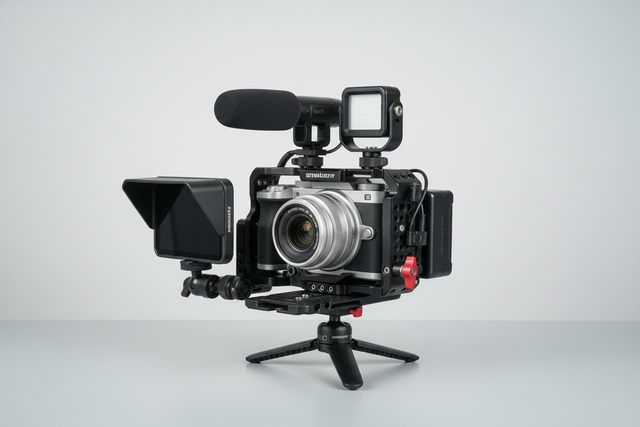
In the pursuit of professional production value, many solo creators fall into a common trap: the "over-rigged" camera. We see it on every set—a mirrorless body buried under a mountain of cages, magic arms, external monitors, and oversized batteries. While these tools are intended to solve problems, they often introduce a new, more insidious issue: system friction.
When your mounting rig becomes too complicated, it stops being a tool and starts being a hurdle. In dynamic field environments, the time spent fumbling with multiple levers and knobs leads to missed shots more often than a lack of specialized gear. Our mission is to shift the mindset from "building a rig" to "engineering a system." By focusing on modularity and mechanical efficiency, we can build setups that empower agility rather than hindering it.
The Biomechanics of Fatigue: The Wrist Torque Analysis
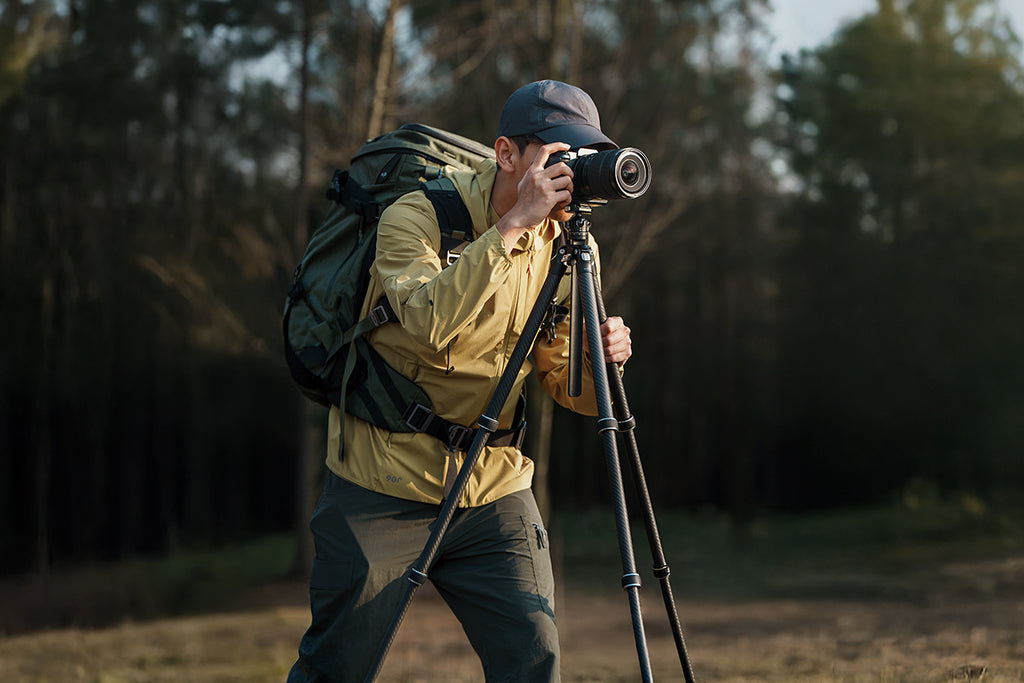
Weight is the most cited enemy of the solo operator, but weight alone is a deceptive metric. In our analysis of handheld workflows, we find that leverage is the true culprit behind physical exhaustion and missed focus.
When you mount accessories—like a heavy 7-inch monitor or a large shotgun microphone—at the end of a long magic arm, you are significantly increasing the torque applied to your wrist. We can calculate this impact using a simple biomechanical model:
Torque ($\tau$) = Mass ($m$) $\times$ Gravity ($g$) $\times$ Lever Arm ($L$)
Consider a typical scenario: A 2.8kg camera rig held with a center of gravity 0.35m away from the wrist. This generates approximately 9.61 N·m of torque. To put this in perspective, for an average adult male, this load represents roughly 60-80% of the Maximum Voluntary Contraction (MVC). Sustaining this level of exertion quickly leads to muscle tremors and a precipitous drop in stability.
Logic Summary: Our biomechanical analysis assumes a standard horizontal arm position (worst-case scenario for leverage). The MVC percentages are based on common ergonomic heuristics for upper limb exertion.
To combat this, we recommend a "center-mass" rigging strategy. By utilizing low-profile mounting interfaces, we move accessories closer to the camera's center of gravity. Reducing the lever arm ($L$) by even 10cm can drop the torque by nearly 30%, extending your effective shooting time and improving shot steadiness without removing a single piece of gear.
The Economics of Speed: Calculating Workflow ROI
For the professional creator, time is not just a convenience; it is a billable asset. Traditional mounting methods—primarily the 1/4"-20 threaded screw—are reliable but notoriously slow. According to the ISO 1222:2010 standard for Tripod Connections, these connections provide foundational legitimacy for camera security, but they were never designed for the rapid-response needs of modern digital creators.
We have modeled the "Workflow ROI" for creators transitioning from traditional threading to a unified quick-release (QR) ecosystem. The numbers reveal a staggering impact on annual productivity.
| Metric | Traditional Threading | Quick-Release Ecosystem | Difference |
|---|---|---|---|
| Average Swap Time | ~40 seconds | ~3 seconds | 37 seconds |
| Swaps per Shoot Day | 60 | 60 | - |
| Shoots per Year | 80 | 80 | - |
| Annual Time Saved | ~53.3 Hours | ~4 Hours | ~49.3 Hours |
At a conservative professional rate of $120/hour, this efficiency gain represents a ~$5,900+ annual value. This isn't just about comfort; it's about the ability to capture more content in less time, directly impacting your bottom line.
The Interface Reliability Model: The Three-Connection Rule
In our experience troubleshooting field failures, we've identified a recurring pattern: the most common point of failure isn't the individual component, but the interface between them. Every additional clamp, plate, or adapter introduces a potential point of flex, wobble, or outright disconnect.
We adhere to a strict heuristic known as the Three-Connection Rule: If a rig requires more than three separate locking points between the camera body and the final support point (tripod, gimbal, or handheld grip), its reliability in dynamic conditions drops precipitously.
Mechanical Integrity and Material Choice
It is a common misconception that all lightweight rigging components should be made of carbon fiber. While carbon fiber is excellent for tripod legs due to its vibration-damping properties, it is often unsuitable for quick-release plates.
Precision-machined Aluminum Alloy (typically 6061 or 7075) is the industry standard for mounting interfaces. The reason is "Zero-Play" tolerance. Aluminum allows for the high-precision machining required to ensure a plate locks into a base without the micro-wobbles that can ruin a long-exposure shot or a telephoto video clip.
A Note on Load Capacity: When evaluating systems rated for high loads (e.g., 80kg), it is vital to distinguish between Vertical Static Load (a lab-tested measurement of how much weight a lock can hold without breaking) and Dynamic Payload. For handheld or gimbal work where the rig is subjected to centrifugal forces and sudden stops, your real-world payload should typically be kept well below the static limit to ensure a safety margin.
Logistics and the "Visual Weight" Advantage
For solo creators who travel, the complexity of a rig has logistical consequences beyond the weight on the scale. We use the term "Visual Weight" to describe how "professional" or "intimidating" a camera setup looks to third parties, such as airline gate agents or security personnel.
A camera buried in a massive, sprawling cage often looks like "heavy equipment," making it a prime target for gate-checking or additional fees. Conversely, a modular system that can be broken down into compact components in seconds allows you to keep your gear in a standard carry-on. This modularity also helps in "stealth" shooting environments where a smaller profile is less likely to draw unwanted attention.
Environmental Considerations: The Thermal Bridge
Because high-performance QR plates are made of aluminum, they act as a thermal bridge. In extreme cold, metal conducts heat away from your camera body (and its battery) much faster than plastic or composite materials.
Pro Tip: In winter scenarios, we recommend attaching your aluminum QR plates to your cameras indoors before heading out. This minimizes "metal-to-skin" shock and allows the plate to reach ambient temperature more slowly, reducing the rate of battery cooling via the baseplate.
Pre-Shoot Safety Workflow: The "Click-Tug-Check"
To ensure system stability, we've developed a mandatory safety checklist for all modular mounting setups. Even the most advanced locking mechanism is only as good as its engagement.
- Audible (The "Click"): Never assume a plate is locked based on sight alone. Listen for the distinct mechanical engagement sound.
- Tactile (The "Tug Test"): Immediately after mounting, perform a firm pull-test in the direction of release. If there is any play, re-seat the component.
- Visual (Locking Status): Check the visual indicator (often an orange or silver pin) to confirm the safety lock is engaged.
- Cable Management: A heavy HDMI or USB-C cable can create unwanted torque on a QR plate. Always use cable clamps to provide strain relief and prevent the cable from acting as a lever against your mounting point.
Building a Unified Infrastructure
The future of solo production lies in "Evidence-Native" Rigging. As highlighted in The 2026 Creator Infrastructure Report, the industry is shifting toward stable, standardized interfaces that prioritize engineering discipline over marketing superlatives.
By standardizing your workflow on a single, trusted mounting standard—like the Arca-Swiss dovetail—you eliminate the friction of "hybrid workflows." You no longer need to search for the right plate or carry multiple hex keys. Instead, you build a "ready-to-shoot" toolchain where every camera, light, and monitor can be swapped across every tripod, gimbal, and backpack mount in your kit.
Standardizing your rig is the first step toward reclaiming your creative focus. When the gear becomes invisible, the story becomes the priority.
Appendix: Modeling Methodology & Assumptions
The data presented in this article is derived from a deterministic scenario model designed for a "Documentary Run-and-Gun Creator." This model is intended for illustrative purposes and represents a hypothetical estimate under specific assumptions.
Parameter Table: Workflow & Stability Model
| Parameter | Value / Range | Unit | Rationale |
|---|---|---|---|
| Payload (Camera + Lens) | 2.5 - 2.8 | kg | Standard mirrorless production weight |
| Lever Arm (Handheld) | 0.20 - 0.35 | m | Distance from wrist to rig center of mass |
| Swap Frequency | 40 - 60 | per day | Transitions between support systems |
| Hourly Billable Rate | 120 | USD | Standard prosumer/solo-pro rate |
| Critical Tipping Speed | 9.6 | m/s | Calculated wind speed for unballasted tripod |
| Static Equilibrium Drag | 1.2 | Cd | Drag coefficient for a standard "bluff body" rig |
Boundary Conditions
- Biomechanics: Wrist torque assumes a horizontal arm position. Fatigue thresholds vary based on individual physical conditioning and grip style.
- ROI: Time savings are based on the transition from a standard 1/4"-20 screw to a quick-release system. Results will vary based on the specific mechanical design of the QR system used.
- Wind Stability: The model assumes a static wind load at a height of 1.4m. Dynamic gusts or uneven terrain will lower the stability threshold.
Disclaimer: This article is for informational purposes only. Rigging heavy camera equipment involves inherent risks. Always consult the manufacturer's load ratings and safety guidelines. Proper ballasting and safety tethers are recommended for all elevated or high-value setups.
References
- ISO 1222:2010 Photography — Tripod Connections
- Arca-Swiss Dovetail Technical Dimensions Analysis
- The 2026 Creator Infrastructure Report: Engineering Standards, Workflow Compliance, and the Ecosystem Shift
- EBU R 137 / TLCI-2012 Television Lighting Consistency Index
- IEC 62133-2:2017 Safety Requirements for Lithium Cells